
In my perspective as a researcher deeply immersed in the fields of intelligent systems and robotics, the recent global events such as the World Robot Conference and the Humanoid Games have illuminated a transformative path from embodied AI robots to what I term “robotoids” or digital artificial employees. This journey is not merely a technological shift but a paradigm change that redefines the interaction between humans, machines, and digital agents in the era of smart society and intelligent industry. The core of this evolution lies in the fusion of embodied intelligence with parallel intelligence, creating a sustainable ecosystem where embodied AI robots learn, adapt, and collaborate through continuous feedback between virtual and physical worlds.
The concept of embodied AI robot emphasizes that intelligence is not just computational but is grounded in physical interaction with the environment. Unlike traditional AI models that operate in abstract digital spaces, embodied AI robots perceive, reason, and act in real-world contexts, making them essential for applications ranging from manufacturing to healthcare. For instance, an embodied AI robot in a factory must navigate dynamic spaces, manipulate objects, and collaborate with human workers, requiring a blend of sensory-motor skills and cognitive abilities. This integration is captured by the equation for embodied intelligence: $$EI = \int_{t} (S(t) + A(t) + C(t)) \, dt$$ where \(EI\) represents embodied intelligence, \(S(t)\) is sensory input, \(A(t)\) is actuator output, and \(C(t)\) is cognitive processing over time \(t\). This formula highlights how embodied AI robots continuously integrate perception, action, and thought to achieve goals.
To achieve this, my work has focused on the parallel intelligence framework, which is based on the ACP method: Artificial societies, Computational experiments, and Parallel execution. This approach creates a closed-loop system where digital twins of embodied AI robots are simulated in artificial environments, subjected to computational experiments to optimize behaviors, and then deployed in physical settings with real-time feedback. The ACP cycle can be summarized as: $$ACP: \mathcal{A} \rightarrow \mathcal{C} \rightarrow \mathcal{P} \rightarrow \mathcal{F}$$ where \(\mathcal{A}\) denotes artificial societies (virtual models), \(\mathcal{C}\) represents computational experiments (simulations), \(\mathcal{P}\) is parallel execution (interaction between virtual and physical), and \(\mathcal{F}\) is feedback for continual learning. This process enables embodied AI robots to evolve from simple automata to intelligent agents capable of prescriptive actions, such as predicting failures or optimizing workflows in real-time.
The recent Humanoid Games served as a vivid parallel experiment for embodied AI robots. In these events, physical robots competed in sports like sprinting or weightlifting, but behind each one was a digital twin that had undergone thousands of computational experiments. The failures and successes on the field provided valuable data to refine the artificial societies, creating a feedback loop that accelerates innovation. For example, if an embodied AI robot stumbled due to a servo motor limitation, this information was fed back into the simulation to improve design and control algorithms. This mirrors the prescriptive intelligence concept, where systems not only describe or predict but also guide optimal actions. The effectiveness of such parallel systems can be measured by the improvement rate: $$\eta = \frac{I_{post} – I_{pre}}{I_{pre}} \times 100\%$$ where \(\eta\) is the improvement percentage, \(I_{pre}\) is the initial performance index (e.g., task completion speed), and \(I_{post}\) is the performance after parallel learning cycles. Through this, embodied AI robots achieve higher adaptability and reliability.
However, the journey from humanoids to robotoids faces significant industrial and societal challenges. The Humanoid Games exposed critical bottlenecks in the supply chain for embodied AI robots, such as precision减速器 (gearboxes) and servo motors, which are often dominated by foreign technologies. This has spurred efforts toward localization and innovation in core components. Below is a table summarizing key challenges and solutions for embodied AI robot development:
| Challenge | Impact on Embodied AI Robot | Proposed Solutions |
|---|---|---|
| Hardware Limitations (e.g., actuators, sensors) | Reduced mobility and durability in dynamic environments | Invest in R&D for high-torque motors and resilient materials; use parallel simulations for stress-testing |
| Software Integration (e.g., perception, control algorithms) | Inefficient decision-making and slow response times | Develop open-source platforms for multi-modal data fusion; implement deep reinforcement learning in digital twins |
| Energy Efficiency | Short operational lifespan and high costs | Optimize power management through AI-driven scheduling; explore novel battery technologies |
| Social Acceptance | Fear of job displacement and ethical concerns | Promote “machine-augmented-human” narratives; establish transparent governance frameworks |
| Cross-Platform Collaboration | Fragmented ecosystems hindering multi-robot systems | Create standardized APIs for data and model sharing; foster industry-academia partnerships |
This table underscores how embodied AI robots must overcome technical hurdles while aligning with human-centric values. In my view, the economic implications are profound. The embodied AI robot market is poised for growth, but investments must be directed toward practical applications rather than speculative hype. The parallel intelligence framework helps prioritize areas with high return on investment, such as logistics or elderly care, where embodied AI robots can augment human capabilities. For instance, in a smart factory, an embodied AI robot might collaborate with workers to handle hazardous tasks, reducing accidents and increasing productivity. The cost-benefit analysis can be expressed as: $$ROI = \frac{B – C}{C} \times 100\%$$ where \(ROI\) is return on investment, \(B\) is benefits (e.g., labor savings, error reduction), and \(C\) is costs (e.g., development, maintenance). By leveraging digital twins, companies can simulate scenarios to estimate ROI before deploying physical embodied AI robots.
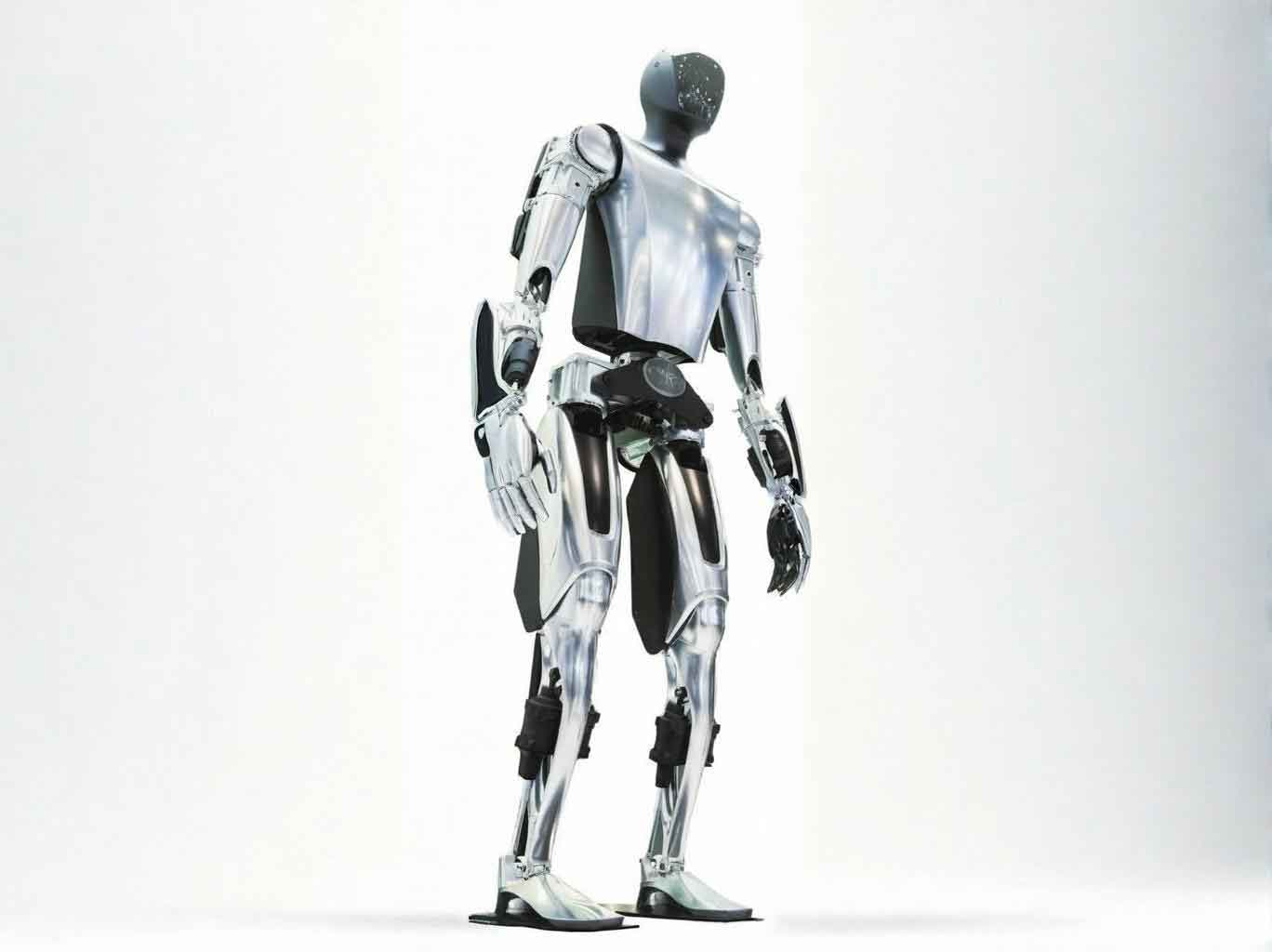
The image above illustrates a manufacturing setting where embodied AI robots are integrated into production lines, highlighting the shift toward intelligent automation. This visual reinforces the tangible progress in making embodied AI robots more accessible and efficient. Beyond factories, the applications of embodied AI robots span diverse domains. In healthcare, they can assist surgeons with precise movements or provide companionship to patients, requiring advanced perception and gentle actuation. In homes, embodied AI robots might manage daily chores, learning from user interactions via continual learning algorithms. The learning process for such embodied AI robots can be modeled using a reinforcement learning framework: $$Q(s,a) \leftarrow Q(s,a) + \alpha [r + \gamma \max_{a’} Q(s’,a’) – Q(s,a)]$$ where \(Q(s,a)\) is the value of taking action \(a\) in state \(s\), \(\alpha\) is the learning rate, \(r\) is the reward, and \(\gamma\) is the discount factor. This allows embodied AI robots to optimize behaviors through trial-and-error in both virtual and real environments.
Moreover, the social dimension cannot be ignored. The rise of embodied AI robots has sparked debates about ethics and governance. I advocate for a approach where these technologies are developed openly and inclusively, ensuring safety and普惠 (universal benefit). Parallel intelligence facilitates this by enabling transparent testing in artificial societies before real-world deployment. For example, ethical dilemmas, such as how an embodied AI robot should prioritize tasks in emergencies, can be explored through computational experiments involving diverse cultural models. The goal is to foster trust and avoid the “black box” problem common in AI. A governance model for embodied AI robots might include: $$G = \sum_{i=1}^{n} w_i \cdot E_i$$ where \(G\) is a governance score, \(w_i\) are weights for factors like safety or transparency, and \(E_i\) are evaluation metrics derived from parallel simulations. This quantitative approach helps policymakers regulate embodied AI robot development responsibly.
Looking ahead, the convergence of embodied AI robots with technologies like 5G, edge computing, and large language models will unlock new possibilities. In my research, I envision a future where embodied AI robots operate in swarms, coordinating through decentralized intelligence. This requires advances in communication protocols and collective learning, which can be accelerated by parallel systems. Below is a table comparing different stages of embodied AI robot evolution:
| Stage | Characteristics | Example Applications | Key Technologies |
|---|---|---|---|
| Humanoids (Current) | Bipedal mobility, basic manipulation, limited autonomy | Entertainment, simple industrial tasks | Servo control, computer vision, rule-based AI |
| Robotoids (Emerging) | Multi-modal perception, adaptive learning, human-robot collaboration | Smart factories, hospital assistants, home care | Digital twins, deep reinforcement learning, cloud robotics |
| Autonomous Agents (Future) | Full cognitive integration, self-replication, ethical reasoning | Disaster response, space exploration, personalized education | Neuromorphic computing, quantum AI, blockchain for trust |
This progression highlights how embodied AI robots will transition from mechanical mimics to intelligent partners. The term “robotoid” refers to these digital employees that exist in both virtual and physical forms, seamlessly blending into workflows. For instance, a robotoid in a warehouse might have a physical embodiment for handling goods and a digital avatar for planning logistics, all synchronized through parallel execution. The synergy can be expressed as: $$R_{total} = \beta R_{physical} + (1-\beta) R_{digital}$$ where \(R_{total}\) is the overall utility of the robotoid, \(R_{physical}\) and \(R_{digital}\) are contributions from physical and digital components, and \(\beta\) is a balancing factor determined by task requirements. This formula emphasizes the hybrid nature of future embodied AI robots.
In conclusion, the path from humanoids to robotoids is paved with innovation in embodied AI robots, driven by parallel intelligence. The ACP method provides a robust framework for continuous improvement, turning real-world challenges like those seen in the Humanoid Games into opportunities for growth. As we advance, it is crucial to emphasize openness, safety, and普惠, ensuring that embodied AI robots serve humanity’s long-term well-being. The mathematical foundation for this vision can be summarized in a unified equation for intelligent systems: $$I_{system} = \iiint \left( \frac{dE}{dt} + \nabla \cdot P + \frac{\partial C}{\partial t} \right) dV$$ where \(I_{system}\) represents system intelligence, \(E\) is embodied energy (physical interaction), \(P\) is information flux (data flow), and \(C\) is cognitive density (processing power), integrated over volume \(V\) of the operational space. This holistic view captures the essence of embodied AI robots as dynamic, learning entities in a connected world.
Ultimately, the success of embodied AI robots hinges on collaborative efforts across disciplines and borders. By fostering an ecosystem where digital twins and physical counterparts co-evolve, we can unlock unprecedented levels of productivity and creativity. I remain optimistic that embodied AI robots, guided by parallel intelligence, will transform industries and enrich lives, moving us toward a future where machines augment human potential rather than replace it. The journey has just begun, and each step forward with embodied AI robots brings us closer to a smarter, more inclusive world.