
The 2025 World Robot Conference recently concluded with unprecedented fanfare, gathering over 200 enterprises and 1,500 exhibits in a grand display of technological prowess. Among the highlights, the number of humanoid robot manufacturers participating reached a historic high, signaling that the industry is approaching a pivotal moment for industrialization. This event not only showcased cutting-edge innovations but also underscored the imminent transition of humanoid robots from experimental prototypes to practical, everyday applications. However, the path to mass production of humanoid robots is fraught with challenges that must be addressed to realize their full potential.
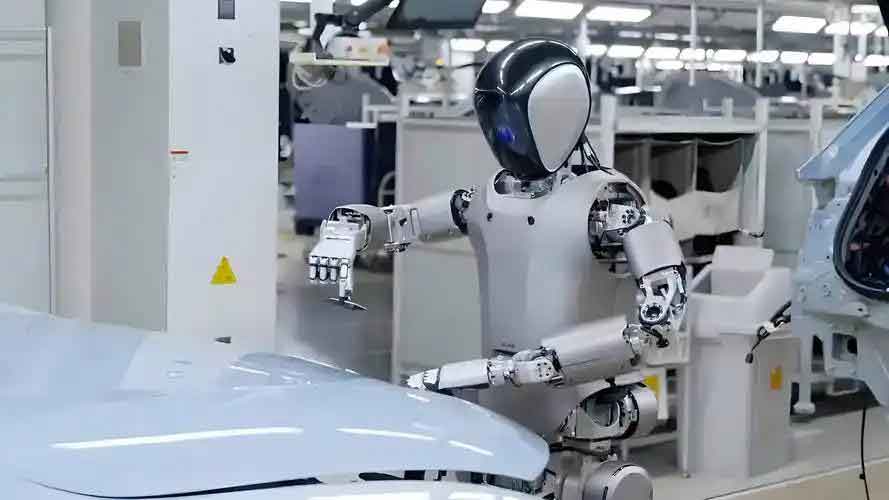
The journey toward widespread adoption of humanoid robots hinges on overcoming three major bottlenecks: technological advancements, ecosystem collaboration, and business model innovation. These barriers, if left unresolved, could delay the integration of humanoid robots into various sectors, from manufacturing to commercial services. As the global interest in humanoid robots surges, industry leaders emphasize that a concerted effort is essential to bridge the gap between demonstration and deployment. This article delves into each of these bottlenecks, exploring the current state of the humanoid robot industry and the strategies needed to propel it forward.
- Technological Evolution: From Clumsy Imitation to Fluid Human-Like Motion
The first and most fundamental bottleneck lies in the technological domain. For humanoid robots to achieve mass production, they must evolve from rigid, mechanical imitations to entities capable of fluid, human-like movements and interactions. This requires breakthroughs in several core areas, including lightweight materials, bionic muscles, and spherical joints, which are critical for enhancing agility, durability, and efficiency. The current generation of humanoid robots often struggles with balance, energy consumption, and natural motion, limiting their practicality in real-world scenarios.
Several companies are making strides in this direction. For instance, UBTECH (Hangzhou) Intelligent Robot Co., Ltd. has demonstrated significant progress with its Walker series of humanoid robots. By incorporating advanced lightweight materials, the weight of their humanoid robot models has been reduced from 77 kilograms in the first-generation 2019 version to 52 kilograms in the 2025 Tian Gong Walker model. This weight reduction substantially improves the robot’s flexibility and energy efficiency, enabling more complex tasks. Similarly, Songyan Power (Beijing) Technology Co., Ltd. has developed the Xiao Nuo bionic robot, which features proprietary bionic skin technology that replicates the realistic tactile sensations of human skin. This innovation not only enhances the humanoid robot’s ability to interact with its environment but also opens up possibilities in healthcare and service industries where touch sensitivity is crucial.
Beyond these examples, the industry is focusing on integrating artificial intelligence and machine learning to enable adaptive behavior in humanoid robots. Key components such as actuators, sensors, and control systems are undergoing rapid iteration to support more nuanced movements. For example, spherical joints allow for greater range of motion, mimicking human articulation, while advancements in battery technology aim to extend operational times. However, achieving a seamless fusion of these elements remains a challenge, as it demands interdisciplinary research and testing. The table below summarizes recent advancements in humanoid robot technology, highlighting the progress made by leading companies.
Company Humanoid Robot Model Key Technological Feature Notable Progress UBTECH (Hangzhou) Intelligent Robot Co., Ltd. Walker Series Lightweight Materials Weight reduction from 77kg (2019) to 52kg (2025), improving agility Songyan Power (Beijing) Technology Co., Ltd. Xiao Nuo Bionic Robot Bionic Skin Replication of human-like tactile sensations for enhanced interaction Despite these achievements, the humanoid robot sector must address issues like power density and thermal management to prevent overheating during prolonged use. Moreover, standardization of components across different humanoid robot platforms is essential to accelerate innovation. As research continues, the goal is to create a humanoid robot that can perform tasks with the grace and efficiency of a human, ultimately driving down costs through scalable production methods.
- Ecosystem Collaboration: From Isolated Breakthroughs to Synergistic Solutions
The second bottleneck involves the need for a cohesive ecosystem that fosters collaboration rather than isolated advancements. Humanoid robots are complex systems that integrate hardware, software, and various subsystems, making it impossible for any single entity to achieve mass production alone. A synergistic approach is required, encompassing vertical integration with suppliers and horizontal partnerships across industries to ensure stability, interoperability, and rapid iteration.
In terms of vertical collaboration, original equipment manufacturers (OEMs) and core component suppliers must establish joint development mechanisms. This close cooperation can accelerate technological iterations and cost optimization while securing a stable and controllable supply chain. For example, partnerships between humanoid robot makers and semiconductor companies could lead to customized chips that enhance processing power for real-time decision-making. Similarly, collaborations with material science firms can yield new composites that reduce weight without compromising strength, directly benefiting the humanoid robot’s performance.
Horizontally, the humanoid robot industry must engage with end-user sectors such as manufacturing,特种作业 (specialized operations), and commercial services to co-define requirements, refine products, and validate场景适用性 (scenario applicability). This cross-industry dialogue can help identify pain points and tailor humanoid robot solutions to specific needs, such as assembly line automation or disaster response. Furthermore, establishing unified safety standards, communication protocols, and interface specifications is vital to promote interoperability among different humanoid robot systems. For instance, common protocols would allow a humanoid robot from one manufacturer to seamlessly integrate with equipment from another, reducing fragmentation and encouraging widespread adoption.
The importance of such collaboration is evident in initiatives like the World Robot Conference, which serves as a platform for knowledge exchange. However, more structured alliances, such as industry consortia or government-backed programs, could drive standardization. By sharing resources and expertise, stakeholders can mitigate risks associated with supply chain disruptions and intellectual property disputes. Ultimately, a collaborative ecosystem will not only enhance the resilience of the humanoid robot industry but also foster innovation through collective problem-solving, paving the way for scalable production.
- Business Model Innovation: From Capital-Intensive to Cost-Effective Deployment
The third bottleneck revolves around business models, where the current high costs of humanoid robots pose a significant barrier to mass production. Achieving a sustainable commercial闭环 (closed loop) necessitates not only identifying viable application scenarios but also reducing costs to a reasonable range that appeals to potential users. This requires a dual approach: leveraging economies of scale for cost reduction and exploring flexible usage models to lower entry barriers.
One promising strategy is to emulate the trajectory of the新能源汽车 (new energy vehicle) industry, where design optimization, efficient supply chain management, and manufacturing process innovations drove down costs through mass production. For humanoid robots, this could involve modular designs that allow for the reuse of components across different models, thereby reducing R&D expenses. Additionally, advancements in automation and robotics manufacturing can lower labor costs and increase output. For instance, using assembly lines specifically tailored for humanoid robot production could achieve scale effects, similar to how electric vehicle batteries became more affordable over time.
Concurrently, continuous technological iteration is fundamental to reducing per-unit costs. As components like sensors and actuators become more standardized and produced in larger volumes, their prices are expected to drop. In the interim, while humanoid robots remain expensive, alternative business models such as leasing, service sharing, or function-based subscriptions can make them more accessible. For example, companies could offer humanoid robots on a rental basis for specific tasks in logistics or healthcare, allowing users to test the technology without large upfront investments. This not only accelerates market validation but also generates feedback for further improvements.
Focusing on high-value, labor-intensive, or high-risk scenarios can also prioritize产业化落地 (industrialization landing) in niche markets. Applications in environments like nuclear facilities, construction sites, or elderly care—where human labor is costly or hazardous—present immediate opportunities for humanoid robot deployment. By demonstrating tangible benefits in these areas, the industry can build momentum for broader adoption. The table below illustrates potential application scenarios for humanoid robots, emphasizing cost-benefit considerations.
Application Scenario Potential Benefits of Humanoid Robot Deployment Cost Considerations Manufacturing Assembly Lines Increased precision and efficiency; reduced human error High initial investment, but long-term savings through automation Disaster Response and Rescue Operations Ability to operate in hazardous environments; minimizes human risk Justified by life-saving potential and reduced insurance costs Commercial Services (e.g., Hospitality) 24/7 availability; enhanced customer experience Leasing models can spread costs over time Ultimately, the success of humanoid robots in achieving mass production depends on creating a virtuous cycle where cost reductions fuel demand, and demand drives further innovations. By aligning business models with real-world needs, the industry can transform humanoid robots from expensive novelties into indispensable tools.
The journey toward mass production of humanoid robots is well underway, with the 2025 World Robot Conference serving as a testament to the industry’s progress. Technological breakthroughs will determine how closely these machines can emulate human capabilities, while ecosystem collaboration will ensure the vitality and resilience of the supply chain. Business model innovation, in turn, will drive the transition from costly exhibits to affordable, widespread tools. Only by addressing these three bottlenecks—technological evolution, collaborative ecosystems, and cost-effective business models—can the humanoid robot industry cross the threshold into mass production. As these challenges are overcome, humanoid robots have the potential to revolutionize production and daily life, ushering in an era of enhanced efficiency and safety across the globe. The continued focus on refining the humanoid robot will be crucial in shaping a future where these advanced machines become integral to society.