
In my years of experience in robotics engineering, I have witnessed the rapid evolution of intelligent robots, particularly those leveraging image recognition technology. The integration of artificial intelligence, machine vision, and sensor networks has transformed these machines from simple automated tools into sophisticated systems capable of perception, decision-making, and interaction. This article delves into the design requirements and testing evaluation methodologies for intelligent robots, with a focus on image recognition applications. I will explore various aspects, including外壳防护, safety, functionality, performance, reliability, and the core image recognition技术, using tables and formulas to summarize key points. The goal is to provide a comprehensive guide that underscores the importance of standards and testing in advancing the intelligent robot industry.
The rise of intelligent robots has been propelled by advancements in computing power, algorithms, and sensor technologies. As an engineer, I have seen how image recognition enables robots to interpret visual data, navigate complex environments, and perform tasks with human-like precision. This capability is crucial for applications ranging from industrial automation to service and特种 robots. In this discussion, I will adopt a first-person perspective to share insights on designing and evaluating these systems, ensuring that关键词 “intelligent robot” is emphasized throughout to highlight their centrality in modern technology. The development of an intelligent robot involves multiple disciplines, and its success hinges on meticulous design and rigorous testing against established standards.
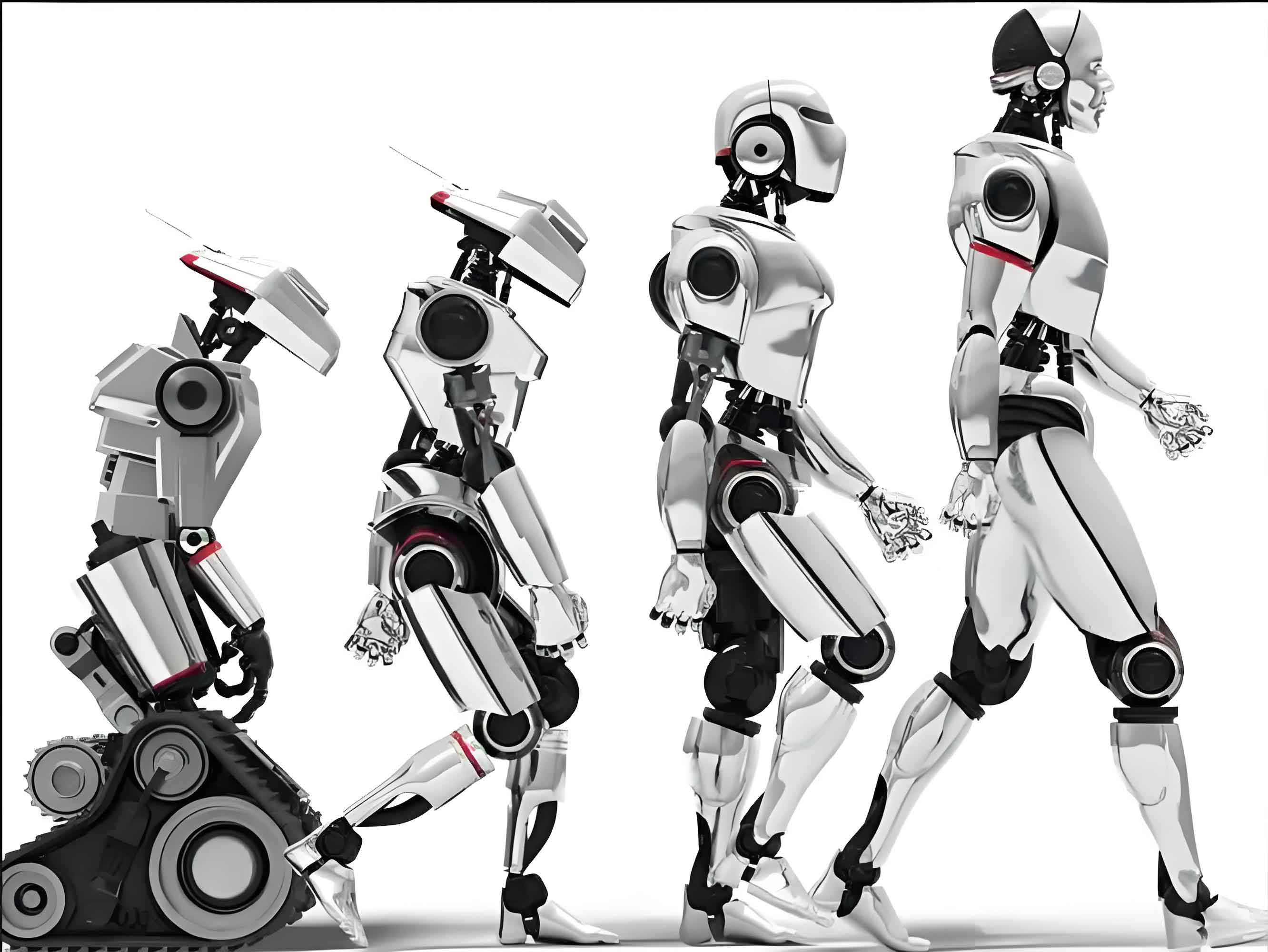
From my perspective, the design of an intelligent robot begins with its外壳, which must balance protection and functionality. The外壳 not only houses internal components but also ensures safety in diverse operating environments. For instance, in search-and-rescue scenarios, an intelligent robot might encounter debris, water, or extreme temperatures, requiring a防护等级 like IP54 or higher. I often evaluate外壳 designs based on criteria such as absence of sharp edges, durability against impacts, and涂装 for visibility or camouflage. Testing involves drop tests from specified heights—say, 0.5 meters—and verifying防水防尘 performance according to IEC 60529. A well-designed外壳 is foundational, as it safeguards the intelligent robot’s integrity and enhances its reliability in field operations.
Moving to safety, I consider mechanical and electrical aspects as critical pillars. For mechanical safety, an intelligent robot must minimize risks during movement and interaction. This includes addressing几何 factors, physical特性, and人类功效学 to prevent injuries. In my designs, I incorporate features like emergency stops, protective barriers, and force-limiting mechanisms. The performance level (PL) for safety functions, as outlined in standards like GB/T 39785-2021, guides these implementations. For example, a service intelligent robot might require a PL of “d” for high-risk scenarios. Electrical safety, on the other hand, varies by industry. As shown in Table 1, different sectors reference distinct standards, such as GB 16796-2009 for public security or GB 5226.1-2008 for industrial applications. I always test for leakage current, insulation resistance, and抗电强度 to ensure compliance, as an intelligent robot must operate safely without posing electrical hazards.
| Industry Domain | Relevant Standard | Key Testing Parameters |
|---|---|---|
| Public Security | GB 16796-2009 | Overheat protection, leakage current, insulation resistance |
| Industrial/Manufacturing | GB 5226.1-2008 | Electrical continuity, protective bonding, voltage withstand |
| Fire and Rescue | GB 3836.1-2000 | Explosion-proof ratings, temperature classification |
| Service Robotics | GB/T 40013-2021 | Enhanced leakage current limits, fault condition tests |
In terms of functionality, an intelligent robot must align with its intended application. I design systems based on specific场景需求, such as remote communication, audio-video capture, or gas sensing. For instance, a巡检 intelligent robot for防疫 might integrate mask detection and thermal imaging. Testing here is straightforward: I verify that each function performs as specified under simulated conditions. However, for advanced functionalities like vibration-resistant人脸识别, I employ rigorous算法 validation. The functionality of an intelligent robot often dictates its hardware-software integration, and I use prototyping to refine these aspects before full-scale production.
Performance evaluation is another area where I focus extensively. The mobility of an intelligent robot—whether wheeled, legged, or tracked—determines its effectiveness in real-world tasks. Key metrics include maximum speed, turning radius,爬坡 capability, and obstacle negotiation. From my testing experience, surface conditions significantly impact results; thus, I adhere to standards like GB/T 38834.1-2020, which specifies a hard, flat surface with a friction coefficient between 0.75 and 1.0. For爬坡 tests, I assess stability to prevent tipping, especially for top-heavy intelligent robots. The performance of an intelligent robot can be quantified using formulas like the velocity equation for motion planning:
$$ v_{\text{max}} = \sqrt{\frac{2 \cdot P_{\text{motor}} \cdot \eta}{m \cdot g \cdot \sin(\theta)}} $$
where \( v_{\text{max}} \) is the maximum speed, \( P_{\text{motor}} \) is motor power, \( \eta \) is efficiency, \( m \) is mass, \( g \) is gravity, and \( \theta \) is the slope angle. This helps in designing an intelligent robot with adequate动力 for demanding environments.
Reliability is paramount for an intelligent robot, as failures can lead to costly downtime or safety incidents. In my design process, I follow GB/T 39590.1-2020, which outlines reliability indicators such as Mean Time Between Failures (MTBF), Mean Time To Repair (MTTR), and mission reliability. I use statistical models to predict and improve reliability. For example, the failure rate \( \lambda(t) \) of an intelligent robot component might follow a Weibull distribution:
$$ \lambda(t) = \frac{\beta}{\alpha} \left( \frac{t}{\alpha} \right)^{\beta-1} $$
where \( \alpha \) is the scale parameter and \( \beta \) is the shape parameter. By conducting accelerated life tests, I estimate these parameters to ensure that the intelligent robot meets its lifespan requirements. Reliability design also involves redundancy and fault-tolerant systems, which I incorporate for critical functions in an intelligent robot.
Now, let’s delve into the core of this discussion: image recognition design and testing for intelligent robots. As an engineer, I prioritize machine vision systems that enable an intelligent robot to perceive and interpret its surroundings. Image recognition involves algorithms for object detection, classification, and tracking. I typically design a vision system comprising an image acquisition unit (e.g., cameras, lenses), a processing unit (e.g., GPUs running deep learning models), and an execution unit. For an intelligent robot, I often employ convolutional neural networks (CNNs) for image recognition, with a forward propagation formula like:
$$ y = f \left( \sum_{i} w_i \cdot x_i + b \right) $$
where \( y \) is the output, \( f \) is the activation function, \( w_i \) are weights, \( x_i \) are input pixels, and \( b \) is bias. Training these models requires large datasets, and I use techniques like data augmentation to enhance robustness. Testing image recognition in an intelligent robot involves both simulated and real-world scenarios. I input图像 or video streams to evaluate accuracy, precision, and recall metrics. For instance, the accuracy of an intelligent robot’s face recognition system can be calculated as:
$$ \text{Accuracy} = \frac{TP + TN}{TP + TN + FP + FN} $$
where TP, TN, FP, FN are true positives, true negatives, false positives, and false negatives, respectively. I also test under varying lighting, occlusion, and motion conditions to ensure the intelligent robot performs reliably in dynamic environments. The integration of sensors like LiDAR or thermal cameras can augment image recognition, and I fuse multi-modal data using Bayesian inference:
$$ P(A|B) = \frac{P(B|A) \cdot P(A)}{P(B)} $$
where \( P(A|B) \) is the posterior probability of an object given sensor data. This enhances the perceptual capabilities of an intelligent robot, making it more adaptive and intelligent.
In testing image recognition systems, I emphasize real-time performance, as delays can hinder an intelligent robot’s responsiveness. I measure帧率 and latency, aiming for at least 30 fps for smooth operation. Additionally, I evaluate the computational efficiency of algorithms on embedded platforms commonly used in intelligent robots. A table summarizing key image recognition testing parameters for an intelligent robot is provided below:
| Parameter | Description | Target Value for Intelligent Robot |
|---|---|---|
| Recognition Accuracy | Percentage of correct identifications | >95% under standard conditions |
| Processing Speed | Frames per second (fps) | ≥30 fps for real-time apps |
| Latency | Time from image capture to decision | <100 ms |
| Robustness | Performance under noise/occlusion | |
| Power Consumption | Energy used by vision system | Minimized for battery-operated intelligent robot |
Beyond technical aspects, I consider the broader ecosystem for intelligent robots. Standardization plays a crucial role, and I advocate for harmonized standards across industries to facilitate innovation. For example, the “机器人+” initiative in China promotes application scenarios, driving demand for high-end intelligent robots with advanced image recognition. In my work, I align with international standards like ISO 10218 for industrial robots or ISO 13482 for service robots, adapting them to the unique needs of an intelligent robot. Testing and certification bodies must evolve to keep pace with technological advances, ensuring that an intelligent robot is safe, reliable, and effective.
Looking ahead, I believe that the fusion of image recognition with other AI technologies will unlock new potentials for intelligent robots. As an engineer, I am exploring areas like semantic understanding and autonomous navigation, where an intelligent robot can interpret scenes at a deeper level. The design process must be iterative, incorporating feedback from testing to refine algorithms and hardware. For instance, I use simulation environments to train image recognition models before deploying them on physical intelligent robots, reducing development time and cost.
In conclusion, the design and testing of intelligent robots based on image recognition is a multifaceted endeavor that requires attention to detail across外壳, safety, functionality, performance, reliability, and core recognition technologies. From my first-person perspective, I emphasize the importance of rigorous evaluation against standards to ensure that an intelligent robot meets real-world demands. By leveraging tables and formulas, I have summarized key aspects to guide engineers and stakeholders. The intelligent robot industry is poised for growth, and through collaborative efforts in standardization and innovation, we can advance these systems to serve humanity in diverse fields. As I continue to contribute to this field, I remain committed to enhancing the capabilities of intelligent robots, making them more intelligent, adaptive, and integral to our future.
Throughout this article, I have intentionally repeated the term “intelligent robot” to underscore its significance. Each section reinforces how image recognition elevates the智能 of these machines, from basic perception to complex decision-making. The journey of designing an intelligent robot is challenging yet rewarding, and I hope this insights inspire further exploration and development in this dynamic domain.