
As an integral part of the modern technological landscape, I believe that AI human robots represent a transformative leap in robotics, integrating advanced fields such as artificial intelligence, high-end manufacturing, and new materials. These AI human robots are poised to become groundbreaking products, following in the footsteps of computers, smartphones, and new energy vehicles, with immense potential and broad applications across various sectors. In my view, intelligent sensors serve as the core components of the perception system in AI human robots, enabling smart sensing and autonomous operations. The high-quality development of these sensors is crucial for empowering the AI human robot industry, fostering new productive forces, and advancing industrialization. In this article, I will explore the current state, challenges, and strategic recommendations for enhancing AI human robot sensors, incorporating tables and mathematical models to summarize key insights.
To begin, let me outline the fundamental aspects of AI human robots and their sensor systems. AI human robots are complex systems that embody mechanical design, motion control, and artificial intelligence, consisting of sensing systems, control systems, driving mechanisms, and execution structures. The sensing system, analogous to human sensory organs, detects internal and external environmental information, while the control system processes this data to regulate behaviors. Sensors in AI human robots include visual, tactile, and auditory types, with emerging applications for olfactory and gustatory sensors in specific scenarios. Key sensor technologies such as six-dimensional force sensors, LiDAR, flexible electronic skin, high-performance inertial measurement units (IMUs), and torque sensors are particularly valuable due to their technical sophistication and market potential. For instance, the performance of these sensors can be modeled using equations that describe their accuracy and response. Consider the general formula for sensor error minimization: $$ E = \frac{1}{n} \sum_{i=1}^{n} (y_i – \hat{y}_i)^2 $$ where \( E \) represents the mean squared error, \( y_i \) is the actual value, and \( \hat{y}_i \) is the sensor’s estimated value. This highlights the importance of precision in AI human robot applications, where reducing error is essential for reliable autonomy.
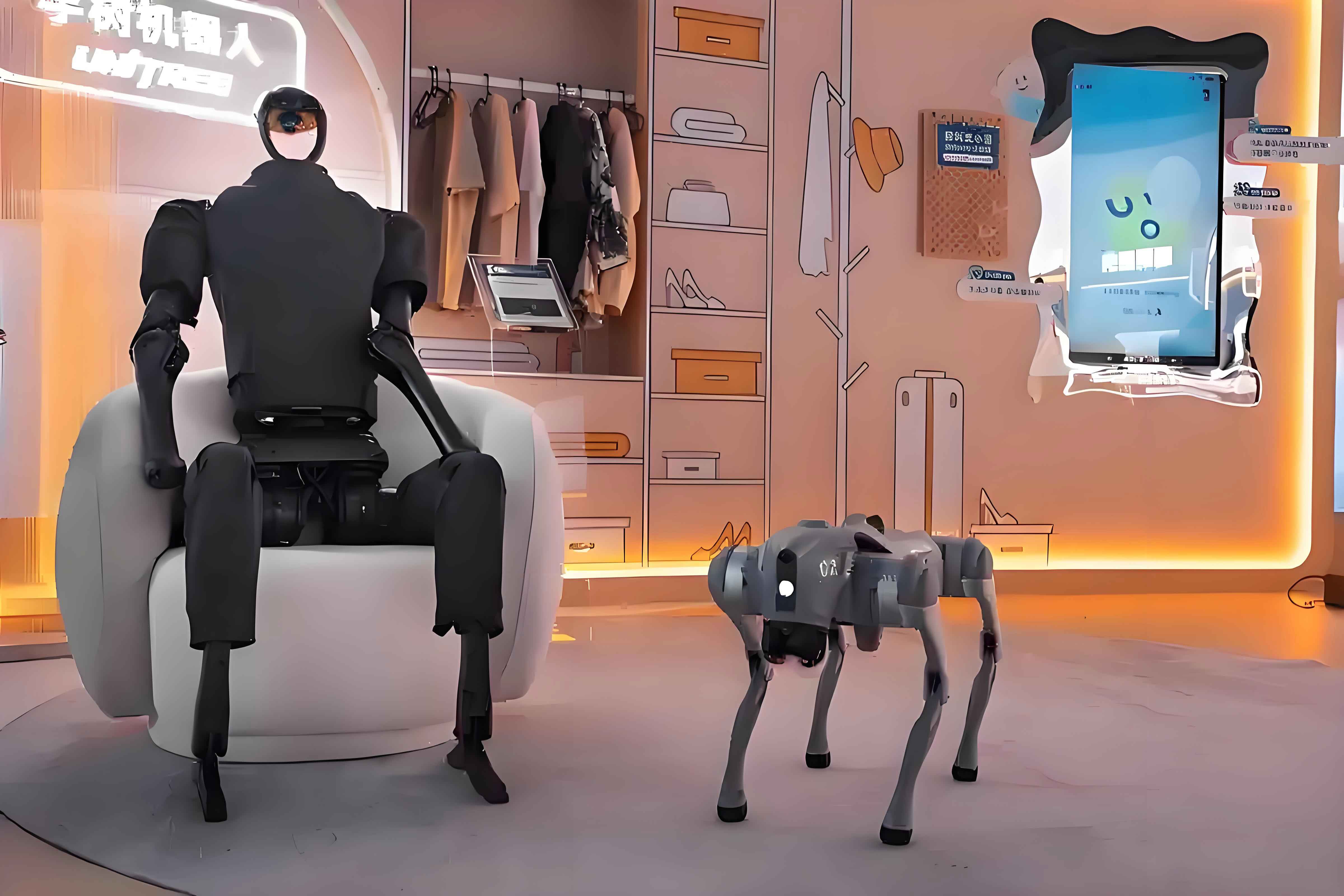
In examining the current landscape of AI human robot sensors, I observe that the global market is characterized by rapid innovation but also significant challenges. While there have been advancements in areas like LiDAR and MEMS microphones, high-end segments remain dominated by international players, leading to dependencies in critical technologies. For example, the development of six-dimensional force sensors and flexible electronic skin often lags in terms of reliability and consistency compared to global benchmarks. This disparity can be attributed to factors such as limited collaboration between academia and industry, with much of the research concentrated in universities and research institutes rather than commercial enterprises. To illustrate the market dynamics, I have compiled a table summarizing key sensor types, their global status, and associated challenges in the context of AI human robots.
| Sensor Type | Current Status | Key Challenges |
|---|---|---|
| Six-dimensional Force Sensor | Dominance by international firms; domestic progress in precision up to 0.5%, but generally 1-3% range | Structural design stability and manufacturing consistency |
| LiDAR | Leadership in global markets, but reliance on external core components | Integration with AI human robot perception systems and cost reduction |
| Flexible Electronic Skin | Innovation driven overseas; gaps in durability and repeatability | Material science advancements for better environmental adaptation |
| High-performance IMU | Foreign companies hold majority share; domestic navigation-grade IMUs emerging | Miniaturization and power efficiency for AI human robot mobility |
| Torque Sensors | Growing global competition with domestic entrants | Calibration and long-term reliability in diverse scenarios |
| MEMS Microphones | Strong domestic production, but innovation needed for AI-specific applications | Noise cancellation and integration with AI human robot auditory systems |
From my perspective, the challenges in AI human robot sensor development are multifaceted. Firstly, the reliance on foreign technology for high-precision components stifles local innovation and increases costs. Secondly, the concentration of R&D in academic institutions rather than industries slows down the commercialization process, as evidenced by patent distributions where universities hold the majority of grants. This misalignment hampers the efficient translation of research into practical AI human robot solutions. Additionally, the ecosystem for AI human robot sensors is still immature, lacking sufficient investment, talent, and standardized processes. For instance, the production of sensors for AI human robots requires stricter controls and certifications compared to consumer-grade variants, which many local players struggle to meet. To quantify some of these issues, we can model the innovation gap using a simple productivity function: $$ P = A \cdot K^\alpha \cdot L^\beta $$ where \( P \) represents output in sensor development, \( A \) is total factor productivity, \( K \) is capital investment, \( L \) is labor input, and \( \alpha \) and \( \beta \) are elasticities. In regions with underdeveloped ecosystems, \( A \) tends to be lower, highlighting the need for holistic improvements.
Moving forward, I propose several strategic recommendations to address these challenges and foster the growth of AI human robot sensors. These strategies are designed to enhance collaboration, innovation, and market readiness, ensuring that AI human robots can achieve their full potential. First and foremost, optimizing top-level design is essential. This involves integrating policy support into industrial plans, establishing clear goals and pathways, and forming expert committees to guide development. By aligning national and regional initiatives, we can create a cohesive framework that accelerates progress in AI human robot sensor technologies. Secondly, building a synergistic innovation system is critical. This system should involve partnerships between AI human robot manufacturers, sensor companies, research institutions, and universities to tackle key technologies. For example, focusing on breakthroughs in multi-sensor fusion algorithms can be represented by: $$ F(S) = \sum_{i=1}^{n} w_i \cdot s_i $$ where \( F(S) \) is the fused sensor output, \( w_i \) are weights optimized for AI human robot tasks, and \( s_i \) are individual sensor readings. Such collaborative efforts can drive advancements in areas like intelligent signal processing and model analysis.
Another key strategy is cultivating high-tech enterprises and industrial clusters. By encouraging technology transfer from academia to industry and supporting traditional sensor firms in upgrading their products, we can build a robust supply chain for AI human robot sensors. This includes attracting international leaders to foster competition and knowledge spillover. Moreover, strengthening application scenarios and pilot demonstrations is vital for market adoption. Through regional coordination and innovative models like “paired攻关” (joint攻关), we can bridge the gap between R&D and real-world use in AI human robots. To illustrate the proposed measures, I have created a table that outlines specific actions and their expected impacts.
| Strategy Area | Specific Measures | Expected Outcomes |
|---|---|---|
| Policy and Design | Integrate sensor support into industrial policies; form expert committees | Standardized frameworks and accelerated innovation cycles for AI human robots |
| Innovation Systems | Establish industry-academia consortia; focus on core tech like flexible sensors | Enhanced R&D efficiency and faster commercialization of AI human robot sensors |
| Enterprise Cultivation | Promote spin-offs from research; upgrade existing sensor firms | Diverse market players and reduced import dependency for AI human robots |
| Application Promotion | Pilot projects in regions; use financing tools like insurance补偿 | Increased adoption and validation of sensors in real AI human robot environments |
| Resource Investment | Set up development funds; enhance talent programs and data sharing | Sustainable growth and innovation in the AI human robot sensor ecosystem |
In terms of technological depth, I emphasize the importance of advancing specific sensor types for AI human robots. For instance, six-dimensional force sensors require improvements in calibration and durability to handle complex interactions. The force-torque relationship can be expressed as: $$ \vec{F} = k \cdot \vec{\delta} $$ where \( \vec{F} \) is the force vector, \( k \) is a stiffness matrix, and \( \vec{\delta} \) is the displacement vector. Enhancing this for AI human robots involves refining material properties and signal processing algorithms. Similarly, LiDAR systems for AI human robots must achieve higher resolution and lower power consumption, which can be modeled using radar range equations: $$ P_r = \frac{P_t G_t G_r \lambda^2 \sigma}{(4\pi)^3 R^4} $$ where \( P_r \) is received power, \( P_t \) is transmitted power, \( G_t \) and \( G_r \) are gains, \( \lambda \) is wavelength, \( \sigma \) is target cross-section, and \( R \) is range. Optimizing these parameters is crucial for autonomous navigation in AI human robots.
Furthermore, the integration of multiple sensors in AI human robots necessitates robust data fusion techniques. I advocate for the use of Bayesian filtering approaches, such as the Kalman filter, to combine inputs from IMUs, visual sensors, and tactile arrays. The state update equation is: $$ \hat{x}_{k|k} = \hat{x}_{k|k-1} + K_k (z_k – H_k \hat{x}_{k|k-1}) $$ where \( \hat{x} \) is the state estimate, \( K_k \) is the Kalman gain, \( z_k \) is the measurement, and \( H_k \) is the observation matrix. This enables AI human robots to maintain accurate pose estimation and environmental awareness. Additionally, the development of electronic skin for AI human robots involves creating flexible, multimodal sensors that can detect pressure, temperature, and humidity. The sensitivity of such sensors can be described by: $$ S = \frac{\Delta R / R}{\Delta P} $$ where \( S \) is sensitivity, \( R \) is resistance, and \( P \) is pressure. Improving \( S \) through nanomaterials is key for realistic tactile feedback in AI human robots.
From an economic perspective, the growth of the AI human robot sensor market is influenced by factors such as investment, talent availability, and regulatory support. I suggest that establishing dedicated funds and innovation platforms can mitigate risks and attract capital. The return on investment in sensor R&D can be approximated by: $$ ROI = \frac{\text{Net Benefits}}{\text{Cost}} \times 100\% $$ where net benefits include technological spillovers and market shares gained. By fostering a vibrant ecosystem, we can achieve higher ROI and sustainable development for AI human robot sensors. Moreover, talent development is critical; programs focused on STEM education and international exchanges can build a skilled workforce capable of driving innovations in AI human robots.
In conclusion, I am confident that by implementing these strategies, we can overcome the existing barriers and unlock the full potential of AI human robot sensors. The journey involves continuous innovation, collaboration, and adaptation to evolving market needs. As AI human robots become more prevalent, their sensors will play an increasingly vital role in enabling intelligent, autonomous behaviors. Through concerted efforts in policy, technology, and ecosystem building, we can ensure that AI human robot sensors contribute significantly to the advancement of robotics and related industries, paving the way for a future where humans and robots coexist seamlessly.
To summarize the mathematical aspects, here is a table of key formulas relevant to AI human robot sensor development:
| Application | Formula | Description |
|---|---|---|
| Error Minimization | $$ E = \frac{1}{n} \sum_{i=1}^{n} (y_i – \hat{y}_i)^2 $$ | Mean squared error for sensor accuracy in AI human robots |
| Productivity Function | $$ P = A \cdot K^\alpha \cdot L^\beta $$ | Economic model for innovation output in sensor R&D |
| Sensor Fusion | $$ F(S) = \sum_{i=1}^{n} w_i \cdot s_i $$ | Weighted fusion of multiple sensor inputs for AI human robots |
| Force-Torque Relation | $$ \vec{F} = k \cdot \vec{\delta} $$ | Linear model for force sensors in AI human robot joints |
| LiDAR Range Equation | $$ P_r = \frac{P_t G_t G_r \lambda^2 \sigma}{(4\pi)^3 R^4} $$ | Power reception model for LiDAR in AI human robot navigation |
| Kalman Filter Update | $$ \hat{x}_{k|k} = \hat{x}_{k|k-1} + K_k (z_k – H_k \hat{x}_{k|k-1}) $$ | State estimation for sensor data fusion in AI human robots |
| Electronic Skin Sensitivity | $$ S = \frac{\Delta R / R}{\Delta P} $$ | Sensitivity measure for tactile sensors in AI human robots |
| Return on Investment | $$ ROI = \frac{\text{Net Benefits}}{\text{Cost}} \times 100\% $$ | Economic metric for evaluating sensor development projects |
Ultimately, the success of AI human robot sensors hinges on a holistic approach that balances technical excellence with practical applicability. I encourage stakeholders across sectors to engage in this endeavor, as the advancements in AI human robot sensors will not only drive industrial growth but also enhance the quality of life through smarter, more responsive robotics. Let us work together to build a future where AI human robots are empowered by cutting-edge sensor technologies, enabling them to perform complex tasks with precision and autonomy.