
We are witnessing an unprecedented era of technological advancement, where AI human robots represent a transformative force in shaping the future of industries and societies. These sophisticated machines, which integrate artificial intelligence, advanced manufacturing, and new materials, are poised to become disruptive products following computers, smartphones, and electric vehicles. As global competition intensifies, we must strategically position ourselves to harness the potential of AI human robots, driving economic growth and fostering innovation. In this analysis, we explore the current landscape, challenges, and strategies for accelerating the development of the AI human robot industry, with a focus on creating a robust ecosystem that supports rapid progress.
The global development of AI human robots is characterized by parallel efforts in technology research and industrial transformation. However, widespread adoption still requires significant time due to challenges in cost, application scenarios, and reliability. Historically, AI human robots have evolved through several stages, from early conceptual designs to modern dynamic systems. For instance, recent advancements by leading companies and research institutions have demonstrated remarkable capabilities in motion, perception, and decision-making. According to optimistic projections, the global market for AI human robots could experience a compound annual growth rate (CAGR) of up to 94% from 2025 to 2035 under ideal technological breakthroughs, reaching a market size of approximately $1540 billion by 2035. This growth is further accelerated by generative AI technologies, which promise to unlock new potentials and drive exponential expansion. The economic impact can be modeled using a growth function: $$ M(t) = M_0 \cdot e^{rt} $$ where \( M(t) \) is the market size at time \( t \), \( M_0 \) is the initial market size, and \( r \) is the growth rate. For example, if \( M_0 = 10 \) billion USD and \( r = 0.94 \), the market could surpass $1500 billion within a decade, highlighting the immense opportunities in this sector.
| Region | Number of Enterprises | Key Focus Areas |
|---|---|---|
| United States | 18 | AI algorithms, sensor technologies, and dynamic motion systems |
| China | 143 | Hardware manufacturing, integration, and application development |
| Europe | 15 | Research collaborations and ethical AI frameworks |
| Japan | 12 | Precision components and human-robot interaction |
| Other Regions | 12 | Niche applications and emerging innovations |
In China, the AI human robot industry is accelerating its research and industrial布局, with strong policy support and market drivers. Following the release of national guidelines, major cities have introduced action plans, leading to a surge in investments and technological advancements. For instance, the establishment of innovation centers and industrial funds has catalyzed growth, with the industry scale expected to exceed $20 billion by 2026. This rapid expansion is supported by a growing number of enterprises entering the field, focusing on areas such as core components, software algorithms, and整机 production. The performance of AI human robots can be evaluated using metrics like speed, agility, and cost-efficiency. For example, the motion speed \( v \) of an AI human robot can be described by the equation: $$ v = \frac{d}{t} $$ where \( d \) is distance and \( t \) is time. Advanced models have achieved speeds over 3.3 meters per second, with potential for further improvements through AI enhancements. Moreover, the cost \( C \) of production is a critical factor, often modeled as: $$ C = \sum_{i=1}^{n} (c_i \cdot q_i) + O $$ where \( c_i \) is the cost of component \( i \), \( q_i \) is the quantity, and \( O \) represents overheads. Reducing \( C \) to below $20,000 is essential for mass adoption, as seen in recent product launches.
The foundation for developing AI human robots in our region is strong, with advantages in basic research and innovation platforms. We have access to leading academic institutions and research labs that pioneer advancements in robotics. These entities have developed multiple generations of AI human robots, showcasing capabilities in adaptive locomotion, terrain navigation, and real-time decision-making. For instance, some prototypes can traverse slopes up to 25 degrees and jump heights of 0.5 meters, demonstrating the integration of AI-driven control systems. The innovation output is reflected in patent applications, which have seen a steady increase since 2016, with a significant portion filed internationally. This underscores our global competitiveness in the AI human robot domain. Additionally, specialized clusters and towns focused on robotics have emerged, fostering collaboration and knowledge sharing among stakeholders.
| Enterprise Type | Key Contributions | Notable Achievements |
|---|---|---|
| 整机 Manufacturers | Develop full-scale AI human robots with high dynamic performance | Set world records in speed and agility; explore commercial applications |
| Component Suppliers | Produce core parts like actuators, sensors, and control systems | Enable cost reduction and performance optimization through innovations |
| Software Developers | Create AI models and platforms for robot cognition and interaction | Integrate large language models for enhanced decision-making |
| Research Institutions | Conduct foundational studies on AI and robotics integration | Drive breakthroughs in仿生 design and intelligent control |
Policy initiatives have also played a crucial role in advancing the AI human robot industry. We have seen the introduction of guidelines aimed at building an innovation system centered around AI human robots, with targets to achieve several产业化-ready products by 2026. The产业链 is primarily concentrated in upstream components and software, including areas like actuators, structural parts, and industrial control software. Several local companies have made significant strides; for example, some have developed linear actuators that serve as key solutions for AI human robot驱动 systems, while others have launched robotic models that integrate cloud-based AI capabilities. These efforts are complemented by a vibrant startup scene, where firms focus on joint modules and sensory systems that are critical for the development of embodied intelligence in AI human robots.
Despite these strengths, we face several challenges that hinder the rapid development of the AI human robot industry. Firstly, policy frameworks are not yet fully developed, leading to insufficient support in terms of capital, talent, and technology aggregation. Compared to other major hubs, our region lacks comprehensive strategies that address the unique needs of AI human robot innovation. Secondly, the industrial ecosystem remains fragmented, with limited collaboration between upstream and downstream players. Core technologies, such as advanced AI algorithms and precision manufacturing, require further breakthroughs to achieve cost-effectiveness and reliability. The maturity of AI human robot products is still low, with many prototypes struggling to transition to mass production due to high costs and technical limitations. For instance, the production cost \( P \) for an AI human robot can be expressed as: $$ P = M + L + R $$ where \( M \) is material cost, \( L \) is labor, and \( R \) is R&D expenses. Current estimates often exceed affordable thresholds, necessitating innovations in supply chain and design.
Moreover, application scenarios for AI human robots are limited, restricting their commercial viability. In industrial settings, these robots often lack the dexterity to perform tasks like bending or squatting for inspections, while in domestic environments, their capabilities are confined to simple chores. This is compounded by a shortage of skilled professionals; for example, the total workforce in leading AI human robot companies is under 400, which is inadequate for scaling up operations. The talent gap \( T \) can be modeled as: $$ T = D – S $$ where \( D \) is demand and \( S \) is supply. Addressing this requires targeted educational programs and incentives to attract top talent to the AI human robot field.
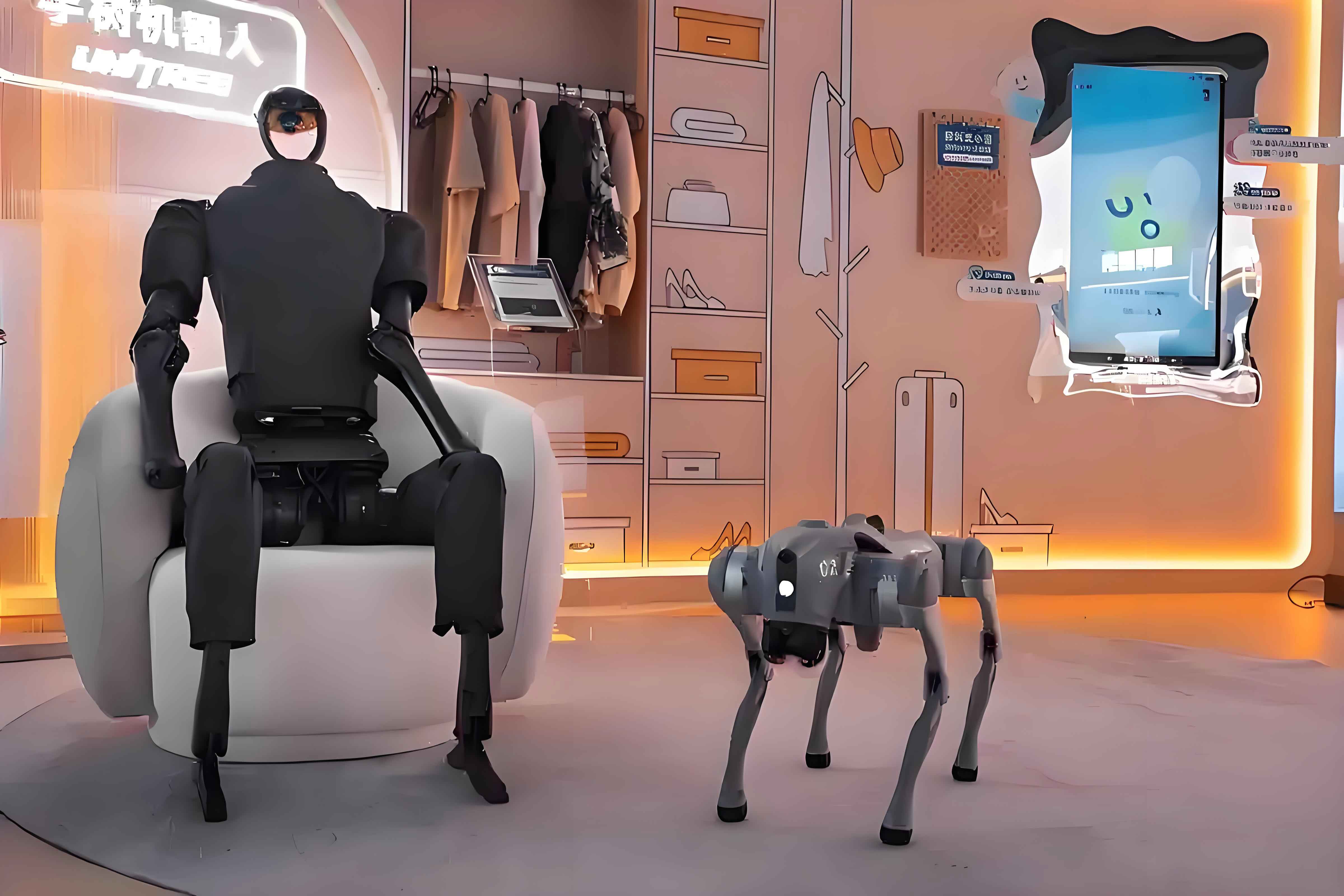
To overcome these challenges and accelerate the development of the AI human robot industry, we propose a multi-faceted approach. First, we must strengthen top-level design by elevating the strategic importance of AI human robots in future industry planning. This involves issuing forward-looking policies, establishing specialized industrial funds, and creating roadmaps for key technologies and products. By increasing the proportion of AI human robot projects in major scientific initiatives, we can foster an environment conducive to innovation and cluster formation. Second, we should proactively布局关键 technologies, such as brain-inspired computing chips, human-like skin, and仿生 muscles. This can be supported by government-led platforms that address common technical issues and promote the localization of core components. The integration of AI human robots with emerging fields like元宇宙 and brain-computer interfaces will be crucial for achieving breakthroughs in intelligence and functionality.
Third, cultivating leading enterprises is essential for driving industry growth. We recommend providing tailored support to local AI human robot companies, helping them scale up and enhance their competitiveness. This includes fostering a梯队 cultivation system that nurtures everything from startups to specialized “little giant” firms and unicorns. By strengthening the产业链, we can ensure a balanced development of hardware and software capabilities. Fourth, building a vibrant industrial ecosystem requires aggregating innovation elements in regions with strong potential. We can leverage the unique advantages of various areas to create hubs for AI human robot development, facilitating cross-border collaborations between enterprises, universities, and research institutions. Hosting high-profile competitions or exhibitions focused on AI human robots will attract global talent and investment, promoting deep integration of production, education, and research.
| Year | Estimated Market Size (Billion USD) | Key Drivers | Potential Challenges |
|---|---|---|---|
| 2024 | 5.0 | Policy incentives and AI advancements | High production costs and limited applications |
| 2025 | 8.5 | Increased R&D investments and pilot deployments | Talent shortages and supply chain issues |
| 2026 | 15.0 | Mass production and ecosystem maturation | Competition and regulatory hurdles |
| 2030 | 50.0 | Technological convergence and global expansion | Ethical considerations and market saturation |
Finally, attracting and nurturing professional talent is critical for sustaining progress in the AI human robot sector. We advocate for including robotics-related roles in紧缺 talent directories, offering incentives for high-level researchers to join enterprises, and establishing joint training programs with academic institutions. By developing a comprehensive talent cultivation system, we can ensure a steady pipeline of skilled professionals capable of advancing AI human robot technologies. The long-term success of this industry hinges on our ability to innovate continuously and adapt to evolving market demands. As we move forward, we remain committed to positioning AI human robots as a cornerstone of future economic development, leveraging their potential to transform industries and improve quality of life.
In summary, the journey toward a thriving AI human robot industry requires concerted efforts across policy, technology, enterprise support, ecosystem building, and talent development. By addressing existing gaps and capitalizing on our strengths, we can accelerate growth and achieve leadership in this promising field. The transformative power of AI human robots is undeniable, and with strategic actions, we can unlock their full potential for societal benefit.