
As an expert in the field of artificial intelligence and robotics, I have observed the rapid integration of AI systems into humanoid robots, leading to significant advancements and challenges. The emergence of AI human robots, which combine human-like forms with adaptive intelligence, has revolutionized industries such as manufacturing, healthcare, and logistics. However, the autonomous nature of these AI human robots introduces complexities in tort liability, primarily due to the inexplicability, unpredictability, and adaptability of AI systems. In this article, I will explore the challenges in attributing liability for autonomous torts involving AI human robots and propose a hierarchical framework for responsibility allocation, emphasizing the roles of providers, large model developers, and users. Throughout, I will incorporate tables and formulas to summarize key concepts, ensuring a comprehensive analysis that balances fair victim compensation with industrial growth. The keyword “AI human robot” will be frequently referenced to maintain focus on this critical intersection of technology and law.
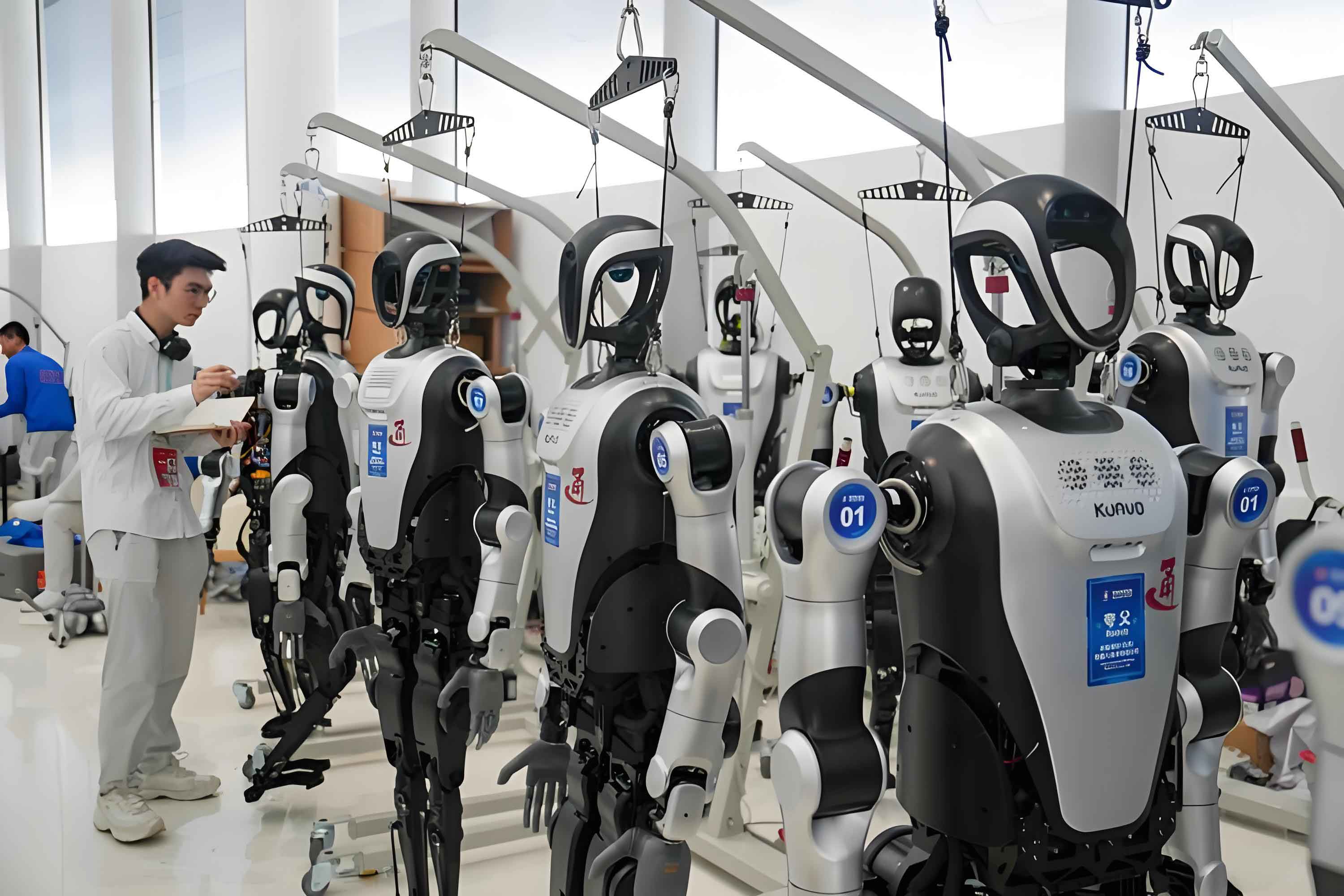
The integration of AI into humanoid robots has enabled a “perception-decision-control” operational model, allowing these AI human robots to perform tasks autonomously. This autonomy, while beneficial, raises concerns about physical harm due to data biases or algorithmic errors. For instance, an AI human robot might fail to recognize obstacles in low-light conditions, leading to collisions. The core issue lies in the “black box” nature of AI algorithms, where decision-making processes are not transparent, making it difficult to assign fault in tort cases. Unlike traditional products, AI human robots exhibit adaptive learning, meaning they evolve based on input data, further complicating liability. In this context, I argue that a nuanced approach is necessary, involving product liability for providers, transparency obligations for large model developers, and reasonable fault standards for users. By implementing layered presumptions for disclosure, fault, and causation, we can address the unique challenges posed by AI human robots without stifling innovation.
To begin, let’s examine the primary challenges in autonomous tort liability for AI human robots. The unpredictability of AI systems stems from their probabilistic decision-making, which humans cannot fully interpret. This is exacerbated in AI human robots, which require complex physical interactions, increasing the risk of harm. Data bias is a major contributor; for example, if an AI human robot is trained primarily on data from controlled environments, it may malfunction in unpredictable scenarios. The formula below represents the probability of harm based on data inadequacy:
$$ P(\text{harm}) = \int_{\text{data bias}} f(\text{error rate}) \, d(\text{environment}) $$
Where \( P(\text{harm}) \) is the probability of harm, and \( f(\text{error rate}) \) depends on the extent of data bias. This illustrates how insufficient training data can lead to higher risks in AI human robots. Additionally, the adaptive nature of these systems means that their behavior changes over time, making it hard to establish a direct causal link between initial design and subsequent harm. The table below summarizes key challenges and their implications for AI human robot liability:
| Challenge | Description | Impact on Liability |
|---|---|---|
| Inexplicability | AI algorithms operate as black boxes, hindering traceability of decisions. | Difficulty in proving defect or fault in product liability cases. |
| Unpredictability | Probabilistic outputs lead to unforeseen actions in AI human robots. | Increased risk of harm, complicating causation analysis. |
| Adaptability | Systems learn and evolve from user inputs and environments. | Shared responsibility among providers and users, blurring fault lines. |
Moving to liability allocation, I propose that providers of AI human robots should bear product liability, as they control the safety-critical components. This aligns with regulatory frameworks like the EU AI Act, which classifies AI systems in physical products as high-risk. Product liability for AI human robots involves proving defect and causation, but the complexity of these systems often necessitates举证责任减轻 (burden of proof mitigation). For instance, if a provider fails to disclose relevant information, a defect can be presumed. The following formula models the presumption of defect based on non-disclosure:
$$ \text{Defect Presumption} = \begin{cases}
1 & \text{if } \text{disclosure} = \emptyset \\
0 & \text{otherwise}
\end{cases} $$
This binary approach simplifies the process for victims of AI human robot incidents. Moreover, in cases of obvious malfunctions, such as a robot collapsing during operation, defect can be directly inferred without detailed technical proof. This hierarchical presumption system ensures that providers of AI human robots maintain high safety standards, such as data quality checks and risk management systems, as outlined in the table below:
| Provider Obligation | Description | Liability Implication |
|---|---|---|
| Safety Controls | Ensure AI human robots operate within predefined safe parameters. | Strict liability for defects causing harm. |
| Information Disclosure | Maintain and share logs of system performance and limitations. | Presumption of defect if withheld, easing victim’s burden. |
| Risk Management | Implement ongoing monitoring and updates for AI human robots. | Reduces liability through proactive measures. |
Next, I address the role of large model providers in the AI human robot ecosystem. These entities develop foundational models that enable robots to understand and execute tasks, but they are often separate from the product providers. For example, a large language model integrated into an AI human robot for task decomposition does not directly control physical safety. Therefore, I argue that large model providers should only bear liability if they fail to fulfill transparency obligations. This involves disclosing model capabilities and limitations, allowing downstream providers to design safe AI human robots. The formula for transparency-based fault is:
$$ \text{Fault} = \neg \text{Transparency} \implies \text{Joint Liability} $$
Where failure to provide adequate information results in shared responsibility with the AI human robot provider. This approach fosters industry growth by avoiding overly strict standards that could hinder innovation. For instance, if a large model provider accurately informs about accuracy limitations, and the AI human robot provider ignores these, liability shifts accordingly. The table below contrasts the responsibilities of AI human robot providers and large model providers:
| Stakeholder | Primary Duty | Liability Type |
|---|---|---|
| AI Human Robot Provider | Product safety and controllability | Strict product liability |
| Large Model Provider | Transparency and disclosure | Fault-based joint liability |
Regarding users of AI human robots, I emphasize that their liability should generally align with traditional fault principles, requiring proof of misuse or negligence. However, for high-risk deployments in public spaces, such as autonomous cleaning robots in crowded areas, a stricter standard may apply. Users must follow instructions and avoid inputting biased data that could cause the AI human robot to harm others. The hierarchical presumption framework includes信息披露 (information disclosure) rules; if a professional user fails to maintain logs, fault can be presumed. The probability of user fault can be modeled as:
$$ P(\text{user fault}) = \frac{\text{number of misuse instances}}{\text{total operations}} $$
This quantitative approach helps in apportioning liability fairly. Moreover, in scenarios involving adaptive AI human robots that learn from user inputs, causation presumptions can resolve uncertainties. For example, if multiple parties contribute data errors, and the specific cause of harm is indeterminable, courts can apply proportional liability based on the likelihood of each party’s contribution. The formula for proportional liability in AI human robot cases is:
$$ L_i = P(\text{causation}_i) \times \text{total damages} $$
Where \( L_i \) is the liability share for party \( i \), and \( P(\text{causation}_i) \) is the probability that their actions caused the harm. This ensures that users are not overburdened while promoting responsible usage of AI human robots.
In conclusion, the autonomous nature of AI human robots demands a refined liability framework that addresses algorithmic complexities without impeding technological progress. By layering presumptions for disclosure, fault, and causation, we can provide fair remedies for victims while encouraging innovation in the AI human robot industry. This balanced approach, involving product liability for providers, transparency for model developers, and reasoned fault standards for users, will help navigate the evolving landscape of AI-driven torts. As AI human robots become more pervasive, continuous evaluation of these rules will be essential to maintain equity and safety.