
In the field of robotics and automation, the six-axis force sensor plays a pivotal role by providing precise measurements of forces and torques in three-dimensional space. As a researcher in this domain, I have observed that these sensors are integral to applications such as robotic manipulation, aerospace testing, and medical devices, where accurate force feedback is crucial. However, a significant challenge in utilizing six-axis force sensors is the inherent coupling between different axes, which can degrade measurement accuracy. This article aims to provide a detailed overview of decoupling techniques, focusing on both static and dynamic methods, while incorporating mathematical models, tables, and practical insights. Throughout this discussion, the term “six-axis force sensor” will be emphasized to underscore its importance in modern engineering systems.
To begin, it is essential to understand the fundamental concepts of coupling and decoupling in the context of six-axis force sensors. Coupling refers to the interference between different measurement channels, where an input in one axis affects the outputs of others. This phenomenon arises due to the mechanical structure and electrical characteristics of the sensor, leading to cross-talk that complicates data interpretation. For instance, in a typical six-axis force sensor, applying a force along the X-axis might induce erroneous readings in the Y or Z axes. Mathematically, this can be represented as a linear system where the output vector \( \mathbf{V} \) (e.g., voltage signals) relates to the input force vector \( \mathbf{F} \) through a coupling matrix \( \mathbf{C} \):
$$ \mathbf{V} = \mathbf{C} \cdot \mathbf{F} + \mathbf{\epsilon} $$
Here, \( \mathbf{\epsilon} \) denotes noise or errors. Decoupling, therefore, involves finding an inverse or approximate inverse of \( \mathbf{C} \) to isolate the true forces and torques. This process is critical for enhancing the performance of six-axis force sensors in high-precision tasks. In practice, decoupling can be achieved through hardware modifications or software algorithms, with the latter being more cost-effective and adaptable. As I delve into the methods, it is important to note that the six-axis force sensor’s design often influences the degree of coupling, but software-based approaches have gained prominence due to their flexibility.
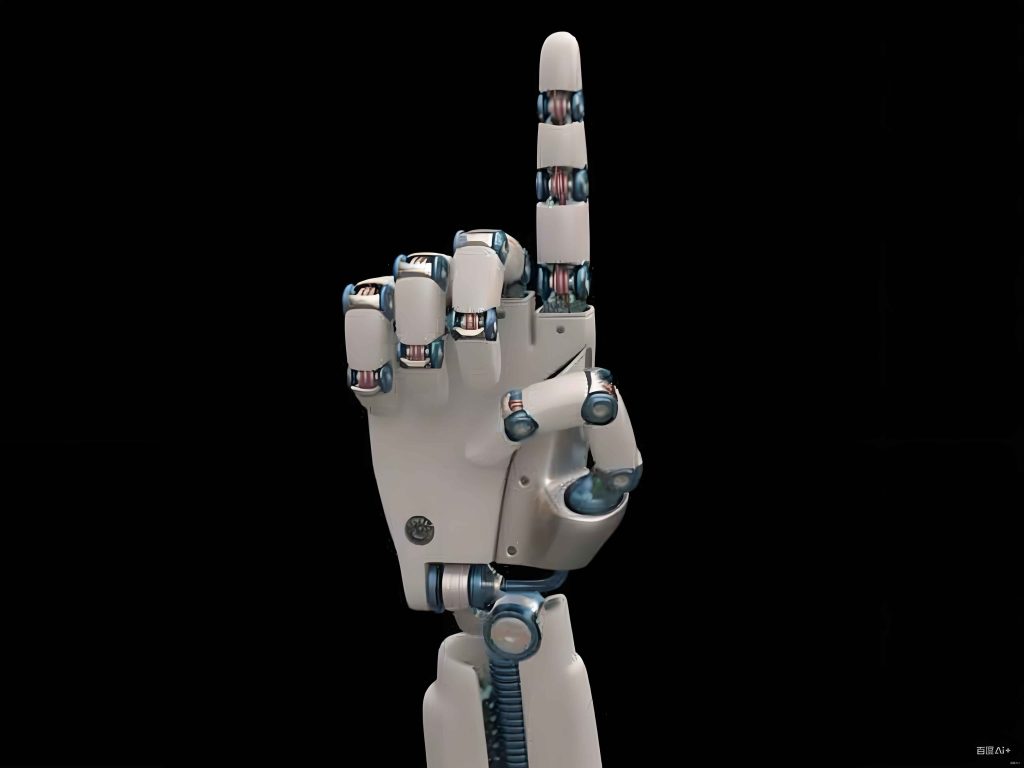
Moving on to static decoupling methods, these are applied when the sensor operates in steady-state conditions, and the relationship between inputs and outputs is time-invariant. One common approach is the least squares method, which assumes a linear model and estimates the decoupling matrix by minimizing the sum of squared errors between measured and predicted outputs. For a six-axis force sensor, this involves collecting calibration data under known force conditions and solving for the matrix \( \mathbf{D} \) such that:
$$ \mathbf{F} = \mathbf{D} \cdot \mathbf{V} $$
where \( \mathbf{D} \) is the decoupling matrix. The least squares solution can be derived as \( \mathbf{D} = (\mathbf{V}^T \mathbf{V})^{-1} \mathbf{V}^T \mathbf{F} \), which works well for linear systems but may suffer from overfitting or numerical instability with large datasets. Another technique is the use of lookup tables or statistical models, such as neural networks or support vector machines (SVMs), which treat the six-axis force sensor as a black box. These methods map input signals to output forces through non-linear functions, offering higher accuracy but requiring extensive training data. For example, a neural network with multiple layers can learn complex couplings in a six-axis force sensor, as shown in the following equation for a single neuron:
$$ y = f\left( \sum_{i=1}^{n} w_i x_i + b \right) $$
where \( f \) is an activation function, \( w_i \) are weights, \( x_i \) are inputs, and \( b \) is a bias. Fuzzy logic is another static decoupling method that uses linguistic rules to handle uncertainties in six-axis force sensor measurements. The process involves fuzzification of inputs, application of fuzzy rules, and defuzzification to obtain crisp outputs. While these methods are effective for static conditions, they may not account for dynamic variations in the six-axis force sensor’s behavior.
To provide a clearer comparison of static decoupling methods for six-axis force sensors, Table 1 summarizes their key characteristics, advantages, and limitations.
| Method | Principle | Advantages | Limitations |
|---|---|---|---|
| Least Squares | Linear regression to minimize errors | Simple implementation, fast computation | Sensitive to noise and non-linearity |
| Neural Networks | Non-linear mapping via trained layers | High accuracy, handles complex couplings | Requires large datasets, prone to overfitting |
| Support Vector Machines | Statistical learning for regression | Robust to outliers, good generalization | Computationally intensive for large data |
| Fuzzy Logic | Rule-based inference system | Handles uncertainties, intuitive design | Rule definition can be subjective |
In contrast, dynamic decoupling addresses time-varying behaviors in six-axis force sensors, which are crucial for applications involving rapid force changes or vibrations. One prominent method is the invariance-based decoupling, which uses transfer functions to model the sensor’s dynamics. For a six-axis force sensor, the system can be represented in the Laplace domain as:
$$ \mathbf{V}(s) = \mathbf{G}(s) \cdot \mathbf{F}(s) $$
where \( \mathbf{G}(s) \) is a matrix of transfer functions. Decoupling involves designing a compensator \( \mathbf{H}(s) \) such that \( \mathbf{H}(s) \mathbf{G}(s) \) is diagonal, eliminating cross-coupling. However, this requires accurate model identification and can be challenging due to sensor non-linearities. Iterative decoupling is another dynamic approach that refines the decoupled outputs through repeated corrections. For instance, starting with an initial estimate \( \mathbf{F}_0 \), the method updates the output using:
$$ \mathbf{F}_{k+1} = \mathbf{F}_k + \alpha \cdot (\mathbf{V} – \mathbf{G} \mathbf{F}_k) $$
where \( \alpha \) is a step size, and \( k \) denotes the iteration number. This technique improves accuracy over time but may converge slowly for highly coupled six-axis force sensors. Diagonal dominance compensation is a simplified dynamic decoupling method that aims to make the system matrix diagonally dominant by adding compensators, reducing coupling effects without full decoupling. While this approach is computationally efficient, it only provides approximate results and may not be sufficient for high-precision applications.
To illustrate the mathematical foundations of dynamic decoupling for six-axis force sensors, consider a state-space representation of the sensor system:
$$ \dot{\mathbf{x}} = \mathbf{A} \mathbf{x} + \mathbf{B} \mathbf{F} $$
$$ \mathbf{V} = \mathbf{C} \mathbf{x} + \mathbf{D} \mathbf{F} $$
Here, \( \mathbf{x} \) is the state vector, and \( \mathbf{A} \), \( \mathbf{B} \), \( \mathbf{C} \), and \( \mathbf{D} \) are matrices describing the dynamics. Decoupling can be achieved by designing a state feedback controller that diagonalizes the system, but this requires precise knowledge of the parameters, which is often difficult to obtain for a six-axis force sensor. In practice, system identification techniques, such as step response analysis or frequency domain methods, are used to estimate these matrices. For example, the transfer function for each channel of a six-axis force sensor can be expressed as:
$$ G_{ij}(s) = \frac{V_i(s)}{F_j(s)} $$
where \( i \) and \( j \) denote the output and input axes, respectively. Dynamic decoupling aims to ensure that \( G_{ij}(s) \approx 0 \) for \( i \neq j \), minimizing cross-talk. However, real-world factors like sensor drift and environmental noise complicate this process, necessitating adaptive algorithms that can update the decoupling parameters in real-time.
Table 2 provides an overview of dynamic decoupling methods for six-axis force sensors, highlighting their applicability and challenges.
| Method | Principle | Advantages | Limitations |
|---|---|---|---|
| Invariance-Based | Transfer function diagonalization | Theoretically exact decoupling | Requires accurate model, complex implementation |
| Iterative Decoupling | Successive approximation of outputs | Improves accuracy over iterations | Slow convergence, sensitive to initial conditions |
| Diagonal Dominance | Compensator design for reduced coupling | Simple and computationally efficient | Approximate decoupling, may not eliminate all coupling |
| State-Space Methods | Control theory applied to sensor dynamics | Handles multi-variable systems effectively | High complexity, requires state estimation |
In summarizing the decoupling techniques for six-axis force sensors, it is evident that both static and dynamic methods have their merits and drawbacks. Static decoupling, such as least squares or neural networks, is suitable for applications where the sensor operates in stable conditions, but it may fail under dynamic loads. On the other hand, dynamic decoupling addresses time-dependent behaviors but often requires sophisticated models and real-time processing. From my perspective, the future of six-axis force sensor decoupling lies in hybrid approaches that combine static and dynamic elements. For instance, adaptive neural networks can be trained to update their weights based on real-time data, effectively handling both steady-state and transient couplings. Additionally, advancements in machine learning, such as deep reinforcement learning, could enable six-axis force sensors to self-calibrate and decouple autonomously in changing environments.
Moreover, the integration of decoupling algorithms with embedded systems is becoming increasingly important for six-axis force sensors used in portable or battery-operated devices. Efficient computation methods, such as recursive least squares or Kalman filters, can reduce the computational burden while maintaining accuracy. For example, a Kalman filter applied to a six-axis force sensor can estimate the true forces by modeling the system dynamics and noise statistics:
$$ \mathbf{F}_{k|k} = \mathbf{F}_{k|k-1} + \mathbf{K}_k (\mathbf{V}_k – \mathbf{H} \mathbf{F}_{k|k-1}) $$
where \( \mathbf{K}_k \) is the Kalman gain, and \( \mathbf{H} \) is the observation matrix. This approach not only decouples the signals but also filters out noise, enhancing the overall performance of the six-axis force sensor. Furthermore, the development of novel sensor designs, such as those based on Stewart platforms or optical principles, may inherently reduce coupling, but software decoupling will remain essential for achieving high precision.
In conclusion, the decoupling of six-axis force sensors is a critical aspect of their deployment in advanced engineering systems. Through this review, I have emphasized the importance of selecting appropriate methods based on the application requirements. As technology evolves, the six-axis force sensor will continue to benefit from interdisciplinary research, combining insights from control theory, signal processing, and artificial intelligence. Ultimately, the goal is to achieve robust and accurate force measurements that enable innovations in robotics, automation, and beyond, solidifying the role of the six-axis force sensor as a cornerstone of modern sensing technology.