
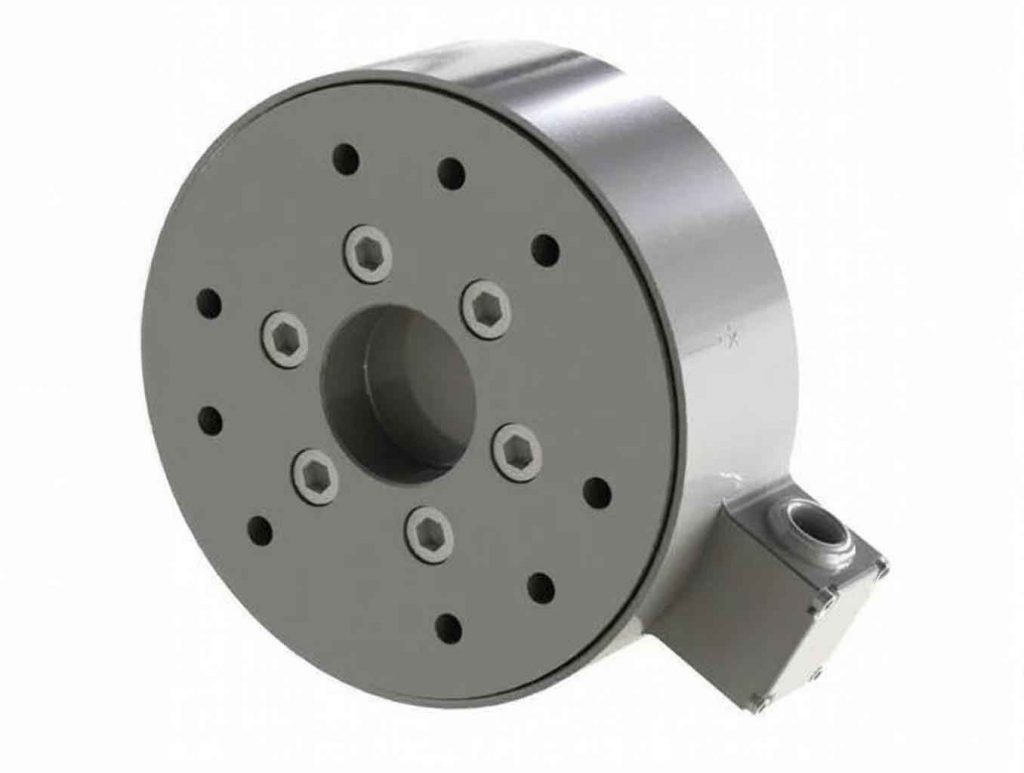
In modern industrial applications, the six-axis force sensor plays a critical role in measuring multidimensional force and torque information in real-time. These sensors rely on strain gauges and elastic structures, such as rectangular plates, to detect forces along three translational and three rotational axes. However, the output signals from six-axis force sensors are often contaminated by various noise sources, including thermal noise from resistive strain gauges, creep noise from elastic bodies, and system flicker or shot noise. This contamination degrades signal quality, making accurate data analysis challenging. Classical Kalman filters are widely used for noise suppression due to their real-time performance and optimal estimation capabilities under ideal conditions. Yet, their effectiveness diminishes when process noise models are inaccurate, leading to performance degradation or even filter divergence. To address this issue, I propose a double-fading Kalman filter that compensates for model errors by incorporating dual fading factors. This approach enhances the robustness of state estimation for six-axis force sensor systems, particularly in handling accumulated errors and current noise model inaccuracies.
The six-axis force sensor typically consists of components like rectangular plates and E-shaped membranes, which facilitate the detection of forces and moments. For instance, the rectangular plate is primarily responsible for measuring torque around the Z-axis. When subjected to dynamic loads, such as sinusoidal excitations, the system’s response can be modeled using state-space equations. However, additive noise—comprising Gaussian white noise and colored interference like creep and flicker noise—complicates this modeling. In this work, I analyze the statistical properties of additive noise and derive an augmented state-space model for the principal mode shapes of the rectangular plate. This model forms the foundation for implementing the double-fading Kalman filter, which dynamically adjusts the measurement innovation weight to mitigate the impact of process noise model errors.
The core of the double-fading Kalman filter lies in its ability to handle two types of process noise model errors: accumulated state estimation errors from previous epochs and current epoch noise model deviations. By introducing scalar factors λ(k) and γ(k), the filter modifies the predicted covariance matrix, thereby inflating the measurement innovation’s contribution. The derivation of these factors is based on the orthogonality principle of innovation sequences and optimization criteria like Sage window estimation and least squares. For example, λ(k) is computed using the trace of innovation covariance matrices, while γ(k) is derived from weighted least squares estimates. This method ensures that the six-axis force sensor system maintains high estimation accuracy even under model uncertainties.
To validate the proposed filter, I conduct simulations using a third-order principal mode state model of the rectangular plate in a six-axis force sensor. Key parameters, such as material properties and structural dimensions, are summarized in the following tables:
| Material | Elastic Modulus | Poisson’s Ratio | Density |
|---|---|---|---|
| LY12 | 72 GPa | 0.33 | 2780 kg/m³ |
| Length (mm) | Width (mm) | Height (mm) |
|---|---|---|
| 20 | 8 | 1.5 |
The state-space model incorporates parameters like natural frequencies and strain coefficients, which are essential for capturing the dynamics of the six-axis force sensor. The process noise covariance Q̃(k) and measurement noise covariance R(k) are determined through experimental calibration, as shown in the system equations below. The state vector X(k+1) represents strain values at different modes, while control inputs U(k) model sinusoidal excitations. The discrete-time state equation is given by:
$$X(k+1) = \Phi(k+1,k) X(k) + \Gamma(k+1,k) U(k) + \Psi(k+1,k) W(k) + \Omega(k+1,k) \Lambda(k)$$
where Φ(k+1,k) is the state transition matrix, Γ(k+1,k) is the control input matrix, and Ψ(k+1,k) and Ω(k+1,k) are noise coefficient matrices. The additive noise terms W(k) and Λ(k) account for Gaussian and non-Gaussian components, respectively. The measurement equation is:
$$Z(k+1) = H(k+1) X(k+1) + V(k+1)$$
Here, H(k+1) relates the state to the output, and V(k+1) is measurement noise. For the six-axis force sensor, H(k+1) depends on factors like bridge voltage and strain gauge sensitivity.
The double-fading Kalman filter algorithm proceeds through prediction and update steps. In the prediction step, the state and covariance are projected forward:
$$X(k,k-1) = \Phi(k,k-1) \hat{X}(k-1) + \Gamma(k,k-1) U(k-1)$$
$$P^{-}(k,k-1) = \lambda(k) P^{\sim}(k,k-1)$$
$$P^{\sim}(k,k-1) = \gamma(k) \Phi(k,k-1) P^{-}(k-1) \Phi^T(k,k-1) + \tilde{Q}(k)$$
where λ(k) and γ(k) are the fading factors. The update step involves computing the innovation, Kalman gain, and state estimate:
$$Y(k) = Z(k) – H(k) X(k,k-1)$$
$$K^{-}(k) = P^{-}(k,k-1) H^T(k) [H(k) P^{-}(k,k-1) H^T(k) + R(k)]^{-1}$$
$$\hat{X}(k) = X(k,k-1) + K^{-}(k) Y(k)$$
$$P^{-}(k) = P^{-}(k,k-1) – K^{-}(k) H(k) P^{-}(k,k-1)$$
The fading factors are derived to satisfy the innovation orthogonality condition. Specifically, λ(k) is calculated as:
$$\lambda(k) = \begin{cases}
1 & \text{if } \tilde{C}(k) < C_{\text{base}}(k) \\
\frac{\text{tr}[\tilde{C}(k)] – \text{tr}[R(k)]}{\text{tr}[C_{\text{base}}(k)] – \text{tr}[R(k)]} & \text{if } \tilde{C}(k) > C_{\text{base}}(k)
\end{cases}$$
where \(\tilde{C}(k)\) is the estimated innovation covariance and \(C_{\text{base}}(k)\) is the baseline covariance. Similarly, γ(k) is given by:
$$\gamma(k) = \begin{cases}
1 & \text{if } \tilde{C}(k) < k_0 C_{\text{base}}(k) \\
\frac{\text{tr}[P_{\text{LSW}}(k)] – \text{tr}[\tilde{Q}(k)]}{\text{tr}[P_{\text{base}}(k,k-1)] – \text{tr}[\tilde{Q}(k)]} & \text{if } \tilde{C}(k) > k_0 C_{\text{base}}(k)
\end{cases}$$
Here, \(P_{\text{LSW}}(k)\) is the posterior covariance from weighted least squares, and \(k_0\) is a threshold parameter. This adaptive mechanism allows the six-axis force sensor to dynamically compensate for model errors.
In the simulation, I apply a sinusoidal force P(t) = 10sin(20t) as a dynamic load on the six-axis force sensor’s rectangular plate. Using 200 sampling points, I compare the double-fading Kalman filter (AKF) with standard Kalman filter (SKF) and robust Kalman filter (RKF). The results demonstrate that AKF consistently outperforms others, especially in later stages where model errors accumulate. For instance, the root mean square error (RMSE) of AKF is significantly lower, as shown in the following tables:
| Filter Algorithm | RMSE | Precision Improvement |
|---|---|---|
| SKF | 0.0014877 | / |
| RKF | 0.0009381 | 36.94% |
| AKF | 0.0009381 | 36.94% |
| Filter Algorithm | RMSE | Precision Improvement |
|---|---|---|
| SKF | 0.0020705 | / |
| RKF | 0.0009422 | 54.49% |
| AKF | 0.0009422 | 54.49% |
| Filter Algorithm | RMSE | Precision Improvement |
|---|---|---|
| SKF | 0.003257 | / |
| RKF | 0.0009462 | / |
| AKF | 0.0008984 | 5.05% |
| Filter Algorithm | RMSE | Precision Improvement |
|---|---|---|
| RKF | 0.0009508 | / |
| AKF | 0.0005832 | 38.66% |
The tables illustrate that AKF maintains stability and accuracy throughout the filtering process. In the early stages, AKF and RKF show similar performance, as only λ(k) is active. However, as errors accumulate, AKF activates γ(k), leading to superior precision. This highlights the effectiveness of the double-fading approach for six-axis force sensor applications.
Further analysis involves the system’s natural frequencies and mode shapes, which are critical for the state model. The following table summarizes these parameters for the rectangular plate in the six-axis force sensor:
| Natural Frequency (Hz) | Simplified Mode Shape Function |
|---|---|
| 19542 | W1 = 0.9996 sin(157x)² |
| 33856 | W2 = 0.9998 sin(157x) sin(314x) |
| 51403 | W3 = 0.9910 sin(157x)²(1-250y) + 0.1339 sin(157x) sin(471x)(1-250y) |
The strain gauge positions and their coefficients are also essential for modeling the six-axis force sensor. For example, the control input matrix Γ(k+1,k) is a diagonal matrix with values derived from these coefficients, ensuring accurate representation of the system dynamics.
In conclusion, the double-fading Kalman filter offers a robust solution for handling process noise model errors in six-axis force sensor systems. By dynamically adjusting fading factors based on innovation sequences, it mitigates the effects of accumulated and current model inaccuracies. Simulation results confirm that this method enhances filtering precision and stability compared to traditional approaches. Future work could explore real-time implementation on embedded systems for industrial six-axis force sensor applications, further improving reliability in noisy environments.
The mathematical foundation of the double-fading Kalman filter relies on linear algebra and stochastic processes. Key equations, such as the state prediction and update, are derived from minimum mean square error estimation. For instance, the Kalman gain minimizes the posterior covariance, ensuring optimal performance. The fading factors λ(k) and γ(k) are computed recursively, making the algorithm suitable for real-time processing in six-axis force sensor systems.
Moreover, the six-axis force sensor’s ability to measure multidimensional forces makes it invaluable in robotics, aerospace, and automotive industries. However, noise interference remains a significant challenge. The proposed filter addresses this by incorporating adaptive mechanisms that do not require precise noise statistics. This flexibility is crucial for practical applications where noise characteristics may change over time.
In summary, the double-fading Kalman filter represents an advancement in signal processing for six-axis force sensors. Its design leverages fundamental principles of estimation theory while introducing innovations in error compensation. As six-axis force sensors continue to evolve, such filtering techniques will play a vital role in ensuring accurate and reliable measurements.