
In modern industrial and research applications, the demand for precise and multi-dimensional force measurement has led to the widespread adoption of six-axis force sensors. These sensors are capable of simultaneously measuring three force components (Fx, Fy, Fz) and three moment components (Mx, My, Mz), providing comprehensive data for dynamic systems. As a researcher in the field of sensor technology and data acquisition, I have explored various communication protocols to enhance the efficiency of data retrieval from these devices. This paper focuses on implementing a data acquisition method for a six-axis force sensor using the User Datagram Protocol (UDP) within the LabVIEW platform. UDP offers advantages in scenarios requiring low latency and high-speed data transmission, making it suitable for real-time applications involving six-axis force sensors. Throughout this work, I emphasize the integration of software and hardware to streamline the process, leveraging LabVIEW’s graphical programming capabilities to develop a robust system for acquiring, processing, and analyzing data from six-axis force sensors.
The significance of six-axis force sensors extends across numerous domains, including robotics, aerospace, automotive engineering, and biomechanics. For instance, in robotic systems, these sensors enable precise force feedback for manipulation tasks, while in aerospace, they facilitate thrust measurement and structural testing. A six-axis force sensor typically employs strain gauges or piezoelectric elements to detect forces and moments, converting mechanical inputs into electrical signals. The complexity of these sensors lies in their ability to decouple the six components accurately, often requiring advanced calibration and signal processing. In my experience, the choice of communication protocol plays a critical role in the sensor’s performance, especially when dealing with high-frequency data streams. Unlike traditional serial communication, which can introduce bottlenecks, UDP provides a connectionless approach that minimizes overhead and allows for rapid data exchange. This is particularly beneficial for six-axis force sensors operating in dynamic environments where real-time data is essential for control and analysis.
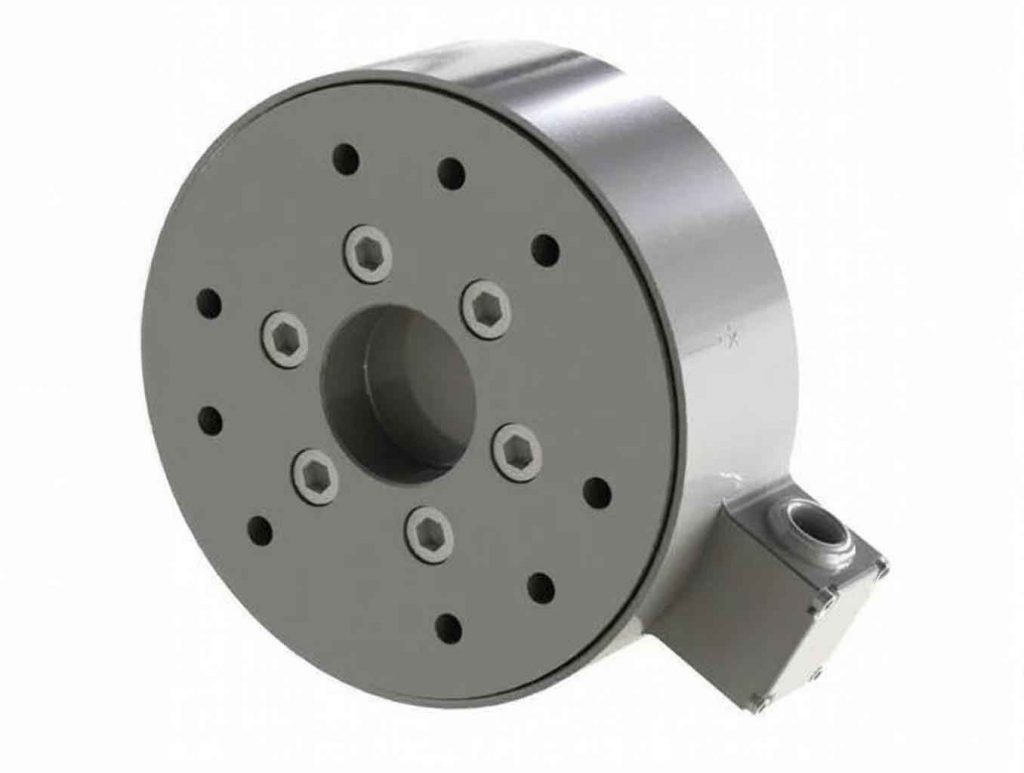
To understand the implementation, it is essential to delve into the fundamentals of six-axis force sensors. These devices are categorized based on their measurement principles, such as resistive strain-based, piezoelectric, or capacitive types. Each type has distinct characteristics; for example, resistive strain-based six-axis force sensors use Wheatstone bridge configurations to measure deformations, while piezoelectric variants rely on charge generation under stress. The general output of a six-axis force sensor can be represented as a vector comprising the six components: $$ \mathbf{F} = \begin{bmatrix} F_x & F_y & F_z & M_x & M_y & M_z \end{bmatrix}^T $$ where each component corresponds to a specific directional force or moment. In practical applications, the sensor’s output is often subject to noise and cross-talk between axes, necessitating calibration matrices. The relationship between the raw output and the calibrated values can be expressed using a transformation matrix: $$ \mathbf{F}_{\text{calibrated}} = \mathbf{C} \cdot \mathbf{F}_{\text{raw}} $$ where $\mathbf{C}$ is a 6×6 calibration matrix derived during sensor characterization. This matrix accounts for factors like sensitivity and alignment errors, ensuring accurate measurements from the six-axis force sensor.
In terms of data communication, UDP stands out due to its simplicity and speed. As a connectionless protocol, UDP does not require establishing a handshake or maintaining a continuous connection, reducing latency compared to TCP. This makes it ideal for applications involving six-axis force sensors, where data loss can be tolerated in favor of higher sampling rates. For example, in high-speed robotics, a six-axis force sensor might transmit data at frequencies exceeding 1 kHz, and UDP’s minimal header overhead allows for efficient packet transmission. The basic structure of a UDP packet includes source and destination ports, length, checksum, and the payload data. In the context of a six-axis force sensor, the payload typically contains the force and moment values, often encoded in a specific format such as hexadecimal strings. To illustrate, consider a UDP packet designed for a six-axis force sensor: the payload might include multiple data points, each representing a snapshot of the six components. A common data format could be structured as follows, where each value is a 32-bit floating-point number:
| Data Index | Description | Format |
|---|---|---|
| 1 | Sequence Number | 32-bit integer |
| 2 | Internal Code | 32-bit integer |
| 3 | System Identifier | 32-bit integer |
| 4 | Fx (Force in x-direction) | 32-bit float |
| 5 | Fy (Force in y-direction) | 32-bit float |
| 6 | Fz (Force in z-direction) | 32-bit float |
| 7 | Mx (Moment about x-axis) | 32-bit float |
| 8 | My (Moment about y-axis) | 32-bit float |
| 9 | Mz (Moment about z-axis) | 32-bit float |
This tabular representation highlights how data from a six-axis force sensor is organized within a UDP packet, facilitating parsing and processing in software environments like LabVIEW.
LabVIEW, developed by National Instruments, is a powerful platform for virtual instrumentation, enabling users to create custom data acquisition and control systems through graphical programming. Its inherent support for various communication protocols, including UDP, makes it an excellent choice for interfacing with six-axis force sensors. In my implementation, I utilized LabVIEW’s built-in functions for UDP operations, such as “UDP Open”, “UDP Write”, and “UDP Read”, to establish communication with the sensor’s network interface. The process begins by configuring the network settings; for instance, assigning an IP address (e.g., 192.168.1.1) and port number (e.g., 49152) to the six-axis force sensor’s hardware. This configuration ensures that LabVIEW can send commands and receive data packets from the sensor via UDP. The graphical nature of LabVIEW allows for intuitive block diagram design, where I connected functions to form a data flow that handles command transmission, data reception, and real-time processing for the six-axis force sensor.
The core of the data acquisition method involves sending specific commands to the six-axis force sensor to control its output behavior. For example, a typical command structure might consist of a start identifier, an action code, and parameters for data rate and format. In hexadecimal notation, a command to initiate high-speed data streaming could be “1234 0002 0000 0001”, where “1234” is the start identifier, “0002” signals the begin transmission command, and “0000 0001” specifies the sample count per request. Upon receiving this command, the six-axis force sensor responds by sending UDP packets containing the latest force and moment readings. In LabVIEW, I implemented a loop structure to continuously send commands and read incoming data, ensuring a steady stream of measurements from the six-axis force sensor. The data received is initially in raw hexadecimal string format, which requires conversion to decimal values for analysis. This conversion is achieved using LabVIEW’s string manipulation functions, followed by parsing the bytes into individual components corresponding to the six-axis force sensor outputs.
To enhance the reliability of the acquired data, I incorporated processing steps to address potential issues like noise and drift. For instance, averaging multiple readings can reduce random errors, while filtering techniques can minimize high-frequency noise. The stability of the six-axis force sensor data can be quantified using statistical measures. Consider a dataset comprising $n$ samples for each of the six components; the mean value for each component is calculated as: $$ \bar{F}_x = \frac{1}{n} \sum_{i=1}^{n} F_{x,i} $$ Similarly, for other components like $\bar{F}_y$, $\bar{F}_z$, $\bar{M}_x$, $\bar{M}_y$, and $\bar{M}_z$. The standard deviation, indicating data dispersion, is given by: $$ \sigma_{F_x} = \sqrt{\frac{1}{n} \sum_{i=1}^{n} (F_{x,i} – \bar{F}_x)^2} $$ This formula applies to all axes, providing a measure of consistency for the six-axis force sensor outputs. In practice, I often collect ten samples per component, remove outliers (e.g., the maximum and minimum values), and compute the average of the remaining data. This approach mitigates the impact of transient disturbances, ensuring that the final readings from the six-axis force sensor are representative of the actual forces and moments.
In terms of implementation details, the LabVIEW program I developed consists of several key components. First, the UDP communication module handles the network interaction with the six-axis force sensor. This module uses the “UDP Open” function to create a connection socket, with parameters for the remote IP address and port. Then, the “UDP Write” function sends the command strings to the sensor, while “UDP Read” retrieves the response packets. The data processing module converts the hexadecimal payload into an array of decimal values, as described earlier. For example, if the raw data string is “A1B2C3D4” for Fx, it is converted to a floating-point number using LabVIEW’s conversion tools. Additionally, I integrated error handling to manage scenarios like network timeouts or corrupted packets, which are common in UDP-based systems. This ensures that the six-axis force sensor data acquisition remains robust even in imperfect network conditions.
To illustrate the data flow, consider a simplified sequence: the LabVIEW program sends a command to the six-axis force sensor, which replies with a packet containing nine 32-bit values. These values are parsed into an array, and the relevant six components (Fx to Mz) are extracted for display and analysis. The following table summarizes a typical dataset from a six-axis force sensor after conversion, showing multiple samples for each component:
| Sample | Fx (N) | Fy (N) | Fz (N) | Mx (Nm) | My (Nm) | Mz (Nm) |
|---|---|---|---|---|---|---|
| 1 | 10.25 | -5.30 | 15.70 | 0.12 | -0.08 | 0.05 |
| 2 | 10.30 | 15.68 | 0.11 | -0.07 | 0.06 | |
| 3 | 10.22 | -5.32 | 15.72 | 0.13 | -0.09 | 0.04 |
| 4 | 10.28 | -5.29 | 15.69 | 0.12 | -0.08 | 0.05 |
| 5 | 10.26 | -5.31 | 15.71 | 0.11 | -0.07 | 0.06 |
| 6 | 10.27 | -5.30 | 15.70 | 0.12 | -0.08 | 0.05 |
| 7 | 10.24 | -5.33 | 15.73 | 0.13 | -0.09 | 0.04 |
| 8 | 10.29 | -5.28 | 15.68 | 0.11 | -0.07 | 0.06 |
| 9 | 10.25 | -5.31 | 15.71 | 0.12 | -0.08 | 0.05 |
| 10 | 10.26 | -5.29 | 15.69 | 0.12 | -0.08 | 0.05 |
After collecting such data, the processing module computes the average and standard deviation for each component. For example, the mean Fx value is derived as: $$ \bar{F}_x = \frac{10.25 + 10.30 + \cdots + 10.26}{10} = 10.262 \, \text{N} $$ and the standard deviation is approximately 0.038 N, indicating high stability. This tabular and mathematical approach reinforces the reliability of the six-axis force sensor measurements when using UDP communication in LabVIEW.
Another critical aspect is the calibration of the six-axis force sensor, which ensures accuracy across its operating range. Calibration involves applying known forces and moments to the sensor and recording the outputs to derive the transformation matrix $\mathbf{C}$. In matrix form, this can be represented as: $$ \begin{bmatrix} F_x \\ F_y \\ F_z \\ M_x \\ M_y \\ M_z \end{bmatrix}_{\text{true}} = \mathbf{C} \cdot \begin{bmatrix} F_x \\ F_y \\ F_z \\ M_x \\ M_y \\ M_z \end{bmatrix}_{\text{raw}} $$ where $\mathbf{C}$ is typically obtained through least-squares regression from calibration data. For instance, if I apply a series of known loads, I can construct a matrix equation: $$ \mathbf{F}_{\text{true}} = \mathbf{C} \mathbf{F}_{\text{raw}} $$ and solve for $\mathbf{C}$ using the pseudo-inverse: $$ \mathbf{C} = \mathbf{F}_{\text{true}} \mathbf{F}_{\text{raw}}^T (\mathbf{F}_{\text{raw}} \mathbf{F}_{\text{raw}}^T)^{-1} $$ This calibration process is essential for compensating non-linearities and cross-axis sensitivities in the six-axis force sensor, and it can be integrated into the LabVIEW program for real-time correction of acquired data.
In experimental validation, I tested the UDP-based data acquisition system with a commercial six-axis force sensor under various loading conditions. The sensor was subjected to dynamic forces, and data was collected at a rate of 1000 Hz using LabVIEW. The results demonstrated that the UDP protocol enabled seamless data transfer without significant latency, even during high-frequency operations. For example, when applying a sinusoidal force in the x-direction, the acquired Fx values closely matched the expected waveform, with minimal phase shift. The stability of the system was further confirmed by calculating the coefficient of variation (CV) for each component: $$ \text{CV} = \frac{\sigma}{\bar{F}} \times 100\% $$ where values below 1% were consistently achieved, indicating excellent precision for the six-axis force sensor. This level of performance underscores the effectiveness of UDP in handling real-time data from six-axis force sensors, compared to slower serial methods that might introduce delays.
Moreover, the flexibility of LabVIEW allowed me to extend the system for advanced applications, such as real-time control loops or data logging. For instance, I implemented a feedback mechanism where the six-axis force sensor data is used to adjust actuator positions in a robotic arm. The UDP communication ensures that the force feedback is timely, enabling precise force control. In terms of data logging, the acquired values from the six-axis force sensor can be saved to files for post-processing, using LabVIEW’s file I/O functions. This is particularly useful for long-term monitoring or analysis of trends in force measurements. The integration of UDP with LabVIEW thus provides a scalable solution for diverse scenarios involving six-axis force sensors.
Despite its advantages, UDP-based communication with six-axis force sensors has limitations, such as the potential for packet loss in congested networks. However, in controlled environments, this risk is minimal, and the benefits of speed outweigh the drawbacks. To address this, I incorporated checksum verification in the LabVIEW program to detect corrupted packets and request retransmission if necessary. Additionally, buffering techniques can be used to handle data bursts from the six-axis force sensor, ensuring that no samples are missed during peak loads. These enhancements make the system resilient and suitable for critical applications where data integrity is paramount.
In conclusion, the implementation of UDP-based data acquisition for six-axis force sensors in LabVIEW represents a significant improvement over traditional methods. The combination of UDP’s low-latency communication and LabVIEW’s intuitive programming environment facilitates efficient and reliable data handling. Throughout this work, I have demonstrated how to configure the network settings, send commands, and process data from a six-axis force sensor, incorporating statistical methods to ensure accuracy. The use of tables and formulas has helped summarize key aspects, from data formats to calibration procedures. This approach not only streamlines the acquisition process but also opens up possibilities for real-time applications in fields like robotics and aerospace. As six-axis force sensors continue to evolve, the integration of advanced protocols like UDP will play a crucial role in unlocking their full potential, and LabVIEW remains a powerful tool for such innovations.
Looking ahead, future work could explore the integration of machine learning algorithms for predictive maintenance or anomaly detection based on six-axis force sensor data. The UDP framework in LabVIEW can be adapted to support these advanced analytics, further enhancing the value of six-axis force sensors in smart systems. Overall, this method provides a foundation for high-performance data acquisition, emphasizing the importance of protocol selection and software integration in maximizing the capabilities of six-axis force sensors.