
In recent years, the integration of artificial intelligence with robotics has catalyzed the emergence of a new generation of intelligent systems, among which embodied robots stand out due to their core emphasis on physical interaction with the environment. As a researcher deeply immersed in this field, I have observed how “AI+” technologies are transforming embodied robots from simple automated machines into sophisticated agents capable of perception, cognition, decision-making, and execution in dynamic, unstructured environments. This paper aims to provide a systematic overview of the concept, development, key technologies, applications, challenges, and future trends of embodied robots empowered by “AI+”. By synthesizing recent advancements, I hope to offer insights that foster further innovation and practical deployment of these intelligent systems.
The concept of embodied intelligence has evolved significantly over the decades. Initially rooted in critiques of traditional AI paradigms like symbolism and connectionism, embodied intelligence emphasizes that smart behaviors arise from the interaction between an agent’s body, its environment, and its cognitive processes. For instance, early theories argued that intelligence requires embodiment and situational context, leading to the development of bio-inspired robots. Today, embodied robots are defined as physical entities that can perceive, decide, and act in real-world settings, leveraging multi-modal sensing and learning algorithms to adapt autonomously. Unlike traditional robots, which rely on pre-programmed tasks, embodied robots exhibit continuous learning through environmental feedback, making them highly suitable for complex scenarios in manufacturing, healthcare, and domestic services.
The development of embodied robots has progressed through several stages: theoretical foundation, engineering breakthroughs, product experimentation, and system integration. Notable milestones include the introduction of quadruped and humanoid robots by companies like Boston Dynamics, followed by advancements in social robots and autonomous navigation systems. Currently, while many embodied robot applications remain in laboratory testing, significant strides have been made in specific domains, though widespread commercialization is still on the horizon. The core of this evolution lies in the “AI+” framework, which enables a closed-loop system encompassing perception, cognition, control, and data generation. This paper delves into the key technologies underpinning this framework, illustrates their applications, and addresses existing bottlenecks to chart a path forward for embodied robots.
Overview of Embodied Robots
Embodied robots represent a paradigm shift in robotics, where physical presence and environmental interaction are central to intelligence. The term “embodied” refers to the necessity of a physical body that can sense and manipulate the real world, as opposed to virtual agents that operate in simulated environments. This embodiment allows for rich, multi-modal interactions, such as grasping objects, navigating spaces, and collaborating with humans, which are essential for tasks in unstructured settings. The intelligence of these embodied robots stems from their ability to integrate sensory inputs, process them using advanced AI models, and execute actions that are continuously refined through feedback loops.
Historically, the journey of embodied robots began with basic behavior control systems and has advanced to incorporate complex感知-cognitive-decision-execution pipelines. For example, early industrial robots could only perform repetitive tasks in structured environments, whereas modern embodied robots, like humanoid models, can understand natural language commands, recognize objects in cluttered scenes, and plan adaptive movements. This progression is largely driven by breakthroughs in AI, particularly in multi-modal perception, large language models (LLMs), and deep reinforcement learning (DRL). As shown in Table 1, embodied robots differ from traditional and广义 AI-driven robots in their deep environmental interaction, continuous learning capabilities, and high adaptability to dynamic conditions.
| Feature | Traditional Robots | AI+ Robots (General) | Embodied Robots (Subset of AI+ Robots) |
|---|---|---|---|
| Core Driver | Programmed Control | AI Algorithm-Driven | AI Algorithm-Driven |
| Intelligence Level | Low (Executes Preset Tasks) | Medium to High (Perception and Decision-Making) | High (Emphasizes Closed-Loop感知-Cognition-Decision-Execution) |
| Interaction Depth | Shallow (Limited Environmental Interaction) | Variable (Depends on Application) | Deep (Active Interaction via Physical Body with Feedback Learning) |
| Environmental Adaptability | Low (Relies on Structured Environments) | Medium to High (Varies with AI Capabilities) | High (Adapts to Unstructured, Dynamic Environments) |
| Learning Ability | None or Weak | Present (Data/Model-Based) | Strong (Continuous Learning from Environmental Interactions) |
| Typical Examples | Industrial Robotic Arms | Smart Vacuum Robots, Customer Service Bots | Humanoid Robots, Advanced Care Robots |
In terms of current status, embodied robots have seen rapid hardware improvements, such as more precise sensors and efficient actuators, coupled with software advances in machine learning. For instance, the integration of multi-modal large models has enhanced their ability to understand and respond to complex commands. Applications span industries like industrial manufacturing, where embodied robots perform flexible assembly tasks, and healthcare, where they assist in rehabilitation. However, challenges such as high computational demands and limited generalization persist, highlighting the need for ongoing research. The embodied robot field is poised for growth, with future directions focusing on more efficient AI models and broader domain applications.
Key Technology System for “AI+” Empowered Embodied Robots
The technological framework for “AI+” empowered embodied robots can be divided into four interconnected layers: multi-modal perception and understanding, multi-modal planning and decision-making, motion control, and multi-modal generative AI. These layers form a closed-loop system that enables embodied robots to perceive their surroundings, reason about actions, execute precise movements, and continuously learn from synthetic and real data. In this section, I will elaborate on each layer, highlighting core methods and their synergies.
Multi-Modal Perception and Understanding
Multi-modal perception is the foundation of an embodied robot’s ability to interact with the world. It involves fusing information from various sensors—such as vision, language, touch, and audio—to build a comprehensive understanding of the environment. Recent advancements in large-scale multi-modal models have shifted the paradigm from rule-based single-modality processing to deep fusion mechanisms that enhance semantic comprehension. Two primary research paths dominate this area: using multi-modal models for environmental perception and task understanding, and employing them for environmental representation and semantic enhancement.
For environmental perception, models like GPT-4V and CLIP (Contrastive Language-Image Pre-training) enable embodied robots to interpret complex scenes and generate structured outputs, such as task decompositions or control commands. For example, a framework based on GPT-4V can combine image frames with language instructions to produce consistent behaviors, demonstrating the potential of pre-trained models in the感知-cognition-planning chain. Similarly, systems like ViLA utilize dynamic visual feedback to adjust actions in real-time, improving robustness in dynamic settings. Another approach involves object-centric embodied large language models, which define action and state tokens to facilitate natural language-driven interactions, allowing embodied robots to generate actions based on multi-modal feedback loops.
In environmental representation, multi-modal models are used to create semantically rich scene reconstructions. Techniques like 3D Gaussian splatting combined with language features allow for efficient rendering and interactive querying, enabling embodied robots to respond to natural language inquiries about their surroundings. For instance, methods that voxelize scenes and apply attention mechanisms enhance focus on relevant regions, while 3D feature fields encode multi-modal data into grids for better generalization in visual localization and retrieval tasks. The integration of these technologies empowers embodied robots with improved adaptability and precision, as summarized in the following formula for multi-modal fusion:
$$ \text{Multi-Modal Output} = f(\text{Visual Input}, \text{Language Input}, \text{Other Sensory Inputs}) $$
where \( f \) represents a fusion function, often implemented through neural networks, that outputs a unified representation for downstream tasks. This approach is critical for embodied robots to operate in open-world environments where uncertainty and variability are common.
Multi-Modal Planning and Decision-Making
Planning and decision-making serve as the “intelligent brain” of embodied robots, translating high-level semantics into actionable sequences. This layer leverages multi-modal large models to reason about future actions based on integrated感知 inputs. Key advancements include zero-shot operation planning, world model-driven approaches, and multi-robot collaboration frameworks.
In zero-shot planning, language models are combined with vision-language models to synthesize 3D value maps, which guide embodied robots in generating collision-free trajectories without prior training on specific tasks. For example, some systems use greedy search algorithms to derive end-effector poses for hundreds of daily operations, showcasing the generalization capabilities of embodied robots. World models, such as those based on 3D transformers, unify scene, object, and action features to imagine task outcomes and output action sequences. These models enable embodied robots to predict future states—like depth maps and point clouds—and plan accordingly, enhancing their ability to handle novel situations.
For multi-robot collaboration, pre-trained LLMs facilitate high-level communication and low-level path planning among multiple embodied robots. Through natural language discussions, these agents can divide tasks, assign roles, and coordinate movements, simplifying navigation and分工 in complex scenarios. The decision-making process can be formalized using Markov Decision Processes (MDPs), where the goal is to maximize cumulative rewards:
$$ \pi^* = \arg\max_{\pi} \mathbb{E} \left[ \sum_{t=0}^{\infty} \gamma^t R(s_t, a_t) \right] $$
Here, \( \pi^* \) is the optimal policy, \( R \) is the reward function, \( s_t \) and \( a_t \) are states and actions at time \( t \), and \( \gamma \) is a discount factor. By incorporating multi-modal inputs, embodied robots can better estimate state transitions and rewards, leading to more informed decisions. Overall, these planning technologies are evolving towards greater efficiency and robustness, reducing the need for extensive prior knowledge and enabling embodied robots to adapt swiftly to changing environments.
Motion Control
Motion control acts as the “motor cerebellum” of embodied robots, converting high-level decisions into precise joint commands. The evolution of control algorithms has transitioned from rule-based methods to model-based and learning-based approaches, with current trends favoring hybrid systems that combine their strengths. Table 2 summarizes these paradigms, highlighting their advantages and limitations for embodied robots.
| Control Paradigm | Representative Methods | Advantages | Limitations |
|---|---|---|---|
| Rule-Based | ZMP, PID | High Real-Time Performance, Simple Implementation | Poor Adaptability, Struggles with Nonlinearities |
| Model-Based | MPC, WBC | High Precision, Incorporates Physical Constraints | High Development Cost, Sensitive to Model Accuracy |
| Learning-Based | DRL, IL | Autonomous Exploration, Strong Generalization | High Data and Simulation Requirements |
In industrial applications, traditional control schemes like vision-temporal networks are still prevalent. For instance, in electronic component welding, convolutional neural networks (CNNs) identify micron-level solder points, while recurrent neural networks (RNNs) predict robotic arm trajectories, achieving sub-millimeter precision. This has led to significant improvements in production quality and efficiency for embodied robots in manufacturing. However, in research settings, hybrid approaches that merge model predictive control (MPC) with deep reinforcement learning (DRL) are gaining traction. MPC provides constraint handling and force control, while DRL enables adaptation to dynamic environments. A common formulation for MPC in embodied robots is:
$$ \min_{u} \sum_{k=0}^{N-1} \left( \| x_k – x_{\text{ref}} \|^2_Q + \| u_k \|^2_R \right) $$
subject to dynamics \( x_{k+1} = f(x_k, u_k) \) and constraints \( g(x_k, u_k) \leq 0 \), where \( x_k \) is the state, \( u_k \) is the control input, and \( Q \) and \( R \) are weighting matrices. By integrating learning mechanisms, embodied robots can auto-tune parameters and handle uncertainties, moving towards more flexible and reliable control. Future advancements will likely focus on high-fidelity simulations and datasets to further enhance the performance of embodied robots in real-world tasks.
Multi-Modal Generative AI
Data generation is a critical enabler for training embodied robots, especially given the high costs and challenges of acquiring real-world data. Multi-modal generative AI technologies, such as diffusion models and transformer-based architectures, produce synthetic 2D/3D data that drive model iteration and optimization. These methods can be categorized into learning-driven and physics-driven generation, as outlined in Table 3.
| Paradigm | Representative Models | Generation Advantages | Training/Inference Efficiency | Typical Platforms | Applicable Scenarios |
|---|---|---|---|---|---|
| Learning-Driven Generation (Diffusion+Transformer) | Stable Diffusion, Imagen, DALL·E, Gato | Strong Semantic Consistency, High Image/Video Fidelity, Flexible Text Control | Parallel Denoising Steps, Fast Inference Pipelines | NVIDIA Cosmos World Foundation Model | Large-Scale 2D/3D Synthetic Data, Zero-Shot Visual Tasks |
| Physics-Driven Generation (GAN+VAE+Physical Priors) | GIRAFFE, Physics-informed GAN, Dual-Representation Gauss-Particle | Strong Physical Consistency, Direct 3D Scene and Dynamics Output | Adversarial Training with Concurrent Sampling, VAE Encoding for Accelerated Rendering | High-Fidelity Digital Twin Engines, NVIDIA Blueprint | Large-Scale 3D Synthetic Data, Complex Industrial Assembly, Mechanics Simulation, Virtual-Reality Closed-Loop Optimization |
Learning-driven generation relies on models like diffusion processes and transformers to create high-fidelity content. For example, Stable Diffusion generates realistic images through iterative denoising, while DALL·E uses text-image pairs to produce semantically aligned visuals. These models support embodied robots by providing diverse training datasets, reducing reliance on costly real data collection. In contrast, physics-driven generation incorporates physical priors into generative adversarial networks (GANs) and variational autoencoders (VAEs) to simulate realistic environments. This approach is particularly useful for industrial scenarios, where embodied robots can train on synthetic data that mirrors real-world conditions, such as varying lighting and object occlusions. The generative process can be modeled as:
$$ p(x|z) = \int p(x|z, \theta) p(\theta) d\theta $$
where \( x \) is the generated data, \( z \) is a latent variable, and \( \theta \) represents physical parameters. By leveraging these technologies, embodied robots achieve better generalization and adaptability, with some industries reporting tenfold improvements in data efficiency. As generative AI continues to evolve, it will play an increasingly vital role in the development of robust embodied robots, enabling them to learn from abundant, cost-effective synthetic data.
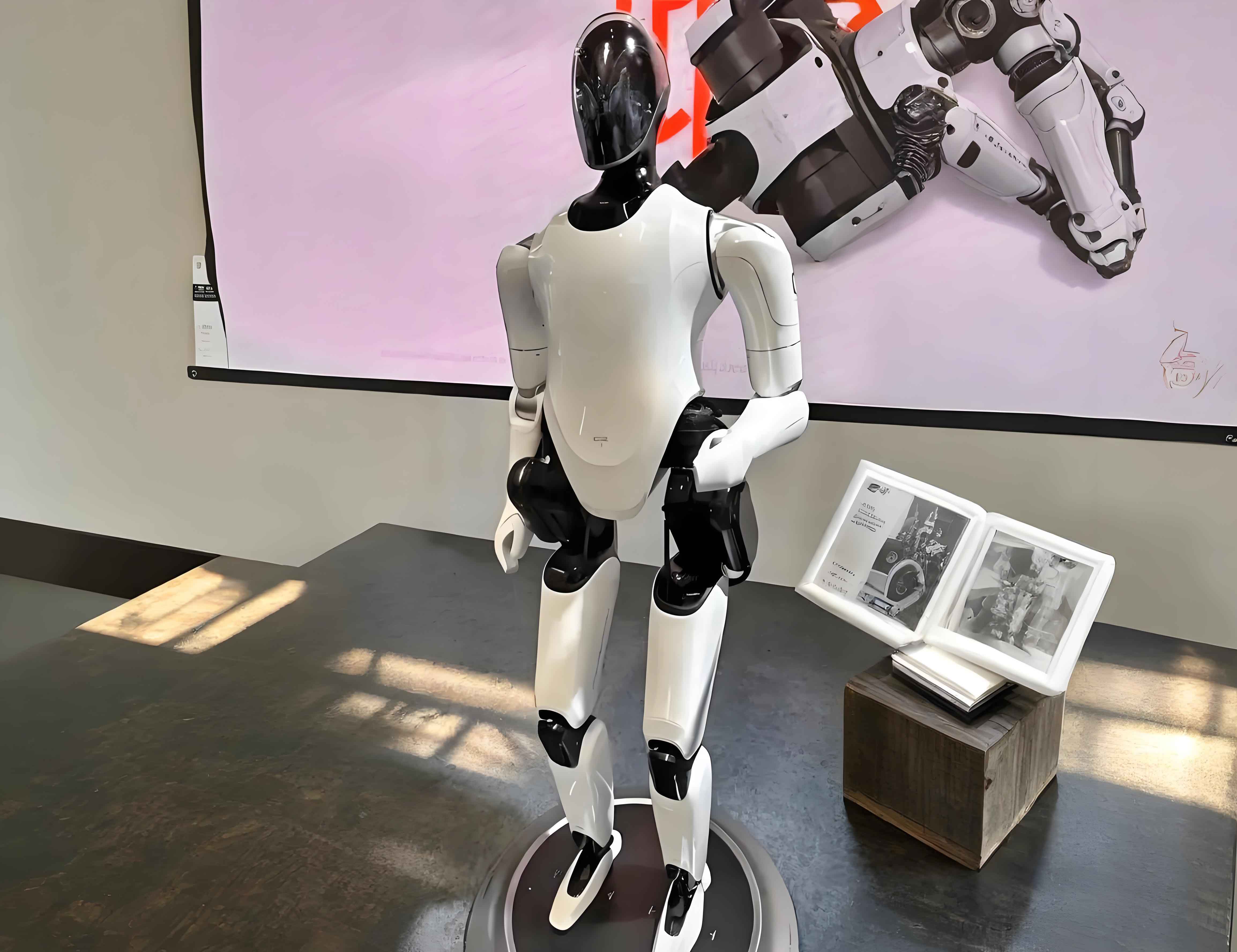
Application Cases of “AI+” Empowered Embodied Robots
The integration of “AI+” technologies has enabled embodied robots to make significant impacts across various sectors. In this section, I will discuss real-world applications in industrial manufacturing, healthcare, and home services, illustrating how embodied robots enhance efficiency, safety, and convenience.
Industrial Manufacturing
In industrial settings, embodied robots are revolutionizing production lines by combining感知, reasoning, and execution to handle complex, flexible tasks. For example, in automotive manufacturing, embodied robots equipped with multi-modal perception can accurately identify and assemble components, using reinforcement learning to optimize movements. This leads to higher precision and reduced errors compared to traditional automation. A notable case involves embodied robots performing engine assembly, where they grasp various parts and follow specified sequences and torque requirements, improving quality and adaptability to small-batch production. Additionally, in flexible manufacturing units, embodied robots with rapid learning capabilities can shorten setup times from weeks to hours, enabling efficient multi-variant production. For hazardous environments, such as painting booths with toxic fumes, embodied robots replace human workers, ensuring safety and consistent quality. These applications demonstrate how embodied robots drive intelligent, adaptive manufacturing, with potential for further expansion into areas like precision machining and quality inspection.
Healthcare
In healthcare, embodied robots are transforming patient care through personalized rehabilitation and daily assistance. Rehabilitation robots, for instance, use AI to tailor exercise regimens based on real-time monitoring of patient movements and muscle data. Through reinforcement learning, they adjust parameters to maximize recovery outcomes, providing consistent and adaptive therapy. For elderly or disabled individuals, embodied robots assist with daily activities like fetching objects or aiding mobility. By incorporating speech recognition and natural language processing, these robots understand user commands and offer companionship, even reminding patients to take medications or exercise. In one implementation, an embodied care robot monitors vital signs via cameras and alerts medical staff to abnormalities, enhancing safety and support. These examples underscore the potential of embodied robots to improve healthcare accessibility and outcomes, though challenges in natural interaction and safety remain areas for improvement.
Home Services
Home service embodied robots are becoming integral to smart households, performing tasks such as cleaning, childcare, and entertainment. For cleaning, embodied robots utilize sensors like LiDAR and vision to map homes and plan optimal paths, using reinforcement learning to avoid obstacles and cover areas efficiently. In childcare, they engage children through interactive games and storytelling, leveraging large language models to answer questions and provide educational content. For example, an embodied robot connected to an LLM can quickly retrieve accurate information and explain it in an engaging manner, reducing parental burdens. These robots not only enhance convenience but also promote independent living, though their widespread adoption depends on overcoming issues like cost and reliability. As AI technologies advance, home service embodied robots are expected to take on more complex roles, such as meal preparation and security monitoring, further embedding themselves into daily life.
Current Challenges Facing Embodied Robots
Despite the progress, embodied robots face several significant challenges that hinder their broader deployment. First, computational resources and energy consumption are major concerns. The real-time processing of multi-modal data and running complex AI models, such as large language models, demand substantial computing power, leading to latency and high energy use. This limits the endurance and applicability of embodied robots in resource-constrained environments. Second, algorithmic generalization and robustness are insufficient. While embodied robots excel in controlled settings, they often struggle with unseen environments or tasks due to over-reliance on training data. For instance, visual perception algorithms may fail under varying lighting or occlusion, and reinforcement learning policies might not transfer well to new scenarios. Improving generalization requires more diverse datasets and advanced learning techniques. Third, naturalness and safety in human-robot interaction pose critical issues. Embodied robots must understand nuanced human commands and predict intentions accurately to collaborate effectively. However, current systems exhibit limitations in speech understanding, especially with accents or multiple speakers, and safety risks arise from potential malfunctions during physical interactions. Addressing these challenges involves developing more intuitive interfaces, robust perception algorithms, and fail-safe mechanisms to ensure that embodied robots can operate reliably and safely alongside humans.
Future Development Trends
Looking ahead, the field of embodied robots is poised for exciting advancements driven by continuous AI innovation and cross-domain integration. One key trend is the ongoing fusion of AI technologies, where more efficient deep learning architectures, quantum computing, and hybrid models will enhance the感知, decision-making, and control capabilities of embodied robots. For example, combining large language models with reinforcement learning could enable faster policy learning and better generalization. Another trend is the increasing intelligence and autonomy of embodied robots. Future systems will feature sharper perception, more nuanced reasoning, and greater adaptability, allowing them to handle complex, dynamic environments independently. In rescue operations, for instance, embodied robots might autonomously assess dangers and execute life-saving missions. Lastly, the application domains for embodied robots will expand and deepen. Beyond current uses, they could revolutionize agriculture with precision farming, space exploration with autonomous rovers, and education with personalized tutoring. As these trends unfold, embodied robots will become more versatile and integral to societal progress, though concerted efforts in research, standardization, and ethics will be essential to realize their full potential.
Conclusion
In conclusion, “AI+” technologies have profoundly transformed embodied robots, enabling them to operate as intelligent, adaptive agents in real-world environments. Through a layered framework of multi-modal perception, planning, control, and data generation, embodied robots achieve closed-loop learning and execution, with demonstrated successes in industries like manufacturing, healthcare, and home services. However, challenges related to computation, algorithm robustness, and human-robot interaction must be addressed to unlock their full capabilities. Future directions include more efficient AI models, enhanced autonomy, and broader applications, requiring collaborative efforts across academia, industry, and policymakers. As we continue to innovate, embodied robots hold the promise of driving economic growth and improving quality of life, making them a cornerstone of the next technological revolution.