
In the current era of rapid technological advancement, embodied robots represent a significant evolution in artificial intelligence, characterized by their ability to interact with both digital and physical environments through multimodal large models. This transformation is reshaping labor markets globally, leading to structural shifts in employment across industrial, non-manufacturing, and technical sectors. The core elements of embodied robots—comprising ontology, environment, and intelligence—endow them with humanoid universality, stable robustness, and intelligent autonomy. These features not only enhance productivity but also pose profound challenges to workers’ rights, including equal employment opportunities, freedom of career choice, and professional development. As embodied robots become more integrated into workplaces, they risk exacerbating inequalities, restricting autonomy, and hindering skill advancement. Therefore, it is imperative to address these issues through legal frameworks that safeguard workers’ rights, promote human-robot collaboration, and ensure healthy labor market development. This article explores the impact of embodied robots on labor employment rights and proposes legal responses to foster a balanced and equitable future.
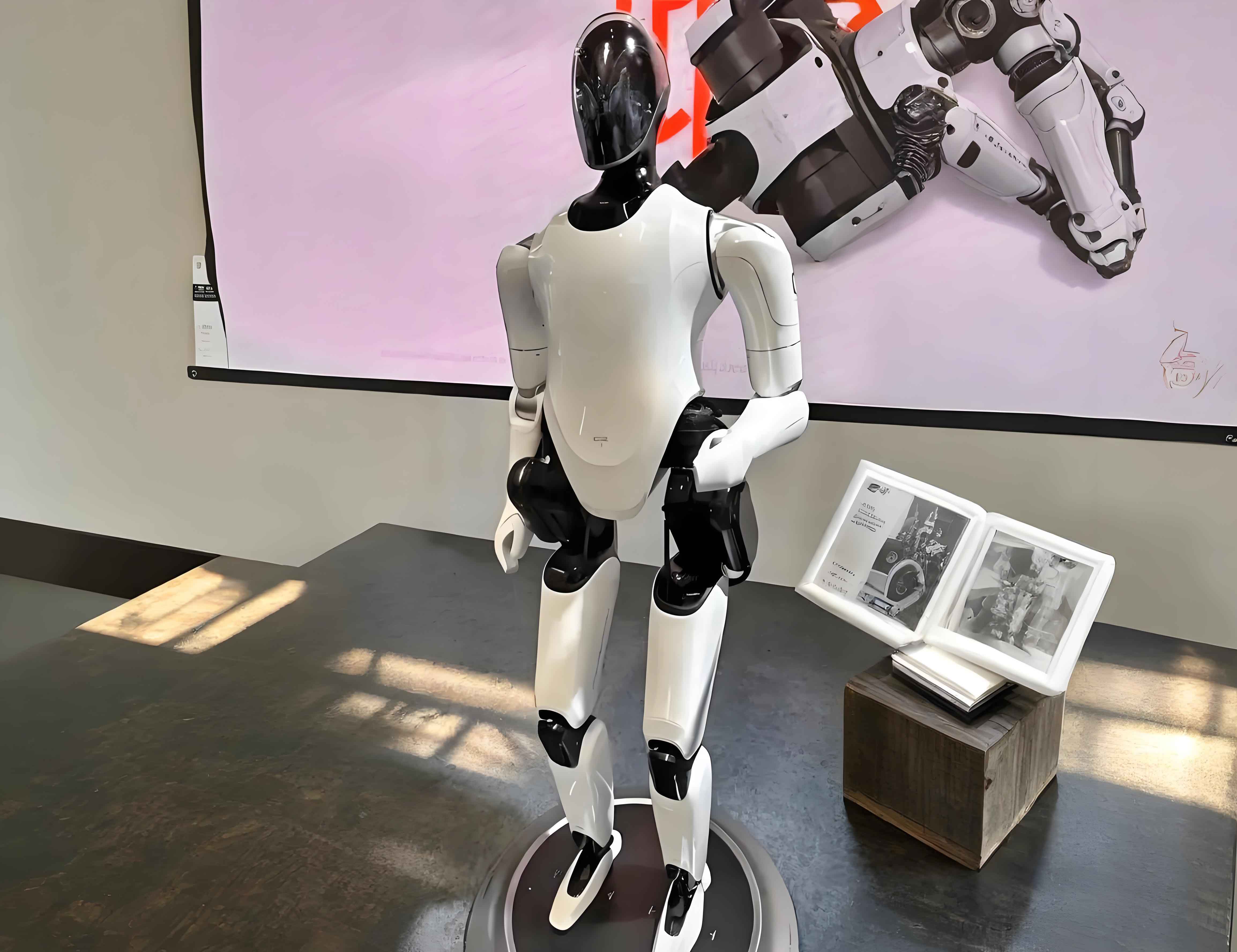
The development of embodied robots is rooted in their three key components: ontology, environment, and intelligence. Ontology refers to the physical hardware, such as humanoid robots, that enables interaction with the world. Environment encompasses the physical and digital spaces where these robots operate, while intelligence involves advanced algorithms, including multimodal models, that facilitate perception, decision-making, and learning. This integration allows embodied robots to perform tasks with high precision and adaptability, moving beyond traditional automation to achieve generalized functionality. For instance, the stability and robustness of embodied robots can be modeled using control theory equations, such as the robustness metric $R = \frac{1}{\Delta \sigma}$, where $\Delta \sigma$ represents the system’s sensitivity to disturbances. This ensures that embodied robots maintain performance in dynamic environments, making them suitable for diverse sectors like manufacturing, healthcare, and services.
| Era | Interaction Mode | Key Features | Impact on Labor |
|---|---|---|---|
| Pre-Industrial | Manual Operation | Direct human control of tools | Labor-intensive societies |
| Industrial Revolution | Automated Supervision | Machines with human oversight | Capital-intensive societies |
| Digital Age | Intelligent Collaboration | AI-driven assistance and advice | Knowledge-intensive societies |
| Super-Intelligent Era | Human-Embodied Robot Interaction | Autonomous task execution with human supervision | Data-driven societies |
The interaction logic between humans and embodied robots has evolved significantly, transitioning from simple machine operation to complex collaborative systems. In early stages, humans directly controlled machines, focusing on optimizing labor processes. With the Industrial Revolution, automation increased, shifting human roles to supervision and management. Today, embodied robots enable a new paradigm of human-robot collaboration, where robots operate autonomously, and humans oversee outcomes. This shift is driven by the formula for intelligent autonomy: $A = \int (P \cdot D) \, dt$, where $A$ is autonomy, $P$ is perception capability, and $D$ is decision-making efficiency. As embodied robots learn from environmental interactions, they enhance their adaptability, leading to more efficient labor processes. However, this also raises concerns about job displacement and the erosion of workers’ rights.
Embodied robots are transforming employment structures across various sectors. In industrial settings, rule-based embodied robots replace manual labor in repetitive tasks, leading to a decline in low-skilled positions. For example, in manufacturing, the employment substitution rate can be expressed as $S_r = \frac{N_r}{N_h}$, where $S_r$ is the substitution rate, $N_r$ is the number of robots deployed, and $N_h$ is the number of human workers displaced. This has resulted in a shift toward more specialized roles, such as robot maintenance and programming. In non-manufacturing sectors, behavior-based embodied robots create new job opportunities in services, healthcare, and companionship, often requiring higher skill levels. Meanwhile, in technical fields, algorithm-driven embodied robots foster smart-intensive jobs, such as AI development and data analysis, but also contribute to skill mismatches. The table below summarizes these impacts.
| Sector | Type of Embodied Robot | Employment Effect | Skill Demand Change |
|---|---|---|---|
| Industrial | Rule-based Embodied Robot | Substitution of low-skilled labor | Increase in technical skills |
| Non-Manufacturing | Behavior-based Embodied Robot | Creation of service-oriented jobs | Rise in interpersonal skills |
| Technical | Algorithm-based Embodied Robot | Growth in smart-intensive roles | Demand for data literacy |
The pervasive use of embodied robots significantly affects workers’ rights to equal employment. These systems, with their humanoid universality and autonomous decision-making, can inadvertently bias hiring and promotion processes. For instance, if an embodied robot is trained on biased data, it may perpetuate discrimination against certain groups, violating equal opportunity principles. The probability of such bias can be modeled as $P_b = \sum_{i=1}^{n} w_i x_i$, where $P_b$ is the bias probability, $w_i$ are weights from training data, and $x_i$ are input features related to worker demographics. Moreover, embodied robots often outperform humans in tasks requiring precision and endurance, leading employers to prefer robots over workers, especially in cost-sensitive industries. This undermines the value of human labor and exacerbates inequalities, as workers with outdated skills struggle to compete. Legal measures must therefore enforce transparency in algorithmic decisions and protect workers from discriminatory practices.
Furthermore, embodied robots impact workers’ freedom of career choice by constraining autonomy and increasing job mobility. In human-embodied robot collaboration, workers may find their decisions influenced or overridden by autonomous systems, reducing their sense of agency. The autonomy loss can be quantified as $L_a = 1 – \frac{C_h}{C_t}$, where $L_a$ is the autonomy loss, $C_h$ is human control level, and $C_t$ is total control capacity. Additionally, the flexibility offered by embodied robots often leads to fragmented employment, such as gig work, where workers frequently switch jobs but have limited control over their career paths. This erodes free choice, as algorithms dictate job assignments and evaluations. For example, an embodied robot might use performance data to restrict a worker’s access to certain roles, effectively limiting opportunities. To counter this, laws should guarantee workers’ rights to dispute algorithmic decisions and ensure that personal data is not misused in employment contexts.
Career development rights are also threatened by embodied robots, as they accelerate skill obsolescence and create structural mismatches. The rapid evolution of embodied robot technology demands continuous upskilling, but many workers lack access to relevant training. The skill gap can be expressed as $G_s = D_s – S_s$, where $G_s$ is the skill gap, $D_s$ is demanded skills, and $S_s$ is supplied skills. As embodied robots take over routine tasks, workers must transition to roles requiring creativity and critical thinking, but without adequate support, this transition fails. Moreover, embodied robots’ ability to learn and adapt independently compresses the time available for workers to develop new competencies, leading to underemployment and reduced career progression. For instance, in healthcare, embodied robots assist in patient care, but workers must now master human-robot interaction skills to remain relevant. Legal frameworks should mandate lifelong learning programs and align training with technological trends to protect workers’ development rights.
To address these challenges, legal responses must reinforce workers’ subjectivity in the face of embodied robot integration. This involves recognizing humans as the primary agents in labor relations and regulating embodied robots as tools rather than autonomous entities. For example, laws could require that all decisions involving embodied robots are subject to human review, ensuring accountability. The principle of human-centricity can be embedded in design rules, such as incorporating ethical guidelines into the learning algorithms of embodied robots. Additionally, anti-discrimination statutes should be updated to cover algorithmic bias, promoting equal employment opportunities. By upholding workers’ rights to equal treatment, legal systems can mitigate the risks posed by embodied robots and foster a fair labor environment.
Protecting workers’ autonomy is crucial for safeguarding free career choice in the age of embodied robots. Legal measures should ensure transparency in how embodied robots influence employment decisions, such as requiring employers to disclose algorithm criteria and allow workers to contest outcomes. Data protection laws, inspired by regulations like the GDPR, can grant workers control over their personal information, preventing its misuse in hiring or evaluations. For instance, workers could have the right to erase data collected by embodied robots during collaborations. Furthermore, collective bargaining agreements could establish boundaries for embodied robot use, preserving workers’ discretion in career choices. By empowering workers with these rights, laws can counterbalance the control exerted by embodied robots and promote genuine free choice.
Enhancing vocational training is essential to secure workers’ career development rights amidst the rise of embodied robots. Legal frameworks should mandate accessible and continuous skill development programs, tailored to the demands of human-robot collaboration. For example, governments could fund training initiatives focused on digital literacy and technical competencies, using formulas like $T_e = \alpha \cdot K_d + \beta \cdot S_o$, where $T_e$ is training effectiveness, $K_d$ is knowledge depth, $S_o$ is skill overlap with embodied robot tasks, and $\alpha$, $\beta$ are weighting factors. Additionally, policies should encourage partnerships between educational institutions and industries to align curricula with emerging needs. By investing in lifelong learning, societies can reduce skill mismatches and empower workers to thrive alongside embodied robots, ensuring sustainable career growth.
In conclusion, embodied robots represent a transformative force in labor markets, offering efficiency gains but posing significant risks to workers’ rights. Their evolution, driven by advances in ontology, environment, and intelligence, necessitates proactive legal responses to uphold equality, autonomy, and development. By reinforcing human subjectivity, protecting autonomy, and promoting skill training, laws can foster a collaborative future where humans and embodied robots coexist productively. Ultimately, preserving the dignity and value of human labor remains paramount, requiring ongoing adaptation of legal frameworks to navigate the complexities of embodied robot integration.