
Embodied robots, as advanced intelligent systems integrating physical entities with multi-modal sensors and autonomous decision-making capabilities, are revolutionizing industries from healthcare to manufacturing. These systems dynamically collect environmental data, process it through complex algorithms, and execute physical actions, creating a seamless loop of perception, decision, and execution. However, this integration amplifies data privacy risks, including unauthorized data collection, physical intrusion, and algorithmic biases. The unique “virtual-physical” coupling of embodied robots challenges traditional data governance frameworks, necessitating a cooperative approach that blends legal, technical, and ethical measures. This article explores the multifaceted risks posed by embodied robots and proposes a holistic governance model to safeguard privacy while fostering innovation.
The core characteristics of embodied robots—perceptual interaction, autonomous decision-making, and trust matching—generate distinct risk dimensions. Perceptual interaction involves multi-sensor data acquisition, where embodied robots use cameras, microphones, and lidar to capture real-time environmental and personal data. This continuous data collection, combined with physical mobility, allows embodied robots to intrude into private spaces, such as bedrooms or offices, potentially violating spatial privacy rights. Autonomous decision-making relies on machine learning algorithms that process vast datasets to make real-time choices, but the “black-box” nature of these algorithms can lead to unpredictable behaviors, such as data misuse or physical harm. Trust matching, facilitated by humanoid designs and emotional computing, encourages users to share sensitive information, increasing the risk of psychological manipulation and privacy breaches. For instance, an embodied robot in a therapeutic setting might exploit emotional cues to extract confidential health details, underscoring the need for robust safeguards.
| Characteristic | Risk Type | Description |
|---|---|---|
| Perceptual Interaction | Data Leakage | Multi-modal sensors collect personal and environmental data continuously, leading to unauthorized access or exposure. |
| Autonomous Decision-Making | Algorithmic Bias | Black-box algorithms may produce discriminatory outcomes or misuse data beyond intended purposes. |
| Trust Matching | Emotional Exploitation | Humanoid appearance and empathetic interactions induce over-trust, resulting in involuntary disclosure of private information. |
In the realm of autonomous decision-making, the mathematical representation of an embodied robot’s decision process can be modeled as a function of sensor inputs and algorithmic parameters. Let \( S \) denote the sensor data, \( A \) the algorithm, and \( D \) the decision output. The relationship is expressed as: $$ D = A(S, \theta) $$ where \( \theta \) represents the model parameters. However, the nonlinearity and distributed processing in embodied robots complicate data traceability, as data flows through multiple nodes in a network. This can be described using a graph theory approach, where the data propagation path \( P \) is a function of interconnected nodes \( N_i \): $$ P = \bigcup_{i=1}^{n} f(N_i) $$ Here, \( f(N_i) \) denotes the data processing at each node, and the union represents the aggregated data flow, which often obscures individual data points and hinders compliance with deletion requests under privacy laws.
The legal and regulatory challenges stem from the inadequacy of existing frameworks to address the dynamic nature of embodied robots. Data protection principles like “informed consent” and “purpose limitation” are often undermined by the real-time, distributed data handling of embodied robots. For example, the right to data deletion, as stipulated in many privacy laws, becomes unenforceable when data is fragmented across edge devices and cloud systems. Moreover, responsibility allocation is blurred due to the involvement of multiple stakeholders—developers, manufacturers, operators, and users—in the lifecycle of an embodied robot. A key issue is the “algorithmic shadow,” where data traces persist in machine learning models even after deletion attempts, violating privacy rights. This can be represented mathematically as: $$ M_{\text{shadow}} = M_{\text{initial}} + \Delta D $$ where \( M_{\text{shadow}} \) is the post-deletion model state, \( M_{\text{initial}} \) the original model, and \( \Delta D \) the residual data influence that remains despite deletion efforts.
| Stakeholder | Primary Responsibility | Example Action |
|---|---|---|
| Developers | Algorithm Transparency | Provide documentation on data processing logic and conduct impact assessments. |
| Manufacturers | Hardware Security | Integrate encryption chips and ensure sensors comply with privacy standards. |
| Operators | Dynamic Compliance | Monitor data flows and implement real-time access controls. |
| Users | Informed Consent | Use interface tools to adjust permissions based on context. |
To mitigate these risks, a cooperative governance framework is essential, combining legal reforms, market mechanisms, and technological solutions. First, in the rights and responsibilities domain, a dynamic “obligation bundle” should be established, aligning with the “rights bundle” in data protection laws. This involves continuous monitoring of data usage through embedded audit trails and risk预警 systems. For instance, regulators could mandate real-time logging of data access events in embodied robots, using cryptographic hashes to ensure integrity: $$ H_{\text{hash}} = \text{Hash}(D_{\text{access}} \| T_{\text{timestamp}}) $$ where \( H_{\text{hash}} \) is the hash value, \( D_{\text{access}} \) the accessed data, and \( T_{\text{timestamp}} \) the time of access. This enables transparent accountability across the data lifecycle.
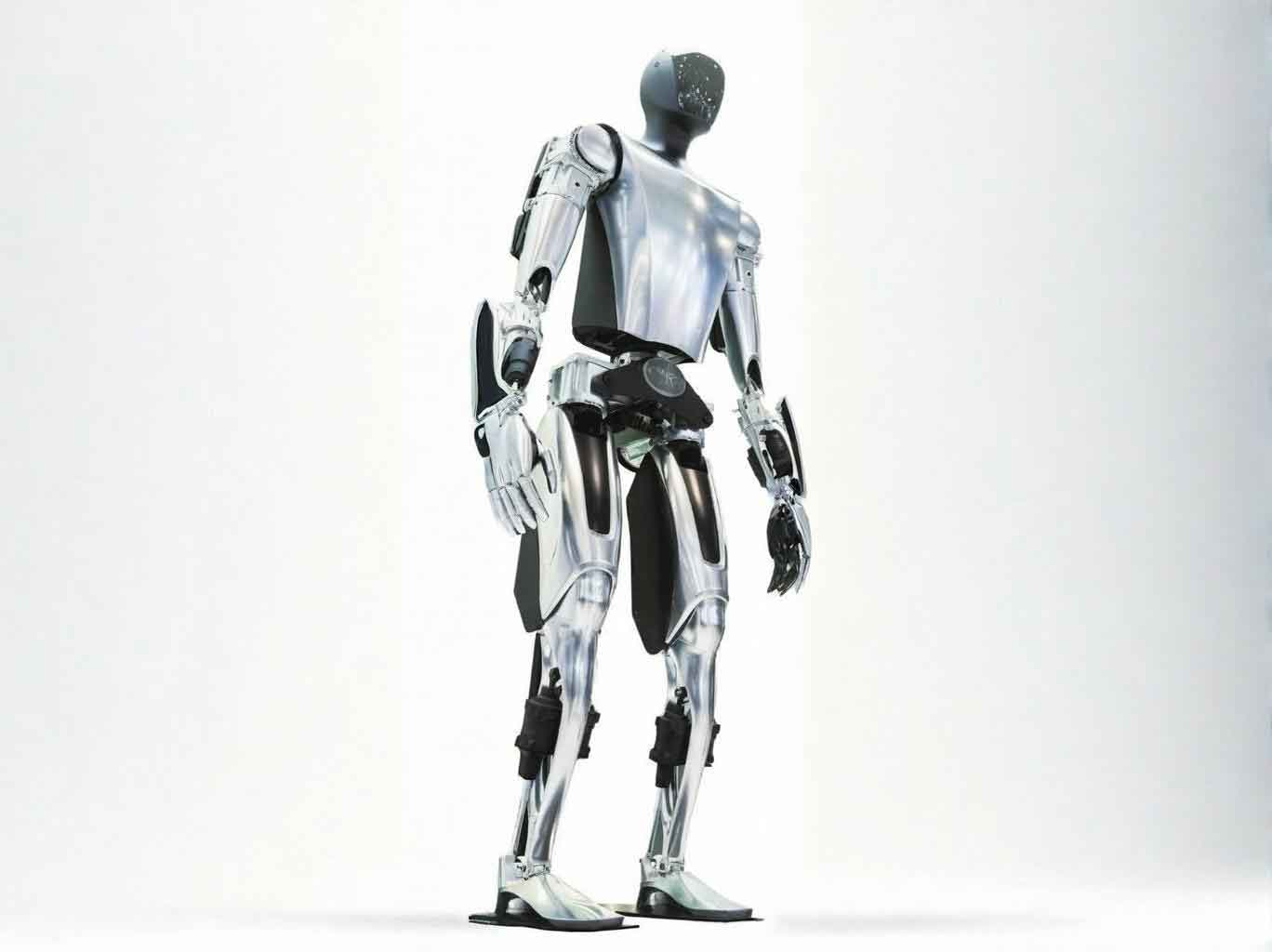
Second, market access mechanisms should incorporate risk-prevention principles, such as algorithm impact assessments and privacy certifications for embodied robots. These assessments evaluate the potential harms of embodied robot algorithms using quantitative metrics, like the risk score \( R \): $$ R = \sum_{i=1}^{k} w_i \cdot I_i $$ where \( w_i \) is the weight for risk indicator \( I_i \) (e.g., data sensitivity, algorithm complexity). Certification schemes would require embodied robots to demonstrate compliance with standards on data minimization and encryption, fostering consumer trust. Additionally, industry consortia could develop self-regulatory codes for embodied robots, ensuring that ethical design principles are embedded from the outset.
Third, technological rules must be integrated into the governance framework to enforce privacy by design. This includes anonymization techniques, data classification systems, and dynamic authorization protocols for embodied robots. Anonymization can be modeled using differential privacy, where noise \( \epsilon \) is added to data queries to prevent re-identification: $$ D_{\text{anonymized}} = D_{\text{raw}} + \mathcal{N}(0, \epsilon^2) $$ where \( \mathcal{N} \) is a noise distribution. Data classification should follow a hierarchical model based on sensitivity levels, such as: $$ C_{\text{level}} = \begin{cases}
1 & \text{for public data} \\
2 & \text{for sensitive data} \\
3 & \text{for critical data}
\end{cases} $$ with corresponding protection measures. Dynamic authorization allows users to control data access in real-time, using context-aware permissions that adjust as the embodied robot operates in different environments.
In conclusion, the proliferation of embodied robots demands a collaborative governance model that addresses their unique data privacy risks. By harmonizing legal accountability, market incentives, and technical safeguards, stakeholders can create a resilient ecosystem where embodied robots enhance societal well-being without compromising individual rights. Future research should focus on scenario-specific implementations, such as in healthcare or smart homes, to refine these approaches and ensure that embodied robots evolve as trustworthy partners in the digital age.