
In recent years, the integration of large models into embodied robot navigation has revolutionized how autonomous systems perceive, reason, and act in dynamic environments. As an AI researcher, I have observed that embodied robots—physical agents capable of interacting with their surroundings—are increasingly leveraging large language models (LLMs) and multimodal large language models (MLLMs) to overcome limitations of traditional navigation methods. Traditional approaches often rely on pre-defined maps and rules, struggling with adaptability in unstructured scenarios. In contrast, large model-driven navigation enables embodied robots to interpret natural language instructions, fuse multimodal sensory inputs, and make real-time decisions, enhancing their generalization and human-robot interaction capabilities. This paradigm shift is critical for applications like industrial automation, smart services, and disaster rescue, where embodied robots must operate reliably in complex, unknown settings.
The core of this advancement lies in the fusion of embodied intelligence with large-scale AI models. Embodied intelligence emphasizes that intelligent behavior emerges from the interaction between an agent and its environment, a concept dating back to Alan Turing but now realized through modern robotics. Large models, such as GPT-4 and CLIP, provide the computational foundation for processing language, vision, and other modalities, allowing embodied robots to perform tasks like zero-shot navigation without extensive training. For instance, an embodied robot can now understand a command like “navigate to the kitchen and avoid obstacles” by leveraging LLMs for instruction parsing and VLMs for visual scene understanding. This capability marks a departure from reinforcement learning-based methods, which often require massive data and suffer from poor sample efficiency. Instead, large models offer pre-trained knowledge that can be fine-tuned for specific navigation tasks, reducing deployment costs and improving performance in real-world scenarios.
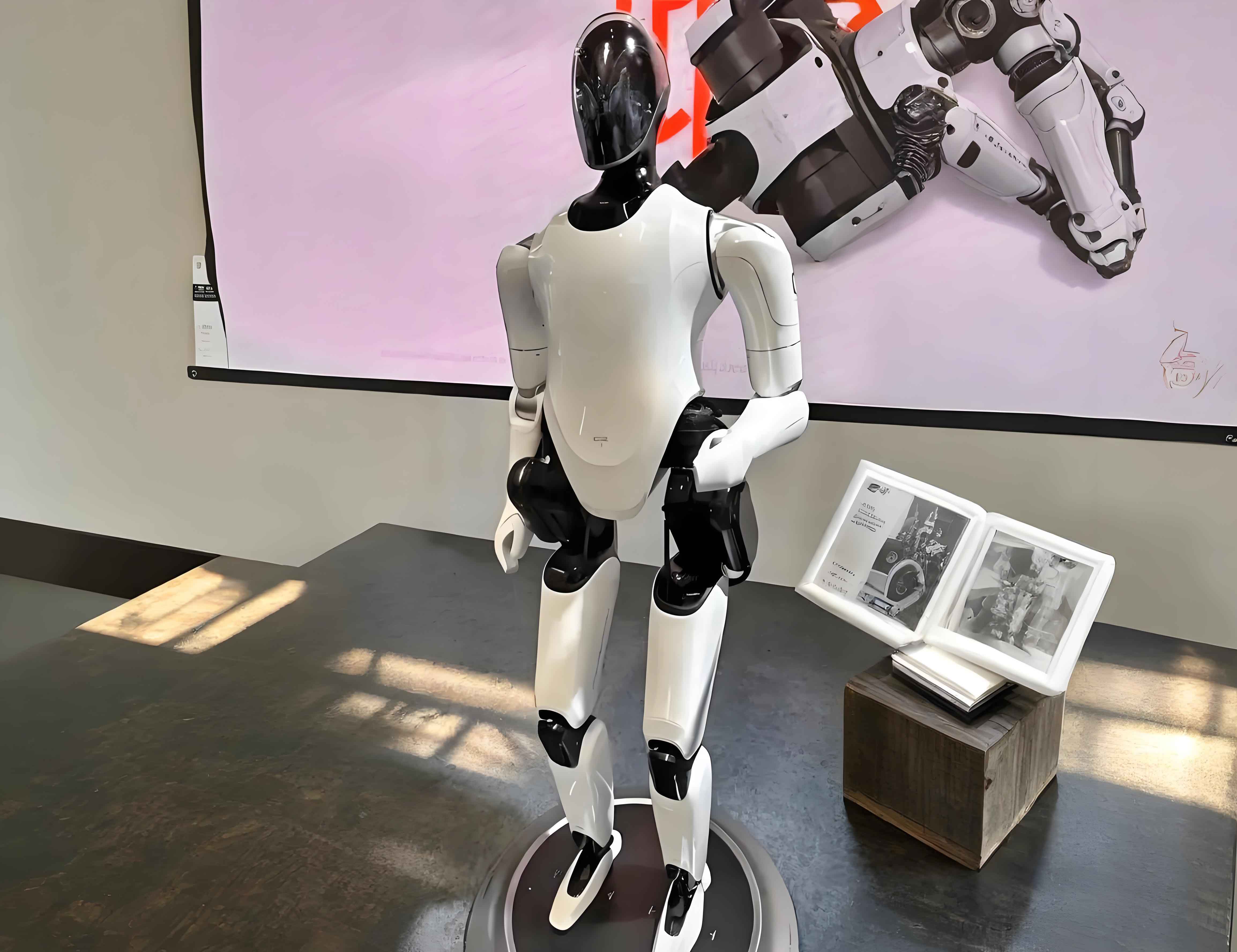
To systematically explore this field, I categorize large model-driven navigation into two primary architectures: end-to-end models and hierarchical models. End-to-end models map multimodal inputs directly to navigation actions, minimizing intermediate representations and error accumulation. For example, models like PaLM-E integrate vision and language into a single framework, enabling embodied robots to generate actions from raw sensor data. In contrast, hierarchical models decompose navigation into modular components, such as perception, decision-making, and execution, which enhances interpretability and stability but may introduce latency. Both approaches leverage the strengths of large models, such as natural language understanding and cross-modal reasoning, to address challenges like dynamic obstacle avoidance and long-horizon planning. As I delve into these methods, I will highlight how they empower embodied robots to achieve higher success rates and adaptability, supported by datasets like MatterPort3D and metrics such as Success Weighted Path Length (SPL).
Behind these innovations are significant strides in artificial intelligence and deep learning. The transition from symbolic AI to data-driven approaches, fueled by neural networks, has enabled models to handle complex patterns in vision and language. For embodied robot navigation, this means that deep learning architectures—like convolutional neural networks (CNNs) for image processing and transformers for sequence modeling—can extract features from RGB images, depth maps, and linguistic commands. The self-attention mechanism in transformers, in particular, allows embodied robots to focus on relevant environmental cues while ignoring noise. Moreover, pre-training paradigms, as seen in BERT and GPT models, facilitate knowledge transfer to navigation tasks, reducing the need for task-specific data. This background sets the stage for understanding how large models act as the “brain” for embodied robots, enabling them to learn from few-shot or zero-shot examples and generalize across diverse environments.
In terms of navigation technology, embodied robots have evolved from rule-based systems to learning-driven agents. Early methods depended on simultaneous localization and mapping (SLAM) and predefined paths, which faltered in dynamic settings. Reinforcement learning (RL) introduced adaptive behavior through trial-and-error, but its high sample complexity limited real-world applicability. Now, with large models, embodied robots can perform visual-language navigation (VLN), where they follow natural language instructions in unseen environments. For instance, an embodied robot might use an LLM to break down a command like “find the red chair in the living room” into sub-goals, while a VLM aligns visual inputs with semantic concepts. This integration not only improves navigation accuracy but also allows embodied robots to engage in dialogues with humans, asking for clarifications or reporting progress. As I discuss specific models and datasets, it becomes clear that large models are pushing embodied robot navigation toward general intelligence, where agents can handle a wide range of tasks without retraining.
Background on Artificial Intelligence and Embodied Robot Navigation
The progression of artificial intelligence has been instrumental in advancing embodied robot navigation. Initially, AI focused on symbolic reasoning, where rules and logic dictated agent behavior. However, this approach struggled with the nuances of real-world environments. The advent of deep learning in the 2010s, particularly through convolutional neural networks (CNNs) and recurrent neural networks (RNNs), enabled more robust perception and sequence modeling. For embodied robots, this meant improved object detection and path planning using models like YOLO for real-time recognition and DeepLab for semantic segmentation. These technologies allowed embodied robots to interpret scenes and navigate based on visual cues, but they still required extensive labeled data and lacked generalization.
Transformers revolutionized AI by introducing self-attention, which processes entire sequences in parallel and captures long-range dependencies. This architecture underpins modern large models, such as BERT for language understanding and CLIP for vision-language alignment. In embodied robot navigation, transformers facilitate the integration of multiple modalities—like RGB images, depth data, and text—into a unified representation. For example, the self-attention mechanism can weigh the importance of obstacles versus landmarks in a scene, enabling an embodied robot to prioritize actions. The equation for self-attention is given by:
$$\text{Attention}(Q, K, V) = \text{softmax}\left(\frac{QK^T}{\sqrt{d_k}}\right)V$$
where \(Q\), \(K\), and \(V\) represent queries, keys, and values derived from input embeddings, and \(d_k\) is the dimensionality. This allows embodied robots to dynamically focus on relevant parts of the environment when making navigation decisions.
Embodied intelligence principles further enrich this by emphasizing that cognition arises from physical interaction. An embodied robot learns by moving through spaces, collecting sensor data, and refining its models. Large models accelerate this process by providing commonsense knowledge—for instance, an LLM might infer that “a kitchen usually contains a sink” to guide exploration. This is a shift from traditional navigation, which relied on geometric maps, to semantic navigation, where embodied robots understand context. As a result, large model-driven embodied robots can perform tasks like object search in unfamiliar rooms by combining pre-trained knowledge with real-time sensor fusion.
The following table summarizes key AI milestones relevant to embodied robot navigation:
| Technology | Year | Impact on Embodied Robot Navigation |
|---|---|---|
| Word2Vec | 2013 | Enabled semantic text embeddings for command understanding |
| YOLO | 2015 | Improved real-time object detection for obstacle avoidance |
| Transformer | 2017 | Facilitated multimodal data processing and long-sequence reasoning |
| BERT | 2018 | Provided pre-trained language models for instruction parsing |
| CLIP | 2021 | Enabled zero-shot vision-language alignment for scene understanding |
| GPT-4 | 2023 | Enhanced reasoning and planning capabilities for complex navigation |
In embodied robot navigation, these technologies converge to create systems that are both adaptive and efficient. For example, the success rate \(SR\) of an embodied robot can be modeled as a function of its ability to integrate multimodal inputs:
$$SR = f(\text{vision}, \text{language}, \text{action})$$
where large models optimize this function through end-to-end or hierarchical designs. As I proceed, I will explore how these architectures are implemented and evaluated, highlighting the role of datasets and metrics in driving progress.
Large Model Applications in Embodied Robot Navigation
Large models have transformed embodied robot navigation by enabling direct processing of natural language and sensory data. In practice, an embodied robot might use an LLM like GPT-4 to interpret a user’s command, such as “go to the conference room and avoid crowded areas,” and then a VLM like CLIP to identify relevant objects in its camera feed. This allows the embodied robot to perform tasks that require commonsense reasoning—for instance, inferring that “crowded areas” might correspond to groups of people in visual data. The integration of these models reduces the need for explicit programming, as the embodied robot can leverage pre-trained knowledge to handle novel situations.
One significant application is in visual-language navigation (VLN), where embodied robots follow text-based instructions in photorealistic simulations or real environments. Models like VLN-BERT combine vision and language encoders to ground instructions in visual observations, improving navigation accuracy. For embodied robots, this means they can traverse multiple rooms while adhering to commands like “turn left at the blue chair.” The navigation process can be formalized as a partially observable Markov decision process (POMDP), where the embodied robot maintains a belief state over its location and updates it based on actions and observations. Large models enhance this by providing priors over likely states; for example, an LLM might suggest that “offices often have desks” to narrow down search areas.
Another application is social navigation, where embodied robots must navigate among humans. Models like VLM-Social-Nav use vision-language models to score potential paths based on social norms, such as maintaining personal space. This is crucial for embodied robots operating in hospitals or shopping malls, where safety and etiquette are paramount. The decision-making can be expressed as an optimization problem:
$$\max_a \mathbb{E} \left[ \sum_{t=0}^{T} \gamma^t R(s_t, a_t) \right]$$
where \(a_t\) represents the action at time \(t\), \(s_t\) is the state, \(R\) is a reward function incorporating social scores, and \(\gamma\) is a discount factor. Large models contribute to defining \(R\) by encoding human preferences from language and vision data.
The following table contrasts traditional and large model-driven navigation for embodied robots:
| Aspect | Traditional Navigation | Large Model-Driven Navigation |
|---|---|---|
| Input Processing | Geometric maps and waypoints | Natural language and multimodal sensors |
| Adaptability | Limited to known environments | Generalizes to unseen scenarios via pre-training |
| Human Interaction | Pre-defined commands | Dynamic dialogues and instruction following |
| Training Data | Task-specific datasets | Large-scale pre-training with fine-tuning |
| Example Model | ORCA for collision avoidance | PaLM-E for embodied reasoning |
In my research, I have found that large models also facilitate zero-shot navigation, where an embodied robot performs tasks without prior training on similar environments. For instance, the LM-Nav system uses GPT-3 for instruction parsing, CLIP for visual grounding, and a path planner for execution, allowing embodied robots to navigate outdoor terrains based on descriptions. This capability is quantified by metrics like navigation error \(NE\), which measures the distance between the robot’s stopping point and the goal:
$$NE = d(p_e, p_t)$$
where \(p_e\) is the endpoint and \(p_t\) is the target. Large models help minimize \(NE\) by improving the embodied robot’s understanding of spatial relationships.
Overall, the application of large models in embodied robot navigation spans from indoor object search to outdoor autonomous driving. As I discuss specific architectures next, it will become evident how these models are tailored to different challenges, ensuring that embodied robots can operate effectively in a variety of settings.
End-to-End Models for Embodied Robot Navigation
End-to-end models represent a streamlined approach where embodied robots map raw sensor inputs directly to control commands, bypassing intermediate representations like maps or plans. These models typically leverage large-scale neural networks, such as transformers, to process multimodal data in a unified manner. For example, an embodied robot might take in RGB images, depth readings, and a language instruction, and output linear and angular velocities for movement. This design reduces cumulative errors from modular pipelines and can improve real-time performance, but it requires substantial computational resources and may lack interpretability.
A prominent example is PaLM-E, which integrates language and vision into a single transformer-based model. PaLM-E is trained on diverse tasks, including navigation and manipulation, allowing an embodied robot to perform sequences like “navigate to the table and pick up the cup.” The model processes inputs by embedding images and text into a shared space, then generating actions autoregressively. The probability of an action sequence \(a_{1:T}\) given observations \(o_{1:T}\) and instruction \(l\) can be expressed as:
$$P(a_{1:T} | o_{1:T}, l) = \prod_{t=1}^{T} P(a_t | a_{<t}, o_{\leq t}, l)$$
where large models parameterize the conditional distributions using attention mechanisms. In practice, this enables embodied robots to handle long-horizon tasks by conditioning past actions and observations.
Another model, NavGPT, uses an LLM as the core reasoner, converting visual observations into text descriptions via a vision encoder. The embodied robot then uses these descriptions, along with navigation history, to generate action plans in natural language, which are translated into controls. For instance, NavGPT might output “move forward 2 meters, then turn right” based on a command like “find the exit.” This approach benefits from the interpretability of text but can suffer from information loss in visual-to-text conversion. The navigation performance is often evaluated using Success Weighted Path Length (SPL):
$$SPL = \frac{1}{N} \sum_{i=1}^{N} S_i \frac{L_i}{\max(P_i, L_i)}$$
where \(S_i\) is a success indicator, \(L_i\) is the shortest path length, and \(P_i\) is the actual path length for task \(i\). End-to-end models like NavGPT aim to maximize SPL by generating efficient paths.
However, end-to-end models face challenges in stability and generalization. Since they rely on black-box transformations, an embodied robot might make unpredictable errors in novel environments. To address this, models like LVLM-OGN incorporate explicit mapping modules, where the embodied robot builds a semantic map during navigation and uses it to guide actions. This hybrid approach retains the benefits of end-to-end learning while adding structure for reliability. The table below summarizes key end-to-end models for embodied robot navigation:
| Model | Key Features | Advantages | Disadvantages |
|---|---|---|---|
| PaLM-E | Multimodal transformer, action generation | Handles complex tasks, reduces error accumulation | High computational cost, requires extensive training |
| NavGPT | LLM-based reasoning, text-based plans | Interpretable, zero-shot capabilities | Visual details may be lost, latency issues |
| LVLM-OGN | Integration with semantic maps, boundary exploration | Improved exploration efficiency, better generalization | Increased complexity, map maintenance overhead |
| VLFM | Value maps from language, visual grounding | Enhanced explainability, adaptive to goals | Dependent on VLM accuracy, may struggle with ambiguities |
In terms of performance, end-to-end models often achieve higher success rates in simulated environments like ProcTHOR, but their real-world deployment requires careful tuning. For embodied robots, this means that end-to-end architectures are best suited for tasks where speed and integration are prioritized, such as drone navigation or domestic assistants. As research progresses, lightweight versions of these models are emerging, making them more accessible for resource-constrained embodied robots.
Hierarchical Models for Embodied Robot Navigation
Hierarchical models decompose embodied robot navigation into specialized modules, such as perception, planning, and control, which interact through standardized interfaces. This modularity enhances transparency and allows for incremental improvements, as each component can be optimized independently. Large models are often integrated into specific layers—for example, an LLM for high-level planning and a VLM for environment perception—enabling embodied robots to handle complex instructions and dynamic scenes. However, this approach can introduce latency due to inter-module communication and may accumulate errors across stages.
One common hierarchical design uses large models for environment perception. In the ADAPT model, embodied robots employ CLIP to align visual inputs with language instructions, creating action prompts that guide navigation. The perception module encodes RGB images and text into a shared embedding space, and the planning module uses this to select actions. The alignment loss function in ADAPT ensures that visual and linguistic representations are coherent:
$$\mathcal{L}_{\text{align}} = -\log \frac{\exp(\text{sim}(v, l)/\tau)}{\sum_{l’ \in \mathcal{N}} \exp(\text{sim}(v, l’)/\tau)}$$
where \(v\) is a visual embedding, \(l\) is a language embedding, \(\text{sim}\) is a similarity measure, \(\tau\) is a temperature parameter, and \(\mathcal{N}\) includes negative samples. This helps embodied robots maintain consistency between what they see and what they are told to do.
Another approach leverages LLMs for decision-making. In SayNav, embodied robots incrementally build a 3D scene graph of the environment and use an LLM to generate exploration plans with conditional branches. For instance, if an embodied robot is tasked with “finding a book in the library,” the LLM might suggest checking shelves first, then desks, based on commonsense knowledge. The planning process can be formalized as a graph traversal problem, where the embodied robot selects nodes to visit based on expected information gain. The value of a node \(n\) can be estimated as:
$$V(n) = P(\text{target} \mid n) \cdot U(n) – C(n)$$
where \(P(\text{target} \mid n)\) is the probability of finding the target at \(n\) (inferred by the LLM), \(U(n)\) is the utility, and \(C(n)\) is the cost of moving to \(n\). This allows embodied robots to balance exploration and exploitation efficiently.
Hybrid models combine VLMs and LLMs for full-stack navigation. Lang2LTL-2 uses GPT-4V to describe images and CLIP to align them with text, enabling embodied robots to interpret spatiotemporal commands like “go to the room you visited before the kitchen.” The system translates natural language into linear temporal logic (LTL) formulas, which are then used for motion planning. This enhances the embodied robot’s ability to handle complex constraints, but it requires careful synchronization between modules. The table below compares hierarchical models for embodied robot navigation:
| Model | Architecture | Strengths | Weaknesses |
|---|---|---|---|
| ADAPT | Perception with CLIP, action prompts | Strong modality alignment, robust to noise | Limited to pre-defined action sets |
| LM-Nav | LLM for instruction parsing, ViNG for planning | Zero-shot outdoor navigation, leverages commonsense | Dependent on component integration, may have high latency |
| SayNav | LLM with 3D scene graphs, incremental planning | Handles multi-object tasks, explainable decisions | Computationally intensive, requires accurate mapping |
| Lang2LTL-2 | VLM and LLM fusion, LTL translation | Supports complex commands, formal guarantees | Complex implementation, potential error propagation |
| ESC | GLIP for perception, LLM for soft constraints | Improves exploration with commonsense, adaptable | Sensitive to model inaccuracies, may over-rely on priors |
Hierarchical models are particularly effective for embodied robots operating in structured environments, such as homes or offices, where tasks can be clearly decomposed. For example, an embodied robot might use a VLM to identify a “coffee mug” and an LLM to infer that it is likely in the kitchen, then plan a path accordingly. The navigation success rate \(SR\) in hierarchical systems often depends on the reliability of each module:
$$SR = \prod_{m=1}^{M} \alpha_m$$
where \(\alpha_m\) represents the accuracy of module \(m\), and \(M\) is the number of modules. To mitigate error accumulation, models like E2BA incorporate backtracking mechanisms, where embodied robots revisit areas if initial plans fail.
In summary, hierarchical models offer a balanced trade-off between performance and interpretability for embodied robot navigation. As large models continue to evolve, we can expect more seamless integration between layers, reducing latency and improving overall efficiency for embodied robots in real-world applications.
Datasets and Evaluation Metrics for Embodied Robot Navigation
Datasets play a crucial role in training and benchmarking embodied robot navigation models. They provide simulated or real-world environments where embodied robots can learn to interpret instructions, avoid obstacles, and reach goals. Common datasets include MatterPort3D (MP3D) for indoor scenes, TOUCHDOWN for outdoor street views, and Room-to-Room (R2R) for visual-language navigation. These datasets often include multimodal data—such as RGB images, depth maps, and semantic annotations—enabling embodied robots to develop robust perception and planning skills. For instance, MP3D contains 3D scans of buildings, allowing embodied robots to practice navigation in diverse layouts, while R2R pairs natural language instructions with trajectories in realistic settings.
Evaluation metrics quantify the performance of embodied robots in these datasets. Key metrics include Success Rate (SR), which measures the proportion of tasks completed successfully; Path Length (PL), the total distance traveled; and Navigation Error (NE), the Euclidean distance from the stopping point to the goal. Additionally, Success Weighted Path Length (SPL) combines success and efficiency, penalizing embodied robots that take long detours even if they eventually succeed. The formula for SPL is:
$$SPL = \frac{1}{N} \sum_{i=1}^{N} S_i \frac{L_i}{\max(P_i, L_i)}$$
where \(N\) is the number of tasks, \(S_i\) is 1 if task \(i\) is successful, \(L_i\) is the shortest path length, and \(P_i\) is the actual path length. For embodied robots, a high SPL indicates both reliability and efficiency, which is essential for real-world deployment.
The following table outlines popular datasets used in embodied robot navigation research:
| Dataset | Environment Type | Key Features | Common Use Cases |
|---|---|---|---|
| MatterPort3D (MP3D) | Indoor | 3D scans, RGB-D data, semantic labels | Visual navigation, object search |
| TOUCHDOWN | Outdoor | Google Street View, spatial reasoning | Autonomous driving, urban navigation |
| Room-to-Room (R2R) | Indoor | Language instructions, photorealistic sim | Visual-language navigation, instruction following |
| CVDN | Indoor | Human-robot dialogues, long instructions | Interactive navigation, collaborative tasks |
| REVERIE | Indoor | Complex goals, daily life commands | Semantic reasoning, multi-task learning |
| ProcTHOR | Indoor | Procedurally generated scenes, customizable | Large-scale training, generalization tests |
| X-Embodiment | Mixed | Aggregated trajectories, multiple robots | Cross-robot transfer, skill learning |
In addition to these, metrics like Task Completion Time (TCT) and Collision Rate (CR) are used to assess the practicality of embodied robots. For example, TCT measures how quickly an embodied robot accomplishes a task, which is critical in time-sensitive applications like disaster response. CR counts the number of collisions during navigation, reflecting safety. When evaluating large model-driven embodied robots, researchers often report these metrics across unseen environments to test generalization. For instance, an embodied robot trained on ProcTHOR might be evaluated on MP3D to measure its ability to adapt to new layouts.
Datasets also drive innovation by introducing challenges that require advanced reasoning. REVERIE, for example, includes commands like “retrieve the shiny cup from the bedroom,” which demand that embodied robots understand object properties and room associations. This pushes models to integrate vision and language more deeply. Similarly, X-Embodiment provides data from various robot platforms, encouraging the development of universal navigation policies that can be transferred across different embodied robots. As the field progresses, datasets are expanding to include more dynamic elements, such as moving obstacles and human crowds, to better simulate real-world conditions for embodied robots.
Overall, datasets and metrics form the foundation for advancing embodied robot navigation. They enable fair comparisons between models and ensure that embodied robots meet practical standards for reliability and efficiency. As large models become more prevalent, we can expect datasets to evolve toward greater diversity and complexity, further enhancing the capabilities of embodied robots in unpredictable environments.
Conclusion and Future Directions
In conclusion, large model-driven embodied robot navigation represents a significant leap toward general-purpose autonomous systems. By harnessing the power of LLMs and VLMs, embodied robots can now interpret natural language, reason about environments, and execute complex tasks with minimal training. This review has highlighted how end-to-end and hierarchical architectures leverage these models to improve navigation performance, supported by rich datasets and rigorous metrics. As an AI enthusiast, I am excited by the potential of embodied robots to transform industries—from logistics to healthcare—by operating safely and intelligently alongside humans.
However, challenges remain. End-to-end models, while efficient, often require massive computational resources and can be unstable in novel settings. Hierarchical models offer better interpretability but may suffer from latency and error propagation. Future research should focus on developing lightweight large models that retain performance while reducing costs, perhaps through knowledge distillation or efficient fine-tuning. For embodied robots, this could mean on-device models that process sensor data in real time without cloud dependency. Additionally, improving the robustness of these models to adversarial inputs or sensory noise will be crucial for real-world deployment.
Another promising direction is the integration of lifelong learning, where embodied robots continuously update their knowledge from interactions. Large models could facilitate this by serving as a dynamic memory, allowing embodied robots to adapt to changing environments without forgetting previous skills. Moreover, combining large models with simulation-to-real transfer techniques could accelerate training, enabling embodied robots to learn from virtual environments before facing physical challenges. As datasets grow to include more diverse scenarios, we can expect embodied robots to achieve human-level navigation capabilities in the near future.
In the grand scheme, large model-driven navigation is paving the way for embodied robots to become ubiquitous assistants. By addressing current limitations and exploring new frontiers, researchers can ensure that these systems are not only intelligent but also trustworthy and accessible. I look forward to witnessing how embodied robots evolve to meet the demands of an increasingly complex world, driven by the synergy of large models and embodied intelligence.