
In this comprehensive review, I explore the intricate dynamics of affective interaction within embodied robots, focusing on the generation, recognition, and expression of emotions in human-robot interfaces. As embodied intelligence advances, it becomes crucial to integrate emotional capabilities into these systems to foster natural and harmonious interactions. I begin by outlining the conceptual foundations of embodied intelligence and its evolution, emphasizing how emotional interactions enhance human-robot symbiosis. Drawing from interdisciplinary research, I delve into emotional representation models, including discrete, dimensional, and cognitive frameworks, and discuss their applications in embodied robots. Furthermore, I examine methods for emotion recognition, covering subjective experiences, external expressions, and physiological arousal, with a focus on multi-modal data fusion techniques. The generation and expression of emotions in embodied robots are analyzed through macro-level frameworks and micro-level characteristics, highlighting how these systems can adapt to user emotions. Additionally, I address the socio-cognitive influences on emotions, such as individual heterogeneity and cross-cultural group dynamics, which shape emotional responses in human-robot interactions. Throughout this review, I incorporate tables and mathematical formulations to summarize key concepts, ensuring a detailed and structured analysis. The integration of emotional intelligence into embodied robots not only improves user experience but also paves the way for more empathetic and socially aware artificial agents. By synthesizing current research, I aim to provide insights into the challenges and future directions for affective computing in embodied robotics, underscoring the importance of emotional alignment in achieving true human-robot collaboration.
Embodied intelligence represents a paradigm shift in artificial intelligence, where robots interact with their environment through physical presence and sensory feedback. Unlike traditional AI approaches that emphasize symbolic reasoning or connectionist computations, embodied robots leverage their bodily forms to engage in dynamic interactions with humans. This embodied interaction is deeply influenced by emotional exchanges, which are essential for building trust and rapport. In my analysis, I consider how embodied robots can simulate emotional processes to enhance their functionality in diverse fields such as healthcare, education, and service industries. For instance, an embodied robot acting as a companion for the elderly must recognize and respond to emotional cues to provide effective support. The core of this review revolves around the emotional architecture in human-robot interactions, which I break down into three key phases: emotion generation, recognition, and expression. Each phase is critical for developing embodied robots that can engage in meaningful emotional dialogues with users.
To structure this discussion, I first explore the models used to represent emotions in computational systems. Emotions in embodied robots are often modeled using discrete categories, dimensional spaces, or cognitive appraisal theories. Discrete models, for example, classify emotions into basic types like joy, sadness, anger, fear, surprise, and disgust, which can be directly mapped to robotic behaviors. However, these models may overlook nuanced emotional states that arise in human-robot interactions, such as trust or boredom. Dimensional models, on the other hand, represent emotions as continuous vectors in a space defined by dimensions like valence (pleasure-displeasure) and arousal (activation-deactivation). For instance, the valence-arousal (VA) model can be mathematically expressed as a vector $\vec{E} = (V, A)$, where $V$ represents valence and $A$ represents arousal. This allows for a more granular analysis of emotional states in embodied robots. Cognitive models, such as the OCC (Ortony, Clore, and Collins) model, frame emotions as outcomes of appraisals based on events, agents, and objects, enabling embodied robots to generate context-aware emotional responses. In Table 1, I summarize the key emotional representation models and their relevance to embodied robots.
| Model Type | Key Components | Application in Embodied Robots |
|---|---|---|
| Discrete Model | Basic emotions (e.g., joy, anger) | Simple emotion triggering in interactions |
| Dimensional Model | Valence, Arousal, Dominance | Continuous emotion adaptation |
| Cognitive Model | Appraisal-based emotions | Context-dependent emotion generation |
Emotion recognition in embodied robots involves detecting and interpreting human emotional states through various modalities. I categorize recognition methods into subjective experiences, external expressions, and physiological arousal. Subjective experiences are typically assessed using self-report scales, such as the PAD (Pleasure-Arousal-Dominance) scale or the SAM (Self-Assessment Manikin), which provide insights into user emotions but lack real-time capabilities. For embodied robots, external expressions like facial expressions, gestures, and vocal tones offer more dynamic data. For example, facial action coding systems (FACS) decompose expressions into action units, enabling robots to decode subtle emotional cues. Physiological signals, including electroencephalography (EEG), electrodermal activity (EDA), and heart rate variability (HRV), provide objective measures of emotional arousal. The integration of these multi-modal data sources is crucial for accurate emotion recognition in embodied robots. I represent the fusion process using a mathematical framework: if $F_f$ represents facial features, $V_v$ vocal features, and $P_p$ physiological features, the combined emotion estimate $\hat{E}$ can be modeled as $\hat{E} = \alpha F_f + \beta V_v + \gamma P_p$, where $\alpha$, $\beta$, and $\gamma$ are weighting coefficients optimized through machine learning. Table 2 outlines common physiological signals and their emotional correlates in embodied robot interactions.
| Signal Type | Features | Emotional Correlation |
|---|---|---|
| EEG | Power spectral density | Arousal and valence detection |
| EDA | Skin conductance | Stress and excitement |
| HRV | Heart rate variability | Anxiety and relaxation |
The generation and expression of emotions in embodied robots are guided by both macro-level frameworks and micro-level characteristics. Macro-frameworks, such as hierarchical models or dual-process systems, provide overarching structures for emotional behavior. For instance, a hierarchical framework might simulate emotional decay over time using differential equations: $\frac{dE}{dt} = -\lambda E + I(t)$, where $E$ is emotion intensity, $\lambda$ is a decay constant, and $I(t)$ is an external input. Micro-level characteristics involve the fine-grained modulation of expressive elements, such as light patterns, sound parameters, or movement dynamics in embodied robots. For example, the emotional expression of an embodied robot can be tuned by adjusting the frequency and amplitude of vibrations or the color transitions in LED displays. Empirical studies show that robots with adaptive emotional expressions are perceived as more lifelike and trustworthy. In human-robot interactions, these expressions must align with social norms and user expectations to avoid misinterpretations. I emphasize that embodied robots should incorporate cultural and individual differences in their emotional designs to enhance relatability. For instance, an embodied robot in a multicultural setting might adjust its gestures or vocal tones based on user backgrounds.
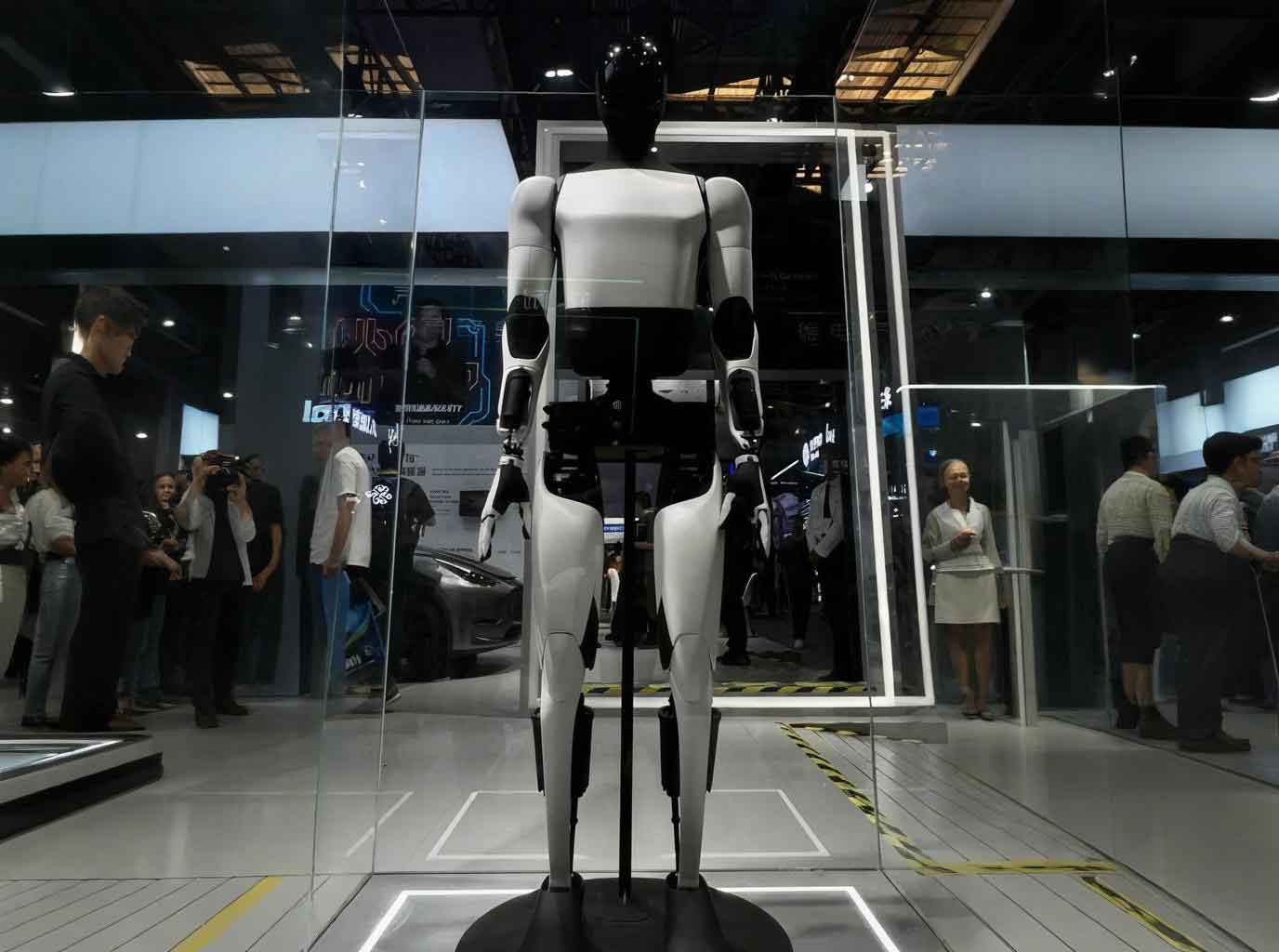
Socio-cognitive factors significantly influence emotional interactions with embodied robots. Individual differences, such as personality traits, age, and gender, affect how users perceive and respond to robotic emotions. For example, users with high empathy levels may form stronger emotional bonds with embodied robots, while cultural backgrounds shape the interpretation of emotional expressions. In collective settings, group dynamics and social roles introduce additional layers of complexity. Embodied robots must navigate these variables to maintain effective communication. I propose that future research should focus on adaptive emotional models that account for these heterogeneities. For instance, machine learning algorithms can personalize emotional responses in embodied robots by learning from user interactions over time. The integration of large language models (LLMs) offers promising avenues for real-time emotion adaptation, enabling embodied robots to engage in nuanced dialogues. However, challenges such as data privacy and ethical considerations must be addressed to ensure responsible deployment.
In conclusion, the emotional capabilities of embodied robots are pivotal for advancing human-robot collaboration. Through a detailed examination of emotion models, recognition techniques, and expressive mechanisms, I highlight the progress and pitfalls in this field. Embodied robots that emulate emotional intelligence can transform industries by providing compassionate and context-aware services. Future work should explore cross-cultural emotional alignment and the long-term impact of emotional interactions on user well-being. As I reflect on this review, it is clear that emotional design in embodied robots is not merely a technical challenge but a holistic endeavor requiring interdisciplinary insights. By continuing to refine these systems, we can move closer to a future where embodied robots serve as genuine emotional partners in our daily lives.
To further elaborate on emotional representation, dimensional models like the PAD space allow for mathematical manipulations that are useful in embodied robots. For example, the distance between emotional states can be computed using Euclidean metrics: $d(E_1, E_2) = \sqrt{(V_1 – V_2)^2 + (A_1 – A_2)^2 + (D_1 – D_2)^2}$, where $V$, $A$, and $D$ represent valence, arousal, and dominance, respectively. This facilitates emotion clustering and transition modeling in embodied robots. Additionally, cognitive appraisal models can be implemented as rule-based systems in embodied robots, where emotional outcomes are derived from logical inferences about user actions. For instance, if an embodied robot appraises a user’s compliment as positive, it might trigger a joy response, updating its internal state accordingly.
In emotion recognition, multi-modal fusion techniques are essential for robust performance in embodied robots. I discuss feature-level, decision-level, and model-level fusion strategies. Feature-level fusion combines raw data from sensors early in the processing pipeline, but it requires temporal alignment, which can be challenging. Decision-level fusion aggregates outputs from separate classifiers, offering flexibility but potentially ignoring inter-modal correlations. Model-level fusion, using architectures like recurrent neural networks (RNNs), captures dynamic interactions between modalities. For embodied robots, this can be represented as a function $F(M_1, M_2, …, M_n)$ where $M_i$ denotes different modalities, and the output is a unified emotion label. Empirical studies indicate that model-level fusion achieves higher accuracy in unpredictable environments, making it suitable for embodied robots operating in real-world settings.
When considering emotion generation, embodied robots often employ probabilistic models to simulate emotional dynamics. For example, a Markov decision process (MDP) can model emotion transitions based on user interactions: $P(E_{t+1} | E_t, A_t)$, where $E_t$ is the emotion at time $t$ and $A_t$ is the action taken by the embodied robot. This allows for adaptive behavior that evolves with the interaction history. In terms of expression, micro-level parameters such as motion speed or sound pitch can be optimized using control theory. For instance, the emotional intensity of a gesture can be modeled as $I = k \cdot v \cdot a$, where $v$ is velocity, $a$ is amplitude, and $k$ is a scaling factor. By fine-tuning these parameters, embodied robots can convey emotions like excitement or calmness effectively.
Lastly, the socio-cognitive aspects of emotions in embodied robots necessitate a focus on ethical AI development. As these robots become more integrated into society, issues of emotional manipulation and bias must be mitigated. I advocate for transparent emotional algorithms in embodied robots that allow users to understand and control emotional interactions. In summary, the journey toward emotionally intelligent embodied robots is filled with opportunities for innovation, and I believe that by addressing these multifaceted challenges, we can create systems that enrich human experiences profoundly.