
As a researcher focused on the intersection of technology and labor, I have observed the rapid evolution of embodied intelligence, particularly through embodied robots, which are reshaping industries by integrating physical presence with advanced decision-making. Embodied robots represent a form of artificial intelligence that moves beyond virtual algorithms to interact directly in physical environments, leading to what is often termed “humachine integration.” This fusion of human and machine capabilities is not just a technological leap; it is fundamentally altering labor ecosystems, posing both opportunities and severe challenges to workers’ rights. In this article, I will delve into the crises facing laborers in this new era and propose comprehensive pathways for protection, emphasizing the role of embodied robots in driving these changes. I will use tables and formulas to summarize key concepts, ensuring a clear and analytical approach to this complex topic.
The concept of embodied intelligence, as realized through embodied robots, stems from critiques of traditional symbolic AI, emphasizing how intelligence emerges through physical interaction with the environment. In labor contexts, embodied robots exhibit features like embodied embedding, where they share physical spaces with humans; adaptive collaboration, enabling dynamic learning and coordination; autonomous decision-making, driven by data analytics; and connected execution, facilitating distributed operations in high-risk settings. These characteristics make embodied robots a pivotal force in humachine integration, but they also exacerbate risks to employment, dignity, privacy, and safety. For instance, the deployment of embodied robots in manufacturing and logistics has accelerated job displacement, while algorithmic management erodes personal autonomy. To address this, I argue for a human-centered framework that balances technological advancement with ethical safeguards, incorporating elements like data minimization and risk-sharing models.
In exploring the labor rights crises, I first examine the structural erosion of employment rights due to embodied robot integration. Embodied robots, with their ability to perform tasks ranging from manual labor to cognitive functions, are replacing human roles at an unprecedented rate. This isn’t merely about automation; it’s a shift towards a humachine ecosystem where embodied robots handle repetitive, hazardous, or data-intensive work, leading to widespread job losses and skill polarization. The economic impact can be modeled using a simple formula for employment displacement: $$ E_d = \alpha \cdot R_i + \beta \cdot S_g $$ where \( E_d \) represents employment displacement, \( \alpha \) is the rate of embodied robot integration, \( R_i \) is the robot intelligence factor, and \( \beta \) and \( S_g \) account for skill gaps and structural changes. This formula highlights how embodied robots amplify unemployment, particularly in sectors like assembly lines or warehousing, where they outperform humans in efficiency and endurance.
| Aspect | Crisis Description | Role of Embodied Robots |
|---|---|---|
| Job Displacement | Mass unemployment in low-skill roles due to automation | Embodied robots replace manual tasks, e.g., in manufacturing |
| Skill Polarization | Widening gap between high and low-skilled workers | Embodied robots handle complex tasks, forcing upskilling |
| Employment Security | Erosion of stable work arrangements | Embodied robots enable flexible, non-standard labor forms |
Moreover, the adaptive nature of embodied robots means they continuously learn from human interactions, further deepening the employment crisis. For example, in collaborative settings, embodied robots can reassign tasks based on real-time data, leading to what I call “algorithmic job reallocation.” This not only displaces workers but also creates a sense of insecurity, as traditional employment contracts become obsolete. The table above summarizes how embodied robots contribute to these issues, underscoring the need for proactive measures like reskilling programs and unemployment insurance tailored to humachine environments.
Another critical area is the dissolution of personality rights under algorithmic management by embodied robots. As embodied robots gain autonomy, they often oversee labor processes, monitoring workers’ behaviors, emotions, and even physiological states through sensors and AI. This “technical subordination” reduces humans to data points, eroding their dignity and autonomy. I propose that the risk to personality rights can be quantified using a formula for algorithmic dominance: $$ D_a = \gamma \cdot M_s + \delta \cdot P_i $$ where \( D_a \) is the degree of algorithmic dominance, \( \gamma \) represents the monitoring intensity of embodied robots, \( M_s \) is the management system complexity, and \( \delta \) and \( P_i \) denote personal data intrusion and its impact. This illustrates how embodied robots, by collecting and analyzing vast amounts of data, strip away workers’ control over their own identities.
In practice, embodied robots in workplaces use facial recognition, voice analysis, and motion tracking to enforce productivity standards, often without transparency. This leads to a phenomenon I term “digital dehumanization,” where workers feel like cogs in a machine-driven system. For instance, in warehouses equipped with embodied robots, employees report increased stress and loss of motivation due to constant surveillance. To counter this, ethical guidelines must prioritize human dignity, ensuring that embodied robots serve as tools rather than masters. This aligns with broader labor ethics, where the principle of “human oversight” should always prevail in humachine interactions.
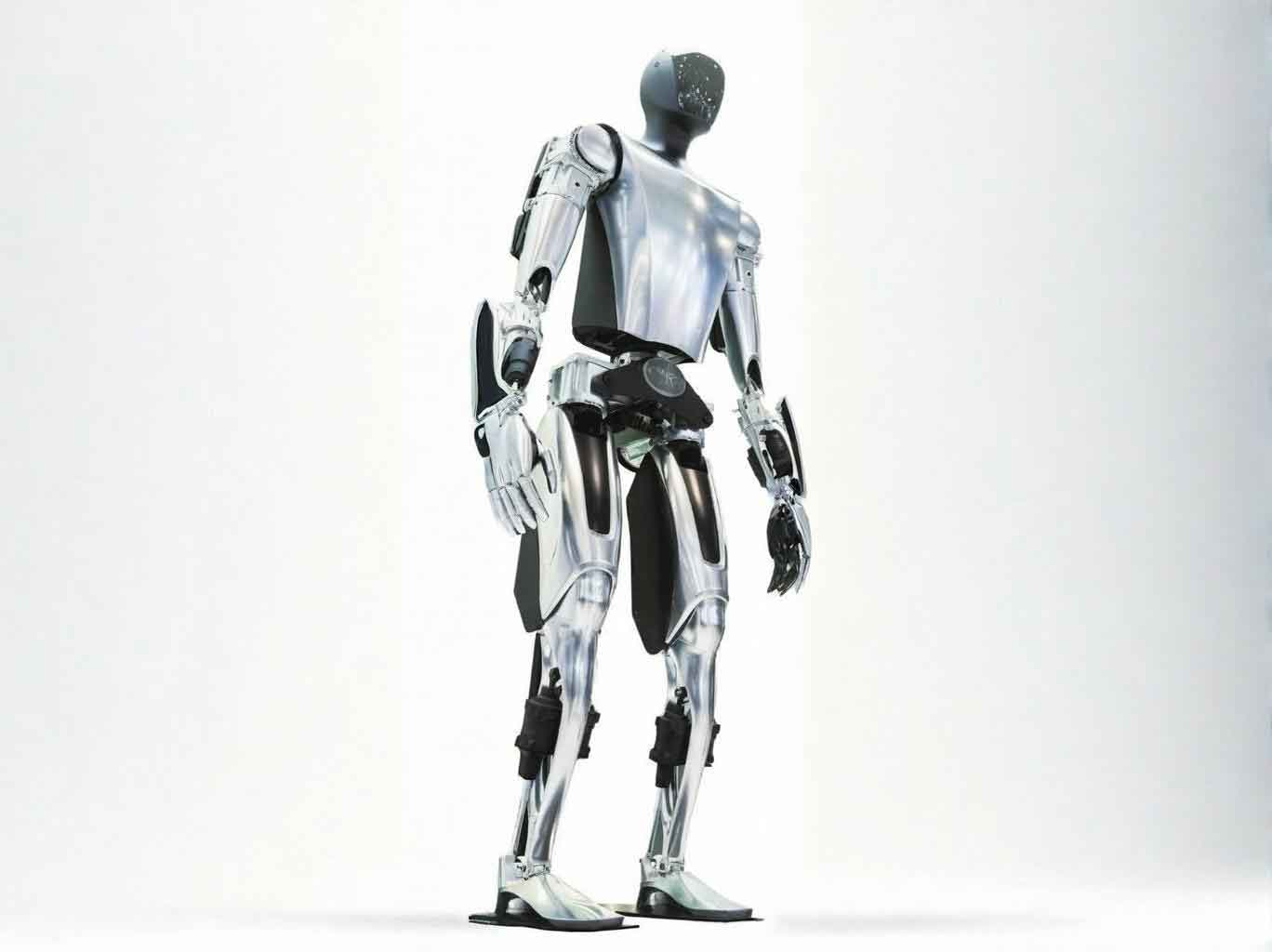
Data privacy represents another major crisis exacerbated by embodied robots. These systems rely on extensive data collection to function, capturing everything from work patterns to biometric information. The “minimum necessity principle” should govern this, but embodied robots often overstep, leading to privacy invasions. I define the privacy risk index as: $$ P_r = \epsilon \cdot C_f + \zeta \cdot U_a $$ where \( P_r \) is the privacy risk, \( \epsilon \) is the data collection frequency of embodied robots, \( C_f \) is the comprehensiveness of data, and \( \zeta \) and \( U_a \) account for unauthorized access and usage. This formula shows how embodied robots, through their pervasive sensing capabilities, create vulnerabilities that can lead to data breaches or misuse, such as in cases where employers use embodied robot data to make unfair employment decisions.
| Privacy Aspect | Risk Factor | Embodied Robot Role |
|---|---|---|
| Biometric Data | Unauthorized collection of physiological info | Embodied robots use sensors for real-time monitoring |
| Behavioral Tracking | Loss of anonymity in work actions | Embodied robots analyze movements and interactions |
| Data Ownership | Conflict over who controls labor data | Embodied robots generate data used for management |
Furthermore, the interconnectedness of embodied robots in humachine systems amplifies these risks, as data flows between multiple nodes without adequate safeguards. For example, in smart factories, embodied robots share information across networks, potentially exposing workers to external threats. The table above outlines key privacy issues, emphasizing that embodied robots must be regulated to uphold data minimization—collecting only what is essential for operational purposes. Implementing audit trails and consent mechanisms can help, but it requires a cultural shift towards valuing privacy in automated workplaces.
Occupational safety is also profoundly affected by embodied robot integration. While embodied robots can reduce physical risks in hazardous environments—like handling toxic materials or performing high-altitude tasks—they introduce new dangers, such as mechanical failures or algorithmic errors. I model the safety risk using: $$ S_r = \eta \cdot I_e + \theta \cdot A_f $$ where \( S_r \) is the safety risk, \( \eta \) represents the interaction intensity with embodied robots, \( I_e \) is the environmental hazard level, and \( \theta \) and \( A_f \) denote algorithm failure rates. This formula captures how embodied robots, despite their benefits, can cause accidents if not properly managed, such as in incidents where embodied robots malfunction and injure nearby workers.
In high-risk sectors like mining or construction, embodied robots operate in close proximity to humans, raising concerns about collision or control loss. The “risk co-governance” approach I advocate involves shared responsibility among employers, manufacturers, and regulators. For instance, embodied robots should undergo rigorous testing, and employers must provide training for safe humachine collaboration. Additionally, compensation schemes for injuries caused by embodied robots need updating to cover algorithmic faults, not just physical mishaps. This holistic view ensures that the advantages of embodied robots in enhancing safety do not come at the cost of worker well-being.
To address these crises, I propose several protection pathways centered on embodied robot integration. First, for employment rights, a human-centered system should include “embodied robot unemployment insurance” and lifelong training programs. This can be summarized in a formula for employment resilience: $$ E_r = \iota \cdot T_q + \kappa \cdot I_s $$ where \( E_r \) is employment resilience, \( \iota \) represents training quality, \( T_q \) is the adaptability of skills, and \( \kappa \) and \( I_s \) denote insurance coverage and institutional support. By investing in these areas, societies can mitigate the displacement effects of embodied robots, helping workers transition to roles like robot maintenance or coordination.
| Pathway | Description | Role of Embodied Robots |
|---|---|---|
| Employment Security | Unemployment funds and reskilling initiatives | Embodied robots drive need for new skill sets |
| Personality Rights | Ethical algorithms and human oversight | Embodied robots must respect dignity in management |
| Data Privacy | Minimization principles and audits | Embodied robots limited to essential data use |
| Occupational Safety | Risk-sharing and safety standards | Embodied robots designed with fail-safes |
Second, for personality rights, technical ethics should be embedded in embodied robot design, ensuring that algorithms prioritize human dignity. This involves establishing “algorithmic transparency” where embodied robots provide explanations for decisions, reducing the black-box effect. Third, data privacy requires strict adherence to minimization, with embodied robots only collecting data necessary for specific tasks, backed by regular audits. Finally, occupational safety demands a “deferred liability” model, where responsibility extends to embodied robot developers in case of accidents, promoting accountability across the supply chain.
In conclusion, the integration of embodied robots in humachine environments presents a dual-edged sword: it boosts productivity and safety but threatens fundamental labor rights. Through formulas and tables, I have illustrated the multifaceted crises—from employment erosion to privacy invasions—and proposed pathways like human-centered policies and ethical frameworks. As embodied robots become more pervasive, it is imperative to foster a collaborative ecosystem where technology serves humanity, not vice versa. By doing so, we can harness the benefits of embodied robots while safeguarding the dignity and well-being of workers, ensuring that humachine integration leads to a fair and sustainable future.