
As an observer of technological advancements, I have witnessed the rapid evolution of humanoid robots, which are increasingly regarded as the ultimate form of artificial intelligence. The integration of AI large models has endowed humanoid robots with cognitive abilities, enabling them to interact with environments, perceive stimuli, and execute actions in a human-like manner. With supportive policies and capital investments, the humanoid robot industry is accelerating, and factors such as declining population growth and aging societies are creating unprecedented opportunities. In this article, I will delve into the comprehensive analysis of humanoid robots, covering their conceptual framework, industrial chain, market dynamics, and policy landscape, while incorporating quantitative models and tables to summarize key insights. The keyword “humanoid robots” will be emphasized throughout to underscore its significance.
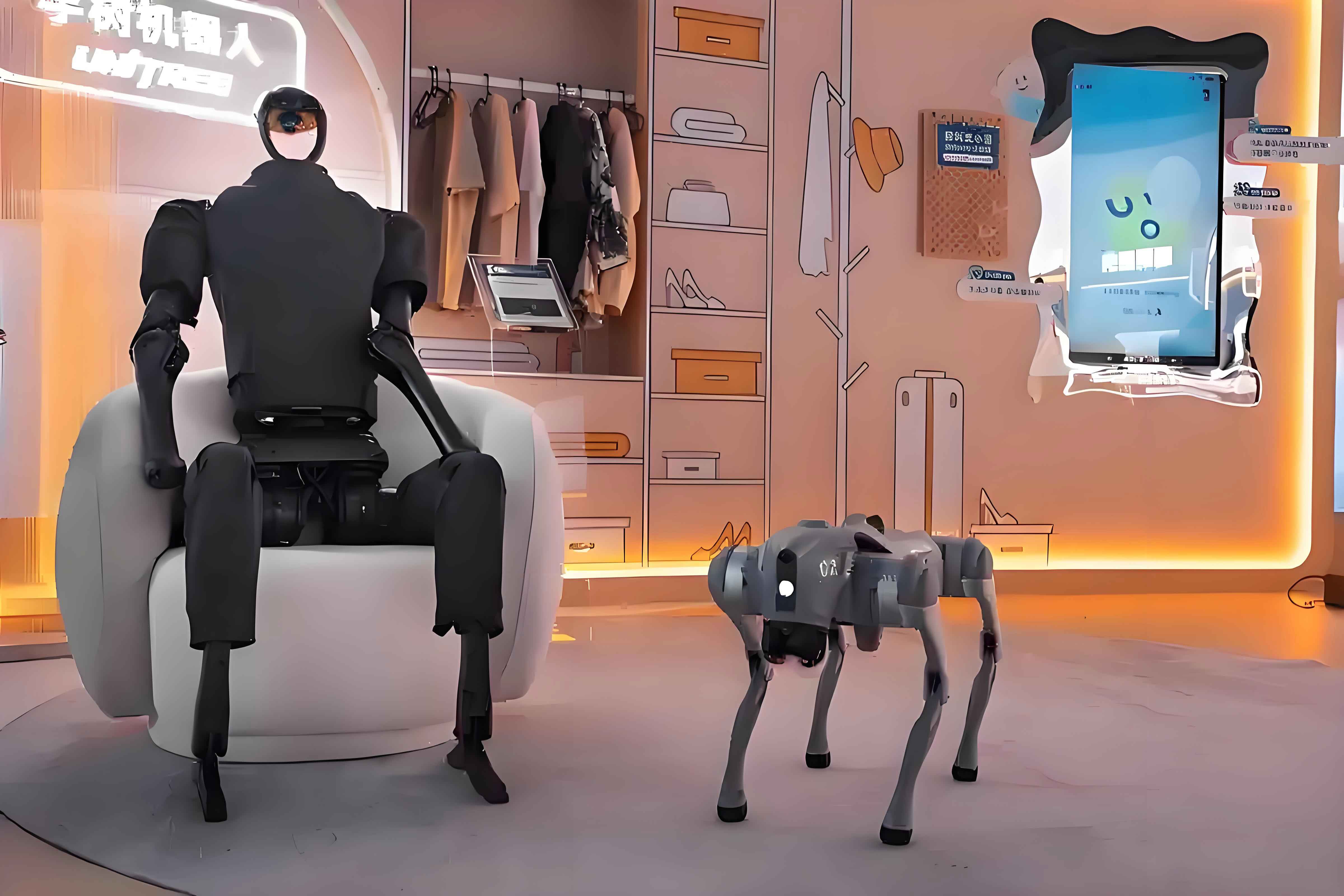
Humanoid robots, also known as embodied intelligent robots, are designed with biomimetic principles that mimic human appearance, perception, decision-making, behavior, and interaction capabilities. They represent one of the optimal forms for achieving embodied intelligence and can operate across diverse scenarios, including households, commercial settings, and industrial environments. Based on design variations, humanoid robots can be categorized into several types: legged models that prioritize lower-body mobility, mobile versions with wheeled bases and collaborative arms, all-purpose types featuring full-body capabilities, and performance-oriented models limited to predefined actions. The development of humanoid robots is not just a technological pursuit but a strategic imperative for future industries, as highlighted by various national policies.
In analyzing the industrial chain of humanoid robots, I have identified a structured framework comprising upstream, midstream, and downstream segments. The upstream segment includes software system development and hardware components, while the midstream focuses on本体 manufacturing, and the downstream encompasses terminal applications. To illustrate this, I have prepared a detailed table summarizing the key elements of the industrial chain for humanoid robots.
| Segment | Components | Cost Proportion (%) | Development Challenges |
|---|---|---|---|
| Upstream | Software Systems, Simulation Tools, Servo Motors, Reducers, Sensors, Chips, Actuators | Software: N/A; Hardware: Joint Modules (60%), Perception Modules (25%) | High patent barriers, data accumulation requirements, precision in perception and control |
| Midstream | 本体 Assembly, Integration, Algorithm Design, Environmental Configuration | Varies based on design and scale | Strong system integration capabilities, adaptation to multiple tasks |
| Downstream | Healthcare, Disaster Relief, Public Safety, Education, Domestic Services, Manufacturing | Dependent on application-specific demands | Lack of rigid replacement scenarios, need for cost-effective solutions |
The cost structure of humanoid robots can be mathematically represented to highlight the dominance of joint and perception modules. Let \( C_{\text{total}} \) denote the total cost of a humanoid robot. Then, the joint module cost \( C_{\text{joint}} \) and perception module cost \( C_{\text{perception}} \) can be expressed as:
$$ C_{\text{joint}} = 0.6 \times C_{\text{total}} $$
$$ C_{\text{perception}} = 0.25 \times C_{\text{total}} $$
$$ C_{\text{other}} = C_{\text{total}} – C_{\text{joint}} – C_{\text{perception}} = 0.15 \times C_{\text{total}} $$
This formulation underscores the criticality of optimizing joint and perception components to reduce overall expenses. In terms of technological challenges, humanoid robots face hurdles in intelligent capabilities, such as developing AI large models for enhanced perception and interaction, motion control algorithms for expanded application scenarios, and本体 enhancements like lightweight structures and high-energy power units. The evolution of humanoid robots is currently in the research and development phase, with breakthroughs needed to achieve commercial viability.
Market prospects for humanoid robots are promising, with substantial growth anticipated over the next decade. According to industry forecasts, the global market size for humanoid robots was approximately $1.62 billion in 2022 and is projected to reach $28.66 billion by 2032, reflecting a compound annual growth rate (CAGR). The CAGR \( r \) can be calculated using the formula:
$$ S_t = S_0 \times (1 + r)^t $$
Where \( S_0 = 1.62 \) (in billions of USD) for 2022, \( S_t = 28.66 \) for 2032, and \( t = 10 \) years. Solving for \( r \):
$$ r = \left( \frac{S_t}{S_0} \right)^{\frac{1}{t}} – 1 = \left( \frac{28.66}{1.62} \right)^{\frac{1}{10}} – 1 \approx 0.332 $$
This indicates a CAGR of approximately 33.2%, highlighting the rapid expansion of the humanoid robot market. In optimistic scenarios, annual sales could exceed 100,000 units by 2030 and reach 8 million by 2035, driven by industrialization maturity. The application of humanoid robots is expected to debut in industrial settings, such as logistics and automotive manufacturing, before extending to service domains like elderly care and household chores. To quantify the potential adoption, I have compiled a table of market projections based on various scenarios.
| Year | Optimistic Sales (Units) | Conservative Sales (Units) | Primary Application Areas |
|---|---|---|---|
| 2029 | 900,000 | 500,000 | Industrial Manufacturing, Logistics |
| 2030 | 1,000,000 | 600,000 | Expansion to Services, Education |
| 2035 | 8,000,000 | 3,000,000 | Widespread Domestic and Commercial Use |
Policy support plays a pivotal role in fostering the growth of humanoid robots. At the national level, initiatives such as the “Future Industry Innovation Tasks” and the “Guidelines for the Innovative Development of Humanoid Robots” have been introduced to prioritize technological breakthroughs and application scenarios. These policies encourage collaboration between enterprises and research institutions, aiming to build a robust ecosystem for humanoid robots. Locally, various regions have launched plans to establish innovation centers and accelerate industrial clustering, though specific names are omitted to adhere to guidelines. The emphasis on humanoid robots as a strategic industry underscores their potential to drive economic growth and address societal challenges.
In examining global case studies, I have analyzed several representative humanoid robot products to extract best practices and innovation trends. For instance, a leading electric vehicle manufacturer has developed a humanoid robot known for its advanced mobility and interaction capabilities. This robot leverages proprietary AI chips and simulation tools, with a design featuring multiple degrees of freedom and sensitive force control. Similarly, a prominent Chinese robotics firm has introduced a humanoid robot focused on service scenarios, utilizing core technologies in servo drivers and motion planning to perform tasks in domestic and industrial environments. Another innovative company has launched a humanoid robot with high dynamic performance, incorporating custom joint motors and versatile hand structures for complex operations. These examples demonstrate the diversity in approaches to humanoid robot development, yet common challenges persist in achieving cost-effectiveness and full autonomy. The table below provides a comparative overview of key parameters from these case studies, though specific identifiers are generalized to maintain anonymity.
| Feature | Company A Humanoid Robot | Company B Humanoid Robot | Company C Humanoid Robot |
|---|---|---|---|
| Height (cm) | ~170 | ~130 | Varies |
| Weight (kg) | ~70 | ~60 | ~50 |
| Degrees of Freedom | 28+ | 41 | 49 |
| Key Technologies | AI Models, Simulation Software | Servo Drivers, Motion Control | High-Torque Joint Motors, Sensory Integration |
| Application Scenarios | Industrial, Domestic | Service, Education | Industrial, Research |
The motion performance of humanoid robots can be modeled using dynamics equations. For example, the walking speed \( v \) of a humanoid robot can be related to joint torque and power density. Let \( \tau \) represent the torque of a joint motor, \( \rho \) the power density, and \( m \) the mass of the robot. A simplified equation for maximum speed might be:
$$ v_{\text{max}} = k \cdot \frac{\tau \cdot \rho}{m} $$
Where \( k \) is a constant factor accounting for design efficiency. This highlights the importance of high-torque, lightweight components in enhancing the mobility of humanoid robots.
Based on these analyses, I propose strategic recommendations for regions aiming to capitalize on the humanoid robot industry. These suggestions are framed around three pathways: refining existing strengths, nurturing emerging capabilities, and creating new opportunities. First, in areas with a solid foundation in related industries, such as automotive electronics, efforts should focus on specialized segments like high-flexibility wiring systems for humanoid robots. These components must endure mechanical stress and environmental hazards, which can be quantified using reliability models. For instance, the failure rate \( \lambda \) of a wiring system under stress might follow an exponential distribution:
$$ F(t) = 1 – e^{-\lambda t} $$
Where \( F(t) \) is the probability of failure by time \( t \). Enhancing material properties can reduce \( \lambda \), thereby improving durability.
Second, for regions with nascent capabilities in fields like optoelectronics or advanced materials, priority should be given to developing AI chips and lightweight alloy structures for humanoid robots. The computational power of AI chips can be expressed in terms of operations per second (OPS), with higher OPS enabling better perception and decision-making. Let \( P_{\text{chip}} \) denote the performance of a chip; then, the overall system performance \( P_{\text{system}} \) might be:
$$ P_{\text{system}} = \sum_{i=1}^{n} P_{\text{chip},i} \cdot \eta_i $$
Where \( \eta_i \) represents the efficiency of integration for each chip. Similarly, for lightweight materials, the density \( \rho_m \) and strength \( \sigma_m \) can be optimized to achieve a high strength-to-weight ratio, crucial for the本体 of humanoid robots.
Third, in domains with limited existing infrastructure, initiatives should target core software and hardware innovations through partnerships and investments. This includes building application development platforms and advancing key components like high-precision actuators. The torque density \( \delta_{\text{torque}} \) of an actuator, defined as torque per unit volume, can be a critical metric:
$$ \delta_{\text{torque}} = \frac{\tau}{V} $$
Where \( \tau \) is the torque and \( V \) is the volume. Improving \( \delta_{\text{torque}} \) allows for more compact and powerful joint designs in humanoid robots.
In conclusion, the advancement of humanoid robots represents a transformative force in technology and industry. Through systematic analysis of the industrial chain, market trends, and policy environment, I have highlighted the immense potential and challenges ahead. The integration of quantitative models, such as cost equations and growth projections, provides a rigorous framework for understanding the dynamics of humanoid robots. As the industry evolves, collaborative efforts across sectors will be essential to overcome technical barriers and unlock new applications. By embracing strategic pathways, stakeholders can position themselves at the forefront of this exciting field, driving innovation and economic growth through humanoid robots.
To further illustrate the technological progress, I emphasize that humanoid robots are not merely tools but partners in addressing global issues like labor shortages and aging populations. The continued emphasis on research and development, coupled with supportive policies, will accelerate the commercialization of humanoid robots. In my view, the future of humanoid robots lies in their ability to adapt to unstructured environments, which requires advances in AI, sensor fusion, and energy management. As I reflect on these insights, it is clear that humanoid robots will play an increasingly vital role in shaping our world, and I encourage ongoing exploration and investment in this domain to fully realize their benefits.