
As a researcher in robotics engineering, I have extensively studied the application of linear joint modules in humanoid robots, which are increasingly recognized as ideal physical carriers for artificial intelligence. These modules serve as core components in humanoid robots, and their development is a critical area of focus. Unlike rotary joint modules that dominate current humanoid robot designs—often leading to complex linkage mechanisms, difficulties in joint motion decoupling, and challenges in maintaining robot posture—linear joint modules offer distinct advantages. They provide high axial thrust, biomimetic design benefits, and superior transmission precision, making them more reliable and maintainable. By generating linear motion directly, linear joint modules simplify transmission chains, enhance energy efficiency, and reduce the difficulty of posture maintenance in humanoid robots. Recent implementations in models like Tesla’s Optimus and Xiaopeng’s Iron demonstrate their growing adoption for optimizing motion performance. In this article, I delve into the characteristics, technical challenges, and future trends of linear joint modules, emphasizing their role in advancing humanoid robots through detailed analyses, tables, and formulas.
Linear joint modules typically consist of frameless torque motors, screws (such as planetary roller screws or ball screws), drivers, encoders, force sensors, and structural housings. The frameless torque motors often employ inner rotor designs to address heat dissipation issues in high-stack stators, leveraging direct contact with metal components for cooling. Planetary roller screws are preferred for their high structural stiffness, whereas ball screws, with their lower load capacity and stiffness, are suitable for low-thrust scenarios and often require additional guiding structures. For instance, a linear joint module based on a planetary roller screw features a compact radial design but larger axial dimensions, making it ideal for high-thrust applications like thigh joints in humanoid robots, where peak thrust exceeds 8000 N. Conversely, modules using ball screws exhibit smaller radial dimensions and longer axial lengths, suited for low-thrust areas such as forearm joints, with peak thrust under 1000 N. Drivers are usually external to the module to avoid heat management complexities, though internal integration can enhance compactness. The following table summarizes key components and their functions in linear joint modules for humanoid robots:
| Component | Function | Common Types |
|---|---|---|
| Frameless Torque Motor | Converts electrical energy to mechanical motion | Inner rotor design |
| Screw | Transforms rotary motion to linear motion | Planetary roller screw, Ball screw |
| Driver | Controls motor operation | External or integrated |
| Encoder | Provides position feedback | Optical or magnetic |
| Force Sensor | Measures applied forces | Strain gauge-based |
The application characteristics of linear joint modules in humanoid robots highlight their superiority over planetary reducer-based rotary modules, albeit with certain limitations. Firstly, linear joint modules exhibit high positional and repeatability accuracy due to minimized backlash in the transmission chain. In rotary modules, backlash from gear meshing and linkages amplifies errors, whereas in linear modules, any rotational clearance (e.g., from keyway fits) translates to negligible linear displacement. For example, if rotational backlash is less than 0.5°, and the screw lead is 8 mm, the linear backlash is approximately $$ \text{Backlash} = \frac{0.5^\circ}{360^\circ} \times 8 \, \text{mm} \approx 0.011 \, \text{mm} $$ This precision is crucial for humanoid robots performing delicate tasks. Secondly, linear joint modules offer high axial stiffness but limited transverse stiffness. The screw mechanism, with preloaded rollers or balls, ensures minimal axial deformation under load, enhancing stability. However, susceptibility to bending moments and shear forces can lead to wear; thus, applications should avoid transverse loads. The axial stiffness \( k_a \) can be modeled as $$ k_a = \frac{E A}{L} $$ where \( E \) is the Young’s modulus, \( A \) is the cross-sectional area, and \( L \) is the length. To mitigate transverse issues, guiding structures or multiple support points are incorporated. Thirdly, energy efficiency is superior in linear joint modules, as they eliminate intermediate transmission losses and enable rapid dynamic responses. The efficiency \( \eta \) can be expressed as $$ \eta = \frac{P_{\text{output}}}{P_{\text{input}}} $$ where \( P_{\text{output}} \) is the mechanical output power and \( P_{\text{input}} \) is the electrical input power. In posture maintenance, the enabling current is significantly lower than in rotary modules, reducing energy consumption. Biomimetic advantages are also notable; the linear reciprocating motion mimics human muscle contractions, allowing humanoid robots to achieve lifelike limb movements. For example, linear modules in robotic arms resemble human forearm structures, facilitating natural motion. However, the high cost of screw components remains a drawback, driven by premium materials, complex manufacturing, and stringent quality control. Planetary roller screws, in particular, involve expensive processes like precision grinding and non-standard thread machining, with costs 2–3 times higher for imported brands compared to domestic alternatives. The table below compares linear and rotary joint modules for humanoid robots:
| Parameter | Linear Joint Modules | Rotary Joint Modules |
|---|---|---|
| Position Accuracy | High (e.g., ±0.011 mm) | Moderate (affected by backlash) |
| Axial Stiffness | High | Variable (depends on reducer) |
| Energy Efficiency | Up to 90% | 70–85% |
| Biomimetic Design | Excellent | Fair |
| Cost | High (screw-dependent) | Moderate |
Despite their advantages, linear joint modules face significant technical challenges in force control and thermal management. Force control difficulties arise from dynamic response lag, nonlinear disturbances, and time-varying parameters. The electromechanical coupling in these modules limits force control bandwidth to around 100 Hz, while nonlinearities like Stribeck friction and backlash introduce steady-state errors, especially at low speeds. The force control system can be described by the equation $$ F = k_p e + k_i \int e \, dt + k_d \frac{de}{dt} $$ where \( F \) is the output force, \( e \) is the error, and \( k_p \), \( k_i \), and \( k_d \) are PID gains. However, variations in screw stiffness due to thermal effects and wear complicate parameter tuning, posing challenges for precise tasks in humanoid robots, such as assembly operations. Thermal management issues stem from concentrated heat sources in screws, leading to thermal expansion and accuracy degradation. In high-dynamic scenarios, heat accumulation causes lead errors, and compact designs limit散热面积. The thermal deformation \( \Delta L \) can be calculated as $$ \Delta L = \alpha L \Delta T $$ where \( \alpha \) is the thermal expansion coefficient, \( L \) is the original length, and \( \Delta T \) is the temperature change. Asymmetric thermal gradients induce multi-degree-of-freedom pose errors, necessitating solutions like low-expansion alloys, enhanced散热structures, and real-time compensation algorithms, which increase complexity and cost. These challenges underscore the need for innovative approaches in linear joint module design for humanoid robots.
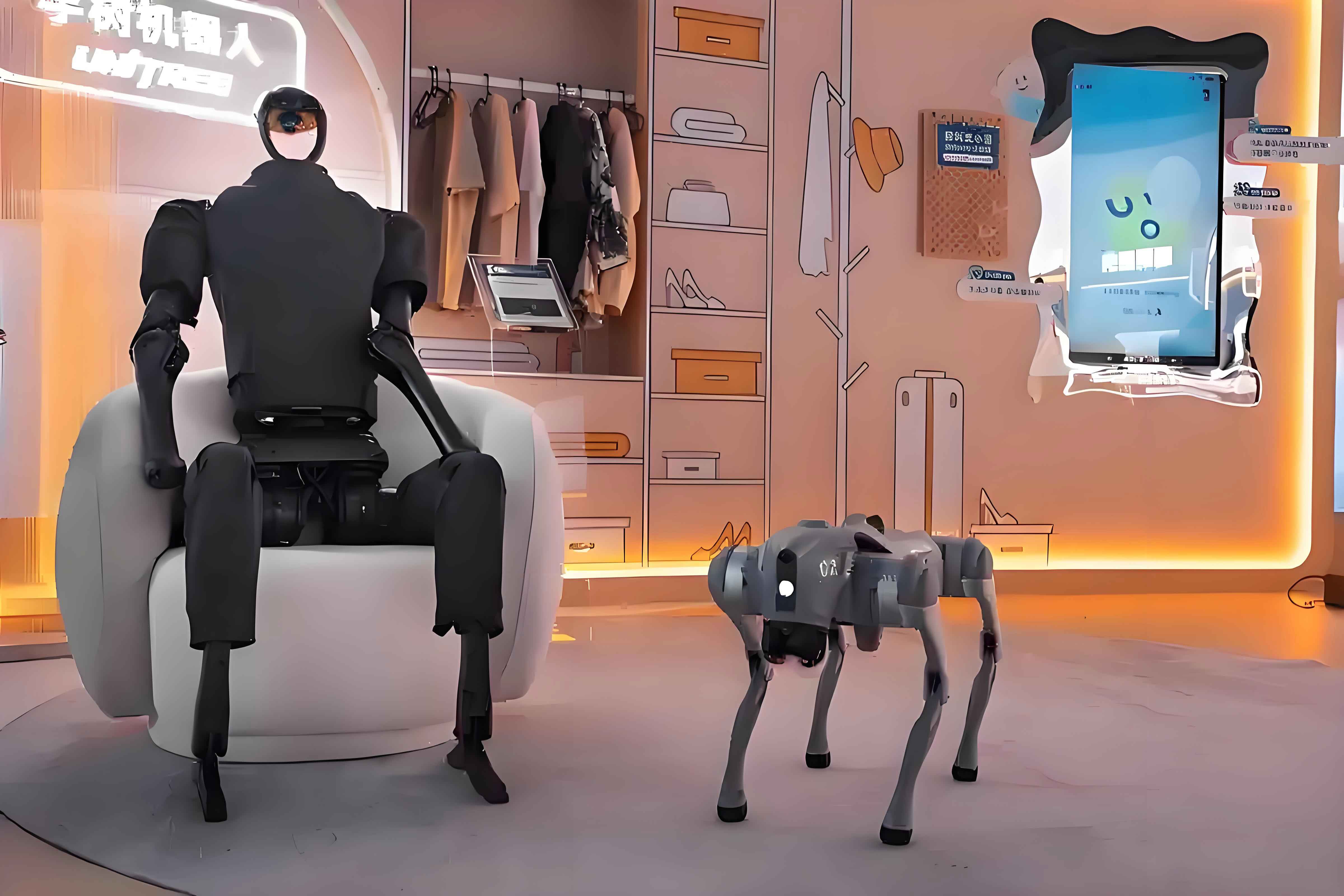
The application and development trends of linear joint modules in humanoid robots are evolving toward integration, standardization, and cost reduction. Current implementations in models like Tesla’s Optimus and Xiaopeng’s Iron involve small-batch production and scenario testing, with projections for mass production reaching millions of units by 2030. Linear joint modules are categorized into three thrust levels for humanoid robots: 500–1000 N for forearms, 3000–6000 N for calves or upper arms, and 8000–10000 N for thighs. Integration trends focus on drive-sense-control unity, improving electromagnetic noise immunity,散热performance, thermal efficiency, and multi-sensor fusion to enhance compactness, stability, endurance, and controllability of humanoid robots. Biomimetic designs are increasingly embedding modules into robot limbs with modular installation and removal features, potentially extending to applications like prosthetics. Product-wise, linear joint modules are diversifying for specific parts such as dexterous hands, manipulator arms, and lower limbs, but future convergence toward standardized, scalable products is expected as humanoid robot configurations mature. Cost reduction will be driven by economies of scale, core component substitution (e.g., domestic alternatives), and optimized manufacturing processes. The following formula estimates cost reduction over time: $$ C(t) = C_0 e^{-kt} $$ where \( C(t) \) is the cost at time \( t \), \( C_0 \) is the initial cost, and \( k \) is the reduction rate. This progression will accelerate the adoption of linear joint modules in humanoid robots, facilitating their deployment in factories, elderly care, and domestic services.
In conclusion, linear joint modules are pivotal in advancing humanoid robots through material, control, and integration innovations, driving them toward low-cost, high-dynamic, and high-reliability solutions. As a key power unit, these modules demonstrate high precision, rapid response, and biomimetic benefits in practical applications. The anticipated surge in mass production of humanoid robots for industrial, healthcare, and household roles will create diverse落地scenarios, supported by governmental and corporate investments that accelerate the localization of critical components like screws. With ongoing technological enhancements and cost optimizations, linear joint modules are set to become a cornerstone in the产业化of humanoid robots, enabling widespread adoption and普及. The future of humanoid robots relies heavily on overcoming current limitations and leveraging the full potential of linear joint modules to achieve seamless human-robot interaction and efficient performance in real-world environments.