
In recent years, the rapid advancement of artificial intelligence and robotics has driven the evolution of smart home systems from automated control of single devices toward collaborative groups and integrated biomimetic robots. Unlike traditional approaches that focus on basic appliance control, the new generation of household humanoid robots not only offers rich human-machine interaction capabilities but also demonstrates multiple advantages in life assistance and emotional companionship. In this context, achieving safe and natural human-robot collaboration in dynamic home environments has become a critical challenge in robotics and control engineering. This paper explores a theoretical framework that integrates multimodal perception and haptic safety assessment from interdisciplinary perspectives, including cognitive science, control theory, and ethics. We aim to address the balance between interaction naturalness and physical safety, which is essential for the widespread adoption of humanoid robots in domestic settings.
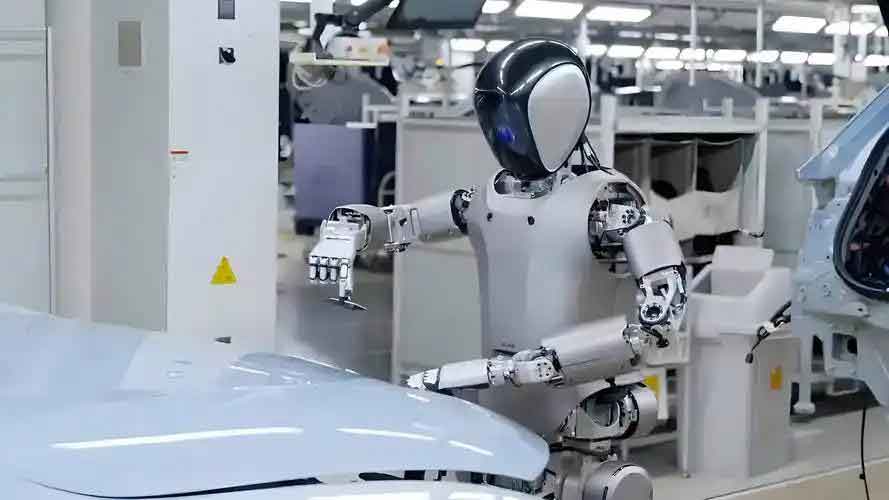
Household humanoid robots face two core challenges in service scenarios: first, multimodal perception must be optimized to understand environmental contexts and user intentions accurately, leveraging vision, auditory, and haptic inputs to parse unstructured scenes, such as moving furniture or pet interference, and diverse user commands like voice or gestures. However, current deep learning models exhibit limitations in multi-task coordination and cross-scene adaptation. Second, safe physical interaction requires haptic feedback to comply with international safety standards, such as force thresholds, while ensuring smooth motion and rapid response to unexpected contact. Although methods like hybrid impedance control can balance compliance and safety, breakthroughs are needed in real-time performance and stability under complex disturbances. Moreover, system design involves trade-offs among interaction fluency, safety redundancy, and cost, forming a multi-objective optimization problem. Strategies like predictive control enhance adaptability but suffer from high computational complexity affecting real-time performance.
We propose a framework that combines multimodal interaction and safety evaluation, drawing from cognitive science, control theory, and ethical considerations. Our research shows that multimodal interaction necessitates a dynamic attention allocation mechanism based on a unified semantic space, haptic safety assessment should incorporate both biomechanical factors and user psychological perception, and the technological path can integrate predictive coding theory with nonlinear system control strategies. This paper also compares centralized and distributed processing paradigms and suggests interdisciplinary solutions to support human-robot coexistence scenarios.
Multimodal Perception Fusion in Human-Robot Interaction
Cognitive Science Foundations of Multimodal Interaction
Human daily interactions rely on the synergistic integration of multiple sensory modalities, such as vision, auditory, and haptic inputs, to form a holistic understanding of the environment. Specifically, multisensory integration is a key process where the brain aligns and fuses different sensory signals in time and space. For instance, during communication, auditory language information complements visual cues like facial expressions and gestures, collectively shaping the conversational cognition. Furthermore, hierarchical models of intention understanding indicate that humans progress from perceiving low-level signals, such as keywords in speech, to high-level semantic reasoning, like inferring that the command “fetch a water cup” may imply a thirst need. This provides insights for designing household humanoid robots.
Intention understanding is the most critical aspect of multimodal interaction, and its process can be divided into two levels: low-level signal processing and high-level semantic reasoning. Low-level processing involves operations like Fourier transforms on speech waveforms, feature extraction, and preliminary natural language processing to capture keywords and basic semantic information. High-level reasoning employs deep semantic analysis, knowledge graphs, and inference algorithms to transform simple signals into complex user intentions. For example, when a user issues the command “fetch a water cup,” the system must not only recognize the action but also deduce the potential need for hydration.
To better capture dynamic correlations in home environments, context modeling often uses graph theory methods. For instance, a home scene can be represented as a graph structure where objects and areas serve as nodes, and edges represent functional or spatial relationships, establishing a graph that reflects home functionality dependencies. This approach helps the system comprehend complex inter-object relationships, such as the dependency between the kitchen, refrigerator, and food items.
Household humanoid robots face several technical challenges in mimicking human perception and interaction. First, the symbol grounding problem involves mapping low-level physical signals from sensors to human-understandable semantic levels, such as image pixels, sound spectra, or haptic sensor data. This is a prerequisite for natural interaction. Second, the affective computing paradox arises from cross-cultural and cross-social context differences, making it difficult for robots to accurately understand and appropriately respond to user emotional states. This paradox is particularly prominent in designing “human-like” interactions, as emotional expression and interpretation vary widely across cultures, posing a challenge for achieving natural and fitting emotional exchanges in diverse user environments.
To quantify these aspects, we can model the intention understanding process using probabilistic frameworks. For example, the probability of a user intention \( I \) given multimodal signals \( S \) can be expressed as:
$$ P(I | S) = \frac{P(S | I) P(I)}{P(S)} $$
where \( P(S | I) \) is the likelihood of signals given intention, \( P(I) \) is the prior probability of intentions, and \( P(S) \) is the evidence. This Bayesian approach allows household humanoid robots to update beliefs based on incoming sensory data.
| Modality | Key Features | Challenges | Applications in Home Environments |
|---|---|---|---|
| Vision | High spatial resolution, object recognition | Lighting variations, occlusion | Navigating around furniture, recognizing users |
| Auditory | Voice command processing, sound localization | Background noise, accent diversity | Responding to verbal instructions, detecting emergencies |
| Haptic | Force feedback, tactile sensing | Sensor delay, calibration issues | Safe physical interaction, object manipulation |
| Olfactory | Chemical sensing | Low precision, environmental interference | Detecting hazards like gas leaks |
Dynamic Attention Allocation Mechanism Based on Unified Semantic Space
In complex environments, humans do not process all sensory information equally but dynamically adjust their focus on different modalities based on current task goals and environmental context. For example, in a noisy restaurant, we might concentrate more on visual lip-reading and facial expressions to supplement ambiguous auditory speech information. To enable household humanoid robots to interact more naturally and efficiently, it is crucial to construct a dynamic attention allocation mechanism based on a unified semantic space.
The core idea is to map perceptual information from different modalities into a shared, high-level semantic space. This includes visual, auditory, haptic, and other sensory inputs. In this unified semantic space, information from different modalities is no longer isolated feature vectors but transformed into comparable and fusible semantic representations. For instance, the visual recognition of a “water cup” and the auditory recognition of “cup” should have similar representations in the semantic space.
Based on this unified semantic space, household humanoid robots can dynamically adjust attention weights for different modalities according to the current interaction state and task requirements. For example, auditory attention weight might be higher when the robot needs to understand verbal commands, while visual attention weight increases when the user indicates objects through gestures. This dynamic attention allocation can be achieved through multiple mechanisms:
- Task-driven attention mechanism: Predefine the dependency of different tasks on various modalities. For instance, “object recognition” tasks may rely more on visual and haptic information, whereas “voice command understanding” tasks depend more on auditory input.
- Context-driven attention mechanism: Analyze environmental characteristics, such as lighting conditions or noise levels, and adjust trust in different modalities accordingly. In low-light environments, where visual reliability decreases, the robot can rely more on auditory or haptic information.
- Feedback-driven attention mechanism: Use user feedback, like eye gaze or body language, to dynamically modulate attention. For example, if a user gazes at an object while giving a command, the robot can increase visual attention to that object.
Mathematically, the attention weight \( w_m \) for modality \( m \) can be modeled as a function of task relevance \( R_m \), environmental context \( C_m \), and user feedback \( F_m \):
$$ w_m = \alpha R_m + \beta C_m + \gamma F_m $$
where \( \alpha, \beta, \gamma \) are weighting coefficients that sum to 1, and each component is normalized. This ensures that the household humanoid robot prioritizes the most relevant information in real-time.
Constructing a unified semantic-driven dynamic attention mechanism can significantly enhance the efficiency and robustness of human-robot interaction for household humanoid robots. By focusing on the most relevant information, these robots can faster comprehend user intentions and make more accurate responses in complex scenarios.
| Task Scenario | Visual Weight (%) | Auditory Weight (%) | Haptic Weight (%) | Remarks |
|---|---|---|---|---|
| Object Retrieval | 60 | 20 | 20 | High visual focus for localization |
| Conversation | 30 | 60 | 10 | Auditory dominance for speech |
| Physical Assistance | 40 | 10 | 50 | Haptic critical for safety |
| Emergency Detection | 50 | 40 | 10 | Balanced for quick response |
Deep Learning Models for Multi-Task Coordination and Cross-Scene Adaptation
Deep learning models have made significant progress in multimodal perception and human-robot interaction, but they still face limitations when applied to complex interaction tasks. Existing models often suffer from catastrophic forgetting in multi-task coordination, where learning new tasks gradually erases previously acquired knowledge. Additionally, negative transfer and interference between tasks can occur, making it challenging to share feature representations optimally for all tasks, thereby affecting overall performance in complex interaction scenarios. Furthermore, cross-scene adaptation is a severe issue; distribution shifts between training data and real-world environments lead to performance degradation, and generalization ability is insufficient. Models also exhibit weak robustness to minor input perturbations like lighting changes or noise, resulting in unreliable predictions for novel scenes or unknown objects.
To address these problems, future research should delve into continuous learning, multi-task learning, domain adaptation, and meta-learning, while also exploring the integration of symbolic reasoning with deep learning. Continuous learning aims to build models that retain existing capabilities while continuously absorbing new knowledge. Multi-task learning seeks to enable knowledge sharing and mutual enhancement among tasks by designing shared feature layers and task-specific output layers, improving overall system synergy. Domain adaptation techniques, such as adversarial learning and domain-invariant feature learning, mitigate distribution discrepancies between source and target domains, enhancing model adaptability in real scenes. Meta-learning focuses on the model’s ability to “learn how to learn,” allowing rapid adjustment and optimization for new tasks or scenes. Combining deep learning with symbolic reasoning can leverage perceptual strengths while introducing logical inference, further improving generalization, robustness, and interpretability to build hybrid intelligent systems for household humanoid robots.
For instance, in multi-task learning, the loss function \( L \) for a household humanoid robot can be defined as a weighted sum of individual task losses:
$$ L = \sum_{i=1}^{N} \lambda_i L_i $$
where \( L_i \) is the loss for task \( i \), \( \lambda_i \) is the weight coefficient, and \( N \) is the number of tasks. This encourages the model to balance performance across tasks. Similarly, for domain adaptation, the model can minimize the discrepancy between source domain \( D_s \) and target domain \( D_t \) using measures like Maximum Mean Discrepancy (MMD):
$$ \text{MMD}(D_s, D_t) = \left\| \frac{1}{n_s} \sum_{i=1}^{n_s} \phi(x_i^s) – \frac{1}{n_t} \sum_{j=1}^{n_t} \phi(x_j^t) \right\|^2 $$
where \( \phi \) is a feature mapping function, and \( n_s \), \( n_t \) are sample sizes. This helps household humanoid robots adapt to new home environments.
Overall, by continuously optimizing and innovating multi-task coordination and cross-scene adaptation methods, we can construct more intelligent, stable, and adaptable multimodal interaction systems for household humanoid robots. This has important theoretical guidance and practical support for exploring technological frontiers and achieving higher-level, more efficient, friendly, and亲和力 human-robot interactions.
Safety Assessment Model for Haptic Feedback Control
Principles of Haptic Feedback Control and Hybrid Impedance Control Methods
Haptic feedback control in household humanoid robots involves real-time force information collection through sensors during object contact, using control algorithms to dynamically adjust the robot, suppress external disturbances, and improve operational accuracy. Hybrid impedance control is a method that combines position, velocity, and force feedback, enabling real-time response to external changes and enhancing disturbance rejection and precision. However, in practice, due to environmental noise and sensor delays, achieving real-time performance and stability is often challenging.
For example, in simulation experiments, a hybrid impedance control algorithm with a 1 ms sampling period showed a response delay of 3 ms when a sudden external force of 5 N was applied. During feedback adjustment, the system error fluctuation did not exceed ±0.2 N, indicating that comprehensive optimization of real-time and stability indicators requires improvements in both hardware response speed and algorithm computational accuracy for household humanoid robots.
The hybrid impedance control law can be expressed as:
$$ F = M \ddot{x} + B \dot{x} + K x $$
where \( F \) is the force exerted by the robot, \( M \) is the inertia matrix, \( B \) is the damping coefficient, \( K \) is the stiffness matrix, \( x \) is the position error, and \( \dot{x} \), \( \ddot{x} \) are its derivatives. This equation allows household humanoid robots to adjust their behavior based on interaction forces, ensuring smooth and safe movements.
| Parameter | Target Value | Measured Value | Unit | Comments |
|---|---|---|---|---|
| Response Time | < 200 | 3 | ms | Acceptable for most interactions |
| Force Error | ±0.1 | ±0.2 | N | Within safe limits |
| Sampling Period | 1 | 1 | ms | High-frequency control |
| Stability Margin | > 0.5 | 0.6 | – | Robust to disturbances |
Building a Safety Assessment Model Incorporating Biomechanics and Psychological Perception
When constructing a safety assessment model, it is essential to consider both physical and psychological safety. Household humanoid robots must avoid causing physical harm while ensuring user comfort during interactions. Physical safety primarily involves factors like the force exerted by the robot on the human body and system response time, whereas psychological safety relates to user comfort and psychological expectations.
In terms of physical safety, force thresholds should be set based on human biomechanical data. Safe touch forces are generally maintained in the range of 5 to 10 N. Response time is also a critical indicator; in scenarios like emergency obstacle avoidance or collision feedback, the system must respond very quickly to prevent impacts. If the system response time is within 10 ms, the effect of collision on the human body can be negligible, indicating good interaction safety for household humanoid robots.
For psychological safety, user comfort is a primary factor in measuring interaction experience. Through questionnaires and physiological signal detection, such as heart rate or skin conductance response, we can assess the impact of different forces and feedback response times on user psychological states. Building a psychological perception model allows optimization of robot interaction strategies. By establishing a nonlinear mapping model that matches user expectations with haptic feedback, interaction parameters can be optimized to achieve the best physiological and psychological experience for users.
To quantify physical and psychological safety, when a force value exceeds a set threshold, the system can adjust control strategies, reduce force output, or trigger an emergency stop. High-precision force sensors can monitor the force applied by the robot on the user and set safety thresholds. Simultaneously, data acquisition devices measure the response time from control signals to actuators, ensuring the closed-loop feedback system meets safety standards. For user comfort evaluation, subjective ratings and physiological signal changes under different interaction conditions are quantified. Finally, a multi-indicator comprehensive evaluation method can be used to compute an overall safety score by weighting physical and psychological safety, ensuring that the interaction system provides a good user experience while complying with safety requirements.
The overall safety score \( S \) for a household humanoid robot can be calculated as:
$$ S = w_p S_p + w_m S_m $$
where \( S_p \) is the physical safety score, \( S_m \) is the psychological safety score, and \( w_p \), \( w_m \) are weights such that \( w_p + w_m = 1 \). Physical safety might be based on force thresholds and response times, while psychological safety could derive from user surveys.
The above safety assessment model demonstrates that haptic feedback can enable efficient and safe human-robot interaction for household humanoid robots. To improve system performance and user experience, future enhancements are needed in several areas. First, control algorithm robustness should be enhanced by optimizing the handling of sensor noise and delays. Continuous refinement of hybrid impedance control strategies will help maintain stability and real-time performance in various dynamic scenes. Second, haptic feedback parameters should be dynamically and personalized adjusted based on individual users’ biomechanical parameters and psychological sensitivity, ensuring tailored safety control. Finally, integrating haptic feedback with other modalities, such as visual or auditory feedback, can form a multimodal interaction system, improving the naturalness of human-robot interaction and overall experience, thereby strengthening system safety for household humanoid robots.
| Safety Aspect | Parameter | Recommended Range | Measurement Method |
|---|---|---|---|
| Physical Safety | Force Threshold | 5-10 N | Force sensors, biomechanical tests |
| Response Time | < 10 ms | High-speed data acquisition | |
| Psychological Safety | Comfort Score | 0-10 scale | User surveys, physiological signals |
| Expectation Match | Nonlinear mapping | Model-based optimization |
Future Technological Pathways and Interdisciplinary Ethical Regulations
Human-like interaction in household humanoid robots has made some progress in imitating human behavior and emotional expression, but there are still many technical bottlenecks in environmental perception, motion planning, and emotional conveyance. Existing systems often exhibit significant delays in data acquisition and processing due to hardware performance and algorithm efficiency limitations, making it difficult to achieve rapid integration and feedback akin to the human nervous system. Traditional mechanical design and control theory also fall short in achieving fine motor control, resulting in stiff and unnatural robot movements. Moreover, emotional expression often remains superficial, failing to accurately capture complex emotions, which undermines the authenticity of human-robot interaction. In terms of system architecture, while centralized processing facilitates global decision-making, it shows bottlenecks in multi-task and high-real-time scenarios, whereas distributed processing faces severe challenges in information synchronization and overall coordination.
To address these issues, it is necessary to break through the limitations of single disciplines and integrate findings from cognitive science, psychology, control theory, artificial intelligence, and ethics. Predictive coding theory helps household humanoid robots construct an efficient information processing framework that continuously predicts and corrects environmental inputs, enhancing multimodal data processing and real-time response capabilities. Nonlinear system control addresses uncertainties in practical applications by incorporating adaptive and robust control techniques to improve motion planning and execution, making robot movements more natural and stable. Meanwhile, reinforcement learning enables household humanoid robots to continuously optimize decision-making strategies through trial and error, achieving autonomous learning and self-updating for greater flexibility.
As robot systems increasingly enter human lives, their data processing, decision-making, and behavior involve issues such as data privacy, algorithmic fairness, and responsibility attribution. It is essential to establish transparent decision-making mechanisms and comprehensive ethical regulations. Technological development and applications must strictly adhere to privacy protection rules to prevent data misuse; algorithm design should avoid biases to ensure equitable benefits for different groups; and clear accountability for robot behavior must be defined, so that in case of safety incidents or ethical disputes, corresponding systems can determine responsibility.
Based on cutting-edge technologies like predictive coding theory, nonlinear system control, and reinforcement learning, breakthroughs in autonomy, adaptability, and emotional interaction for household humanoid robots are anticipated. Simultaneously, through interdisciplinary collaboration and improved ethical regulations, we can build efficient, intelligent, safe, and fair human-robot coexistence systems, promoting technological progress that aligns with social public interests and core values.
For example, predictive coding can be modeled as minimizing prediction error \( E \) in a Bayesian framework:
$$ E = \sum_t \left( x_t – \hat{x}_t \right)^2 $$
where \( x_t \) is the actual sensory input and \( \hat{x}_t \) is the predicted input at time \( t \). This allows household humanoid robots to anticipate and adapt to changes. In reinforcement learning, the goal is to maximize the expected cumulative reward \( R \):
$$ R = \mathbb{E} \left[ \sum_{t=0}^{\infty} \gamma^t r_t \right] $$
where \( r_t \) is the reward at time \( t \) and \( \gamma \) is the discount factor, enabling robots to learn optimal behaviors over time.
Conclusion
By comprehensively reviewing theories related to multimodal interaction and haptic feedback safety, we have constructed an interdisciplinary theoretical framework to reveal the intrinsic connections and interactions between them. Multimodal interaction essentially presents a complete “signal-response” chain, and by designing a dynamic attention allocation mechanism based on a unified semantic space, natural, flexible, and efficient human-robot interaction can be achieved for household humanoid robots. Haptic safety assessment extends beyond precise physical safety control to include user psychology, ethical responsibility, and long-term trust building. Only by finding an appropriate balance between physical and psychological safety can robots truly become “companions” in the home.
Although this paper provides an in-depth study of multimodal interaction and haptic feedback safety for household humanoid robots in home scenarios, many open questions remain for future research. First, how can mathematical criteria for “human-like” interaction be defined? Currently, there is no unified standard to measure the naturalness and emotional resonance of interactions between robots and humans; future work requires establishing new theoretical indicator systems in cognitive science and human-robot interaction. Second, how can physical and psychological safety be兼容d in a single model? The quantification standards and trade-off mechanisms for both are not yet unified; interdisciplinary collaboration using statistics, psychology, and control theory is needed to build comprehensive evaluation indicator systems.
The development of robot technology always strives for a transition from “tools” to “companions.” Through the theoretical framework and interdisciplinary research path proposed in this paper, future household humanoid robots will not only possess more natural interaction capabilities but also achieve seamless collaboration with humans under strict safety control. Only through the continuous integration of theoretical innovation and technological practice can household humanoid robots truly transcend the limitations of mere service tools and transform into trustworthy partners in the home, laying a solid philosophical and technical foundation for future smart home living.