
In a significant shift for the robotics industry, humanoid robots are rapidly moving from experimental prototypes to commercially viable products, with prices plummeting to affordable levels and substantial orders emerging from various sectors. This dual breakthrough in cost and market demand signals that humanoid robots may soon reach a critical threshold for widespread adoption. As excitement builds among investors and industry observers, a pressing question remains: when will these agile machines reliably perform tasks in factories and homes, becoming true partners in daily life?
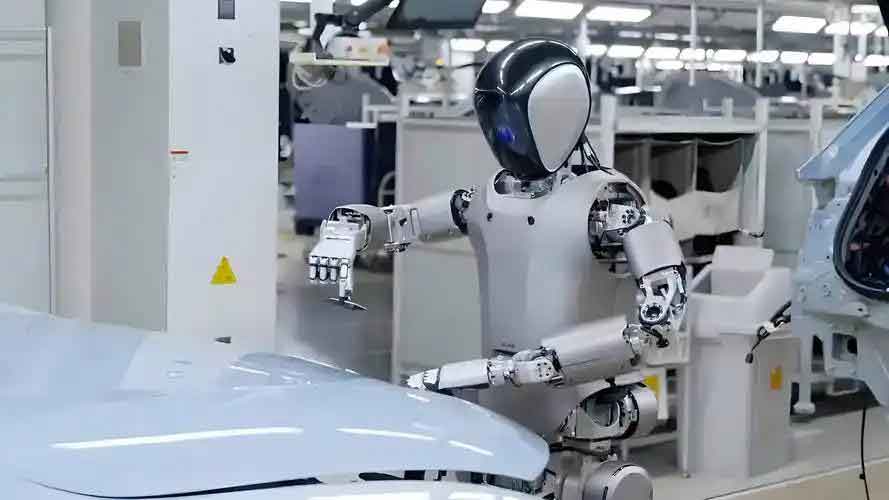
The recent flurry of activity highlights how humanoid robots are transitioning into a new era. With advancements in artificial intelligence and hardware manufacturing, companies are pushing the boundaries of what these machines can achieve. The integration of AI into humanoid robots is seen as a game-changer, enabling them to learn and adapt in dynamic environments. However, the path to full-scale deployment is fraught with technical and practical challenges that must be overcome to realize the vision of humanoid robots as ubiquitous assistants.
1. Price Breakthrough for Humanoid Robots
The cost of humanoid robots has seen a dramatic reduction, making them accessible to a broader audience. Recently, Beijing-based companies have announced products priced at levels comparable to high-end consumer electronics. Songyan Power unveiled the Xiaobumi humanoid robot for just 9,998 yuan, marking the first time a fully functional humanoid robot has been priced below 10,000 yuan. Shortly after, Accelerate Evolution introduced the Booster K1 model with a limited-time starting price of 29,900 yuan. These developments represent a stark contrast to the past, where humanoid robots often cost hundreds of thousands of yuan, confining them to research labs and specialized applications.
Jiang Zheyuan, founder and chairman of Songyan Power, emphasized that the price reduction is achievable through high levels of self-research in core components and increased localization of supply chains. By utilizing materials like plastics, aluminum, iron, copper wires, magnets, and chips, along with composite materials, companies can effectively control costs and margins. Jiang confidently stated that China’s robust hardware testing capabilities surpass those of any other country, positioning it as the likely leader in bringing humanoid robots to households on a large scale. This sentiment is echoed across the industry, as other players like Unitree have also made waves with their Unitree R1 model, launched in July at a starting price of 39,900 yuan, further driving down expectations for humanoid robot costs.
The affordability of humanoid robots is not just a matter of price tags; it reflects deeper trends in manufacturing and technology. As production scales up, economies of scale kick in, reducing per-unit costs. Moreover, innovations in design and material science have enabled lighter, more efficient robots without compromising functionality. For instance, the use of advanced composites reduces weight while maintaining durability, which in turn lowers energy consumption and extends operational life. These factors collectively contribute to the downward price trajectory, making humanoid robots a more attractive investment for businesses and consumers alike.
Beyond the immediate cost benefits, the price breakthrough for humanoid robots opens up new possibilities for applications in education, entertainment, and light industrial tasks. Educational institutions, for example, can now consider deploying humanoid robots for STEM programs, allowing students to interact with cutting-edge technology without prohibitive expenses. Similarly, small and medium-sized enterprises may find it feasible to integrate humanoid robots into their operations for tasks like inventory management or customer service, thereby enhancing productivity and innovation.
2. Surge in Commercial Orders
Parallel to the price drops, the humanoid robot industry is witnessing a surge in commercial orders, indicating growing confidence in their practical utility. On October 29, Yuejiang Robotics signed a procurement contract with Ruidefeng, a precision manufacturing firm, for an order totaling over 80.5 million yuan. This deal includes humanoid robots and embodied intelligent collaborative robots, showcasing the expanding role of these machines in industrial settings. In September, Zhifang reached an agreement with a leading semiconductor display panel manufacturer to deploy more than 1,000 embodied intelligent robots over the next three years, with the order value reaching hundreds of millions of yuan.
These large-scale purchases are not isolated incidents. Companies such as Ubtech, Zhiyuan Robotics, Unitree, Stardust Intelligence, and Yuanli Unlimited have also reported significant orders from manufacturing and other sectors. Guo Yandong, founder and CEO of Zhifang, highlighted that the competition in the humanoid robot industry over the next three years will revolve around “real-scenario closed loops.” He argued that the key to building an insurmountable moat lies in which company can deploy humanoid robots in authentic commercial environments, collect operational data, and use it to iteratively improve models and hardware. According to Guo, focusing solely on price at this stage could harm research and development efforts; instead, priority should be given to ensuring that humanoid robots perform reliably and meet customer needs.
The rise in orders for humanoid robots underscores a broader trend toward automation in response to labor shortages and efficiency demands. In manufacturing, humanoid robots are being tested for tasks such as assembly, quality inspection, and logistics, where their human-like form allows them to navigate spaces designed for people. For example, in electronics assembly lines, humanoid robots can handle delicate components with precision, reducing error rates and increasing throughput. Similarly, in warehouses, they can assist with picking and packing operations, adapting to varied item sizes and weights without extensive reconfiguration of existing infrastructure.
Moreover, the data generated from these deployments is invaluable for refining AI algorithms. Each interaction provides insights into how humanoid robots perceive and respond to their surroundings, enabling continuous learning and adaptation. This feedback loop is crucial for advancing from simple, repetitive tasks to more complex activities that require decision-making and problem-solving skills. As humanoid robots become more integrated into workflows, they are expected to take on roles that complement human workers, handling hazardous or monotonous jobs while people focus on creative and strategic aspects.
3. Challenges in Widespread Adoption
Despite the progress, humanoid robots still face significant hurdles before they can become commonplace in homes and factories. For the general public, encounters with humanoid robots have largely been limited to events like robotics sports competitions, soccer matches, exhibitions, or educational labs. Their ability to perform practical tasks in scalable applications—such as household chores or industrial labor—remains underdeveloped. Cheng Hao, CEO of Accelerate Evolution, likened the development of humanoid robots to the growth of a child: just as a young child gradually develops motor skills before gaining cognitive abilities, humanoid robots must first master basic movements before advancing to complex tasks like screwing bolts in a factory.
With the introduction of smaller, more affordable consumer-grade humanoid robots, the financial barrier to entry has lowered, paving the way for new use cases. Jiang Zheyuan suggested that before humanoid robots can handle demanding roles like elderly care or housekeeping, they can provide emotional value by accompanying children, teaching programming, or assisting with language learning. These applications represent near-term opportunities for humanoid robots to enter households, offering companionship and educational support while technology continues to mature.
However, Deng Feng, executive director of Ubtech, offered a more cautious outlook, estimating that it will take three to five years for humanoid robots to genuinely serve in home environments. He explained that households present highly customized needs and unpredictable tasks, which current robotic capabilities cannot reliably support. For instance, navigating cluttered living spaces, understanding nuanced verbal commands, or performing delicate activities like cooking require a level of dexterity and intelligence that humanoid robots have yet to achieve consistently.
In industrial contexts, humanoid robots are still in the early stages of becoming efficient workers. A veteran in the robotics industry admitted that in factory settings, humanoid robots currently operate at about 30% to 40% of human efficiency, indicating substantial room for improvement. Factors such as battery life, processing speed, and environmental adaptability contribute to this gap. For example, while human workers can quickly adjust to changes on an assembly line, humanoid robots may require reprogramming or recalibration, leading to downtime and reduced productivity. Additionally, safety concerns must be addressed, as humanoid robots working alongside humans need to ensure they do not pose risks through unintended movements or errors.
To bridge these gaps, ongoing research focuses on enhancing the cognitive and physical capabilities of humanoid robots. Advances in machine learning are enabling better object recognition and situational awareness, while improvements in mechanics are leading to more fluid and stable movements. Collaborative efforts between academia and industry are also driving innovation, with projects aimed at developing standardized platforms for testing and validation. As these efforts bear fruit, humanoid robots are expected to gradually transition from novelties to indispensable tools, transforming how we live and work.
The journey toward widespread adoption of humanoid robots is a marathon, not a sprint. While price reductions and commercial orders mark important milestones, the ultimate success of humanoid robots will depend on their ability to deliver tangible benefits in real-world scenarios. Stakeholders across the ecosystem—from manufacturers and developers to policymakers and end-users—must collaborate to address technical, regulatory, and ethical challenges. By fostering an environment of innovation and practical application, the dream of humanoid robots as everyday companions and coworkers may soon become a reality, ushering in a new era of human-robot collaboration.