
This summer, the global spotlight intensified on the humanoid robots industry, fueled by a series of high-profile events including the World Artificial Intelligence Conference, the World Robot Conference, and the Humanoid Robot Games. The heightened exposure, however, has also brought forth a wave of questions and skepticism. Key concerns revolve around whether the lack of convergence in core technologies is a normal phase of development, if applications in cultural and sports domains represent non-essential needs, and when these machines might truly evolve into qualified “labor forces.”
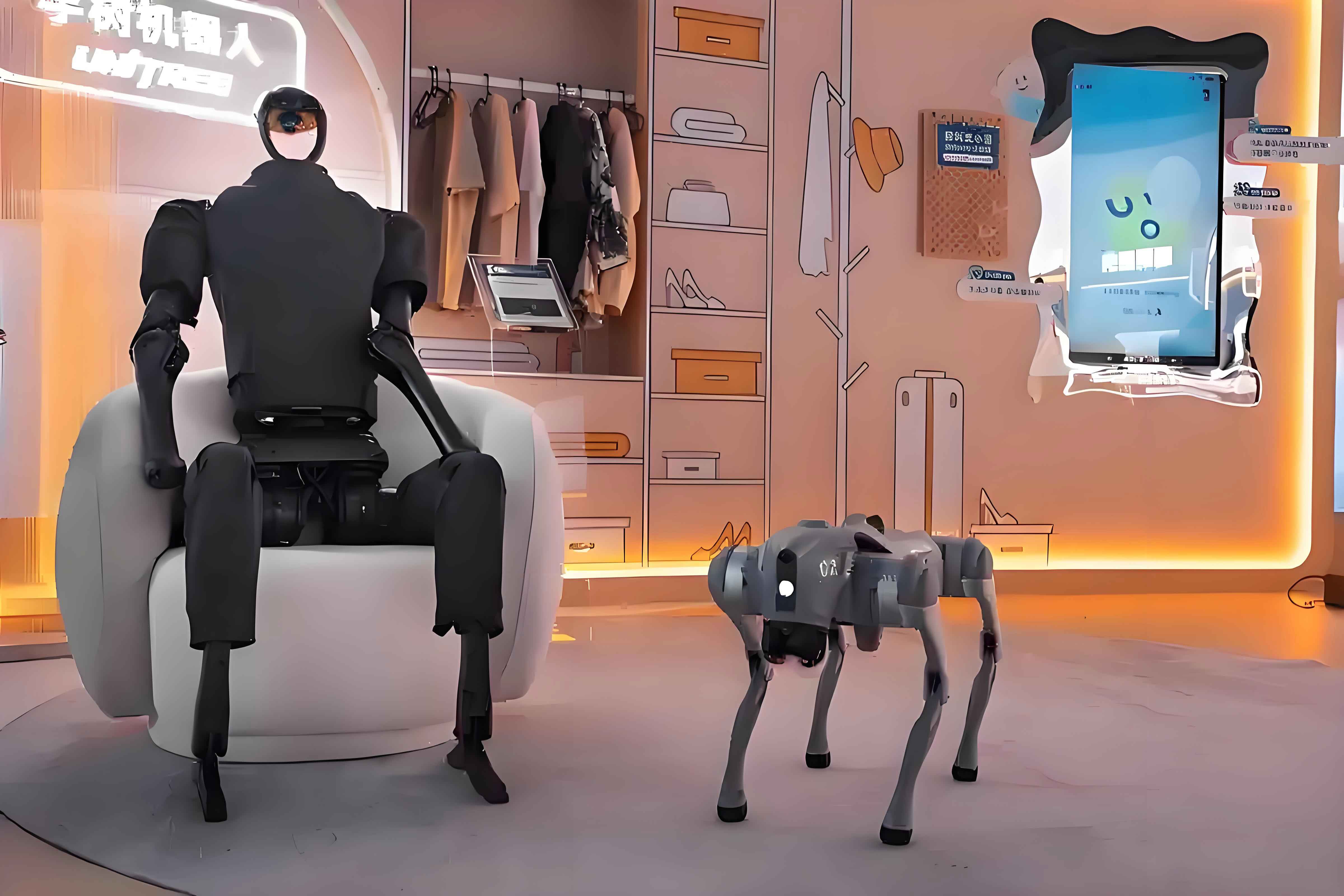
The development of the humanoid robots industry has now ventured into uncharted territory. With no prior experience to draw upon and no definitive path to follow, the emergence of doubts and even outright否定 is a natural occurrence. Encouragingly, amidst the fervent external attention and the cacophony of surrounding noise, companies within China’s robotics sector have not wavered. They continue their relentless exploration and progress through persistent trial and error. As September unfolded, numerous demonstrations of progress emerged: Unitree showcased training results where its humanoid robot G1 could quickly rise after a fall; Ubtech collaborated with the China Vocational and Technical Education Association to establish a data collection center for humanoid robots; Zhiyuan obtained the industry’s first CR certification for a humanoid robots dataset; Galaxy General’s “Embodied Intelligent Robot Retail Store” made an appearance at the Summer Palace; and Leju Robotics partnered with Haichen to establish a joint venture focused on industrial-grade logistics humanoid robots. The pace remains frenetic for companies in the humanoid robots space, with efforts concentrated on standardizing data collection, expanding partnerships across various fields, and pushing forward the practical application and deployment of their technologies. An increasing number of enterprises are refocusing their attention on innovation and strengthening their internal capabilities.
As a representative of future industries, the humanoid robots sector is characterized by multiple core technologies still in their embryonic stages of development. Industry experts and companies alike are navigating by feeling their way forward, leading to the most prominent feature of the current industrial landscape: the lack of convergence in numerous key technological pathways.
“The industrial chain for humanoid robots is long, involving many critical links from hardware to software. The current non-convergence of technologies is a significant characteristic of the industry’s development,” stated Song Wei, Secretary-General of the Zhejiang Robot Industry Development Association and a researcher at the Zhejiang University Robot Institute. He explained that humanoid robots encompass multiple core components and key technologies like AI models and control systems, with each core part presenting different technical routes. For instance, joint modules have two main technical routes: rotary and linear. The former utilizes a “motor + reducer” structure for rotational movement enabling flexible limb motion, while the latter employs lead screw systems to achieve high-load, high-precision motion. The dexterous hands of humanoid robots can also be categorized into three technical routes: gear transmission, linkage transmission, and tendon drive. The gear transmission approach typically results in fewer degrees of freedom, perhaps only several; linkage transmission can achieve around 15 degrees of freedom; and tendon drive, which mimics the operation of the human hand using motors, ball screws, and tendon ropes at the end-effector, can currently reach up to 20 degrees of freedom.
Furthermore, the development of embodied intelligence models primarily follows two main routes: the end-to-end model route (VLA) and the hierarchical model route. The end-to-end model route aims to directly translate human instructions into robotic arm execution—inputting images and text instructions and outputting end-effector actions. The hierarchical model route involves the collaboration of models at different levels, where a high-level large model handles perception and decision-making, and lower-level hardware layers or intermediate, fast-responding smaller models manage decision decomposition and execution.
At various technological nodes, different humanoid robot companies are deeply exploring and refining their chosen technical directions. Naturally, during the process of technological iteration, these companies continuously adjust and polish their technical routes.
Wang He, Assistant Professor at Peking University, founder and CTO of Galaxy General, and a scholar at Zhiyuan, shared insights with reporters. He stated that Galaxy General’s robots are equipped with a VLA embodied intelligence large model, with core technologies entirely self-developed. Differing from other robotics companies, Galaxy General pioneered synthetic simulation data technology, creating a global-first dataset of ten billion units for embodied intelligence, effectively addressing the current challenges in the field of “scarce data, difficult collection, and high costs.”
“We believe that the coupling of model-based approaches and Reinforcement Learning (RL) is the core development trend for the ‘cerebellum’ of humanoid robots. In the future, Leju will progressively advance the industrialization process of humanoid robots,” said Chang Lin, CEO of Leju Robotics. She elaborated that Leju had previously adhered to a model-based route, which ensured controllable behavior in application scenarios, pre-set rules, and precise task execution, guaranteeing that every robot in mass production could complete tasks. However, this approach lacked generalization capability. Consequently, Leju is now promoting the integration of the precise control offered by model-based methods with the generalization capabilities of RL. A collaboration with the Beijing Institute for General Artificial Intelligence enabled multiple Leju Kuafu humanoid robots to deliver a stable Tai Chi performance on stage at the 2025 Zhongguancun Forum.
Beyond the diversity in core technological pathways, the initial target application scenarios prioritized by various humanoid robot companies also differ significantly at present.
TiGong Robots clinched the first half-marathon championship for humanoid robots; Unitree Robots engaged in intense boxing matches; and Accelerated Evolution Robots played soccer on grassy fields. The public has even shown willingness to pay out of pocket to attend humanoid robot games, watching robots run, navigate obstacles, and perform tasks. The Hexuan Robot Band has reached a level where it can play the piano, the yangqin (a Chinese dulcimer), drums, an electric wind instrument, and a fretless guitar, and is now capable of performing a complete piece like “Blue and White Porcelain.”
However, skeptical voices question whether humanoid robots at this stage are merely “entertaining the masses,” arguing that they cannot, in the short term, become genuine “labor forces” capable of replacing human workers.
“Humanoid robots are not engaging in entertainment performances solely for the sake of entertainment; they are honing relevant skills through these performances. For example, our Hexuan robot initially could only play piano pieces at a grade 6 level, but has now advanced to performing grade 10 pieces. The improvement in performance ability is a reflection of technological advancement. Iterating technology and potentially migrating it to industrial or even household application scenarios can stem from such entertainment contexts,” Song Wei commented, emphasizing that entertainment can serve as a platform for refining humanoid robot technologies.
Another perspective holds that cultural and entertainment scenarios represent the most probable and commercially viable areas where current humanoid robot technology can support closed-loop business models. Before humanoid robots enter household settings, companies need to possess the “ability to lay eggs along the way”—generating revenue streams. Only by having profitability can companies ensure sustained funding for their development, ultimately supporting the grand vision of integrating humanoid robots into various application scenarios and homes.
Aside from entertainment, sports, and cultural applications, leading companies are also targeting industrial and commercial scenarios, beginning to achieve tangible results.
Longsheng’s independently developed second-generation Lansen humanoid robot stands 2 meters tall and weighs approximately 100 kilograms, including its mobile base. These humanoid robots have already begun “reporting for duty” on the intelligent production line for new energy vehicle drive motor components at Wuxi Longsheng, taking over tasks like搬运 and inspection from human workers. Hong Xiao, a technical expert in embodied intelligence at Longsheng Weirui Innovation Technology Center, explained that through the integration of specialized large models, the second-generation Lansen humanoid robot can achieve autonomous adaptation to workpiece grasping positions, as well as autonomous perception and understanding of the work environment and its elements. Designed with specialized power and sensing systems, it boasts a搬运 capacity exceeding 20 kilograms and possesses precise tactile and visual feedback at its end-effector, making it a valuable assistant for quality inspection and non-standard short-distance搬运 on the production line.
Leju is also advancing the deployment of its Kuafu humanoid robots in commercial service and industrial manufacturing settings. Chang Lin detailed that Kuafu has already “joined” venues such as the Suzhou Low-Altitude Economic Development Exhibition Hall, the Qingdao Artificial Intelligence Innovation Application Exhibition Center, and the China Mobile Smart Home Operation Center as讲解员s. Simultaneously, Kuafu is currently focusing on breakthroughs in the field of industrial intelligent manufacturing, having been delivered to industrial enterprises like FAW Hongqi and Haichen Co., Ltd. It operates in scenarios traditionally challenging for conventional industrial robots, such as flexible manufacturing and narrow, variable spaces, performing delicate and generalized operations.
Galaxy General, on the other hand, is targeting unmanned retail scenarios. The company’s robots rely on visual feedback closed-loop systems to perform practical tasks like grasping,搬运, and sorting in real-world environments. Based on demand, they are developing industrial-grade, stable, reliable humanoid robots capable of prolonged operation, functioning stably for over 8 hours on a full charge with a task accuracy completion rate of 97%. Their humanoid robot solution for smart retail stores has been operating stably for over half a year.
“We believe that only by placing robots in scenarios where they can solve real-world problems can we continuously drive technological iteration and realize industrial value,” Wang He stated. He indicated that the company currently focuses on two main directions: first, industrial manufacturing scenarios, such as material handling and sorting in vehicle and component manufacturing; and second, public service sectors, including high-frequency, essential scenarios like smart pharmacies and retail kiosks. This allows citizens to purchase medicines at night or buy beverages instantly on the street. These scenarios share common traits of being essential, high-frequency, while simultaneously imposing extremely high demands on the reliability, adaptability, and continuous operational capability of the humanoid robots.
The current industrial and commercial deployment scenarios represent merely the initial explorations for humanoid robots. Companies unanimously believe that through continuous technological innovation and practical implementation, humanoid robots will eventually find their way into household settings.
“Through market selection of scenarios, the technology for humanoid robots will gradually converge towards a route that is applicable and viable for industrialization. In the next 2 to 3 years, or at most 5 to 10 years, the industry will exhibit an exponential growth trend,” Chang Lin pointed out. She defined Leju’s robots as a universal, open development platform where all enterprises can develop skills adapted to different scenarios. The entry of humanoid robots into industrial factories is just the first step; in the future, humanoid robots will also be adapted for directions like elderly care, home services, and ultimately enter millions of households.
Relevant entrepreneurs also expressed that, regardless of environmental fluctuations, they will persistently and diligently promote the continuous advancement of the humanoid robots industry. “For enterprises, the current situation presents both challenges and opportunities. The challenge lies in maintaining long-term R&D investment and strategic focus amidst high uncertainty; the opportunity resides in the fact that whoever can first achieve productization and规模化 deployment in essential scenarios will capture the commanding heights of industrial competition,” Wang He remarked. He expressed hope to be among the first to establish generalization and deployment capabilities for robots within the industry, propelling the sector’s transition from technological demonstrations to genuine productive force.
The journey of humanoid robots is marked by persistent innovation and a clear focus on solving real-world problems. As these machines evolve, the interplay between diverse technological routes and varied application landscapes will shape their future. The ongoing efforts in data standardization, partnership building, and scenario-specific refinements underscore a collective drive towards maturity. While the path may be fraught with uncertainties, the unwavering commitment of companies suggests a future where humanoid robots become integral to numerous aspects of work and daily life. The noise surrounding their development may persist, but the signal of progress grows stronger with each technological breakthrough and successful deployment.