
In a significant development that could reshape the future of robotics, Samsung Display, a subsidiary of Samsung Electronics, has secured a major order to supply 8-inch OLED screens to Tesla, starting from 2027. Industry analysts widely speculate that these displays are destined for the face of Tesla’s next-generation humanoid robot, Optimus. This move has ignited intense discussions among humanoid robot manufacturers and display panel companies, with debates centering on whether such screens are an essential feature or an unnecessary addition for humanoid robots. While some critics argue that displays are superfluous for humanoid robots, others hail this as a groundbreaking step that could unlock a market worth trillions of dollars.
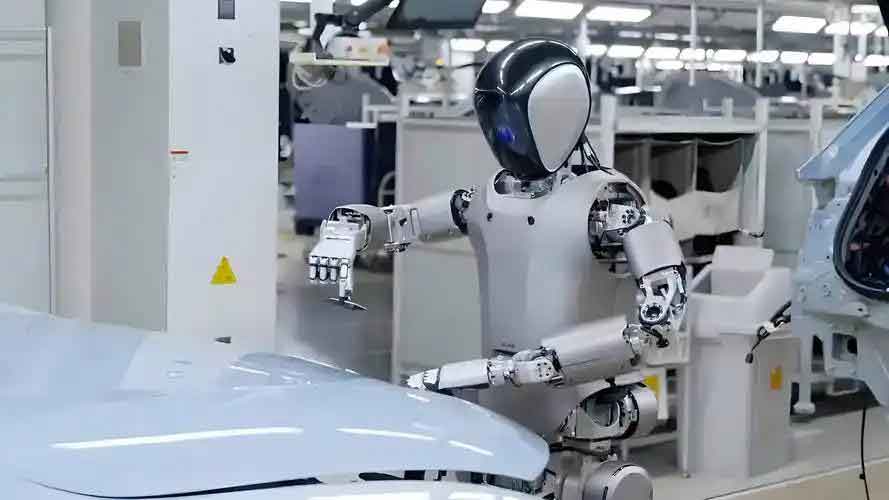
The recent disclosure of Tesla’s board proposing a compensation package and performance targets for CEO Elon Musk, which includes a key performance indicator of delivering one million humanoid robots over ten years, has further amplified interest. This announcement led to a surge in stock prices for Tesla’s humanoid robot suppliers and related sectors, fueling imaginations around the potential of OLED technology in humanoid robots. The integration of displays into humanoid robots represents a pivotal moment, as companies explore how to enhance human-robot interaction through advanced visual interfaces.
- The Strategic Partnership: Tesla and Samsung Display
- Elon Musk’s Ambitious Goals for Humanoid Robots
- The Great Debate: Is a Display Necessary for Humanoid Robots?
- Advantages of Display Screens in Humanoid Robots
- The Case for Simulated Human Faces in Humanoid Robots
- Market Implications and Future Outlook for Humanoid Robots
The collaboration between Tesla and Samsung Display marks a milestone in the evolution of humanoid robots. Under the agreement, Samsung Display will mass-produce 8-inch OLED screens specifically for Tesla’s humanoid robots by 2027. These screens are expected to be mounted on the face of the Optimus humanoid robot, replacing the current design that features an opaque black shell with colored LED strips along the edges. This shift aligns with Elon Musk’s long-standing vision for humanoid robots; during the initial announcement of the Optimus humanoid robot, Musk emphasized that the head would include a screen to provide users with useful information. The choice of OLED technology is driven by its flexibility, energy efficiency, and ultra-thin profile, which perfectly suit the curved, spherical shape of a humanoid robot’s head. This partnership underscores the growing convergence of display innovation and robotics, as humanoid robots advance beyond functional mobility to incorporate expressive, interactive elements.
Elon Musk’s commitment to humanoid robots is evident in the recently revealed compensation package, which sets a target of cumulative deliveries of one million humanoid robots within a decade. This ambitious KPI has not only boosted investor confidence in humanoid robot-related stocks but also accelerated research and development across the industry. Musk’s focus on integrating displays into humanoid robots reflects a broader strategy to make these machines more accessible and intuitive for everyday use. By equipping humanoid robots with screens, Tesla aims to enhance their utility in various settings, from industrial applications to personal assistance. The emphasis on humanoid robots as a mass-market product highlights the potential for exponential growth in this sector, with displays playing a crucial role in differentiating Tesla’s offerings from competitors. As humanoid robots evolve, Musk’s vision could drive widespread adoption, making them a common sight in homes and workplaces worldwide.
The question of whether humanoid robots require a display has sparked diverse opinions within the industry, leading to three primary viewpoints. First, proponents argue that screens are essential for improving interaction efficiency, allowing humanoid robots to convey information quickly and clearly. Second, some advocate for highly realistic human-like faces that use expressions to communicate, similar to humans. Third, skeptics contend that if humanoid robots are primarily designed for physical labor, such as assembly line work, they do not need any facial features at all. This debate is central to the development of humanoid robots, as it influences design choices, cost considerations, and user acceptance. Industry experts note that current humanoid robots from major companies often lack faces because the focus has been on mastering complex technologies like motion control and cognitive systems. However, as humanoid robots mature, the inclusion of displays could become a standard feature, driven by Tesla’s influence as a trendsetter in the field.
Display screens offer several compelling benefits for humanoid robots, making them a practical and economical solution for facial design. According to Liu Yushi, Research Director at CINNO Research, flexible OLED screens are well-suited for the curved contours of a humanoid robot’s face due to their lightweight and thin properties. Beyond aesthetics, these screens enhance interactive capabilities by providing visual feedback, which complements natural language communication. For instance, in scenarios where humanoid robots serve in customer service or educational roles, displays can show text, graphics, or emojis to facilitate understanding. Moreover, from a cost perspective, displays are more affordable and easier to mass-produce compared to simulated human faces. Song Wei, Secretary-General of the Zhejiang Robot Industry Development Association and a researcher at Zhejiang University’s Robot Institute, explained that while human facial expressions aim to convey emotions, displays achieve this more efficiently and consistently. He noted that current 30-inch curved OLED displays retail for just a few thousand dollars, whereas simulated human faces can cost tens of thousands of dollars and may trigger the “uncanny valley” effect, causing discomfort among users. This makes displays a viable option for humanoid robots seeking to balance functionality with user-friendly design.
Despite the practical advantages of displays, some companies are pursuing highly realistic simulated human faces for humanoid robots, arguing that emotional connection is key to certain applications. In fields like entertainment, companionship, education, healthcare, and emotional therapy, humanoid robots with lifelike faces can provide nuanced interactions that go beyond verbal communication. Companies such as EX Robots and Shouxing Technology are at the forefront of this approach, developing technologies that replicate human skin textures, blood vessels, and expressions like smiling, blinking, and frowning. Li Boyang, Co-founder and President of EX Robots, has publicly stated that the goal of facial simulation is not merely to recreate appearances but to enable comprehensive and authentic human-robot interactions. He emphasized that effective human communication relies heavily on non-verbal cues, such as expressions and body language, which are crucial in many contexts. Similarly, Hu Yuhang, Founder, CEO, and CTO of Shouxing Technology, highlighted that empathetic value is essential for humanoid robots to integrate into daily life, fostering trust and natural relationships. While this approach is more complex and costly, it addresses the need for emotional depth in humanoid robots, particularly in roles requiring empathy and social engagement.
The integration of OLED screens into humanoid robots could have far-reaching implications for the display industry and robotics market. According to data from CINNO Research, global shipments of OLED panels for smartphones are projected to reach approximately 900 million units in 2025. Morgan Stanley predicts that the volume of displays for humanoid robots could be on a similar scale, suggesting a substantial growth opportunity. However, experts like Liu Yushi caution that the future applications of humanoid robots remain uncertain, and it is too early to label this as a blue-ocean market for displays. The humanoid robot industry is still in its nascent stage, with various technologies competing for dominance, including brain models, joint systems, and dexterous hands. The adoption of displays as a facial solution will depend on market validation, user feedback, and technological advancements. If Tesla’s Optimus successfully incorporates screens and gains traction, it could inspire other companies to follow suit, potentially standardizing displays in humanoid robots. This evolution aligns with the broader trend of humanoid robots becoming more interactive and multifunctional, capable of tasks ranging from logistics to emotional support.
In conclusion, the debate over facial features for humanoid robots underscores the dynamic nature of this emerging industry. While displays offer a cost-effective and efficient means of interaction, simulated faces provide emotional richness that may be vital in specific contexts. As humanoid robots continue to develop, the choice between these approaches will shape their role in society. Tesla’s partnership with Samsung Display signals a bold step toward making screens a defining element of humanoid robots, potentially influencing the trajectory of robotics for years to come. The journey of humanoid robots is far from over, and the integration of displays will be a critical factor in their widespread adoption and success.