
In a series of groundbreaking developments, the humanoid robots sector in China is experiencing an unprecedented wave of high-value contracts, signaling a pivotal shift from experimental phases to large-scale industrial implementation. Major companies are securing substantial orders for humanoid robots, reflecting growing confidence in their practical applications across manufacturing, logistics, and beyond. This trend underscores the rapid maturation of humanoid robots technology, driven by advancements in AI, perception algorithms, and core components like servo motors and reducers.
The recent announcement from UBTech’s smart logistics subsidiary, UQI Youqi, regarding a procurement contract with Tianqi Automation Engineering Co., Ltd., exemplifies this momentum. Tianqi Automation has committed to purchasing Walker S series industrial humanoid robots from UBTech, with a total contract value of 30 million yuan. This order is scheduled for full delivery by December 31, 2025. Prior to this, UBTech had already secured a massive 250 million yuan procurement contract from a prominent domestic enterprise for embodied intelligent humanoid robot products and comprehensive solutions. These deals highlight the accelerating demand for humanoid robots in real-world settings, with the Walker series already undergoing training and integration in multiple factories. Company representatives have emphasized ongoing efforts to enhance the mass production capabilities of the Walker series to meet escalating delivery requirements and further propel the application of humanoid robots in authentic scenarios.
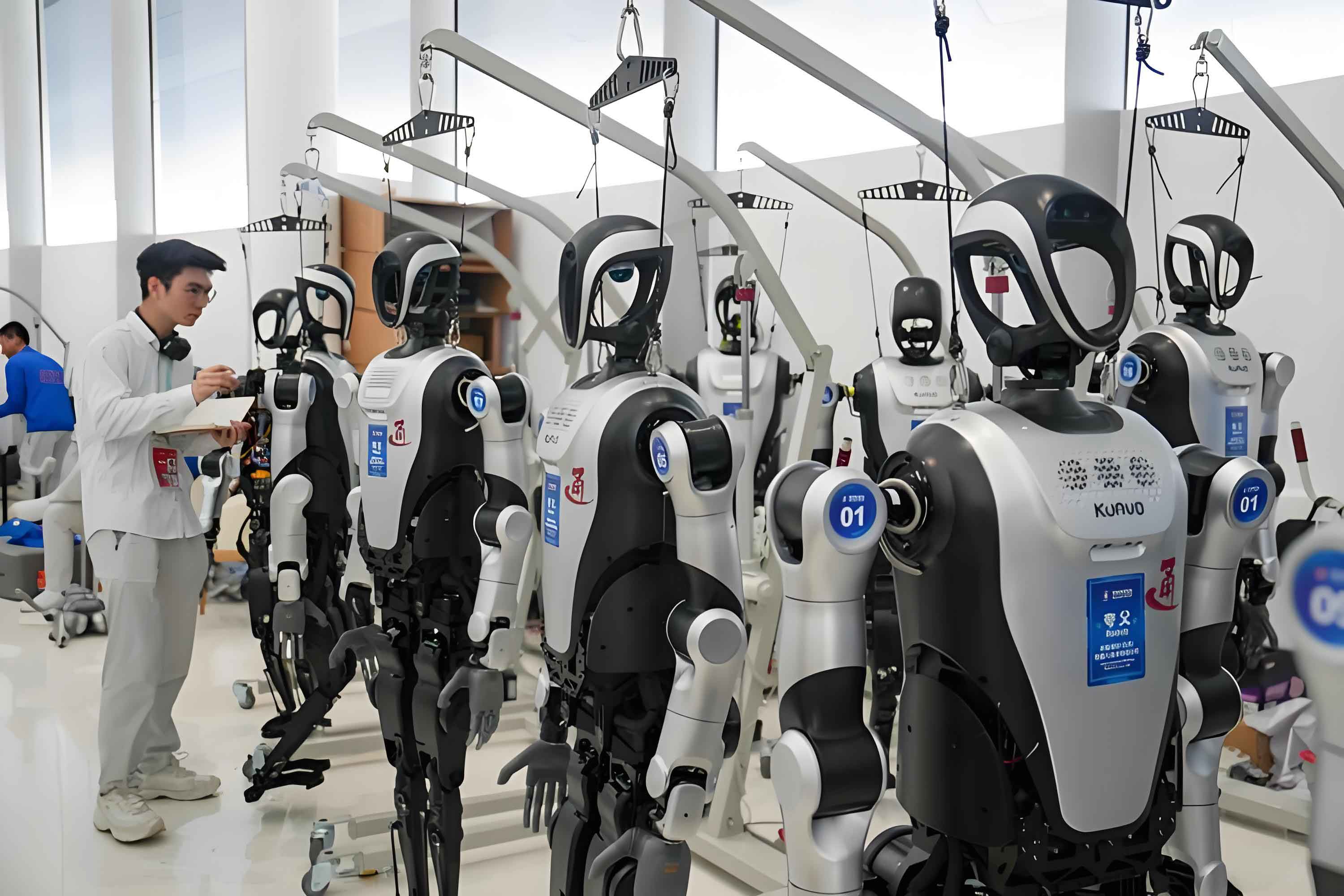
Beyond UBTech, several other enterprises have reported significant strides in the humanoid robots domain, reinforcing the sector’s expansion. In July, Shanghai Zhiyuan Xinchuang Technology Co., Ltd. and Hangzhou Yushu Technology Co., Ltd. were awarded a contract under China Mobile’s subsidiary project for “Humanoid Bipedal Robot Manufacturing Services,” with a staggering contract amount of 124 million yuan. Then, in early September, Stardust Intelligent (Shenzhen) Co., Ltd. announced a strategic partnership with Shanghai Xian Gong Intelligent Technology Co., Ltd., involving a thousand-unit level cooperation for AI robots. This agreement aims to deploy thousands of humanoid robots over the next two years into industrial manufacturing, warehouse logistics, and similar environments, marking a significant scale-up in the deployment of humanoid robots.
The frequent emergence of such high-value orders sends a clear signal: after years of technological validation, humanoid robots are steadily entering a critical stage of规模化 and industrial application. Data from the “2025 Humanoid Robots and Embodied Intelligent Industry Research Report” projects that China’s embodied intelligent market will reach approximately 5.295 billion yuan in 2025, accounting for about 27% of the global market. Simultaneously, the market size for humanoid robots in China is expected to hit 8.239 billion yuan, representing roughly 50% of the global market for humanoid robots. These figures illustrate the dominant role China is poised to play in the worldwide adoption of humanoid robots.
- The procurement contract between UBTech’s UQI Youqi and Tianqi Automation for Walker S series industrial humanoid robots, valued at 30 million yuan, with delivery set for end-2025.
- UBTech’s earlier 250 million yuan order from a domestic知名 enterprise for embodied intelligent humanoid robot products and solutions.
- The 124 million yuan contract won by Shanghai Zhiyuan Xinchuang and Hangzhou Yushu Technology for humanoid bipedal robot manufacturing services under China Mobile’s project.
- The thousand-unit strategic cooperation between Stardust Intelligent and Shanghai Xian Gong Intelligent for AI humanoid robots, targeting deployment in industrial and logistics settings over two years.
According to Hong Yong, Associate Researcher at the Chinese Academy of International Trade and Economic Cooperation, the leap from hundreds to thousands of units in orders indicates that leading companies in the industry have attained batch delivery capabilities. He noted that order volumes not only reflect market recognition but also serve as a crucial driver for cost reduction and accelerated scaling of humanoid robots. This perspective is echoed across the sector, as the industrial landscape is increasingly viewed as the most practical and suitable testing ground for humanoid robots. Statistics from the National Bureau of Statistics show that from January to August, industrial robot output累计 reached 512,000 units, a year-on-year increase of 29.9%, highlighting the accelerated pace of digital and intelligent transformation in manufacturing, which naturally aligns with the integration of humanoid robots.
In discussions on the practical application of humanoid robots, Zhou Xiaoling, Director of the Enterprise Digital Platform Application Center at Midea Group Co., Ltd., outlined key prerequisites for widespread adoption. She emphasized that factory scenarios must be sufficiently diverse to potentially form self-sustaining cycles. Additionally, the “brain” of humanoid robots needs to become increasingly intelligent, equipped with enhanced judgment and decision-making capabilities. Finally, through embodied intelligence, the task breadth of humanoid robots should be expanded, enabling a single humanoid robot to perform a wider range of functions and reduce redundant configurations. These insights underscore the multifaceted challenges and opportunities in deploying humanoid robots at scale.
Technological breakthroughs have been instrumental in the progress of humanoid robots. Advances in AI large models, perception algorithms, servo motors, reducers, and other core areas have significantly improved the dexterity, stability, and autonomy of humanoid robots. Zhang Xiaorong, Dean of the Deep Technology Research Institute, observed that humanoid robots, which were once primarily seen at exhibitions or in laboratories, are now capable of handling specific processes such as component handling, quality inspection, and material turnover. He attributed the appearance of large procurement contracts to this combination of technological progress and declining mass production costs for humanoid robots. Moreover, Zhang highlighted that the落地 of humanoid robots is not merely a breakthrough for individual companies but represents a leap forward across the entire industry chain—from core components to system integration, and from software and hardware platforms to整机 manufacturing. As规模化 applications continue to advance, collaborative innovation throughout the upstream and downstream产业链 will further strengthen China’s voice and competitiveness in the global robotics arena, particularly in the realm of humanoid robots.
Looking ahead, industrial scenarios are just the starting point for the commercialization of humanoid robots. As technology continues to evolve and costs decrease, humanoid robots are expected to expand into broader application spaces such as healthcare, rehabilitation, and education. This potential underscores the transformative impact humanoid robots could have across various sectors, driven by ongoing innovation and increasing market acceptance. The current wave of orders and technological enhancements positions humanoid robots as a cornerstone of future automation and intelligent systems, with China playing a leading role in this global transformation. The integration of humanoid robots into daily operations is not only reshaping industrial processes but also paving the way for more versatile and adaptive robotic solutions in diverse environments.
The synergy between market demand and technological advancement is creating a virtuous cycle for humanoid robots. As more companies adopt humanoid robots for tasks like quality inspection and logistics, feedback from real-world use cases drives further refinements in design and functionality. This iterative process is crucial for optimizing the performance of humanoid robots and ensuring their reliability in critical applications. For instance, the ability of humanoid robots to perform delicate operations in controlled factory settings demonstrates their potential to eventually handle more complex tasks in less structured environments. The emphasis on embodied intelligence in humanoid robots is particularly noteworthy, as it enables these machines to learn from interactions and adapt to new challenges, much like their human counterparts.
In addition to industrial applications, the societal implications of humanoid robots are gaining attention. As humanoid robots become more prevalent, discussions around ethics, safety, and job displacement are intensifying. However, the current focus remains on leveraging humanoid robots to enhance productivity and address labor shortages in certain sectors. The progressive deployment of humanoid robots in fields like healthcare could revolutionize patient care by assisting with repetitive tasks or providing companionship, thereby freeing up human workers for more complex duties. Similarly, in education, humanoid robots could serve as interactive tutors or facilitators, personalizing learning experiences for students. These prospects highlight the long-term vision for humanoid robots as integral components of a smarter, more connected world.
The global race for dominance in humanoid robots is accelerating, with China’s robust manufacturing base and technological investments giving it a competitive edge. The concentration of major orders within China reflects not only domestic demand but also the country’s strategic push to lead in emerging technologies. Government policies supporting innovation in AI and robotics have fostered an ecosystem where companies can rapidly develop and deploy humanoid robots. This environment encourages collaboration between academia, industry, and government, ensuring that research findings are quickly translated into practical applications for humanoid robots. As a result, China is well-positioned to set global standards for humanoid robots and influence their evolution in the coming years.
Despite the optimism, challenges remain for the widespread adoption of humanoid robots. Cost barriers, though decreasing, still pose a hurdle for smaller enterprises looking to integrate humanoid robots into their operations. Additionally, ensuring the safety and reliability of humanoid robots in dynamic environments requires continuous testing and validation. Interoperability with existing systems and standardization across different models of humanoid robots are also areas needing attention. However, the current trajectory suggests that these obstacles will be overcome through persistent innovation and collaborative efforts. The growing portfolio of successful use cases for humanoid robots provides a solid foundation for addressing these challenges and building trust among potential users.
In conclusion, the surge in multi-million dollar orders for humanoid robots marks a defining moment for the industry. From UBTech’s Walker series to collaborations involving companies like Stardust Intelligent and Shanghai Xian Gong, the scale of adoption is expanding rapidly. Supported by favorable market projections and technological breakthroughs, humanoid robots are transitioning from niche novelties to essential tools in modern industrialization. As this trend continues, humanoid robots will not only revolutionize industrial processes but also unlock new possibilities in healthcare, education, and beyond, solidifying their role as a transformative force in the global economy. The ongoing evolution of humanoid robots promises to reshape how we work, live, and interact with technology, making this an exciting era for innovators and stakeholders alike.