
The Fourth Global Digital Trade Expo, held in Hangzhou from September 25 to 29, showcased a remarkable array of products powered by embodied intelligence, drawing significant attention from attendees. These innovations, featuring advanced embodied robots, are transitioning from exhibition pieces to practical tools that enhance daily life, entertainment, and public services. The event highlighted how embodied intelligence is driving technological普惠, enabling smarter and more efficient solutions across various sectors.
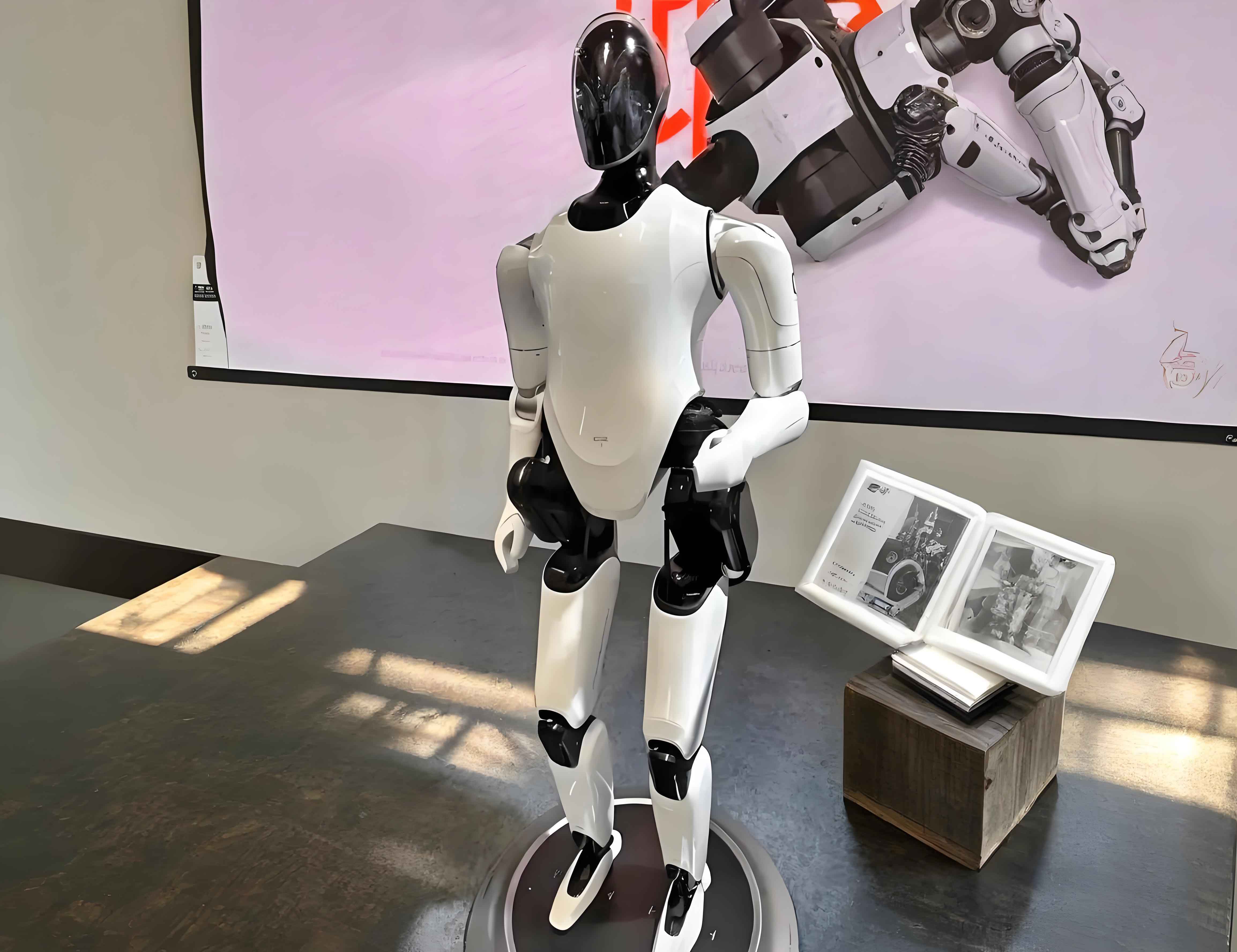
At the expo, numerous companies demonstrated how embodied robots and embodied intelligence are being integrated into everyday scenarios. From assistive devices for the elderly and disabled to interactive educational tools and public service machines, the applications of embodied intelligence are expanding rapidly. This reflects a growing trend where embodied robots are not just futuristic concepts but tangible assets improving human capabilities and quality of life. The following sections delve into the key areas where embodied intelligence is making a substantial impact, emphasizing the role of embodied robots in shaping a smarter future.
-
Technology Empowerment for Daily Life through Embodied Intelligence
In the “Smart Future” themed exhibition area, several companies presented embodied robots designed to assist individuals in their daily activities. BrainCo, a prominent player, displayed its intelligent bionic legs and hands, which attracted crowds during live demonstrations. A staff member wearing the intelligent bionic leg explained that the product contains sensors in its cavity that capture weak neural signals and electromyographic signals from the skin. Using large-model algorithms, it interprets the wearer’s intended movements from brain signals, enabling adaptive walking on different terrains and in various scenarios. He noted that earlier prosthetic legs functioned more like crutches, requiring dragging motions, whereas this embodied intelligence-driven device allows for natural, alternating steps, significantly enhancing mobility for users.
Another highlight was the robotic exoskeleton showcased by Taixi Intelligent, aimed at reducing physical strain during activities like mountain climbing or stair ascent. Chen Xulei, a mechanical engineer assistant at Taixi Intelligent, described how the exoskeleton monitors the wearer’s gait in real-time and provides waist support through a closed-loop system of perception, decision-making, and execution. This embodied robot leverages mechatronics to augment human strength, demonstrating how embodied intelligence can be applied to consumer products. Liang Linchao, CEO of Taixi Intelligent, shared that the consumer-grade exoskeleton is priced at around five to six thousand yuan. Additionally, the company has introduced rental services in some scenic areas, where tourists can use the device for approximately twenty to thirty yuan per hour. Battery swap stations are set up along routes for quick recharging. Collaborations with companies like SF Express are underway to deploy these embodied robots in logistics centers, assisting with搬运 tasks and improving efficiency.
Embodied intelligence is also being utilized for hazardous environment inspections, as demonstrated by Kuangxing Technology. Mao Shipeng, the responsible person at Kuangxing Technology, introduced three products at the expo: a quadruped inspection robot, an engineering inspection drone, and a wall-climbing inspection robot. These embodied robots excel in motion control, recognition accuracy, and intelligent perception, enabling fully intelligent processes from data collection to problem diagnosis. Mao emphasized that their products are closely integrated into daily life and production, serving as safety guardians in urban high-altitude areas, industrial plants, and mine shafts. For instance, the embodied robots can precisely identify risks like falling objects, detect toxic gas leaks, and inspect瓦斯 concentrations in mines, thereby replacing manual inspections and enhancing safety and timeliness. Founded in February this year, Kuangxing Technology has already achieved profitability, with contract values exceeding ten million yuan, underscoring the commercial viability of embodied intelligence in practical applications.
-
Expanding Boundaries into Diverse Fields with Embodied Robots
The expo revealed how embodied intelligence is extending into public services, consumer services, and commercial displays, with embodied robots playing a central role. In the public cleaning sector, Xingwuzhong Robot presented the world’s first human-collaborative intelligent cleaning robot. This embodied robot employs embodied intelligence technology, combining robotic arms, depth cameras, and laser radar to overcome the limitations of traditional cleaning equipment that only perform planar tasks. It can autonomously handle 3D space cleaning duties, such as identifying stains, lifting toilet lids, retrieving cleaning nozzles, and precisely washing toilets in a seamless sequence. Yu Jichun, co-founder of Xingwuzhong, explained that the robot includes built-in water tanks for automatic water supply and drainage, along with a cleaning toolkit that adapts to different stain types by activating functions like spraying and drying. Currently deployed in locations such as Hangzhou Xiaoshan Airport, Aoti Impression City, subway stations, and large parks, this embodied robot addresses challenges like labor shortages and low cleaning efficiency in public areas, showcasing the practical benefits of embodied intelligence.
In the consumer service domain, Yiqiang Future introduced the intelligent physiotherapy robot R1, tailored for beauty, body care, massage, and traditional Chinese medicine clinics. Equipped with vision recognition capabilities in its robotic arms, this embodied robot performs precise operations like meridian推拿, moxibustion, and fascial relaxation. A key feature is that each physiotherapist can manage up to four robots simultaneously, reducing reliance on specialized human resources. Clients can adjust massage intensity via voice commands, balancing service efficiency with personalized experiences. This innovation highlights how embodied robots are transforming service industries through embodied intelligence.
For educational and family contexts, Luka Smart Technology’s Luka picture book reading robot has gained popularity domestically and internationally. Cao Qiang, the market responsible person at Luka Smart Technology, reported that the product is sold in over 60 cities across 18 countries, with global shipments exceeding ten million units. The embodied robot is user-friendly: by pressing a button and placing a picture book in front of it, the robot’s forehead camera识别文字 and utilizes large models for interactive responses, including describing images. If a user points to a specific character, the robot’s eye display immediately shows pinyin, stroke order, and word groups. Priced at 999 yuan and supporting English mode switching, this embodied intelligence device serves as an innovative tool for children’s启蒙教育, demonstrating the widespread adoption of embodied robots in household settings.
In commercial displays, robot performances have reached a mature stage. At the entrance of the artificial intelligence exhibition area, a robot band named “Hexuan Robot Band” from Hangzhou Haichuang Humanoid Robot Innovation Center (affiliated with Zhejiang University Robot Institute) captivated audiences by playing instruments like the piano, yangqin, drums, electric wind instruments, and a stringless guitar. Song Wei, deputy director of the center, shared that the band has been “active” for several months, performing dozens of shows at tech exhibitions, communities, and shopping malls. Market demand for such robot performances is high, with bookings extending into the October holiday period and beyond. Song explained that music was chosen as an application scenario for humanoid robots because it involves spatiotemporal precision and foresight, such as hitting the right notes at the right time and coordinating arm movements. This aligns with the center’s goal of developing dexterous hands and human-like mechanical arms for general tasks. By forming a robot band and generating revenue through performances and sales, the center creates a commercial闭环 to support research and development, ultimately advancing embodied intelligence for production, manufacturing, and home services.
Additionally, Yushu Technology showcased its Unitree G1 robot, which demonstrated skills like dancing and combat. Wang Xingxing, founder and CEO of Yushu Technology, stated during the expo that AI and robotics represent the greatest current opportunity. He predicted that intelligent robots, driven by embodied intelligence, will accelerate development in sports events and commercial services in the coming years, further expanding the reach of embodied robots.
-
Exploring Future Frontiers with Embodied Intelligence Innovations
Beyond current applications, the expo featured forward-looking initiatives that push the boundaries of embodied intelligence. Diwei Er Space Computing Company set up a simulated lunar surface environment, showcasing two AI lunar robots that depict future scenarios of embodied intelligence on the moon. A responsible person detailed that these embodied robots are scheduled to land on the moon around 2029 aboard the Chang’e-8 probe. They will demonstrate capabilities like太空扫码支付 and wireless charging, utilizing a self-developed AI platform for mutual charging and payment transactions in space. This project, in collaboration with Zhejiang University, aims to deploy人工智能 technology through commercial航天, highlighting how embodied robots could operate in extraterrestrial environments.
In technical research, the Hangzhou Haichuang Humanoid Robot Innovation Center is pursuing systematic breakthroughs in embodied intelligence. Song Wei explained that the center has shifted from traditional single-point technological advances to defining requirements based on real products. It addresses issues like insufficient智能化 and weak robot本体 capabilities by focusing on two main research directions: “strongest brain” and “strongest body.” The “strong brain” team tackles cognitive and autonomous operations in unstructured environments, having developed a framework for robot brain systems that enables functions such as voice interaction, positioning, navigation, and grasping. This has significantly enhanced scene perception and cognitive abilities, supporting various embodied robots like guide robots, companion robots, and humanoid robots. The “strong body” team concentrates on developing economical, reliable, and practical robot bodies centered on dexterous hands, human-like arms, and universal mobile platforms. Within two months, they overcame challenges like dual-arm collaborative trajectory planning, multi-machine synchronous control, and high-frequency motion control of mechanical arms, while deepening explorations into intelligent dexterous hands and human-like mechanical arms. These efforts underscore the center’s commitment to advancing embodied intelligence through embodied robots, paving the way for broader applications in the future.
The expo collectively illustrated a vibrant landscape where embodied intelligence and embodied robots are not only solving present-day challenges but also envisioning a future where technology seamlessly integrates into every aspect of life. From assisting individuals with mobility issues to performing complex tasks in space, the potential of embodied robots is vast. As companies continue to innovate, the synergy between embodied intelligence and practical applications promises to redefine industries, enhance human experiences, and drive economic growth. The success stories and ongoing projects at the expo serve as a testament to the transformative power of embodied robots, signaling a new era of intelligent automation and connectivity.
In summary, the Fourth Global Digital Trade Expo served as a pivotal platform for showcasing the rapid evolution of embodied intelligence and embodied robots. The diverse exhibits underscored how these technologies are moving beyond theoretical realms to deliver tangible benefits in daily life, public services, and futuristic explorations. With continued research and commercialization, embodied robots are set to become integral components of a smarter, more efficient world, driven by the relentless advancement of embodied intelligence. The event not only highlighted current achievements but also inspired further innovation, ensuring that embodied intelligence remains at the forefront of technological progress.