
At the 2025 China International Service Trade Fair, a remarkable display of embodied intelligence captivated audiences, as various embodied robots demonstrated unprecedented capabilities in movement, interaction, and learning. These advanced machines, which integrate perception, action, and cognition through dynamic environmental interactions, highlighted the rapid progress in embodied intelligence technologies. From performing intricate Tai Chi routines to dancing gracefully and navigating challenging terrains, the embodied robots showcased their potential to revolutionize industries and daily life. The event underscored China’s commitment to fostering innovation in this burgeoning field, aligning with national strategies to cultivate embodied intelligence as a future industry. The following sections delve into the specific innovations and applications presented, emphasizing the transformative impact of embodied robots across multiple sectors.
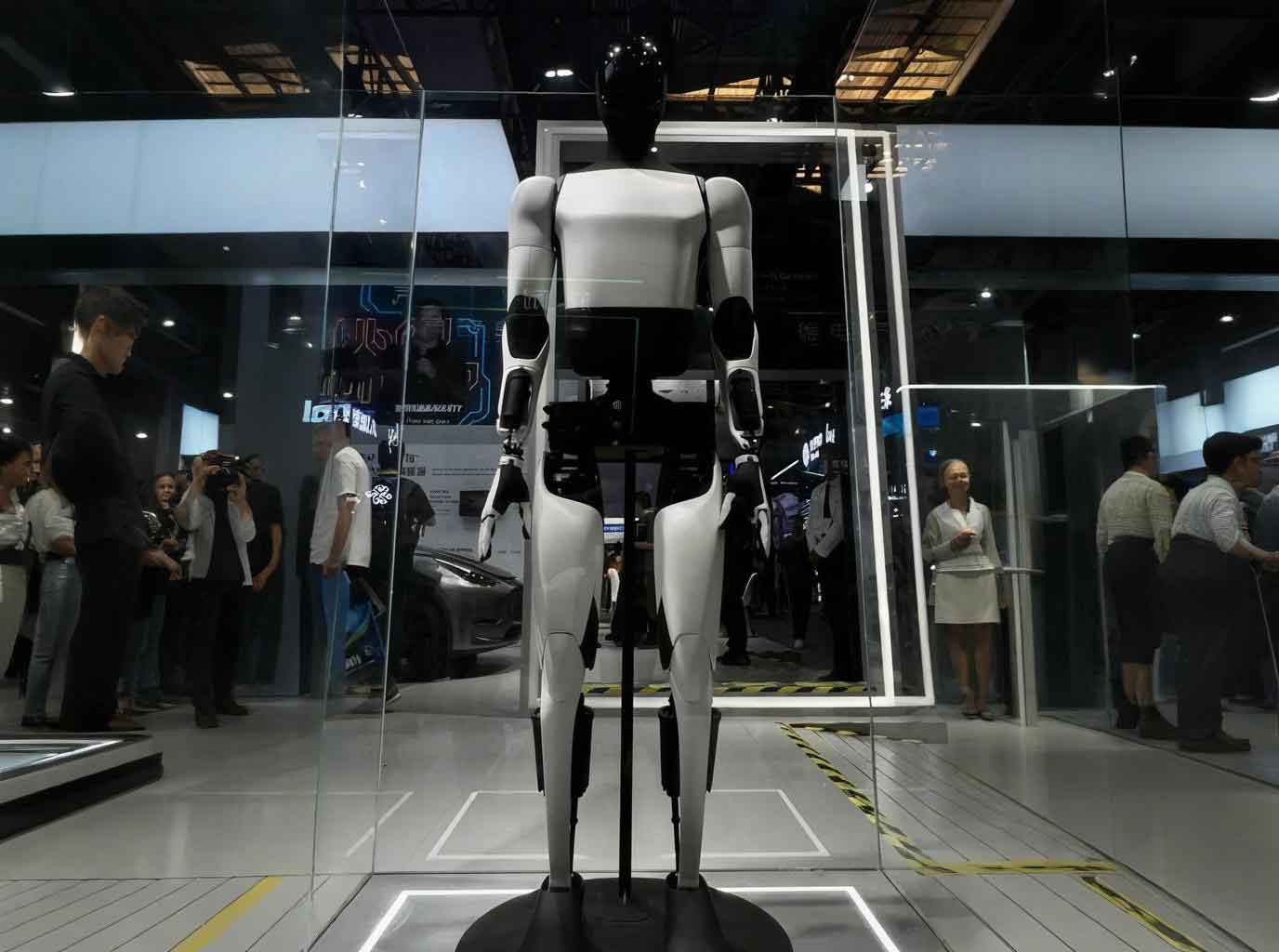
- Kuavo: Mastering Tai Chi and Complex Scenarios with Embodied Intelligence
The Kuavo humanoid robot, developed by Leju Intelligent (Shenzhen) Co., Ltd., delivered an impressive Tai Chi performance, executing fluid movements such as pushing palms, bending at the waist, and rotating its body with seamless precision. This demonstration highlighted the advanced embodied intelligence of Kuavo, which enables it to handle complex scenarios through deep integration of sensory and motor functions. Notably, Kuavo secured eighth place in the 2025 Beijing Yizhuang Humanoid Robot Half-Marathon, showcasing its robustness in endurance and adaptability. As China’s first humanoid robot designed for home environments and compatible with the open-source HarmonyOS, Kuavo exemplifies the progress in embodied robots capable of jumping and traversing diverse terrains.
Key to Kuavo’s capabilities is its data collection and programming infrastructure, facilitated by sensors and cameras attached to its arms and back. These components allow for mechanical learning, where the robot acquires skills under supervised conditions using AI models. For instance, Kuavo can learn tasks like jumping, fast walking, and household chores such as laundry, watering plants, and making beds. This embodied intelligence not only enhances its utility in domestic settings but also extends to industrial applications. In factories, hazardous environments, and medical fields, Kuavo is being developed for tasks like parcel sorting, special rescue operations, high-altitude work, and inspections in complex terrains. The fusion of the PanGu large model with Kuavo’s hardware promises to expand the scope of embodied robots, addressing needs in恶劣 conditions and contributing to societal benefits like elderly care and health monitoring. The future vision for Kuavo involves full integration into households, meeting high-quality life demands through陪伴 and assistance, driven by continuous advancements in embodied intelligence.
- Congcong: Enhancing Emotional and Physical Interaction Through Dance
Congcong, a humanoid robot from Yiqing Group Holding Co., Ltd., mesmerized audiences with its elegant dance routines set to抒情 music, reflecting its advanced embodied intelligence in肢体交互. By incorporating AI models that enable reinforcement learning, Congcong has developed the ability to perform coordinated movements, positioning it as an effective greeter and guide for roles such as voice-guided tours and咨询服务. However, the primary challenge lies in translating verbal commands into precise physical actions, a frontier in embodied robots research. For example, when instructed to “shake hands” or “sweep the floor,” Congcong can respond verbally, but achieving the corresponding motions requires further innovation in mapping语音交互 to joint movements in its limbs.
To overcome this, researchers are focusing on integrating深度仿生, multi-modal perception, and intelligent algorithms into Congcong’s design. This approach aims to enhance its embodied intelligence, allowing for more natural and responsive interactions. The development of such capabilities could redefine service roles, making embodied robots like Congcong more adept at tasks that require both cognitive and physical engagement. As embodied intelligence evolves, the potential applications expand to include personalized assistance in public spaces, where these robots could provide not only information but also physical support, thereby enriching user experiences and setting new standards for human-robot collaboration.
- China Mobile’s Robotic Dogs: Pioneering Full Ecosystem Intelligence for Families
In a vibrant display set to energetic jazz music, a group of quadruped robotic dogs from China Mobile performed acrobatic feats like handstands, flips, and agile leaps, illustrating their advanced embodied intelligence. These消费级 machines represent a significant leap beyond remote-controlled models, as they embody a comprehensive “interaction-service-movement” system with autonomous mobility, task execution, communication, and learning capabilities. Designed as versatile companions, they can accompany seniors on walks, assist children with English learning, and run errands, covering a wide range of scenarios from indoor to outdoor environments.
The embodied robots serve triple roles in家庭场景: as health managers for the elderly, they offer reminders for medication, exercise, and blood pressure monitoring, along with remote video monitoring and anomaly alerts; as成长伙伴 for children, they feature AI-based tutoring systems for English practice, interactive storytelling, and classical poetry, while maintaining learning records accessible to parents; and as全能家庭助手, they handle tasks like item delivery, security patrols, and schedule management. A standout feature is their情感交互 system, which detects family members’ emotional states and initiates interactions, transforming them from mere tools into “intelligent family members.” This evolution in embodied intelligence creates a holistic ecosystem encompassing safety, education, daily services, and emotional support, redefining smart living through environmental awareness, emotional computation, and autonomous decision-making.
- Yun Shen Chu’s Mountain Cat: Excelling in Rugged Terrains with Adaptive Embodied Intelligence
The Mountain Cat wheel-legged robot from Yun Shen Chu Technology Co., Ltd., demonstrated exceptional agility in navigating rocky and uneven landscapes, showcasing its superior embodied intelligence in multi-terrain adaptation. Unlike conventional robots, it thrives in extreme conditions, from freezing cold to intense heat, thanks to its ability to balance speed and flexibility. As a leader in仿生足式机器人, Yun Shen Chu’s innovations enable these embodied robots to operate in complex environments, performing repetitive or high-risk tasks that extend the boundaries of robotic applications.
Notable achievements include the “Jueying” series of quadruped robots, which have been deployed in fields like power inspection, firefighting, emergency reconnaissance, education, metal smelting, and surveying. These embodied robots have set records in Asia by functioning in temperatures ranging from -20 to 55 degrees Celsius, significantly broadening their operational scope across various climates and terrains. The embodied intelligence embedded in these machines allows for autonomous decision-making in unpredictable settings, making them invaluable for industrial and rescue operations. As the technology matures, the potential for embodied robots to replace humans in dangerous tasks grows, highlighting their role in enhancing safety and efficiency.
- Market Outlook and Strategic Importance of Embodied Intelligence
The embodied intelligence industry is experiencing explosive growth, with projections indicating a market value reaching trillions of dollars. In 2025, the Chinese government’s work report首次 included embodied intelligence as a national strategy, emphasizing its cultivation through policy guidance, technological innovation, and industrial integration to drive intelligent transformation. According to the “2025 Humanoid Robots and Embodied Intelligence Industry Research Report,” the global market for embodied intelligence is expected to reach 19.525 billion RMB in 2025, with China accounting for approximately 5.295 billion RMB, or about 27% of the global total. Further insights from the China Academy of Information and Communications Technology’s “Humanoid Robot Industry Development Research Report (2024)” predict that by 2045 and beyond, humanoid robots will achieve Level 5 autonomy, with over 100 million units in use and a整机 market size of around 10 trillion RMB.
This growth is fueled by advancements in embodied robots that overcome technical bottlenecks, enabling seamless integration into various sectors. From manufacturing to household applications, embodied intelligence is paving the way for an era of “万物智联” (intelligent connectivity of all things), where robots interact intelligently with their surroundings. The table below summarizes key market projections, illustrating the expanding scope of embodied intelligence and its economic impact.
Year Global Market Size (in billion RMB) China Market Size (in billion RMB) Key Highlights 2025 195.25 52.95 China represents about 27% of the global embodied intelligence market, driven by policy support and innovation. 2045+ 10,000 (estimated for humanoid robots) N/A (focus on global scale) Over 100 million humanoid robots in operation, achieving Level 5 autonomy and transforming industries. The rapid expansion of embodied robots underscores their strategic importance, as they bridge gaps in labor-intensive and high-risk areas. With continued investment in research and development, embodied intelligence is set to redefine global competitiveness, fostering a new wave of technological advancement and international collaboration.
The 2025 Service Trade Fair served as a pivotal platform for highlighting the transformative potential of embodied intelligence and embodied robots. From Kuavo’s graceful Tai Chi to Congcong’s dance, China Mobile’s robotic dogs, and Yun Shen Chu’s Mountain Cat, these innovations demonstrate how embodied robots are evolving beyond mere tools into intelligent partners capable of complex interactions and adaptations. As the industry moves toward overcoming technical challenges, the integration of embodied intelligence into everyday life promises to enhance productivity, safety, and quality of life. With strong governmental backing and a booming market, embodied robots are poised to lead the charge into an interconnected, intelligent future, making the vision of万物智联 a tangible reality.