
At the 2025 World Robot Conference, a shift from mere demonstrations to tangible applications is palpable, as embodied robots take on roles in retail, logistics, manufacturing, and domestic care, showcasing their potential in diverse settings. However, these embodied robots currently operate within limited scenarios, handling simple tasks and struggling with the complexities of real-world environments. Interviews with industry executives and experts reveal that the core hurdle lies in enhancing the “brain” capabilities of embodied robots, specifically advancing embodied intelligence. Companies are actively exploring breakthroughs in embodied intelligence large models, while methods like learning in open environments and leveraging synthetic data to address data shortages are gaining traction as practical approaches.
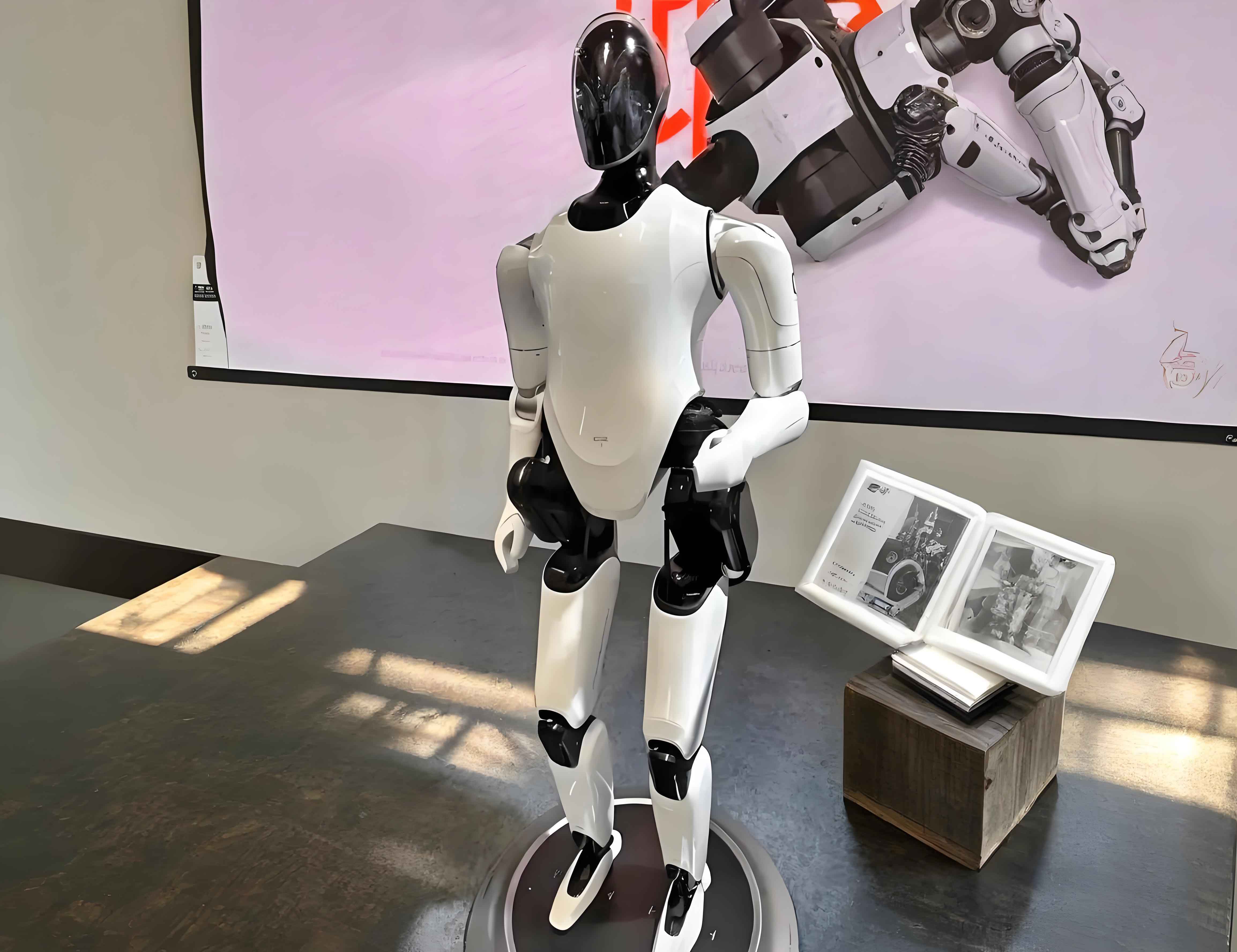
The conference, held from August 8 to 12, features over 200 domestic and international robotics firms, with more than 1,500 robot products on display, setting a record for such events in China. Unlike previous years focused on skill exhibitions, this edition emphasizes real-world deployment. For instance, Galaxy General’s robots fetch items for customers in unmanned pharmacies, Yuejiang Robotics prepares for material sorting tasks, Leju Robotics’ “Kuafu” retrieves materials from shelves, and Xingchen Intelligent’s Astribot S1 demonstrates coffee-making amidst crowds.
Beyond the conference halls, embodied robots are being tested in actual scenarios. Songyan Power has received over 2,000 orders for humanoid robots, primarily in education for roles like pacemakers or guides in cultural tourism. Fourier Intelligence recently launched its full-sized humanoid robot, Care-bot GR-3, designed for interactive companionship in healthcare and elderly care, with plans to deliver thousands of units in 2025. Galaxy General Robotics has deployed embodied robots in 10 unmanned pharmacies in Beijing, aiming to expand to 100 by year-end. Zhi Ping Fang’s AlphaBot series has garnered nearly 500 orders, already in use at factories like Dongfeng Liuzhou and Jingneng Microelectronics. Xingdong Jiyuan reports dozens of orders for its Xingdong Q5 robot, expecting 100 deliveries this year, signaling accelerated commercialization of embodied robots.
Robot designs are evolving beyond bipedal forms, with increased prevalence of models featuring foldable or adjustable lower bodies, such as those from Qinglang Intelligent, Paxini, and Lingbao CASBOT, which use wheeled bases to enhance mobility and adaptability across scenarios. Despite this progress, the application scope for embodied robots remains constrained. Yao Song, Director of the International Advanced Technology Application Promotion Center (Shenzhen), compares embodied intelligence to autonomous driving, proposing a tiered progression from L1 to L5. Currently, embodied robots operate between L1 and L2 levels—completing single, predefined tasks or adjusting within segmented steps under human guidance. Industry optimists project large-scale adoption in 5 to 10 years, with tangible applications emerging in 2 to 3 years, similar to the gradual rollout of assisted driving technologies.
Initial deployment scenarios for embodied robots focus on high-risk environments like mines and electrical grids, hazardous conditions involving dust or radiation, undesirable tasks such as restroom cleaning, and repetitive labor in assembly lines. These areas represent the forefront where embodied intelligence can demonstrate immediate value, though broader integration hinges on overcoming cognitive limitations.
Key Challenges in Embodied Intelligence Development
The advancement of embodied robots faces several critical bottlenecks, with “brain” capabilities being the most significant. Wang Qian, founder of Zibianliang Robotics, notes that while the “cerebellum” of embodied robots—responsible for movement and balance—has reached a competent level, the “brain” powered by embodied intelligence large models lags behind. This gap limits robots to entertainment and emotional support roles, with poor cost-benefit ratios for practical utility. Wang Xingxing, CEO of Yushu Technology, adds that current embodied intelligence software is akin to the pre-ChatGPT era, with clear directions but no full realization yet.
Embodied intelligence involves processing complex physical world information, unlike symbolic data in language models, posing higher technical hurdles. Che Zhengping, head of embodied intelligence at the Beijing Humanoid Robot Innovation Center, highlights issues with Vision-Language-Action (VLA) models, including difficulty in action prediction, incompatibility across robot morphologies, data heterogeneity, and weak task generalization. Models struggle with accurate pixel-to-action mapping, adaptability to diverse robot designs, and scalability to new instructions or environments, often requiring extensive retraining.
This deficiency in embodied intelligence directly impacts generalization—the ability of embodied robots to adapt and apply learned skills flexibly. Zhao Hui, general manager of Baichuan Intelligent’s shared factory, points out that businesses currently prefer non-AI robots or automated equipment for fixed, programmed tasks, as they boost efficiency without the unpredictability of embodied intelligence. Consequently, the lack of robust cognitive functions restricts embodied robots to niche applications, delaying widespread adoption.
Strategies for Enhancing Embodied Intelligence and Commercialization
To propel the commercialization of embodied robots, the industry is focusing on closed-loop systems integrating data, model development, and scenario validation. Wang Qian emphasizes that consensus is building around unified, end-to-end large models for embodied robots, with breakthroughs expected in 2–3 years. Tan Min, chief brand officer of Ubtech, notes that their robots are used in sorting,搬运, and quality inspection in factories, projecting that 5–10 years of real-world data accumulation and substantial investment will enable embodied intelligence to support core roles.
Innovations in embodied intelligence are underway. The Beijing Humanoid Robot Innovation Center has released key outcomes, including an “embodied world model system,” a “cross-ontology VLA model,” a “full-body control and autonomous navigation system,” and a “plan for collecting data from 1,000 robots in real scenarios,” aimed at transitioning embodied intelligence from theoretical advances to industrial practicality.
Spatial perception, crucial for accurate physical actions, is another area of exploration. Huang Xiaohuang, chairman of Qunhe Technology, reports that using 1 million design drawings has achieved 80% accuracy in spatial perception for embodied robots, but further improvements require massive data increases. Physical world training data is scarce—while humans learn from few environments, embodied robots need thousands of examples for basic generalization and hundreds of thousands for strong adaptability.
Galaxy General adopts a “physical simulation plus synthetic data” approach, integrating robot dynamics models and environmental assets to create simulated settings. Using consumer-grade graphics cards, they generate synthetic data at scale, training models with 99% synthetic and 1% real data. This method, combined with simulation-to-reality transfer, ensures model efficacy in real-world tasks, lowering training barriers for embodied intelligence.
Future Outlook for Embodied Robots
The trajectory for embodied robots indicates gradual integration into specialized domains before achieving ubiquity. As embodied intelligence matures, early adopters in hazardous, repetitive, or undesirable jobs will pave the way for broader applications. Industry leaders stress that sustained investment in embodied intelligence research, coupled with real-world testing, is essential to overcome current limitations.
In summary, the 2025 World Robot Conference marks a pivotal moment where embodied robots transition from novelty to utility. While challenges in embodied intelligence persist, concerted efforts in model development, data innovation, and scenario-based learning are driving the commercial thaw. The journey ahead involves refining the cognitive abilities of embodied robots to unlock their full potential in diverse, dynamic environments.