
In the rapidly evolving field of robotics, the 2025 World Robot Conference held in Beijing from August 8 to 12 served as a pivotal platform for showcasing advancements and discussing future trajectories. Among the key topics, the development and commercialization of humanoid robots took center stage, drawing insights from industry leaders. During the event, Jiang Lei, Chief Scientist of the National-Local Humanoid Robot Innovation Center (referred to as the “National Center”), provided an in-depth analysis in an exclusive interview with the 21st Century Business Herald. The National Center, established in Shanghai in May 2024, represents China’s first national public platform dedicated to the humanoid robot sector, aiming to foster innovation and accelerate industrial growth.
Jiang Lei elaborated on the strategic “three-step” approach for the产业化 of humanoid robots, emphasizing the need to compress a development cycle that traditionally spanned decades into a mere 5 to 10 years. This vision aligns with global trends where humanoid robots are transitioning from niche applications to broader commercial use. The interview covered critical aspects such as technological evolution, market trends, challenges faced by enterprises, and the overall ecosystem for humanoid robots. As the humanoid robot industry gains momentum, understanding these dynamics becomes essential for stakeholders worldwide.
-
The “Three-Step” Industrialization Path for Humanoid Robots
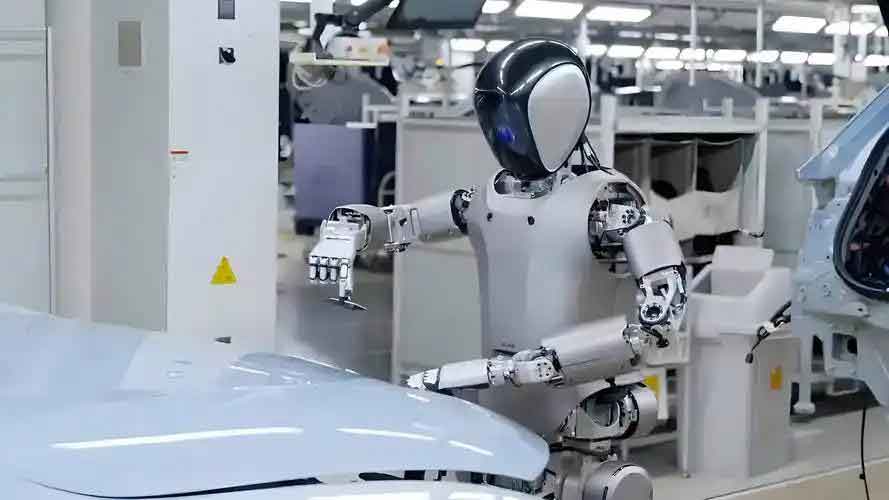
Jiang Lei outlined a clear roadmap for the commercialization of humanoid robots, drawing parallels with the historical development of the new energy vehicle industry. He explained that the humanoid robot sector should follow a phased approach: first targeting entertainment and cultural services, then expanding into industrial applications, and finally penetrating household and民生 scenarios. This “three-step” strategy is designed to address the varying levels of intelligence requirements across different domains. In the initial phase, humanoid robots can be deployed in entertainment settings where demands for autonomous decision-making are relatively low, allowing for real-world data collection and iterative improvements. This data-driven approach is crucial for enhancing the intelligence of humanoid robots, moving from remote operation to semi-autonomy and eventually full autonomy.
The rationale behind this progression lies in the gradual accumulation of technological maturity and user acceptance. For instance, in entertainment, humanoid robots can serve as interactive exhibits or performers, providing a testing ground for hardware reliability and software integration. As these humanoid robots evolve, they can transition to industrial environments, where they might assist in manufacturing or logistics, requiring higher levels of precision and adaptability. Ultimately, the goal is to integrate humanoid robots into daily life, supporting tasks in homes and communities, which demands advanced AI and safety features. Jiang Lei highlighted that this entire process, if managed effectively, could be compressed from the 25 years seen in other industries to just 5-10 years for humanoid robots, thanks to concerted efforts in resource integration and open innovation.
To achieve this acceleration, Jiang Lei stressed the importance of collaborative initiatives like the China Humanoid Robot Hundred People Conference, which aims to build consensus and promote open-source frameworks. By fostering a culture of sharing and standardization, the humanoid robot industry can avoid redundant efforts and accelerate development. The National Center plays a key role in this, serving as a hub for research and development that brings together academia, industry, and government. This approach not only speeds up technological advancements but also ensures that humanoid robots can quickly adapt to market needs, paving the way for widespread adoption.
-
Key Trends Observed at the 2025 World Robot Conference
Reflecting on the recent World Robot Conference, Jiang Lei identified several notable trends that signal the growing maturity of the humanoid robot industry. First, there has been a significant increase in the availability and diversity of整机 products. Unlike previous years where many companies were still in the research and development phase, this year’s event featured numerous exhibitors showcasing tangible humanoid robot models ready for deployment. This shift indicates that the industry is moving from conceptual designs to practical implementations, with humanoid robots becoming more accessible for various applications.
Second, the integration of AI large models with humanoid robot platforms has improved markedly. Jiang Lei noted that the compatibility between AI systems and humanoid robot hardware is enhancing, allowing for a more modular and efficient development process. For example, a single AI model can now be adapted to multiple humanoid robot platforms, similar to how Android operating systems work across different smartphone brands. This interoperability reduces development costs and encourages specialization, where hardware manufacturers can focus on perfecting physical designs while AI firms concentrate on software innovations. As a result, the humanoid robot ecosystem is becoming more cohesive, driving innovation and scalability.
Third, there is a growing focus on scalable markets such as餐饮 and entertainment for humanoid robots. Jiang Lei expressed optimism that by the latter half of next year, humanoid robots could become commonplace in venues like shopping malls, hotels, and restaurants. This trend is fueled by the increasing demand for automated services and interactive experiences, positioning humanoid robots as viable solutions in these sectors. While industrial and household applications remain longer-term goals, the immediate opportunities in entertainment and service industries provide a solid foundation for growth. Overall, these trends suggest that the humanoid robot industry is not only expanding but also diversifying, with a clear path toward commercialization.
-
Addressing Challenges and Opportunities in the Humanoid Robot Sector
Jiang Lei also discussed the challenges faced by enterprises, particularly small and medium-sized innovative companies, in the humanoid robot field. He categorized these into two main types: traditional manufacturing firms and AI-based software companies. For traditional manufacturers looking to enter the humanoid robot industry, the primary issue is transitioning from simple component production to a more integrated, digitally-driven approach. Many such companies have expertise in areas like precision machining or冲压件 manufacturing but lack the infrastructure for software development and data management. Jiang Lei advised these firms to prioritize building operating systems, cloud facilities, and vertical-specific large models before fully committing to humanoid robot production. This foundational work is essential for competing in a market where digital and physical integration is key.
On the other hand, AI companies with strong software capabilities often struggle with market saturation in areas like visual recognition or access control systems. For these entities, Jiang Lei recommended venturing into hardware development to complement their soft skills. By creating tangible products like electronic pets or other interactive devices, AI firms can leverage their models in real-world applications, thus enhancing their value proposition. The convergence of software and hardware—often referred to as “soft-hard integration”—is critical for future success in the humanoid robot industry. This strategy not only diversifies revenue streams but also drives innovation by bringing AI advancements directly to consumers through humanoid robot platforms.
Moreover, Jiang Lei addressed skepticism regarding the practical value of humanoid robots. He argued that the market is gradually shifting in favor of proponents, as evidenced by successful ventures and increasing investments. For instance, companies like Galaxy Universal have achieved valuations exceeding billions of dollars by adopting an “AI + robot” strategy. Jiang Lei emphasized that profitability in the humanoid robot sector is achievable for those who align with the trends of digital and real economy integration. Enterprises that neglect investments in core technologies like operating systems and chips may find themselves lagging, whereas those embracing open innovation and standardization are likely to thrive. This perspective underscores the importance of strategic positioning in the rapidly evolving humanoid robot landscape.
-
Recent Market Developments and the “Order Wave” for Humanoid Robots
In response to questions about recent surges in orders for companies like宇树科技, Jiang Lei provided context on what this means for the humanoid robot industry. He described the current “order wave” as a reflection of industry hype rather than a definitive milestone in规模化 commercialization. Specifically, the demand for humanoid robots in events such as weddings or promotional activities has created a temporary boom, driven by the novelty and prestige associated with these technologies. While this does not yet indicate mass adoption in industrial or household settings, it demonstrates the potential of humanoid robots to capture public interest and generate early revenue.
Jiang Lei highlighted that China’s vast market provides a fertile ground for testing and scaling humanoid robot applications. The ability to generate positive cash flow from these initial deployments allows companies to sustain operations and invest in further research. However, he cautioned that long-term success will depend on moving beyond niche uses to address broader societal needs. For humanoid robots to achieve true commercialization, they must prove their utility in repetitive, cost-sensitive environments like manufacturing or elder care. The current order wave is a positive sign, but it should be seen as a stepping stone rather than an endpoint for the humanoid robot industry.
Looking ahead, Jiang Lei predicted that as technology improves and costs decrease, humanoid robots will find more sustainable markets. The key is to leverage these early successes to build robust ecosystems that support continuous innovation. By focusing on user feedback and data-driven improvements, companies can gradually expand the capabilities of humanoid robots, making them indispensable in various sectors. This iterative process is essential for transforming the current excitement into lasting commercial value for humanoid robots.
-
Collaboration, Competition, and Ecosystem Development for Humanoid Robots
When discussing the health of collaboration and competition among humanoid robot enterprises, Jiang Lei pointed out two primary issues that need addressing. First, the rapid pace of industry growth has outpaced the capacity of existing open-source communities. To remedy this, the National Center has been actively contributing to initiatives like the Open Atom Open Source Foundation. By establishing Special Interest Groups (SIGs), the center aims to create a national-level open-source platform that transcends individual companies. This effort will facilitate knowledge sharing and reduce duplication in humanoid robot development, ultimately accelerating progress across the board.
Second, there is an ongoing need for standardized frameworks in the humanoid robot industry. Jiang Lei mentioned debates over definitions, such as whether wheeled humanoid robots should be classified under the same category as bipedal models, and how to establish universal evaluation criteria. Standardization in areas like data formats, hardware interfaces, and performance metrics is crucial for ensuring interoperability and safety. The National Center is actively involved in these discussions, working with stakeholders to develop consensus-based standards that can guide the future of humanoid robots.
In terms of ecosystem optimization, Jiang Lei emphasized that open-source initiatives and standard-setting will be the main focus moving forward. By promoting transparency and collaboration, the humanoid robot industry can avoid fragmentation and build a cohesive environment where innovations thrive. This approach not only benefits large corporations but also empowers startups and research institutions to contribute meaningfully. As the humanoid robot sector continues to evolve, these efforts will play a vital role in shaping a sustainable and inclusive future for all involved.
In conclusion, the insights from Jiang Lei underscore a transformative period for the humanoid robot industry, characterized by strategic roadmaps, emerging trends, and collaborative efforts. The “three-step” approach to commercialization, coupled with advancements in AI integration and market diversification, positions humanoid robots for significant growth in the coming years. While challenges remain, particularly for SMEs and in standardizing technologies, the overall trajectory points toward a future where humanoid robots become integral to various aspects of society. As the industry moves forward, continued emphasis on open innovation and ecosystem development will be essential for realizing the full potential of humanoid robots on a global scale.