
This month, Beijing became the epicenter of global robotics innovation, hosting two landmark events that showcased the rapid evolution of humanoid robots. The 2025 World Robot Conference, held on August 8, gathered over 200 robotics companies from around the world, with more than 100 new products unveiled. Shortly after, on August 14, the inaugural World Humanoid Robot Sports Games kicked off, drawing 280 teams from 16 countries and regions. These events highlighted the impressive capabilities of humanoid robots, from performing complex tasks in industrial settings to competing in athletic contests, raising a critical question: How close are these humanoid robots to integrating into our daily lives?
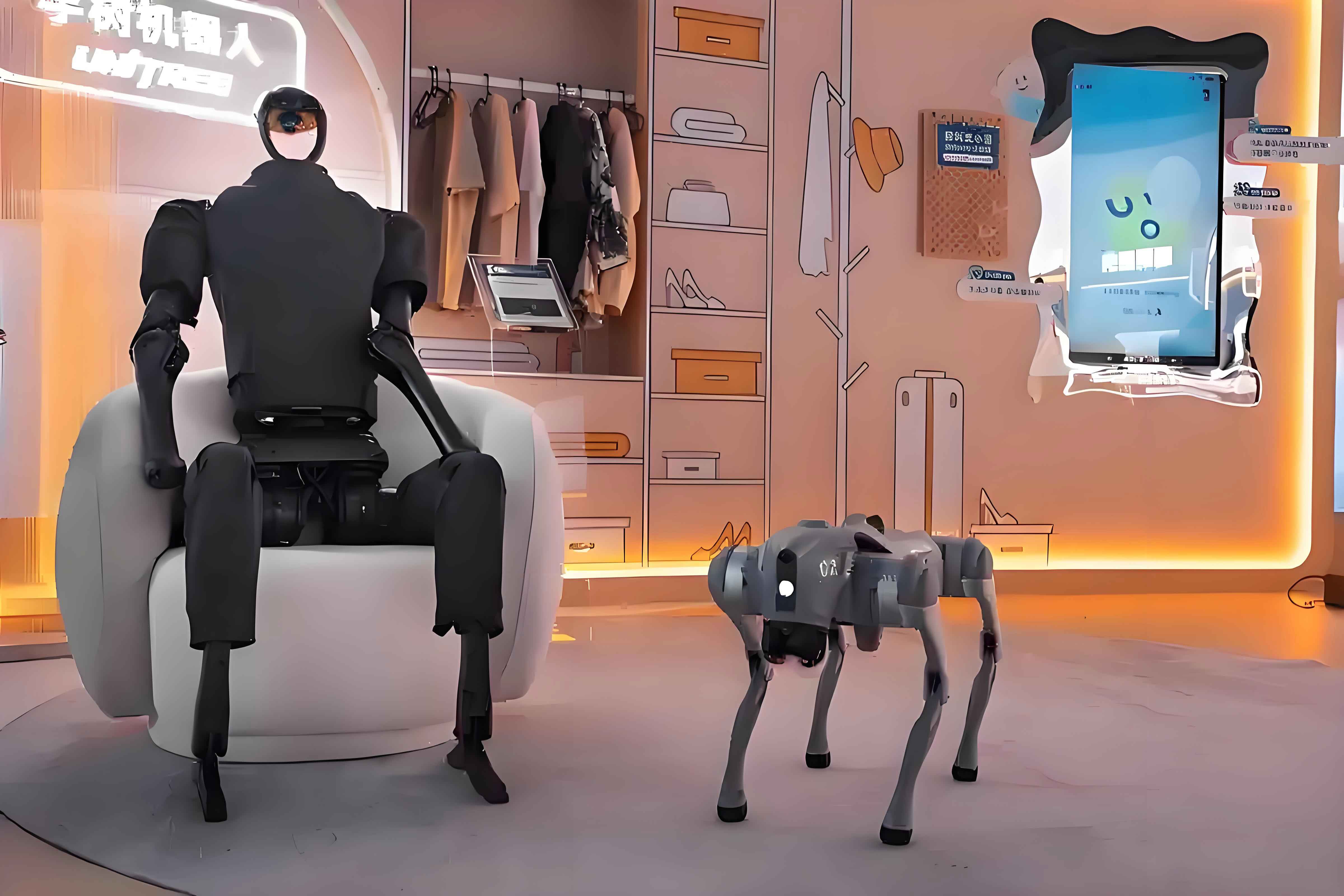
The humanoid robot demonstrations spanned a wide range of activities, emphasizing their potential in both specialized and everyday scenarios. At the World Humanoid Robot Sports Games, humanoid robots engaged in running, dancing, somersaults, and obstacle navigation, captivating audiences with their agility. In a thrilling 5V5 football match on the final day, the “Tsinghua Huoshen Team” secured a 1:0 victory against a German team using self-developed algorithms and strategies. Dong Hao, Technology Vice President of Beijing Accelerated Evolution Technology Co., noted that their humanoid robots are designed for durability and developer-friendly customization, enabling teams to build decision-making programs on their framework. This event underscored the growing prowess of humanoid robots in dynamic environments, though their performance still trails behind human athletes in many respects.
Key performances at the games included remarkable feats by humanoid robots from various companies. For instance, the G1 humanoid robot from Yushu Technology completed the 100-meter obstacle race in 33.71 seconds, while the H1 humanoid robot from the same company won the 1500-meter race with a time of 394.40 seconds. Although these times are slower than those of elite human runners, Wang Xingxing, founder of Yushu Technology, expressed optimism, stating that humanoid robots will likely surpass human speed in the near future. The competition also featured a free gymnastics champion, the “Songyan Power Xiaowantong” humanoid robot, which executed flawless flips and routines. Jiang Zheyuan, founder of Songyan Power (Beijing) Technology Co., highlighted that while hardware and运动 capabilities of Chinese humanoid robots are among the world’s best, advancements in the “brain” or intelligence of these humanoid robots remain limited globally.
To provide a clear overview of the humanoid robot performances at the games, the following table summarizes key results:
| Event | Humanoid Robot | Result |
|---|---|---|
| 100m Obstacle Race | G1 Humanoid Robot by Yushu Technology | 33.71 seconds |
| 1500m Race | H1 Humanoid Robot by Yushu Technology | 394.40 seconds |
| 5V5 Football | Tsinghua Huoshen Team Humanoid Robots | 1:0 win |
| Free Gymnastics | Songyan Power Xiaowantong Humanoid Robot | Champion |
These achievements reflect the ongoing progress in humanoid robot technology, but they also reveal challenges. For example, during the games, some humanoid robots occasionally strayed from tracks or struggled to locate opponents in boxing matches, often due to remote control issues or electromagnetic interference. To encourage autonomy, the event rules favored humanoid robots operating without human intervention; the Tian Gong Ultra humanoid robot, which used a fully autonomous navigation system, had its time multiplied by a 0.8 coefficient in the 100-meter race, earning it the highest ranking despite not being the first to cross the finish line. This emphasis on intelligence underscores the critical role of AI in advancing humanoid robots.
- Technological Advances and the Journey from Lab to Industry
Humanoid robots are currently in a pivotal phase, transitioning from laboratory breakthroughs to industrial applications. According to Xu Xiaolan, Chairman of the China Electronics Society, the global landscape for humanoid robots is characterized by continuous improvements in hardware physical performance, generational leaps in AI decision-making capabilities, and the strengthening of supportive technologies like datasets and virtual simulations. This convergence is driving humanoid robots toward widespread产业化, but significant hurdles remain. Jia Baoxiong, a researcher at the Beijing Institute for General Artificial Intelligence’s Embodied Robot Center, pointed out that while humanoid robots excel in specific tasks such as running or dancing, their autonomy in general scenarios, accuracy in movement and operation, stability, and safety in human interactions need enhancement before they can become commonplace in daily life.
The development of humanoid robots dates back to the 1970s, but recent surges in interest are largely fueled by advances in embodied intelligence. This technology aims to equip humanoid robots with cognitive abilities akin to humans, enabling them to perceive, learn, and adapt. Xiong Youjun, General Manager of the Beijing Humanoid Robot Innovation Center, explained that their universal embodied intelligence platform, “Huisikaiwu,” allows humanoid robots to perform tasks across industrial production, commercial services, logistics, special operations, and household chores, achieving multi-robot and multi-function capabilities through a single brain. However, the intelligence of humanoid robots is evolving gradually, and Xiong emphasized that持续 improvements in smart systems are essential for these humanoid robots to effectively assist and serve humans.
Wang Xingxing of Yushu Technology added that while existing hardware for humanoid robots is fundamentally usable and continues to be optimized, the main bottleneck lies in the immaturity of embodied intelligence. This gap is the primary barrier to the large-scale adoption of humanoid robots, and it may take considerable time before humanoid robots seamlessly enter ordinary households. The focus on “brain” development is thus paramount, as it dictates how well humanoid robots can navigate complex, unpredictable environments beyond controlled settings like sports arenas or factories.
- Key Challenges: Ethics, Costs, and Technical Hurdles for Humanoid Robots
As humanoid robots edge closer to practical use, they face several formidable challenges that must be addressed. Ethically, the integration of humanoid robots into homes and workplaces raises concerns about privacy, safety, and human-robot coexistence. At the 2025 World Robot Conference, discussions frequently centered on questions like how to protect personal data when humanoid robots are present in living spaces, and what norms should govern interactions between humans and these machines. These ethical considerations are crucial for building public trust and ensuring that humanoid robots enhance rather than disrupt society.
Cost is another major obstacle. Xiong Youjun highlighted that training embodied intelligence models for humanoid robots requires vast amounts of high-quality operational data, which is not only scarce but also expensive to acquire. This data scarcity drives up the overall cost of developing and training humanoid robots, making them less accessible for mass adoption. For instance, the pursuit of more advanced humanoid robots involves significant investments in simulation environments and real-world testing, which can be prohibitive for many companies. The high price point of current humanoid robots poses a barrier to their entry into average households, limiting their use to specialized sectors such as entertainment, warehousing, and healthcare for now.
Technically, humanoid robots must overcome issues related to reliability and adaptability. Jia Baoxiong noted that in applications like material handling, medicine sorting, and hotel services—seen as promising early fields for humanoid robots—their performance can be inconsistent. For example, a humanoid robot might excel in a controlled factory setting but struggle in a cluttered home environment. This variability stems from limitations in sensor integration, power efficiency, and real-time processing. Moreover, the humanoid robot’s ability to handle diverse tasks without frequent human intervention is still under development, requiring breakthroughs in machine learning and environmental awareness.
To illustrate the projected growth and challenges, the table below outlines market predictions for humanoid robots, based on data from the International Robotics Federation and the China Electronics Society:
| Aspect | Details |
|---|---|
| Global Market Growth (2021-2030) | 71% annual compound growth rate predicted by International Robotics Federation |
| China Market Size by 2030 | Approximately 870 billion yuan forecasted by China Electronics Society |
| Primary Application Scenarios | Industrial work, commercial services, logistics, special operations, household tasks |
| Main Challenges | High costs, ethical issues, technical limitations in autonomy and stability |
These challenges underscore the need for collaborative efforts among researchers, industries, and policymakers to accelerate the development of humanoid robots while addressing societal concerns. Without resolving these issues, the path to everyday use of humanoid robots could be prolonged, despite the optimistic market forecasts.
- Future Prospects and the Path Forward for Humanoid Robots
Looking ahead, the potential for humanoid robots to transform daily life is immense, but it hinges on sustained innovation and responsible deployment. In the short term, humanoid robots are expected to make inroads in sectors where their human-like form provides distinct advantages, such as in caregiving, education, and personalized services. For instance, humanoid robots are already being used in表演 and entertainment to deliver emotional value, and when combined with wheeled or other forms, they can handle sorting and搬运 tasks in warehouses, supermarkets, and pharmacies, reducing human labor. Jia Baoxiong suggested that these applications serve as a “forward base” for humanoid robots before they reach households, allowing for gradual refinement of their capabilities.
The evolution of humanoid robots will likely be driven by advancements in AI, materials science, and energy efficiency. Wang Xingxing emphasized that as embodied intelligence matures, humanoid robots will become more adept at learning from interactions and adapting to new situations. This could lead to humanoid robots that not only perform chores but also provide companionship or assist in complex decision-making. However, this future requires patience and investment in foundational research, as well as international cooperation to share knowledge and standards.
Ethical frameworks will play a critical role in shaping the adoption of humanoid robots. As discussed at the World Robot Conference, establishing guidelines for data privacy, safety protocols, and human-robot ethics is essential to prevent misuse and ensure that humanoid robots serve the greater good. Public education and transparent development processes can help alleviate fears and foster acceptance of humanoid robots in communities.
In conclusion, humanoid robots are at a transformative juncture, with recent events in Beijing showcasing their growing capabilities and the hurdles that remain. While humanoid robots have demonstrated impressive feats in sports and industrial tasks, their journey into everyday life depends on overcoming technical, ethical, and economic barriers. The predicted market growth signals strong interest and potential, but realizing it will require a balanced approach that prioritizes innovation, affordability, and societal well-being. As humanoid robots continue to evolve, the day when they seamlessly integrate into our homes and daily routines may not be far off, but it demands concerted effort and vigilance from all stakeholders involved.
The ongoing acceleration in humanoid robot development promises a future where these machines could become as common as smartphones, but for now, the focus remains on building robust, intelligent, and ethical humanoid robots that can earn their place in society. With each breakthrough, humanoid robots move closer to fulfilling their potential, and the world watches with anticipation as they step out of labs and into the fabric of everyday life.