
In an unprecedented gathering that marks a milestone in robotics history, the 2025 World Humanoid Robot Sports Games unfolded as the world’s first comprehensive athletic competition exclusively designed for humanoid robots. Over 500 humanoid robot participants engaged in 538 diverse events, showcasing abilities that increasingly mirror human athleticism, from strategic soccer plays and agile boxing maneuvers to spirited track and field sprints. This landmark event not only highlighted the rapid advancements in humanoid robot technology but also signaled a future where humanoid robots could integrate seamlessly into various aspects of daily life and industry.
-
The Dawn of a New Era in Humanoid Robot Athletics
The 2025 World Humanoid Robot Sports Games served as a vibrant arena where humanoid robots demonstrated remarkable autonomy and decision-making capabilities. On the soccer field, humanoid robot players executed precise passes, powerful shots, and defensive strategies, all driven by advanced artificial intelligence. When a humanoid robot stumbled and fell, it exhibited resilience by quickly recovering to its feet, and upon scoring a goal, it celebrated with animated gestures, eliciting cheers from spectators. Similarly, in boxing rings, humanoid robot fighters assessed opponents’ positions in real-time, dodged attacks with flexibility, and launched counterstrikes with calculated precision. Track events featured humanoid robot athletes running with determined strides and sprinting toward the finish line, embodying the spirit of competition.
This event underscored the transformative potential of humanoid robots in replicating complex human movements and interactions. Each match and race provided a live demonstration of how humanoid robots are evolving beyond industrial applications into dynamic, interactive entities. The humanoid robot competitors, though mechanical, displayed behaviors that resonated with human emotions and physicality, making the games a compelling spectacle of innovation.
Organizers emphasized that the humanoid robot sports games were not merely for entertainment but aimed to accelerate technological progress. By pitting humanoid robots against each other in challenging environments, the event pushed the boundaries of what these machines can achieve. The humanoid robot participants operated in conditions that simulated real-world unpredictability, testing their sensors, actuators, and control systems to the limit.
Audiences witnessed humanoid robots navigating uneven terrain, adjusting to variable lighting, and responding to dynamic obstacles—all critical skills for future deployments in homes, workplaces, and public spaces. The humanoid robot games thus functioned as a large-scale laboratory, generating invaluable data to refine humanoid robot designs and algorithms.
Moreover, the humanoid robot sports event fostered international collaboration among researchers, engineers, and companies. Teams from various countries brought their unique humanoid robot models, each with distinct capabilities and learning approaches. This diversity highlighted the global race to develop superior humanoid robot technology, with each iteration bringing us closer to humanoid robots that can assist in disaster response, healthcare, and beyond.
The success of the humanoid robot games has inspired plans for future editions, with discussions already underway to include more sports and interactive challenges. As humanoid robot technology continues to advance, these competitions may become regular fixtures, driving continuous improvement and public engagement with humanoid robots.
-
From Humble Beginnings to Athletic Prowess: The Evolution of Humanoid Robots
The journey of humanoid robots from rudimentary prototypes to agile athletes is a testament to five decades of relentless innovation. In 1973, the world’s first humanoid robot was created, capable only of slow, deliberate movements—each step taking about 45 seconds. Contrast that with today’s humanoid robots, which can run, jump, and perform complex tasks with increasing speed and accuracy. The progression of humanoid robot capabilities mirrors a compressed version of human evolution, condensing millions of years of bipedal development into mere decades of engineering breakthroughs.
Early humanoid robot models were primarily confined to research labs, where they served as testbeds for basic mobility and balance algorithms. These initial humanoid robot designs often struggled with simple actions like walking on flat surfaces, let alone navigating obstacles. However, persistent research and development gradually enhanced the humanoid robot’s stability and coordination. The introduction of advanced materials, more efficient motors, and sophisticated control systems enabled humanoid robots to achieve greater dexterity and endurance.
By the early 2000s, humanoid robot technology had advanced sufficiently for demonstrations in controlled environments. Humanoid robots like ASIMO by Honda captured public imagination by walking, climbing stairs, and even dancing. These milestones paved the way for more ambitious projects, including humanoid robots designed for search-and-rescue missions and space exploration. Each iteration of humanoid robot development incorporated lessons from previous failures, turning stumbling blocks into stepping stones toward greater reliability.
The last decade has seen an exponential growth in humanoid robot capabilities, driven by advancements in artificial intelligence, machine learning, and sensor technology. Modern humanoid robots can process vast amounts of data in real-time, allowing them to adapt to changing environments and perform tasks with minimal human intervention. The humanoid robot athletes at the 2025 games are products of this accelerated innovation, embodying the cumulative knowledge of generations of engineers and programmers.
Looking ahead, the evolution of humanoid robots is expected to continue at a rapid pace. Researchers are working on enhancing the humanoid robot’s cognitive abilities, enabling them to learn from experiences and make independent decisions. As humanoid robots become more autonomous and versatile, their potential applications will expand, transforming industries and everyday life. The humanoid robot sports games symbolize this ongoing evolution, showcasing how far we’ve come and hinting at the incredible possibilities that lie ahead.
In summary, the history of humanoid robots is a story of perseverance and progress. From slow, clumsy beginnings to the dynamic athletes of today, humanoid robots have overcome numerous challenges to reach their current state. The humanoid robot games celebrate this journey while inspiring future innovations that will push the boundaries of what humanoid robots can achieve.
-
Navigating Challenges: The Learning Process of Humanoid Robot Competitors
Despite the impressive displays at the humanoid robot sports games, the humanoid robot participants faced significant challenges that revealed areas for improvement. It was not uncommon to see a humanoid robot wobble while walking or occasionally lose balance and fall. In soccer matches, some humanoid robots struggled to locate the ball even when it was nearby, spinning in circles as they attempted to find it. These moments, while sometimes amusing to observers, provided crucial insights into the limitations of current humanoid robot technology.
Each misstep by a humanoid robot represents a valuable learning opportunity. When a humanoid robot falls, it generates data on how hardware interacts with unpredictable environments. This information is fed back into algorithms to enhance stability and responsiveness. The humanoid robot’s sensors capture details about surface friction, weight distribution, and impact forces, allowing engineers to refine designs and prevent similar failures in the future. Thus, every fall of a humanoid robot contributes to the iterative process of improvement.
Moreover, the humanoid robot games highlighted the importance of robust software in managing complex tasks. Humanoid robots rely on sophisticated algorithms for perception, decision-making, and motor control. When a humanoid robot fails to detect a ball or misjudges an opponent’s move, it underscores the need for better object recognition and predictive modeling. Developers use these instances to train humanoid robot AI on larger datasets, incorporating diverse scenarios to enhance accuracy and reliability.
The event also emphasized the role of simulation in humanoid robot development. Before deploying humanoid robots in physical competitions, many teams test their algorithms in virtual environments. Simulations allow humanoid robots to practice millions of scenarios without the risk of damage, accelerating the learning curve. However, the transition from simulation to real-world settings remains challenging, as humanoid robots must contend with hardware wear, sensor noise, and unforeseen variables. The humanoid robot games served as a critical bridge, exposing these gaps and driving solutions.
In addition to technical hurdles, humanoid robot developers must address issues of energy efficiency and durability. Humanoid robots require substantial power to operate, and prolonged activities can lead to overheating or battery depletion. The games pushed humanoid robots to their limits, revealing the need for more efficient power systems and stronger materials. Innovations inspired by these challenges could lead to humanoid robots that operate longer and withstand harsher conditions.
Ultimately, the humanoid robot sports games functioned as a collaborative problem-solving platform. Teams shared insights and strategies, fostering a community dedicated to advancing humanoid robot capabilities. The open exchange of knowledge accelerated progress, turning individual failures into collective advancements. As humanoid robots continue to learn from their mistakes, they inch closer to seamless integration into society.
-
The Path to Mass Production: Humanoid Robots Enter a New Phase
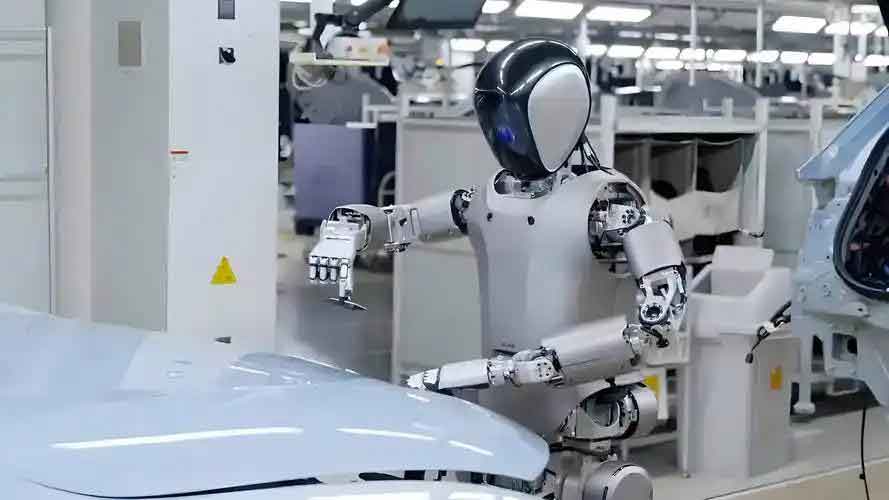
Industry experts have widely designated 2025 as the inaugural year for mass production of humanoid robots. The humanoid robot sports games acted as a pressure test for this emerging industry, identifying strengths and weaknesses in current models. By competing in rigorous athletic events, humanoid robots exposed flaws that must be addressed before they can be manufactured at scale. This process is essential for transforming fragmented technologies into standardized, reliable modules suitable for widespread adoption.
Mass production of humanoid robots requires overcoming several barriers, including cost reduction, supply chain optimization, and quality control. The games demonstrated that while humanoid robots have achieved impressive functionalities, consistency remains a challenge. Variations in performance among humanoid robot units highlighted the need for uniform manufacturing processes. Companies are now focusing on developing scalable production lines that can deliver humanoid robots with identical capabilities and reliability.
Key to this effort is the modularization of humanoid robot components. By creating interchangeable parts for sensors, actuators, and processors, manufacturers can streamline assembly and maintenance. The humanoid robot games provided real-world data on which components are most prone to failure, guiding engineers in designing more durable modules. This modular approach not only facilitates mass production but also simplifies upgrades, ensuring that humanoid robots can evolve with technological advancements.
Moreover, the humanoid robot sports event spurred investments in robotics infrastructure. Venture capitalists and corporations recognized the potential of humanoid robots, leading to increased funding for research and development. This financial support accelerates innovation, enabling faster iteration and refinement of humanoid robot designs. As production scales, economies of scale are expected to lower costs, making humanoid robots accessible to a broader range of applications.
The games also highlighted the importance of software standardization for humanoid robots. Common operating systems and programming frameworks can reduce development time and enhance compatibility. Industry consortia are working on establishing standards that allow different humanoid robot models to communicate and collaborate seamlessly. Such initiatives will be crucial for integrating humanoid robots into existing ecosystems, from smart homes to industrial automation.
Looking forward, the mass production of humanoid robots is poised to revolutionize various sectors. Factories could deploy humanoid robots for assembly line tasks, while hospitals might use them for patient care. The humanoid robot games have set a precedent for rigorous testing, ensuring that commercially available humanoid robots meet high standards of performance and safety. As production ramps up, we can expect humanoid robots to become commonplace, transforming how we work and live.
-
Expanding Horizons: Humanoid Robots in Diverse Real-World Applications
Beyond the sports arena, humanoid robots are increasingly being deployed in a variety of settings, demonstrating their versatility and utility. In healthcare, humanoid robots assist with repetitive tasks such as dispensing medication and monitoring patients, allowing medical staff to focus on more complex duties. Their precise movements and ability to follow protocols make humanoid robots valuable allies in maintaining hygiene and reducing errors. For instance, humanoid robots can navigate hospital corridors to deliver supplies, using sensors to avoid obstacles and interact safely with people.
In the hospitality industry, humanoid robots serve as concierges, greeting guests, providing information, and even carrying luggage. These humanoid robots are programmed with natural language processing capabilities, enabling them to understand and respond to queries in multiple languages. The humanoid robot’s ability to work 24/7 without fatigue enhances customer service while reducing operational costs. Hotels and airports worldwide are adopting humanoid robots to create seamless and efficient experiences for travelers.
Manufacturing and logistics are other domains where humanoid robots are making significant inroads. Unlike traditional robots confined to fixed positions, humanoid robots can adapt to dynamic environments, handling tasks that require human-like dexterity. In warehouses, humanoid robots sort packages, load goods, and collaborate with human workers to optimize workflows. Their flexibility allows them to perform multiple roles, from quality inspection to inventory management, increasing productivity and reducing physical strain on human employees.
Education and entertainment are also benefiting from humanoid robot innovations. Schools use humanoid robots as teaching assistants to engage students in interactive lessons, especially in STEM subjects. These humanoid robots can demonstrate experiments, answer questions, and even provide personalized feedback. In entertainment, humanoid robots perform in theaters and theme parks, dancing synchronously or acting in shows that blend technology and art. The humanoid robot’s ability to emulate human expressions and movements creates immersive experiences for audiences.
Furthermore, humanoid robots are being explored for emergency response and disaster management. In scenarios too dangerous for humans, such as collapsed buildings or radioactive sites, humanoid robots can navigate debris, assess damage, and locate survivors. Their humanoid form allows them to use tools designed for humans and traverse uneven terrain. Research institutions and government agencies are collaborating to enhance the resilience and autonomy of humanoid robots for these critical missions.
As humanoid robots become more integrated into society, ethical considerations and public acceptance are gaining attention. Developers are prioritizing safety features and transparent design to build trust. The humanoid robot sports games have played a role in familiarizing the public with these machines, reducing apprehension and highlighting their benefits. With continued advancement, humanoid robots are set to become indispensable partners in building a smarter, more connected world.
-
A Vision for Coexistence: The Oath and Future Aspirations of Humanoid Robots
At the opening ceremony of the humanoid robot sports games, a collective of humanoid robots delivered a solemn oath, articulating a vision for harmonious collaboration between humans and machines. The oath, “Carrying the will of humanity, showcasing the power of technology, hoisting the sails of innovation, building dreams of coexistence, and competing intelligently toward the future,” resonated deeply with attendees. This moment symbolized the evolving relationship between humans and humanoid robots, emphasizing partnership rather than replacement.
The humanoid robot’s oath reflects a commitment to leveraging technology for the greater good. By embracing human values and aspirations, humanoid robots aim to augment human capabilities and address global challenges. For example, humanoid robots could assist in caring for the elderly, enabling older adults to live independently longer. In agriculture, humanoid robots might help with planting and harvesting, increasing food production sustainably. The potential applications are vast, limited only by our imagination and ethical frameworks.
Innovation in humanoid robot technology is driven by a desire to create machines that understand and empathize with humans. Researchers are developing emotional AI that allows humanoid robots to recognize and respond to human emotions. This capability could make humanoid robots effective companions for individuals with social isolation or mental health issues. The humanoid robot’s ability to provide consistent, non-judgmental support could revolutionize healthcare and wellness industries.
Moreover, the humanoid robot oath underscores the importance of ethical development and deployment. As humanoid robots become more autonomous, questions about accountability, privacy, and control arise. Industry leaders are advocating for guidelines that ensure humanoid robots operate transparently and align with human interests. International standards are being discussed to regulate the use of humanoid robots in sensitive areas, such as security and personal data handling.
The future of humanoid robots is not just about technological prowess but about fostering a symbiotic ecosystem. Humanoid robots could work alongside humans in creative endeavors, from art and music to scientific discovery. By combining human intuition with the computational power of humanoid robots, we can tackle complex problems like climate change and disease eradication. The humanoid robot games have ignited conversations about this collaborative future, inspiring new generations to engage with robotics.
In conclusion, the 2025 World Humanoid Robot Sports Games marked a pivotal moment in the journey of humanoid robots. From demonstrating athletic skills to pledging a shared future, humanoid robots have proven their potential to transform society. As we look ahead, the continued evolution of humanoid robots promises a world where technology and humanity coexist in harmony, driven by innovation and mutual respect. The humanoid robot oath serves as a beacon, guiding us toward a future filled with endless possibilities.
The 2025 World Humanoid Robot Sports Games have set a new benchmark for what humanoid robots can achieve. Through intense competition and collaborative innovation, humanoid robots have shown that they are more than mere machines—they are partners in progress. As the industry moves toward mass production and broader adoption, the lessons learned from these games will shape the next generation of humanoid robots. The event has not only entertained but also educated, highlighting the transformative power of humanoid robot technology. With each passing day, humanoid robots are becoming an integral part of our world, embracing possibilities that once seemed like science fiction. The future is bright for humanoid robots, and their journey has only just begun.