
In a significant advancement for robotics and artificial intelligence, researchers have developed a novel approach to improve the acceptance and trust of humanoid robots in everyday life and commercial service scenarios. By exploring the evaluation dimensions and design features of affinity appearances, the study leverages AI-driven training methods to generate humanoid robot designs that are more appealing and relatable to users. This innovation addresses a critical challenge in robotics: the often cold, rigid, and uninviting appearance of humanoid robots, which can lead to user resistance and reduced interaction. The integration of perceptual engineering and stable diffusion models marks a pivotal step toward creating humanoid robots that foster positive emotional connections, potentially revolutionizing their deployment in homes, healthcare, and retail environments.
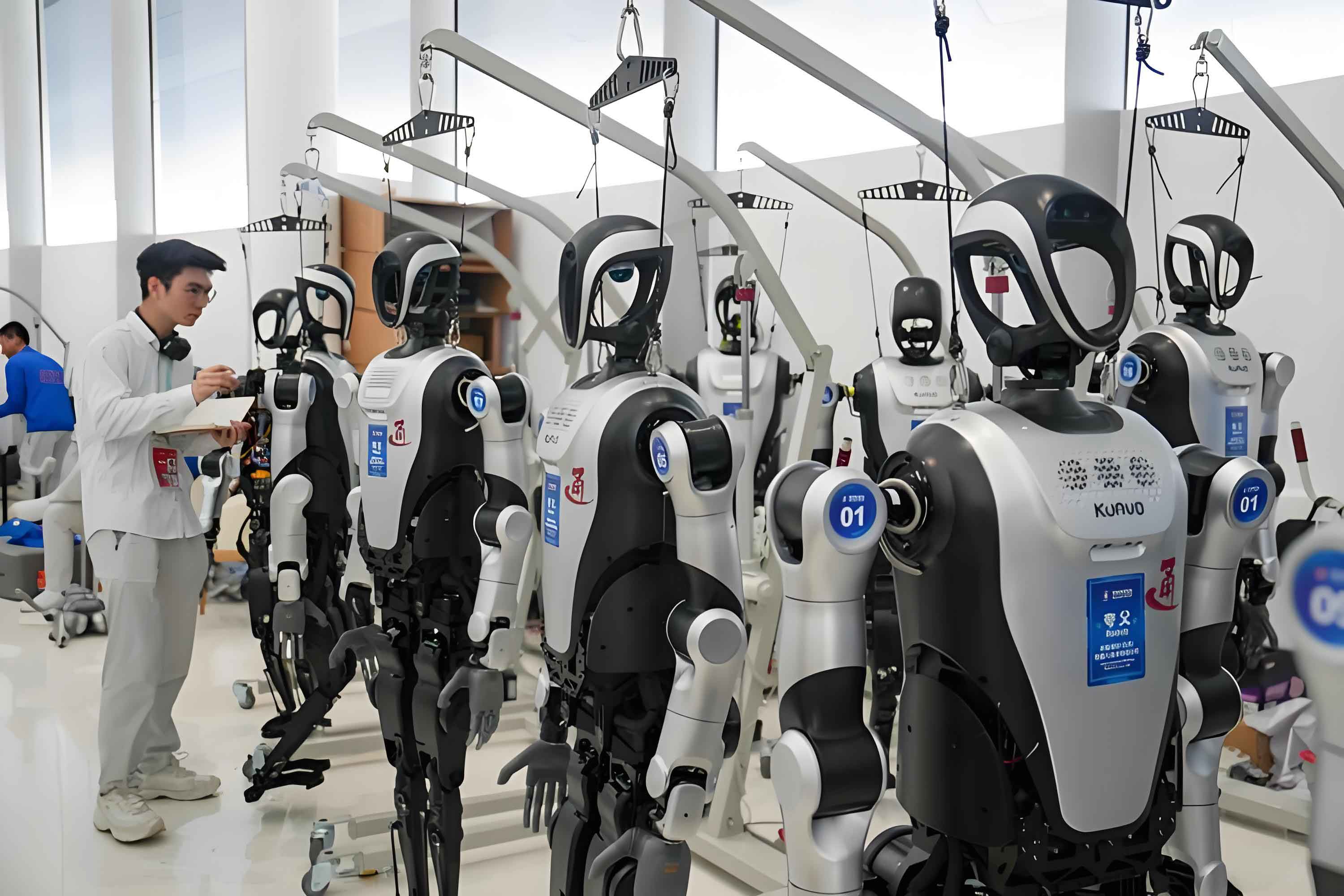
The growing prevalence of humanoid robots in various sectors underscores the need for designs that prioritize user experience. Traditional humanoid robot development has focused heavily on engineering and functional aspects, resulting in appearances that lack warmth and approachability. This disconnect can trigger negative emotions, such as discomfort or fear, hindering the widespread adoption of humanoid robots. To tackle this, the research team employed perceptual engineering methods to quantify the abstract concept of affinity, translating it into tangible design elements like shape, material, and color. Through extensive user surveys and quantitative analysis, the study identified key factors that influence perceptions of affinity, enabling the creation of a scoring system to guide design decisions. This systematic approach ensures that humanoid robots not only perform tasks efficiently but also resonate emotionally with users, paving the way for more harmonious human-robot interactions.
Research Methodology: Unpacking Affinity in Humanoid Robot Design
The study utilized perceptual engineering, a method that bridges emotional responses with product design, to dissect the components of affinity in humanoid robot appearances. Researchers began by gathering 30 pairs of descriptive terms related to affinity, which were categorized into three dimensions: social impression (e.g., closeness in human-robot relationships), style and temperament (e.g., gentleness and warmth), and vitality (e.g., liveliness and energy). After expert discussions and voting, the most representative pairs—”indifferent-affectionate,” “cold-hard-gentle,” and “serious-lively”—were selected to measure affinity, gentleness, and liveliness, respectively. These dimensions provided a comprehensive framework for evaluating how design elements impact user perceptions of humanoid robots.
To collect user feedback, the team designed a questionnaire featuring abstracted visual elements of humanoid robots, including head shapes (e.g., square, circle, vertical and horizontal跑道圆, and semi-circle), eye shapes (e.g., circle, square, vertical and horizontal跑道圆), body proportions (ranging from infant-like to adult figures, categorized as slender or robust), materials (plastic, fabric, metal, and transparent, each with two surface treatments), and colors (warm and cool hues at high and low saturation, plus neutral shades like white, gray, and black). A total of 645 valid responses were analyzed using statistical methods such as Kendall and Pearson correlation analyses, as well as non-parametric tests like Kruskal-Wallis H and Mann-Whitney U, to determine the influence of each design element on affinity. The results revealed that head shape, facial expression, color, material, and body proportion, in that order, had the most significant impact on the perceived affinity of humanoid robots.
Key Findings: What Makes a Humanoid Robot Appear Affectionate
The analysis uncovered strong correlations among the three affinity dimensions—affection, gentleness, and liveliness—indicating that they collectively capture the essence of affinity in humanoid robot design. For instance, head shapes like the horizontal跑道圆 and circle scored highest in affinity, while angular shapes were less favorable. Similarly, vertical跑道圆 eyes were most appealing, whereas horizontal跑道圆 eyes detracted from affinity. Body proportions played a crucial role, with infant-like and slender youthful figures receiving higher affinity scores compared to robust adult forms. This suggests that humanoid robots with softer, more child-like features are perceived as more approachable and trustworthy.
- Head Shapes: Horizontal跑道圆 and circular heads rated highest, emphasizing the importance of rounded, smooth contours for affinity in humanoid robots.
- Eye Shapes: Vertical跑道圆 eyes were most effective, followed by circular and square shapes, highlighting the need for expressive yet simple designs in humanoid robots.
- Body Proportions: Slender, youthful figures, such as those resembling children or teenagers, enhanced affinity, whereas taller, bulkier forms reduced it in humanoid robots.
- Materials: Fabric materials, especially those with textured surfaces like plush, scored highest in affinity, while metal surfaces were least appealing for humanoid robots. Plastic and transparent materials fell in between, with matte finishes outperforming glossy ones.
- Colors: Neutral colors like white were most affinity-inducing, followed by low-saturation warm tones (e.g., light yellow or orange). High-saturation cool colors scored lower, but reducing saturation could improve their affinity in humanoid robots.
These insights were compiled into an affinity scoring table, which assigns numerical values to each design feature. For example, a humanoid robot with a horizontal跑道圆 head, vertical跑道圆 eyes, a slender teenage body, fabric material, and a white color scheme would achieve a high affinity score. This table serves as a practical tool for designers to evaluate and optimize humanoid robot appearances, ensuring they align with user preferences for warmth and approachability.
| Design Element | Category | Affinity Score |
|---|---|---|
| Head Shape | Horizontal跑道圆 | 3 |
| Circle | 3 | |
| Square | 0 | |
| Vertical跑道圆 | 0 | |
| Semi-circle | 0 | |
| Eye Shape | Vertical跑道圆 | 3 |
| Circle | 1 | |
| Square | 1 | |
| Horizontal跑道圆 | 0 | |
| Body Proportion | Infant-like (slender) | 3 |
| Child (slender) | 4 | |
| Teenager (slender) | 3 | |
| Child (robust) | 2 | |
| Teenager (robust) | 2 | |
| Adult (robust) | 1 | |
| Adult (robust, tall) | 0 | |
| Material | Fabric (plush) | 3 |
| Fabric (textile) | 3 | |
| Plastic (matte) | 2 | |
| Plastic (glossy) | 1 | |
| Transparent (matte) | 1 | |
| Transparent (glossy) | 1 | |
| Metal (matte) | 0 | |
| Metal (glossy) | 0 | |
| Color | White | 4 |
| Low-saturation warm | 3 | |
| High-saturation warm | 2 | |
| Low-saturation cool | 2 | |
| Gray | 1 | |
| High-saturation cool | 0 | |
| Black | 0 |
The correlation analyses further revealed that affinity decreases as humanoid robots become taller or more robust, and that surface texture plays a key role—rougher, more tactile materials enhance affinity by reducing the coldness associated with smooth surfaces. In terms of color, brightness and low saturation were consistently linked to higher affinity, with warm tones like light orange evoking comfort and cool tones benefiting from reduced saturation. These findings provide a clear roadmap for designing humanoid robots that users find inviting and easy to connect with, ultimately boosting acceptance in diverse settings.
AI Model Training: Leveraging Stable Diffusion for Affinity-Focused Design
Building on these insights, the research team turned to artificial intelligence, specifically stable diffusion models, to generate a wide array of affinity-optimized humanoid robot designs. Stable diffusion is an AI image generation technique that uses latent diffusion models, including components like text encoders and autoencoders, to produce images from text prompts or existing images by iteratively reducing noise. However, standard stable diffusion models often struggle to capture the nuanced design features required for high-affinity humanoid robots. To address this, the team developed a customized training approach using Dreambooth and Lora methods, which adjust the model’s neural network weights and insert new computational layers, respectively, to learn and replicate affinity-related characteristics.
The training process involved four key steps: sample preparation, sample annotation, iterative training, and model selection. First, training samples were carefully selected and refined to embody high-affinity features, such as rounded heads, expressive eyes, and soft materials, while maintaining stylistic consistency but varying details to ensure model generalization. Tools like Controlnet, image-to-image conversion, and local repainting in stable diffusion, combined with software like Photoshop, were used to enhance initial素材, gradually aligning them with affinity criteria through multiple rounds of generation and modification. For instance, early samples might appear too cartoonish, so subsequent iterations incorporated more realistic elements to balance appeal and authenticity in humanoid robots.
Next, samples were automatically and manually annotated with descriptive tags covering overall shape,细节造型, style, material, and color, ensuring accurate representation of affinity traits. For example, a sample humanoid robot might be labeled as “affinity robot, minimalism, organic form, science fiction, humanoid robot, oval head, vertical eyes, yellow eyes, no mouth, white body, plastic material, shiny joints, teenage figure, full body, standing, arms at sides.” This meticulous annotation enabled the model to learn specific design elements that contribute to affinity in humanoid robots.
During iterative training, parameters such as Learning Rate (1×10⁻⁴), Iteration (10), Batch Size (5), Epoch (10), Optimizer (8bit-Adam), Scheduler (Cosine), DIM (128), and Alpha (64) were set based on experimental testing to optimize performance. The team monitored Loss values, aiming for a reduction to around 0.08 by the 7th to 9th Epoch, indicating effective learning. Each training round adjusted samples based on generated outcomes and affinity scores, progressively improving results. For instance, the first round produced humanoid robots with亲和力 heads but overly卡通化 appearances; the second added realism but resulted in overly short proportions; and the third refined body proportions to match high-scoring slender teenage figures, yielding designs that met affinity goals.
Model selection involved evaluating different Epoch models using XY cross-plots to visualize outputs under varying weights, with the 6th Epoch at 0.6–0.8 weights identified as optimal based on affinity scoring. The final models, including a primary Dreambooth model for diverse design generation and multiple Lora models for stylistic variations, can be used independently or in combination to produce a matrix of humanoid robot designs. This allows designers to quickly generate and筛选 high-affinity options, such as those with white bodies and rounded features, significantly accelerating the design process while maintaining emotional appeal.
Implications and Future Directions for Humanoid Robot Development
This research demonstrates a powerful synergy between perceptual engineering and AI, offering a scalable method to enhance the aesthetic and emotional aspects of humanoid robots. By quantifying affinity and integrating it into AI training, the approach addresses a critical gap in robotics design, where technical prowess often overshadows user-centered considerations. The ability to rapidly generate and evaluate numerous humanoid robot designs not only improves efficiency but also ensures that robots are better received in real-world applications, such as elderly care, customer service, and educational settings. As humanoid robots become more integrated into daily life, this focus on affinity could reduce anxiety and foster trust, leading to higher adoption rates and more successful human-robot collaborations.
However, the study acknowledges limitations, such as the relatively homogeneous survey sample, which may affect the generalizability of the findings. Future work could expand to cross-cultural studies to validate affinity criteria across different demographics, explore more diverse design styles through advanced AI models, and investigate the interplay between外观 and interactive behaviors in humanoid robots. For example, combining亲和力 appearances with empathetic gestures or voice modulation could further enhance user experiences. Additionally, as AI technology evolves, incorporating real-time user feedback into model training could enable adaptive design processes that respond to individual preferences.
In conclusion, this breakthrough paves the way for a new era in humanoid robot design, where machines are not only functional but also emotionally intelligent. By leveraging stable diffusion models trained on affinity principles, researchers and designers can create humanoid robots that resonate deeply with users, ultimately transforming how we perceive and interact with robotics in an increasingly automated world. As the field advances, these insights will likely inspire further innovations, making humanoid robots more accessible, relatable, and integral to society.