
In recent weeks, the humanoid robot sector has once again taken center stage in the A-share market, driven by a series of positive catalysts. Industry experts and fund managers are heralding this year as the “commercialization元年” for humanoid robots, highlighting their vast potential across numerous applications. Rough estimates comparing the humanoid robot industry to the automotive sector suggest it could evolve into a global market worth trillions of dollars.
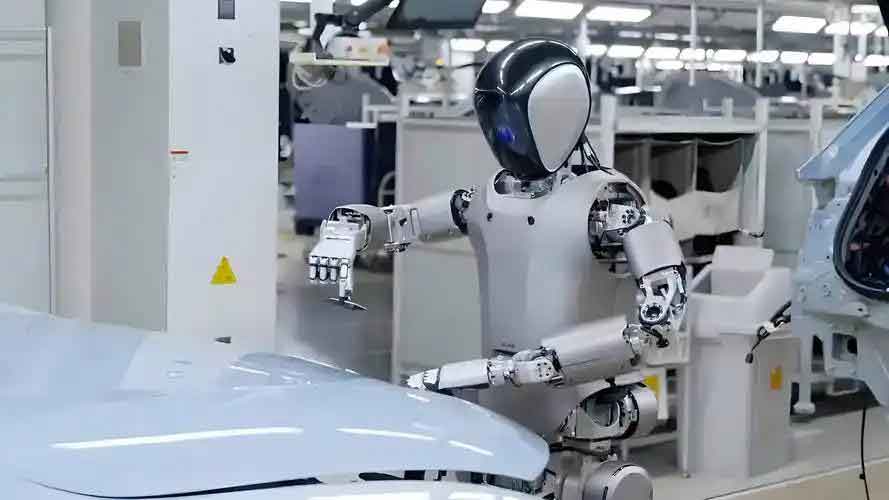
The recent rally in humanoid robot-related stocks marks a significant evolution from previous market cycles. Unlike the broad-based surge seen from late last year to early this year, the current uptrend is characterized by a more discerning approach from investors. Capital allocation has shifted from a scattered investment strategy to one that demands validation through financial fundamentals, with business orders and performance metrics becoming critical differentiators for stock selection. Several thematic funds heavily invested in the humanoid robot sector have outperformed their peers by adeptly picking the right stocks.
Market Performance and Fund Returns
The humanoid robot concept has ignited waves of enthusiasm in the secondary market. Starting from the “September 24行情” last year, the robotics板块 experienced a strong rally that persisted until February this year, during which the Wind robotics index nearly doubled. After a months-long adjustment period, the sector has recently reemerged as a market leader.
This robust performance has translated into impressive returns for several funds. Among actively managed equity products, funds such as Yongying Advanced Manufacturing智选, Zhonghang Trend领航, and Fangzheng富邦信泓 have achieved year-to-date returns exceeding 60%. Furthermore, since April 8, funds including Fangzheng富邦信泓, Zhongou盛世Growth, Changcheng久鑫, Zhonghang Trend领航, and Morgan动力精选 have witnessed rebounds of over 30%.
In the ETF space, multiple thematic products have posted year-to-date returns above 20%, accompanied by substantial growth in scale. For instance, the Huaxia中证Robot ETF skyrocketed from 5.3 billion shares to 17 billion shares. Similarly, the Tianhong中证Robot ETF and the Yifangda国证Robot Industry ETF saw their scales increase by more than 2.4 billion shares and 3 billion shares, respectively.
Transition from Theme Investing to Order Verification
Over the past year, the humanoid robot sector has undergone two distinct phases of market activity.
The initial wave was primarily fueled by technological breakthroughs that sparked imagination. The unveiling of prototype humanoid robots by companies like Tesla and Boston Dynamics generated significant industry heat. However, the market lacked clarity on technical roadmap choices and commercialization timelines. Consequently, investment strategies involved a broad, scatter-shot approach across the board, leading to a普遍rise in stock prices that bore little correlation to companies’ actual competitiveness. This phase resembled a collective anticipation of distant possibilities.
In contrast, the recent surge in the humanoid robot sector is anchored by tangible signals of commercialization. According to Wang Sen, fund manager of Zhonghang Trend领航, the current investment logic focuses on companies with “customer validation, order progress, and mass production plans.” This has resulted in increased differentiation within the sector. Core companies with high technological barriers continue to attract favor, while marginal concept stocks lacking substantial support have noticeably cooled. Thus, the logic of performance realization has replaced mere conceptual imagination as the core driver of stock price movements.
“The most defining characteristic of the current行情 is the shift from theme investing to order verification,” echoed Zhang Lu, fund manager at Yongying Fund. He noted that while the market previously emphasized concepts and imaginative potential, an increasing number of enterprises are now presenting concrete products and orders. Particularly noteworthy are companies exhibiting “stable core businesses + clear second growth curves”—those maintaining steady growth in traditional strengths like precision manufacturing, transmission systems, and reducers while actively expanding into humanoid robot-related operations.
This transformation is also evident in institutional research activities. In August alone, core companies in the humanoid robot industrial chain, such as Estun, Dayang Motor, and Xiaxia Precision, have hosted multiple research sessions with institutions including Guotai Fund. During these exchanges, Estun reported a significant increase in the localization rate of its servo systems and harmonic reducers, with hand-held orders growing approximately 30% year-over-year. Dayang Motor highlighted technological upgrades and production line automation for robot drive motors, anticipating a more than 20% increase in delivery capacity in the second half of the year, serving several leading domestic humanoid robot manufacturers. Xiaxia Precision stated it had achieved a monthly production capacity breakthrough of 10,000 sets for high-precision sensor modules and signed long-term supply agreements with downstream manufacturing and logistics automation enterprises.
Key Investment Areas: High-Barrier Segments
The development of humanoid robots is advancing rapidly. With multiple companies establishing commercialization timelines or clarifying mass production plans, the industry is entering a critical phase transitioning from concept validation to commercial implementation. In this stage, which directions or segments present superior investment opportunities?
Regarding segment selection, Zhang Lu believes the following areas warrant particular attention:
- Upstream core components, especially high-value segments like reducers, six-dimensional force sensors, and lead screws. These components not only possess high technological barriers and constitute a significant portion of the whole machine cost but also offer considerable import substitution potential.
- Whole machine manufacturers with system integration capabilities and commercial closed-loops. Companies possessing proprietary application scenarios are especially noteworthy.
- The intelligent software segment, including large model algorithms and motion control systems, which is crucial for enabling true “intelligence” in humanoid robots.
“As for selecting upstream or downstream targets, it’s not a simple either-or choice but requires a perspective of industrial chain synergy,” Zhang Lu stated. When evaluating enterprises, technological strength serves as the foundation. It’s essential to examine not only patent portfolios and R&D intensity but also technological transformation capabilities, such as order acquisition, customer structure, and revenue quality. Companies achieving upgrades in their supply chain position—for instance, transitioning from Tier 2 to Tier 1 supplier or moving from providing components to offering system solutions—often harbor significant value revaluation opportunities driven by such marginal improvements.
Wang Sen views core component enterprises as a稳健investment choice, valuing their strong technological certainty, high competitive barriers, and substantial share in per-unit value. Examples include producers of reducers and servo motors. The lengthy R&D cycles and high process barriers for such products mean that once technological positioning is established, they become indispensable during industry scaling phases. Investors should particularly focus on suppliers certified by leading manufacturers while monitoring marginal changes in areas like technological breakthroughs (e.g., new material substitutions) and customer expansion progress.
“Whole machine manufacturing enterprises represent the long-term ceiling of the赛道, with an investment logic reliant on the outcome of the ‘ticket competition.’ Such companies need capabilities in hardware integration, software iteration (e.g., embodied intelligence large models), and scenario understanding. Those that can validate business models and achieve规模化delivery will reap the greatest dividends,” Wang Sen added.
Three Types of Enterprises Highlighting Investment Opportunities
This year, the humanoid robot sector has frequently produced star stocks, such as Weike Technology and Zhejiang荣泰, which have already delivered multibagger returns.
Behind these success stories lies China’s comprehensive manufacturing accumulation. Currently, humanoid robots have become a必争之地in the global科技industry, with China and the United States emerging as front-runners in this nascent赛道. However, leveraging their respective strengths, the two nations are pursuing different突围directions.
Wang Sen pointed out that the United States,凭借its profound accumulation in artificial intelligence algorithms and technological barriers in high-end chips, maintains leadership in the “brain” of humanoid robots—intelligent decision-making, environmental perception, and autonomous learning systems. This endows robots with interaction and execution capabilities closer to humans. Nevertheless, the U.S. also faces notable shortcomings; its relative weakness in large-scale mass production capabilities means hardware implementation heavily relies on the global supply chain. In contrast, China demonstrates significant advantages in hardware integration and cost control efficiency. After years of industrial upgrading, the localization rate of core components in China has exceeded 70%, forming mature technological沉淀and产能reserves in key hardware areas such as motion control modules, high-precision joint modules, and environmental sensors. This enables China to provide full-chain support from core components to whole machine assembly for humanoid robots.
“In this complementary yet competitive landscape, China is poised to capture over 50% of the incremental global humanoid robot market蛋糕, leveraging three key advantages: sustained policy support, ranging from R&D subsidies to application scenario cultivation, forming a comprehensive support system; globally leading intelligent manufacturing foundations, capable of rapidly responding to规模化production demands; and a vast domestic market, providing a natural testing ground for technological iteration,” Wang Sen expressed.
Li Chaoyu holds a similar view. He stated that China’s manufacturing genes and the United States’ artificial intelligence ecosystem form a strategic complement—hardware规模化resonating with algorithm intelligence, jointly promoting industrial technological iteration and accelerating product maturation and implementation. Within the domestic industrial chain, deep participants in the humanoid robot industry primarily fall into three categories: innovative whole machine enterprises like Yushu, Zhiyuan, and Ubtech;整车厂such as Tesla, Xiaomi, and Xpeng; and upstream hardware and software component manufacturing enterprises in the supply chain.
Zhang Lu remarked, “The market蛋糕for humanoid robots is sufficiently large. I am particularly focused on opportunities in three types of enterprises.”
- First, technology-driven enterprises. These companies possess breakthrough innovation capabilities in key technological areas such as perception, decision-making, and execution, enabling them to equip humanoid robots with “intelligent brains” or provide “dexterous bodies.”
- Second, scenario-driven enterprises. Companies deeply cultivating specific scenarios can deeply integrate humanoid robots with particular industries, often achieving commercial closed-loops more rapidly. Examples include flexible assembly in industrial manufacturing and complex sorting in logistics warehousing.
- Third, platform-integrated enterprises. These companies possess industrial chain integration capabilities, connecting technology and markets to provide complete solutions for humanoid robot deployment.
The humanoid robot industry’s trajectory underscores its potential to reshape multiple sectors. As commercialization efforts intensify, the focus on verifiable orders and technological prowess will likely separate leaders from laggards. Fund managers emphasize that the humanoid robot revolution is not merely a speculative bubble but a tangible shift driven by innovation and market demand. With China’s manufacturing muscle and policy backing, coupled with global algorithmic advances, the humanoid robot ecosystem is poised for exponential growth. Investors are advised to monitor companies with solid fundamentals, clear paths to revenue, and strategic positions in high-value segments of the humanoid robot supply chain. The ongoing evolution from concept to reality promises to unlock unprecedented opportunities, making humanoid robots a cornerstone of future technological and economic landscapes.
In summary, the humanoid robot sector’s resurgence reflects a maturation phase where substance triumphs over hype. The emphasis on core components, intelligent software, and scalable whole machine solutions highlights the multifaceted nature of this industry. As more enterprises demonstrate tangible progress, the investment landscape for humanoid robots will continue to evolve, offering lucrative prospects for those who navigate it wisely. The convergence of hardware innovation and artificial intelligence ensures that humanoid robots will remain a dynamic and influential force in global markets for years to come.