
In a groundbreaking event that captured global attention, the world’s first-ever Humanoid Robot Sports Festival unfolded in Beijing from August 14 to 17, 2025. This spectacular gathering, following earlier milestones like half-marathons and combat tournaments, marks a pivotal moment in the evolution of artificial intelligence and robotics. With an unprecedented scale involving numerous participants and diverse competitions, the festival transcended mere entertainment, serving as a critical testing ground for the future of humanoid robot technology. As these machines raced, fought, and performed, the underlying narrative highlighted a collective journey toward perfecting embodied intelligence, where every stumble and victory contributed to richer data and sharper algorithms. This event is not just a display of mechanical prowess but a catalyst for accelerating the integration of humanoid robots into everyday life, pushing the boundaries of what these advanced systems can achieve in real-world scenarios.
- The Scale and Scope of the Humanoid Robot Sports Festival
The 2025 World Humanoid Robot Sports Festival boasted impressive statistics that underscored its global appeal and technological ambition. With participation from 16 countries, 280 teams, 127 distinct brands, and over 500 humanoid robots, the event was a melting pot of innovation and competition. It featured 26 different sport categories, 487 individual matches, and 538 competition items, creating a vibrant arena where humanoid robots from various backgrounds could showcase their capabilities. This massive assembly provided an unparalleled platform for comparing progress in humanoid robot development, as teams from Asia, Europe, North America, and beyond converged to test their creations in standardized environments. The diversity in events—from sprinting and lifting to more complex coordination tasks—ensured that every aspect of humanoid robot functionality was put to the test, offering valuable insights into their current limitations and potential. Such a concentrated gathering of humanoid robot expertise allowed for direct benchmarking against international standards, fostering a spirit of collaboration even amid fierce rivalry. The sheer number of humanoid robots involved highlighted the rapid maturation of this field, moving from isolated prototypes to a global community-driven effort to refine humanoid robot designs for practical applications.
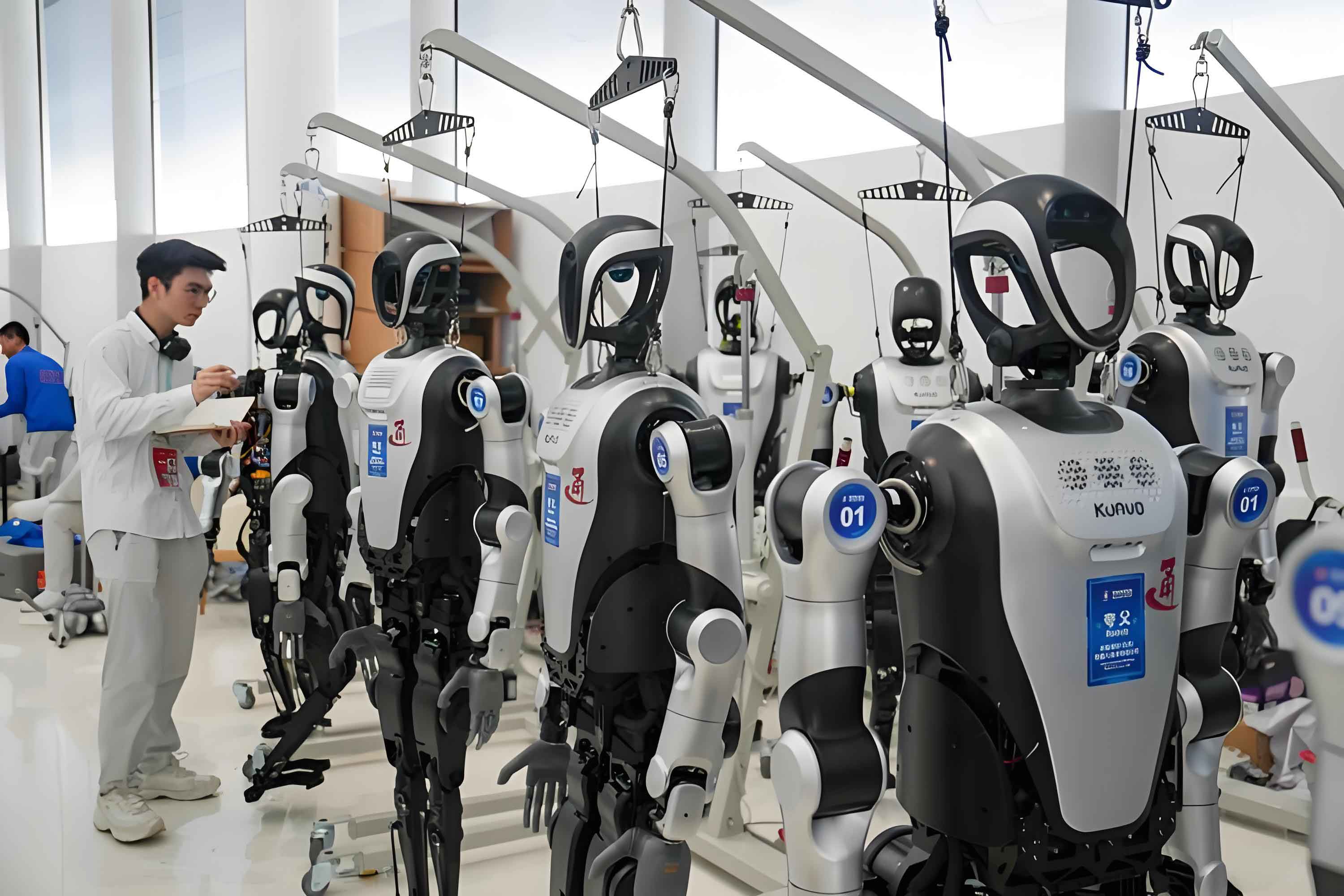
Amid the bustling activity, the humanoid robot competitions served as a live laboratory for observing how these machines handle stress, environmental variables, and unexpected challenges. Each humanoid robot was subjected to rigorous conditions that mimicked real-world demands, from uneven surfaces to dynamic obstacles, providing a wealth of data on durability and adaptability. The presence of so many humanoid robot models in one place enabled side-by-side comparisons of mechanical efficiency, software robustness, and energy consumption, which are critical for future commercial viability. As spectators marveled at the agility and precision of these humanoid robots, engineers and researchers behind the scenes meticulously recorded performance metrics, identifying common failure points and success patterns. This collective effort not only advanced individual humanoid robot projects but also contributed to a broader understanding of how to optimize humanoid robot systems for mass production and deployment. The festival thus became a cornerstone event for the humanoid robot industry, setting new benchmarks and inspiring further innovation in humanoid robot technology across the globe.
- The Philosophical Shift: From Competition to Collaboration in Humanoid Robot Development
At its core, the Humanoid Robot Sports Festival embodied a philosophy where “exchange first, competition second” took precedence, mirroring the Olympic spirit but with a technological twist. Unlike traditional sports, where winning is the ultimate goal, here the primary focus for many participants was on learning, sharing insights, and gathering data to improve their humanoid robot models. For instance, when a humanoid robot stumbled or malfunctioned during an event, it wasn’t seen as a failure but as a golden opportunity to refine algorithms and enhance fault tolerance. This mindset shift is crucial for the humanoid robot industry, as it accelerates problem-solving and reduces the time from concept to reliable application. Teams reported that the real value lay in the post-event analyses, where they could dissect performance logs to identify weaknesses in their humanoid robot’s sensor integration, balance control, or decision-making processes. By embracing this collaborative approach, the humanoid robot community is building a robust foundation for future innovations, where each competition serves as a collective stepping stone toward more capable and resilient humanoid robot systems.
Moreover, the festival highlighted how humanoid robot developers are moving away from siloed research toward open innovation. Many brands used the event to network, form partnerships, and even share proprietary data on humanoid robot performance under stress. This openness is vital for addressing common challenges, such as power management and mobility in complex environments, which no single entity can solve alone. The humanoid robot competitions thus acted as a catalyst for standardizing protocols and best practices, ensuring that advancements in one humanoid robot project can benefit others. As a result, the humanoid robot ecosystem is evolving into a more interconnected and efficient network, where knowledge transfer accelerates the overall progress of humanoid robot technology. This collaborative ethos is essential for achieving the long-term vision of humanoid robots becoming ubiquitous in homes, factories, and public spaces, as it fosters a culture of continuous improvement and shared success in the humanoid robot field.
- Technical Challenges and Breakthroughs in Humanoid Robot Athletics
The humanoid robot competitions exposed a range of technical hurdles that must be overcome to achieve true embodied intelligence. One of the most prominent challenges was maintaining stability and balance during high-speed movements, such as running or jumping, which require sophisticated control systems for each humanoid robot. For example, in sprinting events, humanoid robots often faced issues with gait optimization and energy efficiency, leading to falls or reduced performance. However, these failures provided invaluable data for improving dynamic motion algorithms, which are essential for any humanoid robot operating in unpredictable environments. Another critical area was sensor integration; humanoid robots relied on a combination of cameras, lidar, and inertial measurement units to navigate courses, but inconsistencies in data fusion sometimes caused errors in perception and reaction times. By analyzing these incidents, developers could enhance the sensory capabilities of their humanoid robot models, making them more adept at handling real-world complexities like obstacles or changing lighting conditions.
In addition to hardware limitations, the software aspects of humanoid robot performance came under scrutiny. Machine learning models driving these humanoid robots needed to process vast amounts of data in real-time, but latency issues occasionally resulted in delayed responses or system crashes. The competitions served as stress tests for these AI frameworks, revealing the need for more efficient neural networks and better training datasets tailored to humanoid robot applications. Breakthroughs observed included humanoid robots that successfully adapted to mid-course changes, demonstrating emerging capabilities in adaptive learning and resilience. These advancements are not just academic; they have direct implications for scaling humanoid robot use in sectors like manufacturing and logistics, where reliability is paramount. As humanoid robot technology continues to evolve, the lessons from these athletic events will inform the design of next-generation humanoid robots that are more agile, intelligent, and cost-effective, ultimately bridging the gap between experimental prototypes and practical tools for society.
- The Role of Data Collection and Learning in Humanoid Robot Evolution
Data emerged as the unsung hero of the Humanoid Robot Sports Festival, with every movement, success, and failure generating terabytes of information for analysis. Each humanoid robot was equipped with extensive logging systems that captured details on joint angles, power consumption, environmental interactions, and decision-making processes. This data is invaluable for training and refining the AI models that control humanoid robots, as it provides realistic scenarios that are difficult to replicate in laboratory settings. For instance, when a humanoid robot tripped during a race, the incident offered insights into balance recovery techniques that can be incorporated into future algorithms. Similarly, successful completions of complex tasks, like object manipulation under time constraints, helped identify optimal strategies for humanoid robot operations in crowded or dynamic spaces. By aggregating data from multiple humanoid robots across different brands, researchers can build comprehensive datasets that accelerate the development of more robust and versatile humanoid robot systems.
Furthermore, the festival emphasized the importance of real-world testing for validating simulation-based models. Many humanoid robot developers rely on virtual environments to train their systems, but discrepancies often arise when transferring those models to physical hardware. The competitions provided a controlled yet authentic setting to bridge this gap, allowing for direct comparisons between simulated and actual humanoid robot performance. This iterative process of testing and learning is crucial for achieving the reliability needed for widespread humanoid robot adoption. As data from these events is shared and analyzed, it contributes to a growing repository of best practices for humanoid robot design, from mechanical durability to AI decision-making. In the long run, this data-driven approach will enable humanoid robots to learn from each other’s experiences, creating a collective intelligence that propels the entire field forward. The humanoid robot community is thus leveraging these competitions not just for glory, but as essential milestones in the journey toward creating humanoid robots that can seamlessly integrate into human environments.
- Scenario-Based Testing: From Laboratory to Real-World Applications for Humanoid Robots
The Humanoid Robot Sports Festival functioned as a浓缩ed microcosm of the diverse scenarios that humanoid robots must master to become practical assets. In laboratories, humanoid robots often operate in controlled conditions, but the competitions introduced elements of unpredictability—such as varying terrains, weather effects, and interactive obstacles—that mirror real-life challenges. This scenario-based testing is critical for transitioning humanoid robots from research curiosities to functional tools in industries like healthcare, construction, and domestic services. For example, events that required humanoid robots to navigate uneven surfaces or carry loads simulated tasks they might perform in disaster response or warehouse management. By excelling in these scenarios, humanoid robots demonstrated their potential to take on roles that are dangerous or repetitive for humans, thereby increasing productivity and safety. The data gathered from these tests will inform the development of humanoid robots that are better equipped to handle the complexities of everyday environments, from cluttered homes to bustling factories.
Moreover, the festival highlighted the economic implications of scenario-ready humanoid robots. As these machines prove their mettle in competitive settings, investor confidence grows, fueling further innovation and commercialization in the humanoid robot sector. The ability of a humanoid robot to perform reliably in multiple scenarios reduces the risk associated with large-scale deployments, making them more attractive for businesses seeking automation solutions. This, in turn, drives down costs and accelerates the adoption of humanoid robots across various sectors. The competitions also served as a showcase for the latest advancements in humanoid robot capabilities, attracting attention from policymakers and industry leaders who can influence regulatory frameworks and funding priorities. By demonstrating the practical benefits of humanoid robots in realistic scenarios, the festival is helping to build a compelling case for their integration into society, paving the way for a future where humanoid robots are as commonplace as smartphones or computers.
- Historical Context: Learning from Predecessors Like AlphaGo for Humanoid Robot Advancements
The significance of the Humanoid Robot Sports Festival can be better understood by drawing parallels with historical milestones in AI, such as the AlphaGo matches against Lee Sedol and Ke Jie. While most consumers may not need an AI Go-playing program, those events were transformative for the field of artificial intelligence, showcasing the power of deep learning and neural networks. Similarly, the humanoid robot competitions are not primarily about creating sports champions but about advancing the underlying technologies that enable embodied intelligence. Just as AlphaGo’s victories spurred innovations in algorithm design and data processing, the performances of humanoid robots in Beijing are driving progress in robotics hardware, sensor integration, and adaptive AI. This historical perspective reminds us that the true value of such events lies in their ripple effects, which can reshape entire industries and societal norms over time.
In the case of humanoid robots, the lessons from AlphaGo emphasize the importance of iterative testing and public engagement. The humanoid robot festivals generate widespread interest and debate, much like the Go matches did, which helps demystify the technology and build public trust. This engagement is crucial for the eventual acceptance of humanoid robots in daily life, as it allows people to see these machines as tools for enhancement rather than threats. Furthermore, the data and insights gained from humanoid robot competitions are likely to fuel breakthroughs in related fields, such as autonomous vehicles or smart infrastructure, where similar challenges in perception and decision-making exist. By building on the foundations laid by earlier AI achievements, the humanoid robot community is accelerating its journey toward creating machines that can think, learn, and act with human-like versatility. The Humanoid Robot Sports Festival thus represents a modern incarnation of this evolutionary process, where each competition brings us closer to realizing the full potential of humanoid robots in a connected world.
- Future Outlook: The Path Forward for Humanoid Robots Post-Competition
Looking ahead, the Humanoid Robot Sports Festival has set the stage for accelerated growth and innovation in the humanoid robot industry. The insights gained from the 2025 event will likely influence research priorities, with a greater emphasis on robustness, energy efficiency, and user-friendly interfaces for humanoid robots. In the short term, we can expect to see humanoid robots becoming more prevalent in controlled industrial settings, where they can handle tasks like quality inspection or assembly with increasing precision. As the technology matures, humanoid robots may gradually enter consumer markets, assisting with household chores, elderly care, or education. The competitions have also highlighted the need for international standards and ethical guidelines to govern humanoid robot development, ensuring that these advancements benefit humanity as a whole. By continuing to host such events, the global community can maintain momentum in humanoid robot innovation, fostering a cycle of improvement that leads to more capable and affordable humanoid robots.
Ultimately, the Humanoid Robot Sports Festival is more than a spectacle; it is a vital component of the ecosystem that will bring humanoid robots from the arena into our everyday lives. As these machines continue to “run” and “move” in competitive settings, they are not just winning medals but illuminating the path toward a future where humanoid robots are integral to solving complex global challenges. The collaborative spirit, data-rich environments, and scenario-based testing exemplified by the festival will remain essential as the humanoid robot field evolves. With each iteration, humanoid robots are becoming smarter, more adaptable, and more ready to take on the world—one competition at a time.
In conclusion, the 2025 World Humanoid Robot Sports Festival in Beijing was a landmark event that transcended the boundaries of sport, serving as a powerful catalyst for technological advancement and global collaboration. By bringing together hundreds of humanoid robots from around the world, it provided a unique platform for testing, learning, and innovating in the pursuit of embodied intelligence. The lessons learned here will resonate across industries, driving the development of humanoid robots that are not only faster and stronger but also wiser and more integrated into human society. As we reflect on the excitement of the competitions, it is clear that the true victory lies in the progress made toward a future where humanoid robots enhance our lives in countless ways, from manufacturing floors to living rooms. The journey of the humanoid robot is just beginning, and events like this are essential milestones on the road to a smarter, more automated world.