
From August 15 to 17, 2025, the global stage witnessed an unprecedented event as 280 teams from 16 countries converged for the World Humanoid Robot Games, engaging in 487 intense matches across 26 diverse competitions. This landmark gathering not only highlighted the competitive spirit of humanoid robot technology but also served as a critical testing ground for real-world applications, demonstrating remarkable progress in intelligent decision-making, motion coordination, and collaborative abilities of humanoid robots. Behind the scenes, a symphony of technological expertise and meticulous planning ensured the seamless execution of this pioneering event, underscoring the rapid evolution of the humanoid robot industry and its potential to reshape various sectors worldwide.
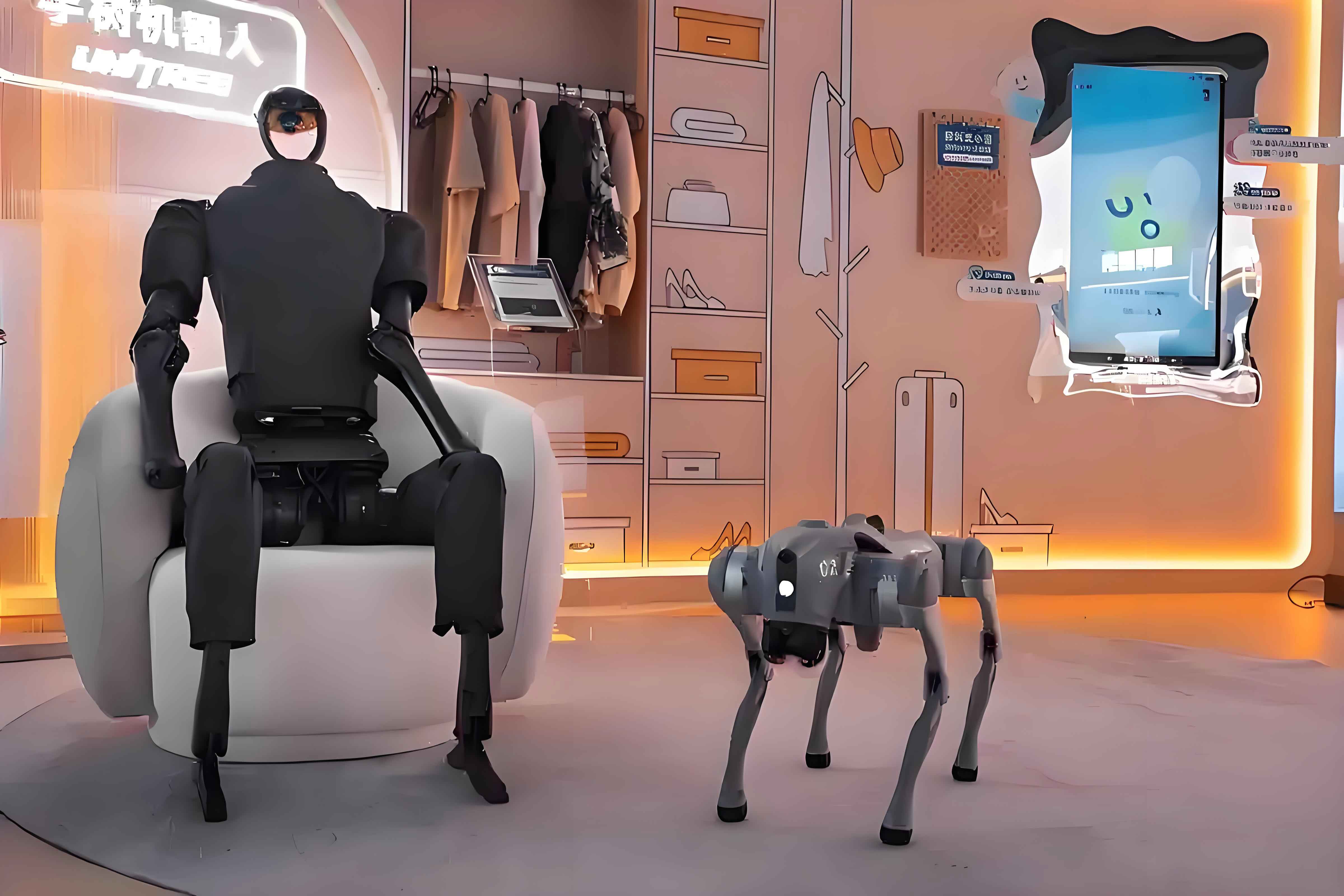
The World Humanoid Robot Games represented a significant milestone in the field of robotics, bringing together innovators, engineers, and enthusiasts to push the boundaries of what humanoid robots can achieve. With events ranging from athletics to scenario-based challenges and performances, the games provided a comprehensive platform to evaluate the capabilities of humanoid robots in dynamic environments. The extensive participation and diverse competitions underscored the growing global interest in humanoid robot development, as teams showcased cutting-edge designs and algorithms that enable these machines to navigate complex tasks with increasing autonomy. This event not only celebrated technological achievements but also fostered international collaboration, setting the stage for future advancements in the humanoid robot ecosystem.
- The Mastermind Behind the Events: CCID’s Comprehensive Role in Shaping the Humanoid Robot Competitions
The China Center for Information Industry Development (CCID) played a pivotal role as one of the organizers of the World Humanoid Robot Games, leveraging its extensive expertise in robotics to design and manage a significant portion of the events. Specifically, CCID was responsible for planning and executing 19 out of the 26 competitions, which included athletic contests, performance showcases, and scenario-based challenges. This involved the development of detailed rules, the construction of standardized competition and training venues, the invitation and coordination of participating teams, and the training of judges. Additionally, CCID conducted pre-event assessments of team capabilities and organized debugging and training sessions to ensure fair and smooth operations throughout the games.
In the athletic segment, the CCID Robotics Testing Laboratory designed a challenging 100-meter obstacle course that incorporated varied terrains such as gravel paths, wooden block sections, stair ascents and descents, sequential pole navigation, and inclined ladders. This course was meticulously crafted to test the diverse obstacle-crossing abilities of humanoid robots, evaluating their stability, adaptability, and precision in motion. For the scenario-based competitions, the laboratory created immersive environments simulating real-world settings, including factory material handling, hospital medicine sorting, and hotel cleaning services. These scenarios were aimed at assessing the comprehensive operational skills of humanoid robots in practical applications. For instance, in the hotel cleaning event, humanoid robots were required to start from a designated point, open a door by manipulating the handle, enter the room, and efficiently collect and dispose of scattered items like water bottles, disposable containers, and cans into a trash bin. Judges scored the robots based on the speed and accuracy of task completion, emphasizing the importance of efficiency and reliability in humanoid robot performance.
Beyond the immediate event coordination, CCID’s Robotics Testing Laboratory offered extensive pre-competition support, providing debugging and training services to all participating teams. This initiative allowed teams to fine-tune their humanoid robots in environments that closely mirrored the actual competition conditions, thereby enhancing their readiness and performance. The laboratory’s approach involves designing multi-dimensional testing and training metrics based on the unique quality characteristics of intelligent robots, constructing realistic scenarios that replicate actual working conditions. These efforts are part of a broader service framework that includes scene setup, testing and training, data collection, analysis, solution development, and standardization, forming a closed-loop professional service tailored for industrial robots, service robots, special-purpose robots, and humanoid robots, including their core components. This comprehensive support system not only facilitated the success of the World Humanoid Robot Games but also contributes to the ongoing innovation and standardization in the humanoid robot industry, driving progress toward more reliable and versatile humanoid robot applications.
- Visual Excellence: Leyard’s Display Innovations Enhancing the Humanoid Robot Experience
The visual presentation of the World Humanoid Robot Games was a standout feature, thanks to the cutting-edge display technologies provided by Leyard. From the opening ceremony to various competition venues, Leyard’s solutions ensured that every detail of the humanoid robot performances was vividly captured and displayed, creating an immersive and futuristic atmosphere. At the National Speed Skating Oval, where the opening ceremony took place, the atmosphere was electric with technological excitement. Leyard’s high-definition LED screens, known for their high brightness, contrast, and refresh rates, delivered crystal-clear visuals that highlighted the intricate movements and actions of the humanoid robots. These displays constructed a stunning stage effect that blended futuristic elements with a competitive vibe, amplifying the excitement and engagement of the audience and participants alike.
At the “Panda Eye” training base, which served as a core facility for the games, Leyard implemented a dome-shaped circular display that became a distinctive visual landmark. This installation featured flowing, colorful lighting effects that crafted a digital landscape brimming with futuristic aesthetics. Not only did this enhance the technological artistry of the venue, but it also boosted the city’s nighttime appeal, establishing itself as a new科技地标 in Beijing. The design seamlessly integrated with the overall theme of the humanoid robot games, providing a backdrop that emphasized innovation and progress in the field of humanoid robotics.
In the ecological area of Lake Heart Island, Leyard introduced an innovative display solution by combining L-shaped foldable screens with natural landscaping. This created a unique experience zone that merged technology, nature, and humanity, offering visitors a novel way to engage with the games. The screens clearly showcased the thrilling performances of the humanoid robots, allowing tourists to witness the action in a serene outdoor setting. This approach not only enhanced the visual appeal but also demonstrated how humanoid robot technologies can be integrated into everyday environments, making advanced robotics more accessible and enjoyable for the public. Through these diverse applications, Leyard’s display innovations played a crucial role in elevating the overall experience of the World Humanoid Robot Games, underscoring the importance of visual technology in promoting and advancing the humanoid robot industry.
- Robust Network Infrastructure: Beijing Unicom’s 5G-A Engineering for Humanoid Robot Reliability
The seamless operation of the World Humanoid Robot Games heavily relied on advanced communication networks, and Beijing Unicom rose to the challenge by providing a robust and high-performance infrastructure tailored to the unique demands of humanoid robots. According to Zeng Wei, a 5G-A expert from Beijing Unicom’s Intelligent Network Optimization Center, humanoid robots impose specific requirements on networks that go beyond typical human use. First, humanoid robots necessitate large bandwidth due to their reliance on numerous sensors, cameras, and other devices that work in unison. These components generate vast amounts of data and video content that must be transmitted in real-time to cloud or edge nodes for analysis and processing, demanding high network capacity. Second, humanoid robots require extremely low latency. While human users may find delays of tens of milliseconds acceptable for a smooth experience, humanoid robots—especially those deployed in industrial, medical, or other critical scenarios—need millisecond or even sub-millisecond latency to ensure safe and reliable operations. Third, humanoid robots and their accompanying environments involve massive connectivity. Unlike traditional sports events where networks support a limited number of audience and staff devices, the humanoid robot games required networks to handle hundreds of humanoid robots simultaneously, along with countless sensors and control units, posing significant challenges to network capacity and reliability.
To address these demands, Beijing Unicom implemented a dual-strategy approach, focusing on both mobile and fixed networks to ensure comprehensive coverage and stability during the games. On the mobile network front, the venue was equipped with nearly 700 wireless routers, enhanced with Huawei’s LampSite 300MHz ultra-wideband network modules. This upgrade boosted the peak network speed to 2.4 gigabits per second, providing the high bandwidth essential for data-intensive humanoid robot operations. For fixed networks, Beijing Unicom deployed 14 internet dedicated lines with bandwidths ranging from 20 megabits to 10 gigabits, along with a network switch featuring four 10-gigabit uplink ports. This infrastructure guaranteed stable and fluid network connections throughout the competition, minimizing disruptions and enabling real-time control and monitoring of humanoid robots.
Qin Yang, Vice President of Beijing Unicom, emphasized that the company is committed to evolving its 5G-A networks from being “built for humans” to a next-generation smart foundation that supports “human + embodied intelligence coexistence.” The introduction of a 5G-A venue acceleration function reserved dedicated network channels for audiences while allocating a flexible, scalable “second channel” for humanoid robots. This design ensured that the network could withstand extreme traffic surges, such as those caused by tens of thousands of visitors during peak times, while also accommodating the low-latency control and remote connectivity needs of humanoid robots in the future. Through comprehensive 5G-A network enhancements, the competition venues achieved “dual 10-gigabit” network coverage, characterized by lower latency, higher speeds, and greater reliability. This engineering feat not only supported the immediate needs of the World Humanoid Robot Games but also set a benchmark for future events and applications involving humanoid robots, highlighting the critical role of advanced networking in the scalability and success of the humanoid robot industry.
The 2025 World Humanoid Robot Games marked a historic convergence of sports and technology, illustrating the rapid maturation of the humanoid robot sector. As the first international-level sports event centered on humanoid robots, it not only fused athletic competition with technological innovation but also signaled a new phase of规模化 and竞技化 development for humanoid robots worldwide. The games acted as a powerful magnet for global humanoid robot innovation resources, attracting top talent and cutting-edge research while simultaneously driving enhancements in supporting industries like electronics and communications. The thrilling speed and激情 displayed in the competitions are poised to continue influencing industrial growth, as the lessons learned and technologies demonstrated here pave the way for broader adoption of humanoid robots in various fields, from manufacturing and healthcare to daily services. This event has undoubtedly accelerated the journey toward a future where humanoid robots play an integral role in society, fueled by collaborative efforts and relentless innovation.
In reflection, the World Humanoid Robot Games served as more than just a competition; it was a dynamic ecosystem where the capabilities of humanoid robots were rigorously tested and celebrated. The involvement of organizations like CCID, Leyard, and Beijing Unicom underscored the importance of interdisciplinary collaboration in advancing humanoid robot technologies. As the industry moves forward, the insights gained from this event will likely inspire new standards, products, and applications, further solidifying the position of humanoid robots as key drivers of the fourth industrial revolution. The success of the games has set a precedent for future international gatherings, promising even greater achievements and breakthroughs in the ever-evolving landscape of humanoid robotics.