
As the 2025 World Robot Conference unfolds in Beijing, showcasing over 200 domestic and international robotics firms, the global spotlight intensifies on the rapid ascent of humanoid robots. This year has witnessed a collective unveiling of Chinese-made humanoid robots, igniting a new wave of development in the sector. In an exclusive discussion, Professor Li Xiangming of Northeastern University in the United States, a pioneer at the intersection of artificial intelligence and robotics, emphasized that the next two to three years represent a rare and pivotal opportunity for China to solidify its position in the humanoid robot industry. With decades of experience spanning from early mainframe transitions to the mobile communication era, including leading the development of the world’s first touchscreen Linux smartphone, Motorola A760, Professor Li brings a unique perspective on the evolution of humanoid robots. His recently published book, “Humanoid Robot—Industry Transformation, Business Opportunities, and Future Trends,” illustrates through numerous anecdotes how humanoid robots will integrate into daily life across education, elderly care, and healthcare over the next 10 to 30 years. Drawing from his deep insights, this article delves into a comparative analysis of the humanoid robot landscapes in the U.S. and China, tracing back to laboratory origins and projecting future trajectories.
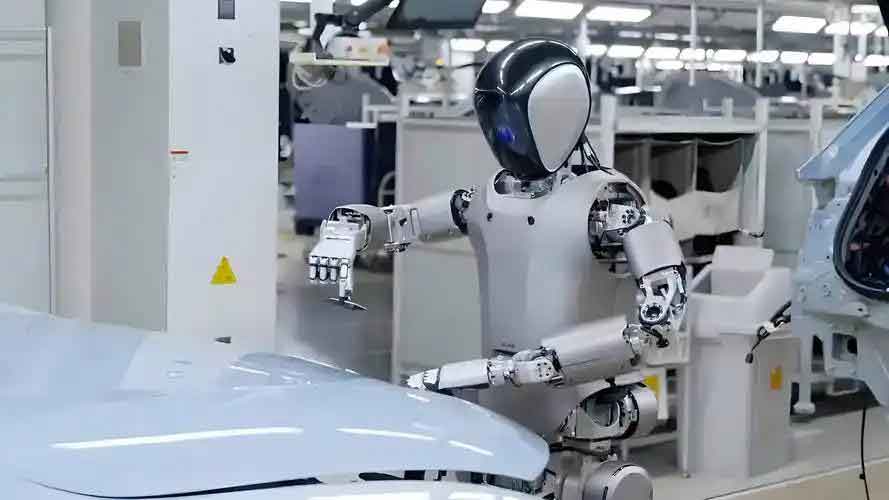
The emergence of humanoid robots as a transformative force marks what many experts are calling the “year of the humanoid robot,” with both the U.S. and China positioning themselves at the forefront of this technological frontier. Professor Li’s observations, rooted in firsthand experiences such as visits to Tesla’s facilities and ongoing research, highlight the dynamic interplay between innovation, market readiness, and global supply chains. This news report explores key facets of the humanoid robot industry, structured around critical themes from the interview, to provide a comprehensive overview of the current state and future potential of humanoid robots.
-
Assessing the Development Levels of Humanoid Robots in the U.S. and China
-
Japan’s Historical Contributions and Current Standing in Humanoid Robotics
-
Tesla’s Pioneering Efforts and the Role of Humanoid Robots in Industrial Settings
-
The Focus of Other U.S. Tech Giants on AI Research and Its Implications for Humanoid Robots
-
The Impact of Humanoid Robots on Global Supply Chains and Manufacturing Dynamics
-
The Timeline for Humanoid Robots to Enter Ordinary Households and Future Industry Structure
According to Professor Li, 2025 signifies the inception of the humanoid robot era, with both the United States and China occupying leading positions in the global first tier. It is premature to declare a definitive leader, as the industry is in its nascent stages, but China’s advancements in humanoid robot technology are undeniable. The United States benefits from over three decades of expertise in traditional robotics, leveraging a robust foundation in automotive manufacturing and other industrial sectors. In terms of the “brain” of humanoid robots, the U.S. excels in artificial neural networks and computational power, providing a significant edge in AI integration. However, China is not lagging; its capabilities, exemplified by models like DeepSeek, demonstrate competitive problem-solving abilities. Moreover, China’s manufacturing prowess offers an irreplaceable advantage in the humanoid robot supply chain, encompassing mechanical components, electronics, and biomaterials. A key differentiator lies in market receptivity: while some American consumers express concerns about privacy and the intrusion of humanoid robots into personal spaces, China’s vast market exhibits a greater openness to adopting new technologies, potentially accelerating the deployment of humanoid robots in various applications.
| Factor | United States | China |
|---|---|---|
| Traditional Robotics Foundation | Over 30 years of experience, with strengths in industrial automation | Strong manufacturing base, though newer to advanced robotics |
| AI and Neural Network Capabilities | Global leadership in research and development | Rapid progress with models like DeepSeek, closing the gap |
| Supply Chain Integration | Heavily reliant on Chinese components for humanoid robot production | Dominance in mechanical, electronic, and biomaterial sectors |
| Market Adoption Potential | Mixed receptivity due to privacy concerns | High openness and enthusiasm for humanoid robot integration |
The evolution of humanoid robots from laboratory curiosities to market-ready products has been catalyzed by breakthroughs in large-scale AI models, enabling independent decision-making. This shift is pivotal for the humanoid robot industry, as it transitions from theoretical research to practical implementation. Professor Li stresses that the humanoid robot sector is still defining its standards, and both nations are contributing to this global endeavor. The humanoid robot landscape is characterized by intense competition, but collaboration in supply chains underscores the interconnected nature of this industry. For instance, while the U.S. leads in AI software for humanoid robots, China’s hardware capabilities are crucial for mass production, highlighting the symbiotic relationship in advancing humanoid robot technologies.
Professor Li acknowledges that the progress in humanoid robots in both the U.S. and China builds upon foundational work pioneered by Japan, effectively standing on Japan’s shoulders. As early as 1969, Japan’s Waseda University, under the leadership of Dr. Ichiro Kato, developed the first bipedal humanoid robot, marking the inception of humanoid robot research. Japanese companies such as Honda and Toyota, along with numerous smaller enterprises, invested significantly in humanoid robot development, making strides in areas like joint mechanics, motors, kinematics, and gait management. These efforts laid the groundwork for modern humanoid robots, with Japan establishing a strong early lead in the field. However, shifts in Japan’s industrial priorities have led to a decline in its prominence in the humanoid robot arena. Today, as indicated by rankings like Morgan Stanley’s “Humanoid 100,” which features 35 Chinese companies and no Japanese entries, Japan’s role has diminished. This transition underscores the dynamic nature of the humanoid robot industry, where early innovators may not always maintain their advantage as global focus shifts.
The legacy of Japanese humanoid robot research is evident in contemporary designs and functionalities. For example, advancements in motor efficiency and balance algorithms from Japan have been integrated into current humanoid robot models. Despite this, the concentration of humanoid robot development has moved to the U.S. and China, driven by factors such as AI advancements and market scale. Professor Li notes that while Japan’s contributions were instrumental, the current humanoid robot revolution is being shaped by new players who are leveraging these historical insights to push the boundaries of what humanoid robots can achieve. This shift highlights the importance of continuous innovation in the humanoid robot sector, where past achievements provide a springboard for future breakthroughs.
During a visit to Tesla’s Gigafactory in Texas in April 2025, Professor Li observed firsthand the integration of humanoid robots, specifically Tesla’s “Optimus” model, into manufacturing processes. These humanoid robots are actively participating in tasks such as rear-end assembly, battery installation, and quality inspection within the factory. Elon Musk’s vision for the humanoid robot includes eventual deployment on Mars, and the current factory applications serve as a testing ground for refining the coordination between the robot’s brain and body. Professor Li regards the “Optimus” humanoid robot as a frontrunner in the field, with superior performance in key metrics like finger dexterity, which outpaces many competitors. Tesla’s ability to merge large AI models with physical humanoid robot entities is a distinct advantage, stemming from its extensive computational resources, substantial funding, in-house battery technology, and top-tier AI talent. However, Tesla’s ambition to mass-produce humanoid robots, targeting thousands of units in its factories by year-end and millions within five years, remains dependent on Chinese supply chains, which account for 80-90% of components. This reliance illustrates the critical role of global collaboration in the humanoid robot industry.
The deployment of humanoid robots in industrial environments like Tesla’s factory represents a significant step toward broader adoption. These humanoid robots are not merely automated tools but are designed to mimic human movements and decision-making, enhancing efficiency in complex tasks. For instance, the humanoid robot “Optimus” is being trained to handle variable scenarios on the assembly line, demonstrating the potential for humanoid robots to adapt to dynamic work environments. Professor Li emphasizes that Tesla’s progress in humanoid robot development sets a benchmark for the industry, encouraging other players to accelerate their efforts. The success of such humanoid robots in real-world settings could pave the way for their expansion into other sectors, ultimately driving down costs and increasing accessibility. As humanoid robots become more prevalent in manufacturing, they may redefine labor dynamics, but for now, their integration highlights the transformative power of humanoid robots in optimizing industrial operations.
While Tesla advances in humanoid robot applications, other American AI giants such as Google and Microsoft are primarily concentrated on neural network research, dedicating massive resources to achieve Artificial General Intelligence (AGI)—the ultimate goal of AI that can perform any intellectual task a human can. This “battle of the titans” among U.S. firms involves intense competition for dominance in AI, with projections suggesting it may take another two to three years to reach AGI, albeit with slowing progress in the final stages. According to Professor Li, this period presents a golden opportunity for China. Although China may not immediately match U.S. breakthroughs in areas like computational power, it can effectively deploy mature large models, such as DeepSeek, into humanoid robot embodiments, yielding substantial benefits. Chinese companies, including Shenzhen-based Ubtech and Hangzhou’s Unitree Robotics, are actively innovating in humanoid robot technology, positioning China with a current edge in practical applications. The temporary focus of U.S. giants on AGI research creates a window for China to strengthen its humanoid robot产业链, making it more precise and potentially irreplaceable.
The divergence in priorities between U.S. and Chinese firms shapes the global humanoid robot landscape. In the U.S., the pursuit of AGI involves high-stakes investments in software and algorithms, with less immediate emphasis on physical humanoid robot integration. This contrasts with China’s approach, which combines AI advancements with hardware development to create functional humanoid robots. Professor Li warns that the window of opportunity is narrow—perhaps only two to three years—before U.S. companies might shift attention to market applications. Therefore, China must capitalize on this interval to enhance its humanoid robot capabilities, particularly in refining supply chains and accelerating commercialization. The humanoid robot industry is at a crossroads, where strategic focus today will determine leadership tomorrow, and China’s proactive stance could secure a dominant role in the humanoid robot ecosystem.
Professor Li’s analysis suggests that humanoid robots could fundamentally disrupt global supply chains, potentially diminishing the advantages of traditional manufacturing powerhouses. With humanoid robots capable of working at near-zero cost for repetitive tasks, production of goods like clothing and footwear may no longer require outsourcing to low-cost countries. Instead, humanoid robot-equipped factories could be established near consumer hubs, enabling automation, unmanned operations, and customization. This shift would localize manufacturing, reducing reliance on international trade and possibly reshaping the global economic order. For China, the imperative is to cultivate a high-precision humanoid robot supply chain; once established, China’s dominance in this area could become unassailable. However, the timeline is tight, with the most critical period being the next two to three years, while U.S. firms are preoccupied with AGI pursuits. By focusing on market applications, China can leverage its manufacturing expertise to lead the humanoid robot revolution, transforming how goods are produced and distributed worldwide.
The integration of humanoid robots into supply chains promises efficiencies but also poses challenges for existing models. For example, humanoid robots could enable just-in-time production in urban centers, minimizing logistics costs and environmental impacts. This aligns with trends toward sustainability and personalized consumption. Professor Li envisions a future where humanoid robot-driven factories are commonplace, but he cautions that this transition requires careful planning to avoid economic dislocations. The humanoid robot industry’s growth must be managed to balance innovation with social equity, ensuring that benefits are widely shared. As humanoid robots become more advanced, their role in supply chains will expand, potentially making traditional manufacturing hubs obsolete unless they adapt. This underscores the urgency for nations to invest in humanoid robot technologies to maintain competitiveness in a rapidly evolving global landscape.
Looking ahead, Professor Li predicts that the humanoid robot industry will evolve into a modular ecosystem, similar to today’s smartphone market. Consumers might visit specialized humanoid robot stores to customize appearances, language capabilities, and skills, with orders fulfilled within days via efficient manufacturing systems. However, achieving this level of integration and accessibility for ordinary households will take at least 20 years, according to his assessment. This timeline accounts for the need for technological refinements, cost reductions, and societal acceptance. The humanoid robot of the future will likely incorporate components from Chinese manufacturing, much like iPhones or Xiaomi phones do today, highlighting the enduring importance of supply chain partnerships. As humanoid robots progress, they will gradually move from industrial and specialized uses to personal assistants in homes, but this journey requires sustained innovation and market development.
The path to widespread household adoption of humanoid robots involves overcoming several hurdles, including affordability, reliability, and user trust. Professor Li’s book illustrates potential scenarios where humanoid robots assist with daily chores, education, and healthcare, but realizing this vision depends on advancements in AI, mechanics, and energy efficiency. The humanoid robot industry must address issues like battery life, safety protocols, and ethical considerations to gain public confidence. In the interim, pilot programs in sectors like elderly care could serve as stepping stones, demonstrating the value of humanoid robots in enhancing quality of life. As the industry matures, the humanoid robot market is expected to fragment into niches, with specialized models for different applications. This diversification will drive innovation, but the core goal remains making humanoid robots as ubiquitous and user-friendly as modern mobile devices. Professor Li’s insights remind us that while the humanoid robot revolution is underway, patience and strategic investment are essential for long-term success.
In conclusion, the humanoid robot industry stands at a pivotal juncture, with China poised to seize a unique opportunity in the next two to three years. Professor Li Xiangming’s expertise underscores the importance of leveraging existing strengths in manufacturing and AI integration to build an unassailable position in the global humanoid robot market. As the 2025 World Robot Conference demonstrates, the momentum behind humanoid robots is building, driven by innovations from companies worldwide. The interplay between U.S. AI advancements and China’s supply chain capabilities will shape the future of humanoid robots, influencing everything from industrial automation to household convenience. With careful strategy and rapid action, China can turn this narrow window into a lasting advantage, ensuring that humanoid robots become a transformative force for society. The journey ahead for humanoid robots is long, but the potential rewards—in efficiency, customization, and quality of life—make it a pursuit worth championing on a global scale.