
The humanoid robot industry, representing a new quality productive force, has emerged as a pivotal battleground in technological competition, attracting numerous listed companies to strategically position themselves in this rapidly evolving sector. In their latest semi-annual reports, these firms have unveiled their most advanced capabilities and progress, highlighting significant investments and innovations aimed at dominating the humanoid robot landscape. The global push for humanoid robot development is accelerating, with companies leveraging their expertise in manufacturing, robotics, and automation to create sophisticated systems that mimic human movements and functionalities. This report delves into the detailed advancements reported by key players, emphasizing their roles as core suppliers, whole machine manufacturers, and contributors to the growing industrial chain demand. The emphasis on humanoid robot technologies underscores a broader trend towards automation and intelligent systems in various industries, from manufacturing to service sectors.
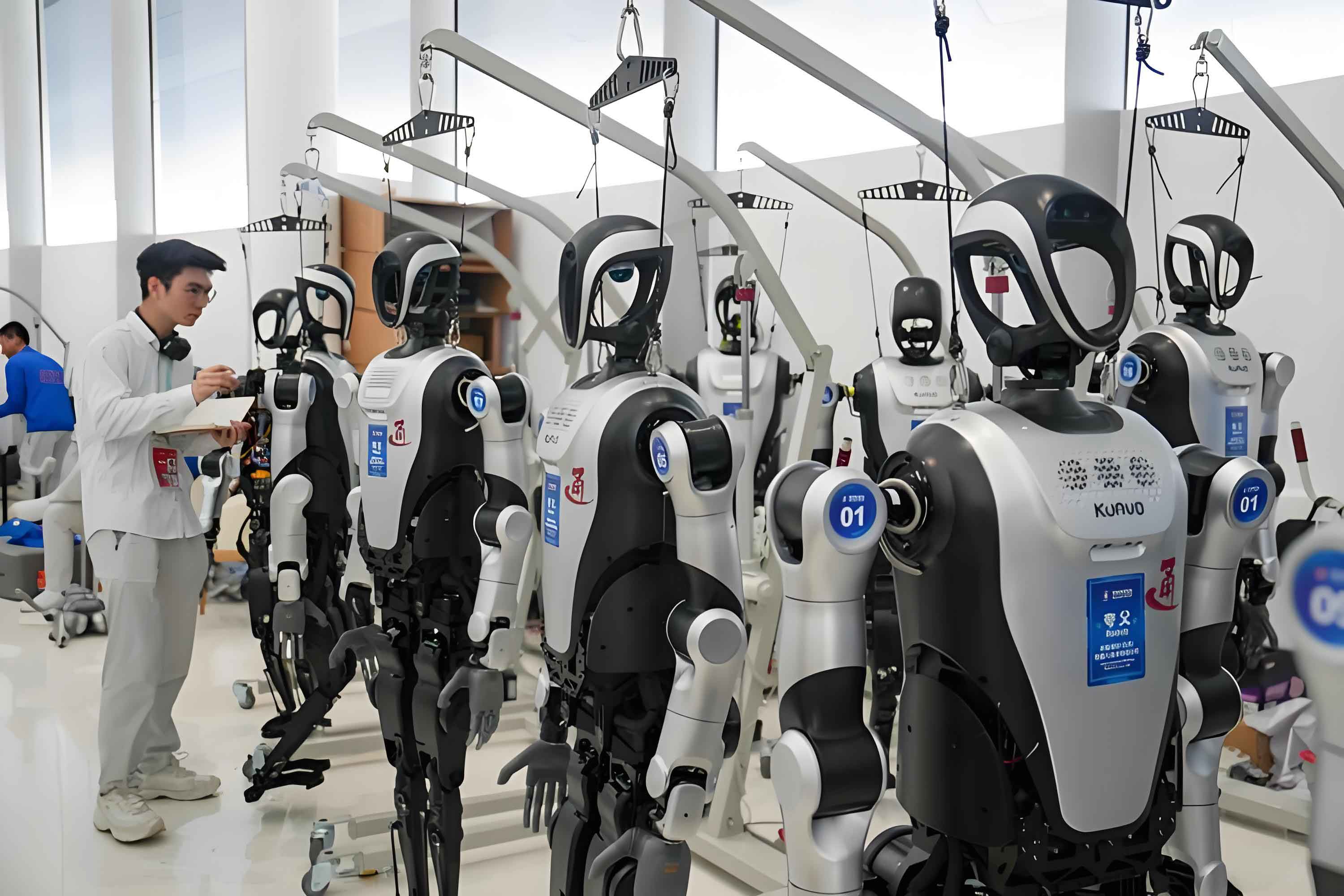
The surge in interest for humanoid robot applications is driven by their potential to perform complex tasks in unstructured environments, such as healthcare, logistics, and domestic assistance. As companies race to develop more agile and cost-effective humanoid robot models, the collaboration between traditional automotive parts manufacturers and robotics startups has become increasingly common. This synergy allows for the transfer of knowledge in precision engineering and mass production to the humanoid robot domain, facilitating faster commercialization. The following sections provide an in-depth analysis of how listed companies are contributing to the humanoid robot ecosystem, based on their semi-annual disclosures, without any fabrication of data.
- Expansion of Core Suppliers in the Humanoid Robot Sector
- Whole Machine Manufacturers Securing Bulk Orders for Humanoid Robot
- Growth in Industrial Chain Demand for Humanoid Robot Components
Core suppliers in the humanoid robot industry are intensifying their efforts to develop critical components, recognizing the immense growth potential. Among these, Top Group (601689) and Sanhua Intelligent Control (002050) stand out due to their strategic moves and investor attention. Top Group, primarily a automotive parts leader, has been diversifying into the robot industry chain while maintaining its focus on smart electric vehicles. During the reporting period, the company decided to establish a separate electric drive business unit, marking a significant strategic step into embodied intelligent robot operations. The humanoid robot executioner is a core component, and Top Group initiated collaboration with clients starting with linear actuators, followed by the development of rotary actuators, and subsequently began researching dexterous hand motors and other products. Samples have been repeatedly delivered to customers, with project advancements proceeding rapidly. Additionally, the company is actively laying out robot body structural parts, sensors, foot shock absorbers, and electronic flexible skin, further forming a platform-based product layout for the humanoid robot business.
Sanhua Intelligent Control, operating across refrigeration, air conditioning, electrical components, and automotive parts, is continuously expanding into emerging areas such as bionic robot electromechanical actuators. In the first half of the year, Sanhua Intelligent Control focused on technological improvements for multiple key model products, collaborating with customers on the full series of product research and development, trial production, iteration, and sample delivery. The company received high praise from customers and achieved a series of innovative results around existing products, leading to an overall enhancement in product capability for humanoid robot applications. The commitment to humanoid robot technologies reflects a broader industry shift towards integrating advanced robotics into everyday operations, with these suppliers playing a crucial role in ensuring the reliability and efficiency of humanoid robot systems.
The involvement of these core suppliers in the humanoid robot market is not just about component production; it encompasses a holistic approach to innovation, including material science, sensor integration, and energy efficiency. For instance, the development of lightweight and durable materials for humanoid robot frames can significantly impact mobility and battery life, while advanced sensors enable better environmental perception and interaction. As the humanoid robot industry matures, these suppliers are expected to drive down costs and improve performance, making humanoid robot more accessible for various applications. The continuous iteration and sample deliveries indicate a robust pipeline for future humanoid robot deployments, with potential impacts on sectors like elderly care, where humanoid robot could assist with daily activities, or in hazardous environments, reducing human risk.
Whole machine manufacturers are making significant strides in the humanoid robot arena, with several companies introducing their own humanoid robot products and securing substantial orders. Junpu Intelligent (688306), for example, successfully developed a prototype of a linear joint humanoid robot arm during the first half of the year, with a load capacity of up to 10kg, while simultaneously advancing the research and development of humanoid robot leg modules. In terms of humanoid robot production lines, the company’s Junpu Humanoid Robot Research Institute established a joint venture with Zhiyuan Robot, named Ningbo Puzhi Future Robot Co., Ltd., which quickly initiated the construction of the first pilot mass production line for robot bodies. The initial production line covers an area of 2,000 square meters, focusing on bipedal/wheeled robots, with an annual planned capacity of 1,000 units. In June, Puzhi Robot and Zhiyuan Robot held a启动仪式 for “robot general product manufacturing certification,” making Puzhi Robot the first robot production enterprise to obtain general product certification initiation from Zhiyuan Robot. Concurrently, the company signed its first humanoid robot contract worth approximately 28.25 million yuan, marking the first large-volume humanoid robot order and representing a successful transition from technological research to commercial application.
Effort (688165) has also been increasing its investment in cutting-edge fields like humanoid robot. According to the semi-annual report, the company invested over 90 million yuan in research and development for industrial robots and embodied intelligence in the first half of the year. Facing challenges, Effort maintained strategic focus, adhering to a difficult but correct path, and expressed firm belief in the long-term value of the robot industry, including humanoid robot. Similarly, Longsheng Technology (300680) has adopted a dual-path advancement model of “core components + whole machine research and development,” achieving multiple breakthroughs in core components such as dexterous hand assemblies, harmonic reducers, and joint modules for humanoid robot. These developments highlight the growing capability of whole machine manufacturers to not only design but also mass-produce humanoid robot, addressing the increasing demand for automated solutions in various sectors.
The ability to secure bulk orders for humanoid robot is a critical milestone, as it demonstrates market acceptance and the scalability of production processes. For Junpu Intelligent, the 28.25 million yuan order signifies confidence in their humanoid robot technology and could pave the way for larger contracts in the future. The focus on bipedal and wheeled humanoid robot variants indicates a diversification approach to cater to different use cases, such as logistics where wheeled humanoid robot might be more efficient, or exploration where bipedal humanoid robot offer better terrain adaptability. As whole machine manufacturers like Effort and Longsheng Technology continue to innovate, the humanoid robot market is likely to see more customized solutions tailored to specific industries, further driving adoption and integration into existing workflows.
With the development and commercialization of humanoid robot and smart car technologies, domestic industrial chain-related enterprises are experiencing growing demand for high-end components like precision screws and bearings. In October 2024, Beite Technology (603009) announced an investment of 1.85 billion yuan to build a planetary roller screw research and production base project. The latest semi-annual report shows that the main project of this production base is currently under construction. Beite Technology stated that the company is primarily coordinating with customers to advance the research, development, and production of screw products for emerging markets, including applications in humanoid robot. This investment underscores the critical role of precision mechanical parts in enabling the sophisticated movements required for humanoid robot, such as walking, grasping, and balancing.
Zhenyu Technology (300953) disclosed in its semi-annual report that it has achieved delivery of micro roller screws, micro ball screws, micro planetary gear sets, and micro worm gears, providing hardware integration solutions for dexterous hands to downstream customers. The micro transmission modules have obtained small-volume orders from domestic and international customers. Notably, Zhenyu Technology’s linear actuator modules and reverse-type planetary roller screws are directly对接 with overseas major clients and are currently in the supplier introduction process audit stage. Domestically, the company has basically achieved full coverage of humanoid robot whole machine manufacturers that have adopted or are researching the use of linear actuator modules and reverse-type planetary roller screws, with batch supply, sampling, and technical exchanges. Related products have been verified by multiple well-known leading humanoid robot whole machine customers both domestically and internationally, highlighting the increasing integration of these components into humanoid robot designs.
Wuzhou Xinchun (603667) reported in its semi-annual report that the company is focusing on two core new product lines: reverse-type planetary roller screws for robots and ball screws for automobiles. Leveraging product technology leadership and positioning advantages, the company continuously obtained small-volume orders for reverse-type planetary roller screw products from several customers during the reporting period. Similarly, Fuliwang (688678) successfully developed multiple specifications of micro planetary roller screws and has begun sending samples to head T1 customers, with five industry-leading customers having received samples so far. Besides micro planetary roller screws, the company has also started shipping and delivering metal parts such as robot reducers (limit sleeves), joint module components, and high-precision wave springs, achieving revenue of approximately one million yuan to date. This growth in component demand is essential for the scalability of humanoid robot production, as it ensures a reliable supply chain for critical parts that affect performance, durability, and cost.
The expansion in industrial chain demand for humanoid robot components is not limited to screws and gears; it includes a wide range of elements such as motors, controllers, and software algorithms. For instance, the development of efficient actuators for humanoid robot joints requires precise torque control and energy management, which in turn drives innovation in motor technologies and power electronics. As companies like Beite Technology and Zhenyu Technology scale up their production, the cost of these components is expected to decrease, making humanoid robot more affordable for small and medium-sized enterprises. Moreover, the verification of components by leading humanoid robot manufacturers indicates a trend towards standardization, which could accelerate interoperability and reduce development time for new humanoid robot models. This section emphasizes how the entire ecosystem is evolving to support the mass adoption of humanoid robot, from raw material processing to final assembly.
In summary, the semi-annual reports from listed companies reveal a concerted effort to capitalize on the humanoid robot revolution, with core suppliers, whole machine manufacturers, and component producers all contributing to the industry’s growth. The humanoid robot sector is poised for significant expansion, driven by technological advancements, strategic investments, and increasing commercial orders. As these companies continue to innovate and collaborate, the humanoid robot market is expected to see broader applications across various domains, from industrial automation to personal assistance. The emphasis on humanoid robot technologies in these disclosures underscores their importance as a key driver of future economic development and technological progress. With ongoing research and development, the humanoid robot industry is likely to overcome current challenges related to cost, efficiency, and usability, ultimately transforming how humans interact with machines in everyday life.
| Company | Key Products/Initiatives | Orders/Investments | Progress |
|---|---|---|---|
| Top Group (601689) | Electric drive business unit, linear and rotary actuators, dexterous hand motors, body structural parts, sensors | N/A | Samples delivered to customers, rapid project advancement |
| Sanhua Intelligent Control (002050) | Bionic robot electromechanical actuators, key model products | N/A | Technological improvements, customer collaboration, high praise received |
| Junpu Intelligent (688306) | Linear joint humanoid robot arm, leg modules, joint venture for production lines | 28.25 million yuan contract | Prototype developed, pilot line construction, first bulk order secured |
| Effort (688165) | Industrial robots, embodied intelligence | Over 90 million yuan R&D investment | Increased investment in humanoid robot, strategic focus maintained |
| Longsheng Technology (300680) | Dexterous hand assemblies, harmonic reducers, joint modules | N/A | Dual-path model, multiple breakthroughs in core components |
| Beite Technology (603009) | Planetary roller screw research and production base | 1.85 billion yuan investment | Base under construction, sample R&D for emerging markets |
| Zhenyu Technology (300953) | Micro roller screws, ball screws, planetary gear sets, linear actuator modules | Small-volume orders | Delivery achieved, overseas client engagement, domestic coverage |
| Wuzhou Xinchun (603667) | Reverse-type planetary roller screws, ball screws | Small-volume orders | Focus on robot and automotive lines, customer orders obtained |
| Fuliwang (688678) | Micro planetary roller screws, reducers, joint module components | Approx. 1 million yuan revenue | Samples sent to head customers, shipping of metal parts |
The table above summarizes the key advancements reported by listed companies in the humanoid robot sector, highlighting their contributions to components, whole machines, and industrial chain growth. This data, drawn directly from semi-annual reports, illustrates the diverse strategies employed to capture opportunities in the humanoid robot market. As the humanoid robot industry continues to evolve, these companies are likely to play pivotal roles in shaping its trajectory, from research and development to mass production and global distribution. The humanoid robot revolution is not just about creating machines that look human; it’s about developing systems that can seamlessly integrate into human environments, enhancing productivity, safety, and quality of life. With ongoing innovations, the dream of widespread humanoid robot adoption is inching closer to reality, driven by the relentless efforts of these listed enterprises.