
BEIJING – The 2025 World Robot Conference has transformed into a futuristic arena where humanoid robots are demonstrating unprecedented agility, intelligence, and practical utility. From executing precise martial arts maneuvers to engaging in soccer matches and performing complex industrial tasks, these advanced machines are no longer confined to laboratory settings. They are rapidly evolving into multi-skilled “all-rounders” capable of cluster coordination, intelligent decision-making, and operating across diverse domains, signaling a significant acceleration in their scale and industrial integration into production and daily life.
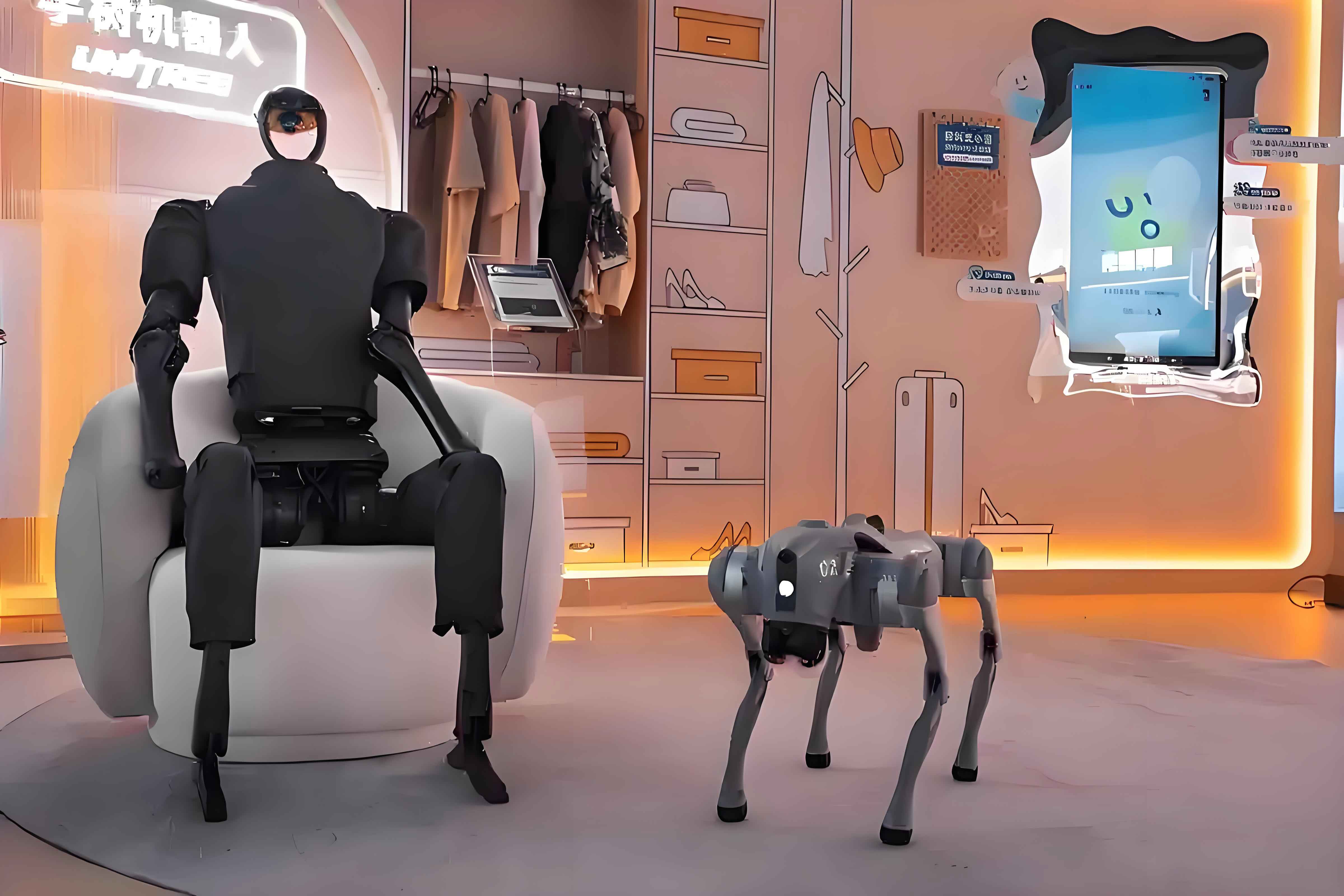
The exhibition floor buzzed with excitement as Unitree Robotics’ G1 combat humanoid robot delivered a series of swift side kicks and hooks, while nearby, a humanoid robot from Beijing Acceleration Evolution Technology engaged a young child in a penalty shootout, drawing cheers from the surrounding crowd. Meanwhile, Ubtech’s Walker S2 showcased its hot-swappable autonomous battery replacement technology, addressing a critical challenge in humanoid robot endurance. This dynamic display marks a stark contrast to previous years, where exhibits were often static, highlighting the rapid progress in the field of humanoid robot development.
New Products: Showcasing Skills and Capabilities
Exhibitors noted a remarkable shift at this year’s event. “Last year, most exhibits were stationary—standing still, sitting, or suspended. This year, the most obvious feeling is that the humanoid robots are all ‘moving’,” remarked one participant. Beyond conventional actions like singing, dancing, and chatting, these humanoid robots are now performing an increasingly diverse array of complex tasks.
At the Unitree Robotics booth, a robotic combat match captivated audiences. Two G1 combat humanoid robots, adorned in black and light green protective gear, exchanged blows with rapid punches and kicks, their metal frames clashing audibly as they maneuvered. Despite occasional stumbles or falls upon impact, the machines quickly regained their balance. “The G1 combat humanoid robot possesses 29 flexible joints. Under external impact, its excellent motion control algorithm allows it to recover balance rapidly and stand up faster,” explained Chen Jiaxin, Marketing Manager at Unitree Robotics.
Opposite this, a small football pitch was surrounded by an enthusiastic crowd. A five-year-old spectator was selected as goalkeeper for a penalty shootout against a humanoid robot from Beijing Acceleration Evolution Technology—the same model that helped the Chinese team win the 2025 RoboCup World Championship in July. Although the young goalkeeper lost 1-3, he left the field exhilarated, exclaiming, “The humanoid robot is amazing!”
The vitality of technology lies in its application. At this conference, numerous companies actively constructed simulated industrial, hospitality, and medical scenarios to demonstrate the usability and substitutability of humanoid robots in real-world tasks.
Pudu Robotics presented its humanoid-style service robot, “Lightning Box Arm,” which utilized AI multimodal interaction to accurately understand and execute various voice commands from visitors. This humanoid robot can autonomously perform tasks such as swiping access cards, opening and knocking on doors, and fetching and delivering items. “Equipped with a robotic arm and dexterous hand, the ‘Lightning Box Arm’ can autonomously press elevator buttons, effectively solving the challenge of elevator control for service robots deployed in overseas multi-story building scenarios,” said Bi Cheng, Brand PR Manager at Pudu Robotics.
The rapid advancement in individual humanoid robot technology is also driving demand for group collaboration in various settings.
At the Ubtech booth, 11 Walker S1 humanoid robots worked collectively on an assembly line, accurately identifying and collaboratively sorting materials in a seamless demonstration of embodied intelligence. “Efficient collaboration is inseparable from the ‘brain’,” stated Tan Min, Chief Brand Officer of Ubtech Technology. The group intelligence technology for humanoid robots deeply integrates large language models, machine vision, and motion control algorithms. Relying on extensive data collection and simulation training, it ensures autonomous decision-making for individual units while achieving group coordination.
Ubtech’s newly launched Walker S2 humanoid robot also attracted significant attention. “Based on deep-thinking large model technology and its equipped hot-swappable autonomous battery replacement system, this humanoid robot can achieve a 3-minute autonomous battery swap without human intervention or shutdown, enabling all-day operation,” Tan Min detailed.
“With the continuous optimization of AI control algorithms, domestic humanoid robots can achieve millisecond-level action responses, with stability, flexibility, and coherence consistently improving, leading to significantly enhanced athletic capabilities,” commented Xu Xiaolan, Chairman of the China Electronics Society.
New Business Models: Robot Restaurants and 4S Stores Open Their Doors
Beyond exhibition halls, humanoid robots are increasingly integrating into daily life. Coinciding with the opening of the 2025 World Robot Conference, Beijing’s first robot-themed restaurant, “Robot Flame Research Institute,” commenced operations in Yizhuang, quickly becoming a popular destination.
Upon entering, patrons are greeted by the bionic humanoid robot bartender “Hill,” while nearby, the robot “Xiao Qi,” fluent in seven languages, offers a standard welcome gesture. Inside, holographic fan navigation devices create a strong sci-fi ambiance. In a themed interactive space, bionic humanoid robots portraying historical figures “Su Shi” and “Li Bai” engage customers in lively debates, blending historical wisdom with contemporary culinary culture.
In the main dining area, a robot band comprising five robotic musicians performs various tunes. Each humanoid robot specializes in an instrument—keyboard, drums, bass—and sways its mechanical body to rock music, delivering an immersive audio-visual experience.
What robotic delicacies can be experienced at the “Robot Flame Research Institute”? According to Sun Ling, the restaurant’s manager, the establishment features over 20 different robots. The pancake robot can produce authentic Tianjin-style pancakes within three minutes; the coffee robot precisely replicates latte art; the kebab robot utilizes automatic skewer rotation and precise temperature control to ensure each skewer is perfectly grilled. “We hope to provide an open testing platform for these robots,” Sun Ling stated. Developing robots involves integrating high-end technologies, but commercialization is even more challenging. The restaurant aims to function as an innovation platform, offering scenario experimentation and data capture opportunities for more robotics companies, making products genuinely useful beyond being merely entertaining or visually appealing.
Next door, the world’s first embodied intelligent robot 4S store officially opened on August 8. This 4,000-square-meter innovative space aggregates dozens of products from over 40 robotics manufacturers across the country.
The store is divided into four zones: the Intelligent Manufacturing Selection Area, which showcases the actual performance of multi-dimensional application robots; the Future Interaction Area, offering immersive human-machine interaction experiences; the Intelligent Maintenance Area, focused on professional after-sales maintenance and upkeep for robots; and the Exclusive Consensus Area, providing dedicated space for in-depth industry exchanges, business discussions, and collaborations.
Wang Yifan, the manager of the embodied robot 4S store, explained that as humanoid robots enter mass production, demands for sales, display, and maintenance are emerging. Drawing from the automotive 4S店 system, the robot 4S store provides comprehensive services including “sales, spare parts, after-sales service, and information feedback,” covering robot selection, customized development, financial leasing, and operational support.
How can one take a robot home? “For individual purchases, sales specialists will retrieve the product from the warehouse and deliver it directly to the consumer. For products not in stock, they will be shipped via express delivery. For corporate purchases, business specialists will handle sales contracts and arrange production and delivery with manufacturers,” Wang Yifan elaborated.
Ma Ning, Deputy Director of the Beijing Economic-Technological Development Area’s Robot and Intelligent Manufacturing Industry Bureau, added that developers can also participate in technical seminars and exchange activities at the robot 4S store, engaging with peers and experts to discuss key robotics technologies and industry trends.
New Trends: Positive Signals for Commercialization Emerge
Data from the Ministry of Industry and Information Technology reveals that in the first half of this year, the operating income of China’s robotics industry increased by 27.8% year-on-year. This growth is underpinned by continuous technological breakthroughs.
At the exhibition, Intime Technology debuted its high-degree-of-freedom dexterous hand, while Aoyi Technology’s intelligent bionic hand demonstrated 27 different gestures with a one-second response time. The maturation of core components such as dexterous hands, reducers, controllers, servo motors, and integrated joints has endowed humanoid robots not only with intelligent “brains” but also agile “limbs.”
“Two years ago, domestic components might have constituted only about 30% of a humanoid robot, with many core parts reliant on foreign suppliers. This year, that proportion has exceeded 80%,” noted Ding Ning, Executive Vice President of the Shenzhen Institute of Artificial Intelligence and Robotics. China’s robotics core components have now formed a rich proprietary product spectrum, with some parts being significantly cheaper than their foreign counterparts.
The decline in hardware costs signifies a maturing supply chain and indirectly indicates the accelerated commercialization of the embodied intelligence industry. Many industry insiders believe that the low-cost evolution of hardware is an inevitable trend for the industry’s future commercialization.
“The most optimistic individuals in the industry believe that large-scale commercial application of humanoid robots will be realized within the next 5 to 10 years. However, this does not preclude humanoid robots from finding genuine application scenarios within the next 2 to 3 years,” said Ma Yang, CEO of Tashan Technology. “It’s similar to assisted driving—no company can directly achieve L5 autonomy; most are practicing and exploring at L1 to L3 stages.”
During the conference, the China Electronics Society also released the “2025 Top Ten Potential Application Scenarios for Humanoid Robots,” providing clear guidance for technological breakthroughs and commercial落地.
The ten potential application scenarios include industrial general operations, automotive manufacturing, 3C manufacturing, shipbuilding, petrochemicals, power production, safety and emergency response, commercial services, home services, and agricultural production. “Humanoid robots will become an important engine for upgrading the manufacturing industry and a crucial guarantee for addressing the pressures of an aging society,” Xu Xiaolan stated. The humanoid robot industry and its applications are currently demonstrating strong development potential, poised to stimulate new consumption, spawn new industries, expand new employment, and accelerate the development of new quality productive forces.
Despite the emergence of positive commercialization signals, achieving large-scale commercial deployment of humanoid robots still requires overcoming the core challenge of enhancing the robot’s “brain” capabilities.
“Currently, the ‘cerebellum’ of most robots has developed to a decent level, allowing for relatively natural running and jumping. However, the intelligence level of the ‘brain’ still needs further improvement,” said Wang Qian, CEO of Independent Variable Robotics. “This is not a hardware issue with the robots themselves, but rather that the intelligence level of the robot’s large model has not yet reached the required standard.”
Wang Xingxing, CEO of Unitree Robotics, also believes that the embodied intelligence large models at the software level for humanoid robots are currently imperfect. Unlike language models driven primarily by data, training embodied intelligence large models—which are not yet sufficiently advanced—with massive amounts of data yields suboptimal results.
Industry analysis suggests that a consensus has formed over the past year or two: for humanoid robots to advance to a higher level, a unified end-to-end large model or general model is necessary. It is anticipated that such models will achieve significant breakthroughs within the next 2 to 3 years, further propelling the capabilities and adoption of humanoid robots across global markets.
| Company/Entity | Humanoid Robot Model / Initiative | Key Feature / Capability Demonstrated | Application Context |
|---|---|---|---|
| Unitree Robotics | G1 Combat Humanoid Robot | 29 flexible joints; rapid recovery from impact; executes side kicks, hooks | Entertainment, Demonstrations, Potential Security |
| Beijing Acceleration Evolution Technology | Competition Humanoid Robot (RoboCup Winner) | Precise soccer playing; interactive penalty shootouts | Sports, Education, Human-Robot Interaction |
| Ubtech | Walker S2 Humanoid Robot | Hot-swappable autonomous battery replacement (3-min swap); all-day operation | Industrial, Logistics, Extended Operations |
| Ubtech | Walker S1 Humanoid Robot Cluster | Group coordination; material sorting; integrates language models, vision, control algorithms | Manufacturing, Warehousing, Collaborative Tasks |
| Pudu Robotics | “Lightning Box Arm” Humanoid-style Service Robot | AI multimodal interaction; autonomous door access, item delivery; solves elevator control | Hospitality, Office Buildings, Delivery Services |
| Robot Flame Research Institute | Various Restaurant Humanoid Robots (Bartender, Chef, Band) | Cooking (pancakes, coffee, kebabs); customer interaction; musical performance | Food Service, Entertainment, Retail |
| Embodied Robot 4S Store | Aggregation Platform for Multiple Humanoid Robots | Sales, maintenance, customization, information feedback for various humanoid robot models | Retail, After-sales Service, Industry Collaboration |
| China Electronics Society | 2025 Top Ten Potential Application Scenarios | Guidance document outlining industrial, service, and emergency uses for humanoid robots | Policy, Industry Roadmap, Investment Guidance |
The progression of the humanoid robot sector is unmistakable. From highly dynamic physical demonstrations to their integration into functional service industries and the establishment of dedicated commercial infrastructure like 4S stores, the humanoid robot is steadily transitioning from a technological marvel to a tangible asset. The emphasis on developing more intelligent “brains” through advanced AI models remains the pivotal frontier. As hardware becomes more accessible and software intelligence deepens, the scope for humanoid robot deployment across the outlined ten application scenarios—and beyond—is expected to expand dramatically, reshaping industries and everyday life on a global scale.