
BEIJING – The 2025 World Robot Conference, held from August 8 to 12, has become a landmark event, drawing over a million attendees to witness robots showcasing capabilities ranging from entertainment to industrial applications. Under the theme “Smarter Robots, More Intelligent Embodiment,” the conference featured more than 1,500 exhibits from 200 global companies, with humanoid robots emerging as a central highlight. This year’s event not only demonstrated technological advancements but also marked a pivotal shift as humanoid robots transition from experimental prototypes to commercially viable products, with several firms securing significant orders that validate their practical utility in sectors like automotive and logistics.
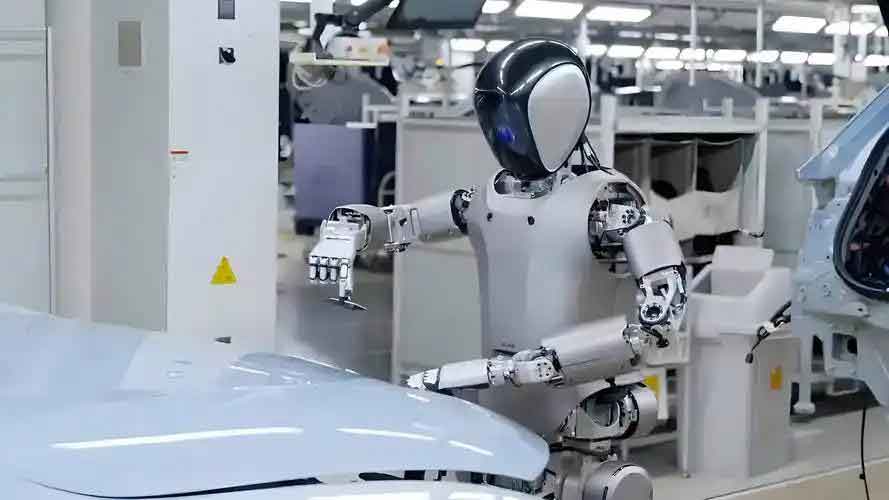
For nearly a decade, the humanoid robot industry struggled with commercialization, often being perceived as expensive novelties. However, recent developments indicate a turning point. Companies such as Ubtech, Zhiyuan Robotics, and Yushu Technology have announced billion-yuan orders, signaling that humanoid robots are finally gaining traction in real-world settings. At the conference, many manufacturers openly displayed price tags for their humanoid robot models, ranging from tens of thousands to nearly a million yuan, a stark contrast to previous years when pricing was a sensitive topic. Additionally, the launch of the world’s first embodied intelligent robot 4S store, featuring over 100 products from 40 manufacturers, further underscores this commercial momentum. Industry experts now predict that humanoid robots will become commonplace in factories within three to five years, driven by rising shipment volumes and the emergence of industry giants.
1. Commercial Breakthroughs: A Decade of Struggle Culminates in Surge of Orders
After years of development, the humanoid robot sector is witnessing unprecedented commercial activity. Ubtech, for instance, recently secured a nearly billion-yuan equipment procurement project from an automotive company, while Zhiyuan Robotics and Yushu Technology won bids for outsourcing services with telecom operators. These deals represent a significant departure from earlier pilot projects, highlighting the growing acceptance of humanoid robots in industrial environments. Tan Min, Chief Brand Officer of Ubtech, emphasized that this year’s orders have shifted from experimental setups to genuine industrial applications, a crucial step forward for the industry.
Similarly, Leju (Shenzhen) Robot Technology Co., Ltd., which has been developing humanoid robots for years, reported a surge in demand. After collaborating with automakers like Hongqi last year to train humanoid robots in factory settings, the company has begun mass production and delivery, experiencing what it describes as an “order explosion.” Beyond large-scale industrial contracts, smaller-scale service applications are also growing. Yushu Technology’s founder, Wang Xingxing, noted that since 2024, clients have been purchasing humanoid robots in larger quantities, fostering new ecosystems such as rental markets. To accelerate monetization, companies are exploring diverse models, including direct sales and experiential spaces. EX Robot Company, for example, opened a fully automated “robot restaurant” during the conference, staffed entirely by humanoid robots serving as bartenders, waiters, cashiers, and even comedians. The company is also expanding into cultural and tourism complexes centered on humanoid robots, with several new projects planned for this year.
2. Manufacturer Perspectives: Industrial Applications Take Priority Over Home Use
Current commercialization efforts reveal divergent paths among humanoid robot makers. While companies like Ubtech, Hexagon, and Dobot focus on industrial scenarios, others such as Yushu Technology and Zhiyuan Robotics see stronger demand in service-oriented settings. Leju Robotics adopts a hybrid approach, targeting both areas. Xie Kaixuan, Marketing Director at Dobot, asserts that factory deployment is the most realistic initial step for humanoid robots, with home use following later. He identifies low-speed, high-frequency, and essential tasks—such as pharmacy logistics, retail guidance, and park inspections—as ideal starting points due to their structured environments and clear objectives.
Regarding household applications, opinions vary. Li Boyang, Co-founder and President of EX Robot Company, maintains that humanoid robots are at least a decade away from home integration, citing complexities like unpredictable home layouts, safety concerns, and privacy issues. Tan Min of Ubtech concurs, noting that current AI capabilities are insufficient for personalized home tasks, making standardized industrial settings more suitable. However, Wang Xingxing of Yushu Technology offers a slightly more optimistic view, suggesting that progress could be evident within two to five years, though full maturity may take up to a decade. He emphasizes that the industry’s primary goal remains enhancing productivity, with entertainment applications like performances and combat serving as interim uses until technology advances.
3. Driving Change: Filling Labor Gaps and Liberating Human Workers
The push to deploy humanoid robots in factories addresses pressing economic needs. In advanced manufacturing, approximately 70% of tasks are already automated using industrial robots like robotic arms and AGVs (Automated Guided Vehicles), but the remaining 30%—often involving complex cognitive functions—still require human labor. Tan Min argues that humanoid robots are uniquely positioned to fill this gap, especially in environments with narrow spaces or dynamic workflows where traditional robots struggle. For example, in logistics scenarios with tight aisles, the humanoid form factor allows for greater flexibility compared to wheeled alternatives.
Leju Robotics highlights that in less automated factories, such as older automotive plants, the potential for humanoid robots to replace human labor exceeds 30%. A key advantage is that humanoid robots can integrate into existing factory layouts without major modifications, as these environments are already designed for human workers. While initial costs are high, long-term expenses—primarily electricity—are lower than human wages, offering a compelling economic case. Hexagon takes this further, proposing that humanoid robots could eventually replace traditional industrial robots entirely. Zhan Yanan, President of Hexagon Manufacturing Intelligence’s Commercial Operations Group in China, explains that the company’s recent foray into humanoid robots aims to bundle sensor technologies for flexible factory applications, with commercialization slated for 2026. He estimates that in sectors like automotive, humanoid robots might supplant existing industrial robots by 2030 or later.
4. Industry Challenges: Overcoming AI, Data, and Ecosystem Hurdles
Despite progress, the humanoid robot industry faces significant obstacles. Lang Xulin, Chief Scientist at Dobot, compares the ecosystem’s evolution to that of smartphones, where hardware innovation precedes AI and application dominance. Currently, the sector is stuck at the second stage, constrained by limitations in artificial intelligence and data training. While hardware capabilities are adequate, the embodied AI models lack critical breakthroughs, restricting the functionality of humanoid robots in terms of dexterity and cognitive abilities.
Data training presents another major challenge. Most companies rely on simulation platforms for training, but real-world data collection is essential for practical deployment. Tan Min notes that Ubtech employs a “dual data flywheel” model, cycling data between real applications and cloud-based simulations, but interoperability issues arise due to the lack of standardization across humanoid robot hardware. Wang Xingxing of Yushu Technology pins hopes on general AI models that could enable efficient training with minimal data, though such solutions remain elusive. Beyond technical barriers, ecosystem development is crucial. Wang Qian, Founder of Independent Variable Robotics, points out that consumer-acceptable prices for humanoid robots should be under $20,000, but current costs are higher, necessitating supply chain optimizations. To address this, major players like JD.com have committed billions to robotics, and government-backed innovation centers in regions like Sichuan, Hubei, and Zhejiang are accelerating research and development.
5. Future Outlook: Rapid Evolution and Competitive Landscape
The humanoid robot industry is at a critical inflection point, with commercial viability within reach for firms that identify essential applications and achieve profitability. Projections indicate that within three to five years, humanoid robots will undergo transformative changes in factory deployments, leading to substantial increases in shipments and the rise of dominant enterprises. As costs decline—potentially matching those of wheeled robots—the humanoid form is expected to become the standard for general-purpose tasks. The involvement of large corporations and national initiatives will likely drive further innovations, reducing costs and expanding applications. Ultimately, the success of humanoid robots will depend on overcoming AI and data challenges, fostering collaborative ecosystems, and demonstrating tangible benefits in productivity and efficiency.
In summary, the 2025 World Robot Conference has underscored that the humanoid robot industry is moving beyond conceptual stages into practical commercialization. With billion-yuan orders, diverse application models, and growing industry consensus, humanoid robots are poised to revolutionize manufacturing and beyond. As technology advances and ecosystems mature, these machines may soon become integral to addressing labor shortages and enhancing operational flexibility across sectors.