
The inaugural World Humanoid Robot Sports Games successfully concluded on August 17, 2025, at Beijing’s National Speed Skating Oval, known as the “Ice Ribbon,” after three days of intense competition and exhibitions. This global event, the first of its kind dedicated entirely to humanoid robot athletes, featured over 500 humanoid robots from 280 teams representing 16 countries. A total of 487 matches were held across 26 competitive, performance, scenario-based, and peripheral events, comprehensively assessing the intelligent decision-making, motion coordination, and real-world application potential of humanoid robot technology. The organizing committee announced that the second edition of the World Humanoid Robot Sports Games is scheduled for August 2026 in Beijing, signaling continued growth and interest in this field.
- Remarkable Advances in Humanoid Robot Athletic Performance
The core of the games centered on athletic competitions designed to evaluate the speed, stability, and adaptability of humanoid robots in dynamic environments. A standout moment occurred during the 1,500-meter race final on the opening day, where the H1 humanoid robot from Unitree Tech secured the first gold medal of the games with a time of 6 minutes and 34 seconds. Unitree Tech CEO Wang Xingxing highlighted that this winning humanoid robot was an upgraded version of the model featured in the Spring Festival Gala, with enhanced algorithms enabling an average running speed of 3.8 meters per second and a maximum speed of 5 meters per second. Another notable participant was the “Tiangan Ultra” humanoid robot, which distinguished itself as the only competitor utilizing fully autonomous navigation without remote control. Tang Jian, CTO of the Beijing Humanoid Robot Innovation Center, explained that this represented a significant upgrade from previous semi-autonomous systems, employing multi-sensor fusion for real-time environmental understanding and independent motion planning in complex settings.
Investors and technical experts closely monitored these events, noting that the performance of humanoid robots in track and field underscored critical advancements in high-torque motor output, joint design, and the stability of underlying control algorithms. The athletic events, which also included the 100-meter hurdles, 3v3 and 5v5 soccer, vertical jump, and standing long jump, served as a rigorous testbed for the physical limits of humanoid robot technology. Performance events, such as group dance, solo dance, and martial arts displays, further demonstrated the全身协同控制 and group coordination capabilities of humanoid robots. Wang Qian, founder of Zibianliang Robotics, expressed that the athletic prowess displayed by humanoid robots this year met technical expectations and delivered an emotionally impactful experience, indicating that fundamental motion challenges are largely resolved, with future improvements focused on enhancing stability and reliability.
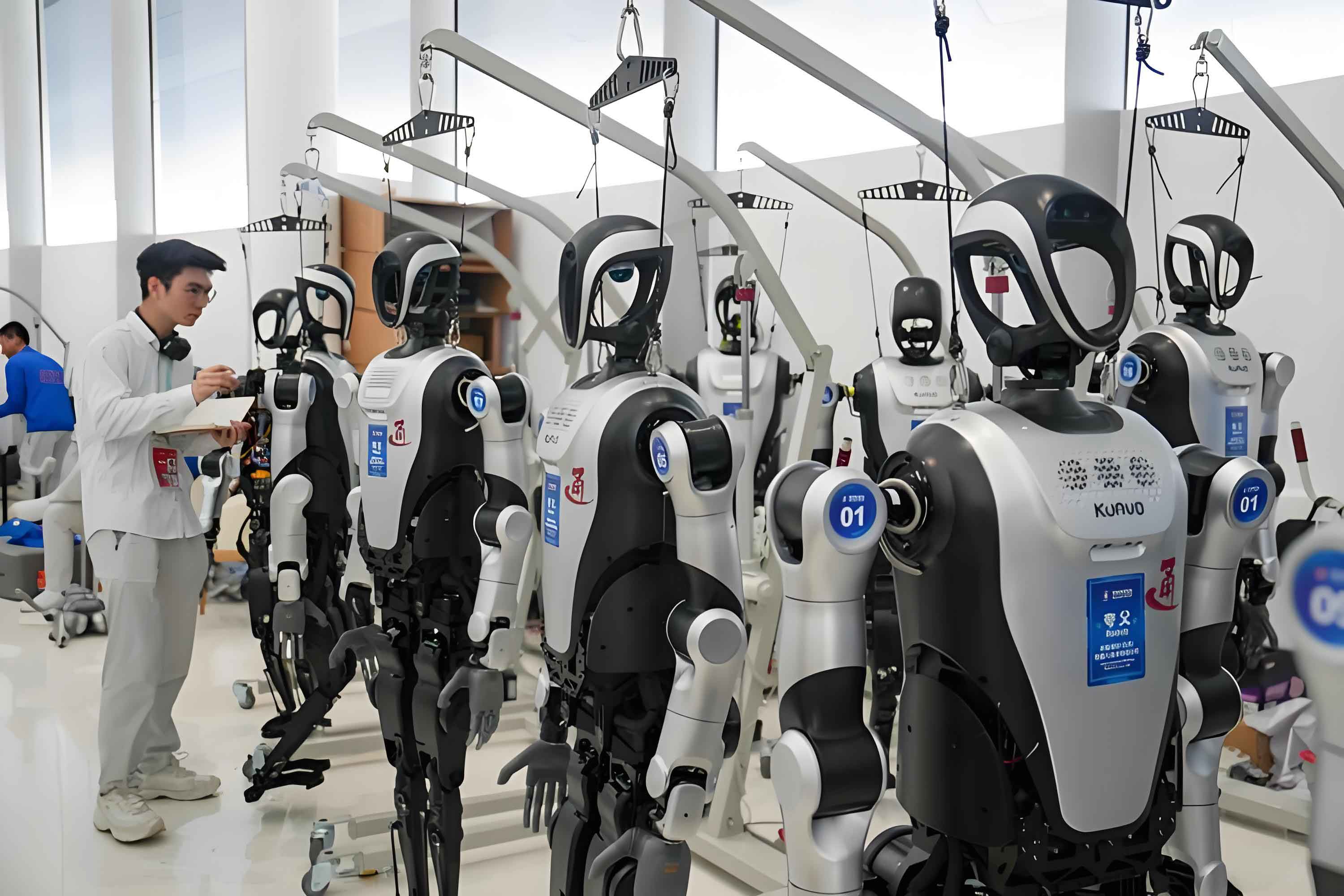
The integration of advanced components is crucial for the development of high-performance humanoid robots. Industry observers pointed out that the progress seen in these games reflects broader trends in the humanoid robot sector, where innovations in actuators, sensors, and AI-driven control systems are pushing the boundaries of what humanoid robots can achieve. The competitive environment provided a unique platform for teams to identify weaknesses and accelerate iterations in humanoid robot design. For instance, the endurance and speed demonstrated in long-distance running events highlighted the importance of energy efficiency and thermal management in humanoid robot systems, areas that are critical for prolonged operational use in various applications.
- Expanding Real-World Application Scenarios for Humanoid Robots
Beyond athletic contests, the games placed a strong emphasis on scenario-based competitions that simulated real-world environments, addressing the critical challenge of practical application for humanoid robots. Scenario events were set in factory, hospital, hotel, and warehouse settings, requiring humanoid robots to perform tasks such as material handling in industrial layouts and medicine sorting and packaging in medical simulations. In the factory scenario, humanoid robots were tasked with moving intake and exhaust valve material boxes from shelves to line-side carts within a specified time, testing their precision and efficiency in logistics. The hospital scenario involved humanoid robots dismantling and repackaging blister-packed capsules and other medications, then neatly arranging them into dispensing boxes, showcasing potential roles in healthcare support.
A key objective of the games was to demonstrate the economic value and readiness of humanoid robot technology for commercial deployment. The event attracted international visitors, with organizers hoping to generate global interest and potential orders for humanoid robot solutions. Compared to traditional expos or conferences, the sports format offered a more concentrated and engaging showcase of humanoid robot capabilities in action. Jiang Zheyuan, founder of Songyan Power, noted that participating in such events has directly driven technical iterations for their humanoid robot models, revealing hardware limitations and informing future development priorities, such as increasing motor torque and joint rotation speed. Songyan Power plans to introduce a full-sized humanoid robot for next year’s games, underscoring the iterative benefits of competition.
Outside the main venue, the Shoucheng Robot Technology Experience Store drew large crowds, offering interactive displays of over 200 robot and smart products from companies like Unitree Tech, Xinghai Tu, Yinhe Tongyong, and Songyan Power. This space, covering nearly 200 square meters, presented humanoid robots and related technologies in lifestyle contexts, including AI-guided tours,麻将-playing robots, claw machine games, and robotic arm delivery systems. Kang Yu, Board Office General Manager of Shoucheng Holdings, described it as a rare comprehensive exhibition and sales space focused on full-scenario experiences for humanoid robots, highlighting the transition of humanoid robots from technical validation to scalable adoption across industrial, service, medical, and household domains.
- Sustained Capital Investment in the Humanoid Robot Sector
The humanoid robot industry continues to attract significant capital investment, reflecting confidence in its growth trajectory. Ye Qian, Co-President of Shoucheng Holdings, confirmed that funding remains robust in this sector. Data indicates that since the beginning of the year, there have been 96 investment and financing deals related to humanoid robots in China, totaling 26.549 billion yuan, already surpassing the full-year 2024 total of 21 billion yuan. This influx of capital is accelerating the pace of corporate activities among startups. In June, Yinhe Tongyong announced a new funding round of 1.1 billion yuan, the largest single investment in the embodied intelligence field this year. July saw Zhiyuan Robot announce its acquisition of A-listed company Shangwei New Materials, followed by Unitree Tech initiating IPO辅导工作, signaling maturation and expansion ambitions within the humanoid robot ecosystem.
The investment landscape is evolving, with a shift in focus from humanoid robot本体企业 to upstream components and downstream applications. Zhu Fangwen, Managing Partner of Shoucheng Capital, explained that while last year’s investments centered on humanoid robot本体企业, current trends include upstream elements like integrated joints, dexterous hands, and new sensors, as well as downstream verticals such as consumer robots, companion robots, and specialized humanoid robots. This diversification indicates a broader recognition of the humanoid robot value chain and its potential for integration into various markets. Kang Yu analyzed that this capital surge is driven by converging factors: technological readiness in servo systems, reducers, high-performance motors, and multi-modal perception algorithms reaching mass-production thresholds; supply chain advancements through standardized and modular designs that reduce costs; and growing demand from enterprises and institutions for labor substitution and intelligent solutions, propelling the “humanoid robot plus” scenario toward commercial scale.
Market analysts observe that the humanoid robot industry is at a pivotal inflection point, where sustained investment is essential for overcoming remaining barriers to widespread adoption. The performance benchmarks set by events like the World Humanoid Robot Sports Games provide tangible proof points for investors assessing the viability of humanoid robot technologies. As companies refine their humanoid robot offerings, the emphasis on cost-effectiveness and reliability will likely shape future funding patterns, with a growing appetite for projects that demonstrate clear paths to market entry and scalability in diverse humanoid robot applications.
- Technical Deep Dive: Components and Algorithms Driving Humanoid Robot Evolution
The athletic and functional demonstrations at the games underscored the importance of advanced hardware and software in humanoid robot development. Key components such as high-torque density motors, precision reducers, and lightweight materials enable the dynamic movements and endurance seen in events like the 1,500-meter run and soccer matches. Control algorithms play an equally critical role, allowing humanoid robots to maintain balance, navigate obstacles, and execute complex tasks autonomously. The progression from remote-controlled to fully autonomous humanoid robots, as exemplified by the Tiangan Ultra, highlights rapid advancements in AI integration, sensor fusion, and real-time data processing capabilities.
Research and development teams are leveraging competitions to stress-test their humanoid robot designs under realistic conditions. Feedback from events has led to iterative improvements in joint flexibility, power management, and thermal dissipation, addressing common failure points in humanoid robot operation. For instance, the ability of humanoid robots to perform consistently over multiple days of competition indicates progress in durability and maintenance aspects, which are vital for industrial and service deployments. Collaborative efforts between academia and industry are also accelerating innovation, with universities and research institutes participating in the games to validate theoretical models and contribute to the open-source ecosystem for humanoid robot technologies.
Looking ahead, the standardization of humanoid robot platforms and interfaces is expected to foster interoperability and reduce development costs. Industry consortia and policy initiatives are emerging to support the creation of common standards for humanoid robot communication, safety, and performance metrics. As the humanoid robot landscape matures, these foundational elements will be crucial for enabling seamless integration into existing infrastructures and unlocking new use cases across sectors such as manufacturing, healthcare, and domestic assistance.
- Global Implications and Future Directions for Humanoid Robot Adoption
The international participation in the World Humanoid Robot Sports Games reflects the global interest in humanoid robot technology and its potential socioeconomic impacts. Teams from 16 countries brought diverse approaches to humanoid robot design, highlighting regional strengths in mechanics, AI, and application-specific innovations. This cross-border exchange facilitates knowledge transfer and collaborative opportunities, potentially accelerating the pace of humanoid robot development worldwide. The announcement of the 2026 games in Beijing reinforces China’s role as a hub for humanoid robot innovation, but also signals the increasingly competitive and cooperative nature of the global humanoid robot market.
Economic analyses suggest that the widespread adoption of humanoid robots could address labor shortages in aging populations, enhance productivity in hazardous environments, and create new markets for robotic services. However, challenges related to cost, public acceptance, and regulatory frameworks remain. Events like the sports games serve as platforms for addressing these issues by demonstrating the practical benefits and safety features of humanoid robots in controlled yet realistic settings. As humanoid robot technologies become more accessible and affordable, their deployment in small and medium-sized enterprises as well as household settings is expected to grow, driven by declining component prices and increasing software capabilities.
In conclusion, the 2025 World Humanoid Robot Sports Games not only celebrated the current achievements of humanoid robot technology but also set the stage for its future evolution. The convergence of athletic prowess, practical application, and robust investment paints a promising picture for the humanoid robot industry. With continued innovation and collaboration, humanoid robots are poised to transition from experimental prototypes to integral components of modern society, transforming how work is performed and services are delivered across the globe. The upcoming 2026 games will likely build on this momentum, offering new benchmarks and inspiring further advancements in the field of humanoid robotics.