
On August 6, the Shanghai Municipal Government Office unveiled the “Implementation Plan for the Development of Shanghai’s Embodied Intelligence Industry,” setting forth ambitious objectives to propel the city into a global leader in embodied intelligence and embodied robot technologies. The plan specifies that by 2027, Shanghai will achieve breakthroughs in no less than 20 core technologies within the embodied intelligence sector, drive the core industry scale to exceed 50 billion yuan, establish multiple incubators, aggregate hundreds of backbone enterprises, and deploy hundreds of application scenarios. This initiative underscores Shanghai’s strategic focus on integrating artificial intelligence into physical entities, fostering a new wave of technological innovation and industrial growth.
Embodied intelligence represents a transformative technological paradigm that embeds artificial intelligence into physical systems, such as robots, enabling them to perceive, learn, and interact with their environment in dynamic, human-like ways. This approach is pivotal for advancing embodied robots, which can autonomously perform complex tasks across diverse settings, from manufacturing floors to healthcare facilities. The Shanghai plan aims to harness this potential, positioning the city at the forefront of the global embodied intelligence revolution.
- Key Technological Breakthroughs and Financial Support
The Implementation Plan prioritizes critical research and development in areas essential for embodied intelligence advancement, including perception and decision-making systems, motion control mechanisms, soft-hard coordination, embodied data sets, and operating systems. To accelerate innovation, the government will provide financial backing of up to 30% of the total investment in核定 projects, with a maximum support cap of 50 million yuan. This funding is designed to spur breakthroughs that enhance the capabilities of embodied robots, making them more adaptive and efficient in real-world applications. By focusing on these core technologies, Shanghai aims to build a robust foundation for embodied intelligence systems that can seamlessly integrate into various industries, driving productivity and innovation.
- Development of Five Major Platforms
To bolster the embodied intelligence ecosystem, the plan calls for the integration of city-wide resources to construct five key platforms: computing power, training grounds, pilot testing facilities, investment channels, and leasing services. Each platform will receive support of up to 50% of the total project investment, not exceeding 20 million yuan. Notably, for embodied intelligence enterprises that achieve a certain scale in computing power rental, the government will offer computing vouchers worth up to 40 million yuan annually. These platforms are intended to provide comprehensive infrastructure for embodied robot development, enabling testing, optimization, and scalability. For instance, the training grounds will simulate real-world environments where embodied robots can hone their interaction skills, while the computing power platform will supply the necessary computational resources for complex AI algorithms in embodied intelligence systems.
- Application Scenarios and Industry Integration
The Implementation Plan emphasizes the practical deployment of embodied intelligence technologies across multiple sectors, including logistics and assembly, industrial manufacturing, commercial retail, healthcare and wellness, and home services. Through scenario征集 and task揭榜 initiatives, the government will identify and support innovative demonstration projects, offering financial assistance of up to 20% of the total investment, capped at 10 million yuan. This approach aims to accelerate the adoption of embodied robots in everyday operations, enhancing efficiency and reducing costs. For example, in logistics, embodied robots could automate warehouse management, while in healthcare, they might assist with patient care, demonstrating the versatile applications of embodied intelligence. The plan seeks to create a feedback loop where real-world usage refines technology, driving continuous improvement in embodied intelligence systems.
- Industry Chain Development and Cluster Formation
To ensure long-term growth, the plan outlines strategies for advancing core component research and production, accelerating the mass production of整机, and strengthening competitive enterprises. This includes fostering specialized industrial clusters that promote high-quality,协同 development across the entire embodied intelligence value chain. By concentrating resources on key areas like sensors, actuators, and control systems, Shanghai aims to reduce dependencies on imports and enhance the global competitiveness of its embodied robot offerings. The cluster model will facilitate collaboration among startups, research institutions, and established companies, creating a synergistic environment where embodied intelligence innovations can thrive and scale rapidly.
- Ecological Support and Innovation Environment
The Implementation Plan also addresses the broader ecosystem for embodied intelligence, focusing on open-source innovation, standard formulation, safety and ethics, talent recruitment, and international cooperation. By establishing guidelines for ethical AI use and promoting open-source projects, Shanghai intends to build a sustainable and trustworthy framework for embodied robot development. Talent initiatives will attract top experts in AI and robotics, while international partnerships will facilitate knowledge exchange and market expansion. This holistic approach ensures that the growth of embodied intelligence is not only technologically advanced but also socially responsible and globally integrated, paving the way for widespread acceptance and application of embodied robots.
In line with these policy directives, several Shanghai-based companies are actively expanding their investments in embodied intelligence and embodied robot technologies. For instance, Shanghai Ant Lingbo Technology Co., Ltd., established in March, serves as a primary vehicle for Ant Group’s foray into embodied intelligence and robotics. The company is dedicated to developing solutions for households, elderly care, and medical health, aiming to build an innovation hub centered on humanoid robots and foster an influential embodied intelligence industry ecosystem. Similarly, Shanghai Fengyuzhu Culture and Technology Co., Ltd. announced the creation of an embodied intelligence research institute in March, focusing on integrating AI decision-making capabilities with the operational abilities of embodied端侧 devices. This move is expected to deepen the application of embodied intelligence in various scenarios, making AI more context-aware and actionable through embodied robots.
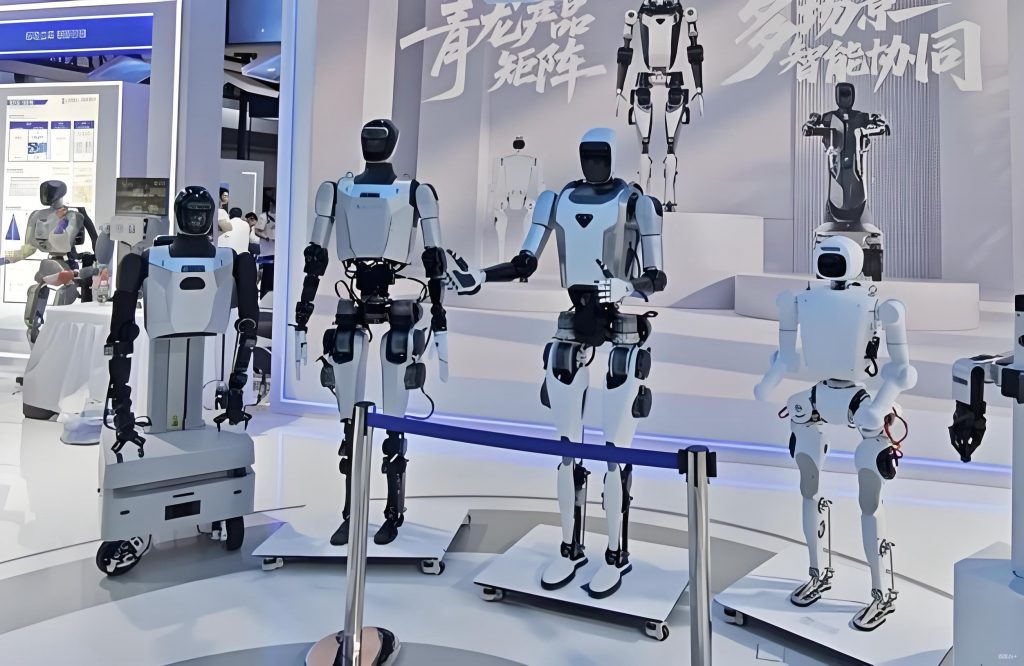
Innovations in core components are also driving progress in embodied intelligence. Companies like Will Semiconductor Integrated Circuit (Group) Co., Ltd. are advancing image sensor technologies that serve as the “eyes” for embodied robots, with multiple CMOS image sensor models capable of capturing clear images even in low-light conditions. This enhances the perceptual abilities of embodied robots, crucial for tasks requiring precise environmental awareness. Meanwhile, Shanghai Moons’ Electric Co., Ltd. has developed robot joint modules that overcome key technical challenges, promoting intelligent upgrades in manufacturing. Their hollow cup motors, featuring innovative winding designs and optimized magnetic field structures, significantly reduce energy consumption and heat loss, achieving performance on par with international standards while offering competitive pricing. These advancements in hardware are essential for the practical deployment of embodied intelligence, enabling more efficient and reliable embodied robots.
Industry experts highlight Shanghai’s advantages in advancing embodied intelligence. Wang Zhiqiu, partner at Shenzhen Huada Research Consulting Co., Ltd., noted that Shanghai benefits from abundant financial resources, a well-developed financial market, a vibrant innovation atmosphere, numerous high-level research institutions, and a strong talent pool. The city’s solid industrial foundation and complete产业链, coupled with its international influence and attractiveness, provide a conducive environment for the rapid development and application of embodied intelligence and embodied robot technologies. This positions Shanghai to lead in the global race for AI-driven physical systems.
Guo Tao, deputy director of the China E-Commerce Expert Service Center, advised that enterprises should focus on software-hardware coordination and deep scenario cultivation to enhance the targeting and practicality of their products. He also suggested leveraging capital forces, such as科创板 green channels, to accelerate the industrialization of technology and achieve fast growth in the embodied intelligence sector. This strategic guidance underscores the importance of aligning technological innovation with market needs to ensure that embodied robots deliver tangible benefits across industries.
The following table summarizes the key financial support measures outlined in the Implementation Plan for embodied intelligence development, highlighting the government’s commitment to fostering innovation in this field:
| Support Area | Support Details | Maximum Support |
|---|---|---|
| Key Technological Breakthroughs | Up to 30% of total project investment | 50 million yuan |
| Platform Construction (e.g., computing power, training grounds) | Up to 50% of total project investment | 20 million yuan |
| Computing Vouchers for Enterprises | Based on computing power rental scale | 40 million yuan per year |
| Application Scenario Demonstrations | Up to 20% of total project investment | 10 million yuan |
This comprehensive support framework is expected to catalyze significant advancements in embodied intelligence, driving the creation of intelligent embodied robots that can transform industries and improve quality of life. As Shanghai moves forward with this plan, the embodied intelligence sector is poised for exponential growth, with embodied robots becoming integral to smart cities, automated factories, and personalized services. The focus on real-world applications and ethical considerations will ensure that the development of embodied intelligence aligns with societal needs, fostering a future where humans and embodied robots collaborate seamlessly.