
In a landmark move to harness the transformative potential of artificial intelligence, the Shanghai Municipal Government has officially launched the “Shanghai Embodied Intelligence Industry Development Implementation Plan,” outlining a comprehensive strategy to establish the city as a global leader in embodied intelligence. The plan, which became effective on July 28, 2025, and will remain in force until July 27, 2028, sets a clear target: by 2027, the core industry scale for embodied intelligence in Shanghai is projected to exceed 50 billion RMB. This initiative represents a critical step in China’s broader technological advancement, focusing on embodied intelligence as a pivotal sector for future economic and innovative growth.
The embodied intelligence field, which integrates AI with physical systems like embodied robots, is rapidly emerging as a key battleground for global technological supremacy. With the term “embodied intelligence” making its debut in the Chinese government’s work report in 2025, regions across the country, including Beijing, Guangdong, and Zhejiang, have been actively formulating policies to support this domain. Shanghai’s plan is strategically designed to capture this developmental opportunity, fostering an ecosystem where embodied intelligence can thrive through model innovation, public platform construction, and real-world application demonstrations.
Core Objectives and Targets for Embodied Intelligence by 2027
The Shanghai Embodied Intelligence Industry Development Implementation Plan delineates a series of concrete objectives to be achieved within the next few years. These targets are aimed at solidifying Shanghai’s position as an innovation hub for embodied intelligence and embodied robot technologies. The key milestones include:
- Achieving no less than 20 breakthroughs in core algorithms and technologies, particularly in areas such as embodied models, embodied data corpora, perception and decision-making, motion control, and operating systems.
- Establishing no less than 4 high-quality incubators dedicated to nurturing startups and projects in the embodied intelligence sector.
- Attracting and clustering hundreds of industry-leading enterprises focused on embodied intelligence and embodied robot development.
- Implementing hundreds of innovative application scenarios that demonstrate the practical utility of embodied intelligence in various sectors.
- Promoting hundreds of internationally leading products derived from embodied intelligence research and development.
These objectives are underpinned by the overarching goal of driving the core industry scale for embodied intelligence beyond 50 billion RMB by 2027, signaling a significant economic and technological commitment.
| Target Category | Specific Goal |
|---|---|
| Core Industry Scale | Over 50 billion RMB |
| Core Algorithm and Technology Breakthroughs | No less than 20 items |
| High-quality Incubators | No less than 4 |
| Gathered Industry Leading Enterprises | Hundreds |
| Innovative Application Scenarios | Hundreds |
| Internationally Leading Products | Hundreds |
The emphasis on embodied intelligence is not merely about numerical targets; it is about creating a sustainable ecosystem where embodied robots and intelligent systems can evolve from conceptual frameworks to commercially viable solutions. This holistic approach ensures that Shanghai remains at the forefront of the global embodied intelligence revolution.
Substantial Financial Incentives and Support Mechanisms
To catalyze the growth of the embodied intelligence industry, the Shanghai government has unveiled a robust package of financial support measures. These incentives are tailored to address key challenges in research, development, and deployment of embodied intelligence technologies, including those related to embodied robots. The support framework includes:
- For key technology攻关: Projects focused on critical areas such as perception and decision-making, motion control, embodied data corpora, and operating systems will receive support covering up to 30% of the total project investment, with a maximum cap of 50 million RMB per project. This is expected to accelerate innovations in embodied intelligence algorithms and systems.
- For industrial innovation service platforms: Initiatives that build essential infrastructure for embodied intelligence, such as computing power platforms, training grounds, pilot testing facilities, investment platforms, and leasing platforms, will be eligible for support covering up to 50% of the total investment, not exceeding 20 million RMB. These platforms are crucial for providing the foundational elements needed for embodied intelligence development.
- Specifically for embodied data corpora: Enterprises purchasing corpus service products will benefit from corpus vouchers of up to 5 million RMB per year. This initiative targets the acute shortage of high-quality data required for training advanced embodied intelligence models, including those powering embodied robots.
- For innovative application demonstration projects: Applications in sectors like logistics assembly, industrial manufacturing, commercial retail, healthcare and wellness, and home services will receive support covering up to 20% of the total project investment, with a maximum of 10 million RMB. This encourages the practical implementation of embodied intelligence solutions in real-world environments.
These financial mechanisms are designed to lower barriers to entry, foster collaboration, and ensure that embodied intelligence technologies can scale efficiently. By addressing funding gaps, Shanghai aims to attract top talent and investment into the embodied intelligence ecosystem, particularly for projects involving embodied robots that require significant R&D resources.
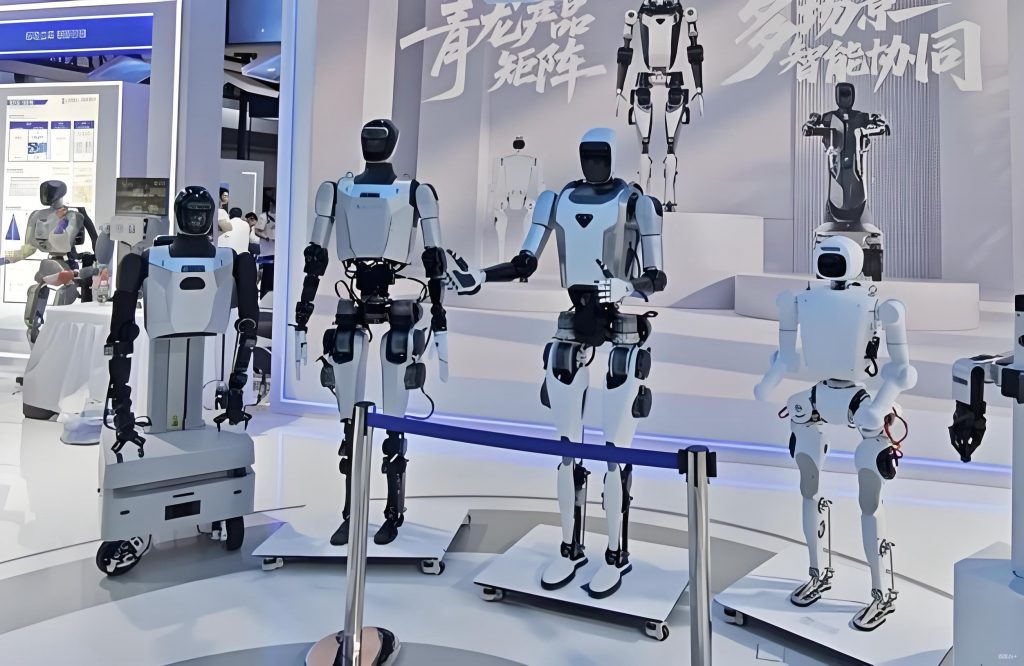
The development of embodied intelligence often materializes through advanced embodied robots, which are designed to interact seamlessly with physical environments. As illustrated, these systems leverage cutting-edge AI to perform complex tasks, from autonomous navigation to object manipulation. The Shanghai plan’s focus on embodied data corpora and public platforms is pivotal for training such embodied robots, enabling them to learn from diverse, real-world scenarios and improve their performance over time.
Expert Perspectives on Shanghai’s Embodied Intelligence Strategy
Industry leaders and analysts have widely applauded the Shanghai Embodied Intelligence Industry Development Implementation Plan for its strategic depth and practicality. Zhu Keli, founding dean of the Guoyan New Economy Research Institute, emphasized the plan’s distinctive features: “Shanghai’s embodied intelligence industry layout is characterized by its model innovation drive, the creation of public platforms, and the establishment of application demonstration benchmarks. These three elements mutually reinforce each other, forming a complete closed loop from technological research to scenario application. This reflects the systematic thinking embedded in Shanghai’s industrial planning, which is essential for advancing embodied intelligence and embodied robot technologies.”
Zhu further noted that the plan’s “scenario traction” approach is particularly effective in bridging the gap between laboratory innovations and market-ready solutions. By prioritizing real-world applications, Shanghai is positioned to accelerate the adoption of embodied intelligence across various industries, ensuring that investments translate into tangible economic and social benefits.
Nie Kaixuan, CEO of Shanghai Songying Technology Co., Ltd., highlighted the significance of the embodied data corpora component: “The specialized focus on embodied data corpora technology is exceptionally亮眼. Embodied data corpora serve as a fundamental foundation for the development of embodied intelligence. Through the municipal corpus platform, Shanghai is constructing high-quality embodied datasets and a comprehensive technical体系. The provision of corpus vouchers, offering up to 5 million RMB per year for enterprises purchasing corpus services, directly tackles industry pain points such as the scarcity of high-quality data and the prohibitive costs associated with data collection. This initiative supplies critical production factors for training sophisticated embodied intelligence systems, including those used in embodied robots.”
Nie’s comments underscore the importance of data in the embodied intelligence lifecycle. Without robust datasets, embodied robots cannot achieve the level of autonomy and adaptability required for complex tasks. The corpus support mechanism, therefore, is a game-changer for startups and established companies alike, enabling them to access essential resources without incurring overwhelming expenses.
Application Sectors: Driving Embodied Intelligence Adoption
The Shanghai plan places strong emphasis on deploying embodied intelligence in key economic and social sectors, leveraging a “scenario牵引” strategy to ensure that technologies are tested and refined in practical settings. This approach is vital for demonstrating the value of embodied intelligence and embodied robots, moving beyond theoretical models to impactful implementations. The primary application areas identified in the plan include:
- Logistics and Assembly: Embodied intelligence systems, particularly embodied robots, can revolutionize warehouse operations, supply chain management, and assembly lines by enhancing efficiency, reducing errors, and enabling 24/7 operations. For instance, autonomous embodied robots can sort packages, load goods, and collaborate with human workers in dynamic environments.
- Industrial Manufacturing: In factories, embodied intelligence can automate complex tasks such as quality inspection, precision assembly, and predictive maintenance. Embodied robots equipped with advanced sensors and AI algorithms can adapt to changing production demands, improving overall productivity and safety.
- Commercial Retail: From customer service to inventory management, embodied intelligence can transform retail experiences. Embodied robots may assist shoppers, manage stock levels, and analyze consumer behavior, driving sales and operational efficiency.
- Healthcare and Wellness: The healthcare sector stands to benefit significantly from embodied intelligence, with applications in surgical assistance, patient monitoring, rehabilitation, and elderly care. Embodied robots can provide round-the-clock support, reducing the burden on medical staff and enhancing patient outcomes.
- Home Services: In residential settings, embodied intelligence can power smart home systems and domestic assistants. Embodied robots may perform tasks like cleaning, security monitoring, and companionship, improving quality of life and enabling aging in place.
By targeting these diverse sectors, the Shanghai plan ensures that embodied intelligence technologies are not developed in isolation but are integrated into the fabric of daily life and industry. This multisectoral approach also facilitates cross-pollination of ideas, where innovations in one field can inspire advancements in another, further accelerating the growth of the embodied intelligence ecosystem.
National and Global Context for Embodied Intelligence Development
The emergence of embodied intelligence as a strategic priority is not limited to Shanghai; it is part of a broader national trend in China. In 2025, the inclusion of “embodied intelligence” in the government work report signaled its importance to the country’s technological future. Since then, regions such as Beijing, Guangdong, and Zhejiang have introduced their own policies to support embodied intelligence and humanoid robotics, creating a competitive yet collaborative landscape for innovation.
Shanghai’s plan, however, stands out due to its comprehensive nature and strong emphasis on implementation. Dubbed “Model Power Gathers in Shanghai,” the initiative aims to consolidate resources, talent, and capital to build a world-class embodied intelligence cluster. This aligns with China’s broader goals of achieving technological self-reliance and leading in key AI domains, including embodied intelligence and embodied robots.
Globally, embodied intelligence is gaining traction as a critical frontier in AI research. Countries like the United States, Japan, and South Korea are investing heavily in similar technologies, recognizing their potential to transform industries and societies. Shanghai’s aggressive targets and supportive policies position it as a formidable player in this global race. By fostering an environment where embodied intelligence can flourish, Shanghai not only contributes to regional economic growth but also sets a benchmark for international best practices.
The current period is often described as a “golden window” for embodied intelligence, characterized by favorable policies, increasing capital inflows, and rapid technological advancements. As Zhu Keli noted, “The plan uses ‘real gold and silver’ to support innovation in various fields, accelerating the transition of technology from the lab to the market.” This window of opportunity is critical for stakeholders to capitalize on, as early movers in embodied intelligence and embodied robot development are likely to gain significant competitive advantages.
Conclusion: Seizing the Embodied Intelligence Opportunity
Shanghai’s Embodied Intelligence Industry Development Implementation Plan represents a bold and forward-thinking strategy to harness the power of embodied intelligence for economic and social progress. With clear targets, substantial financial support, and a focus on real-world applications, the plan lays a solid foundation for growth in this emerging sector. The emphasis on embodied data corpora, public platforms, and cross-sector integration ensures that embodied intelligence technologies, including embodied robots, can evolve from experimental concepts to mainstream solutions.
As the plan moves into implementation, its success will depend on effective collaboration between government, industry, academia, and research institutions. By working together, stakeholders can overcome challenges such as data scarcity, technical complexity, and market adoption barriers. The ultimate goal is to create a vibrant embodied intelligence ecosystem in Shanghai that drives innovation, creates jobs, and improves quality of life.
In the coming years, the progress of embodied intelligence in Shanghai will be closely watched by the global community. If successful, it could serve as a model for other regions seeking to capitalize on the transformative potential of embodied intelligence and embodied robots. With the 2027 targets in sight, Shanghai is poised to lead the charge into a new era of intelligent, interactive systems that redefine human-machine collaboration.