
Industrial capital is shifting from conceptual investments to substantive deployments in the field of embodied intelligence, with recent strategic agreements and intention-based orders signaling a significant step toward practical implementation. Companies across various sectors are now integrating embodied robots into real-world operations, particularly in manufacturing environments, to enhance efficiency and address labor shortages. This transition is underscored by multi-year partnerships and substantial financial commitments, highlighting the growing confidence in embodied intelligence technologies.
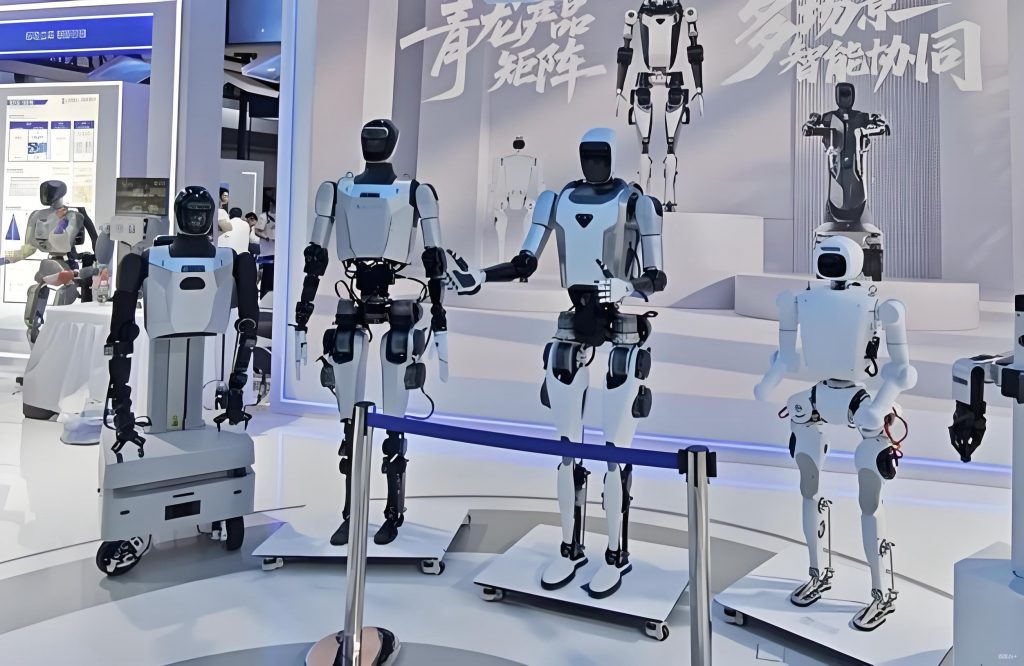
The embodied intelligence sector is witnessing a surge in collaborations aimed at deploying embodied robots in global production bases. For instance, Huizhi IoT, a wholly-owned subsidiary of HKC, has entered into a strategic partnership with Zhi Ping Fang, planning to deploy over 1,000 embodied intelligence robots across HKC’s global production facilities over the next three years. This cooperation, valued at nearly 500 million yuan, represents the first comprehensive strategic collaboration in the global semiconductor display industry focused on embodied intelligence. The embodied robots are designed to handle a wide range of tasks, including warehouse logistics, material handling, component assembly, and quality inspection and testing, thereby driving the application of embodied intelligence in semiconductor display and smart terminal manufacturing processes.
According to Guo Yandong, founder and CEO of Zhi Ping Fang, the company’s embodied robots have been undergoing training in factory settings since last year, currently covering four core scenarios: automotive manufacturing, semiconductors, biotechnology, and public services. These embodied intelligence solutions have established deep cooperative relationships with leading enterprises in each field, with plans for the delivery of robust products this year and an estimated annual order volume of 500 units. This progress demonstrates the tangible advancements in embodied robot capabilities and their integration into industrial workflows.
- Strategic Partnerships and Large-Scale Orders
The embodied intelligence market is expanding rapidly through high-value orders and collaborations. Xingchen Intelligent recently announced a strategic cooperation with Xian Gong Intelligent for a thousand-unit order of humanoid robots, aiming to deploy over 1,000 AI robots in industrial, manufacturing, warehouse, and logistics scenarios over the next two years. This large-scale, phased deployment emphasizes the role of embodied robots in automating repetitive, unsafe, and challenging tasks, thereby improving production efficiency and safety while reducing the burden on human workers.
Similarly, Ubtech, a pioneer in humanoid robot training, has accelerated its commercial pace by securing a 250 million yuan procurement contract for embodied intelligence humanoid robot products and solutions from a well-known domestic enterprise. The contract primarily involves the Walker S2 humanoid robot, which features an autonomous hot-swappable battery system, with deliveries scheduled to commence within the year. These developments underscore the increasing adoption of embodied intelligence in diverse industrial applications, as companies seek to leverage embodied robots for tasks such as搬运, sorting, and quality inspection, which face issues like recruitment difficulties, poor working conditions, and high employee turnover.
- Embodied Robots Entering Factories for Practical Applications
Embodied robots are increasingly being tested and deployed in factory settings, moving beyond theoretical concepts to hands-on operations. At Midea’s washing machine plant in Jingzhou, the self-developed humanoid robot “Mei Luo 1” performs a series of actions, including搬运, initial inspection delivery, and fire patrol inspections, under the调度 of an industrial brain. This exemplifies how embodied intelligence is being applied to real-world manufacturing processes, enhancing automation where traditional equipment falls short.
Despite skepticism about the suitability of general-purpose humanoid robots for factory environments that demand extreme stability, industry leaders argue that embodied robots complement existing automation rather than replace it. Guo Yandong analogizes this by comparing fixed robotic arms to installing armor on a figurine, while the embodied robot (like the figurine) can operate across different scenarios after leaving the fixed area. This perspective highlights that embodied intelligence addresses gaps in current automation, particularly in regions like China, where automation equipment usage accounts for over 50% of the global total, but a significant proportion of frontline workers remain. Embodied robots offer flexibility to solve labor shortages and handle tasks that require adaptability.
Jiao Jichao, vice president and dean of the research institute at Ubtech, noted that after extensive on-site verification, the company has focused its industrial humanoid robot applications on搬运, sorting, and quality inspection. These areas present clear opportunities for embodied intelligence due to urgent automation needs and attractive return on investment. Similarly, Xingchen Intelligent’s AI robots are tasked with material distribution, container handling, loading and unloading, and empty container recycling, automating dull and hazardous jobs to free up workers for more skilled processes.
- Updates from Listed Companies on Embodied Intelligence Progress
Numerous A-share listed companies are intensifying their布局 in embodied intelligence, with recent updates falling into three main categories. These developments reflect a broader trend of integrating embodied robots into corporate strategies, driven by technological advancements and market demand.
First, companies are leveraging existing technical expertise to develop their own humanoid robots. For example, Tuostar announced its first humanoid robot product, “Xiao Tuo,” based on a embodied model co-built with Zhi Pu, which has undergone multiple rounds of verification in injection molding workshops. Similarly, Estun disclosed during a performance briefing that its second-generation humanoid robot, Codroid02, is undergoing small-batch validation in industrial scenarios, capitalizing on the company’s capabilities in core components and robot本体 research and manufacturing.
Second, firms are forming partnerships with leading institutions and enterprises to collaborate on technology and products. Zhongchao Holdings recently signed a strategic cooperation agreement with the Hefei Intelligent Robot Research Institute, focusing on intelligent robot technology cooperation and industrial application, high-temperature alloy casting lightweight technology in aerospace, and the development and application of intelligent robot cables. Hongrun Construction announced a strategic investment in Matrix Super Intelligence, with plans to establish a joint venture dedicated to the research, production, and commercial application of humanoid robots. Matrix Super Intelligence had previously launched its self-developed Matrix-1 humanoid robot, which already has products落地 and orders in hand.
Third, companies are positioning themselves as suppliers to embodied intelligence本体 manufacturers by providing essential components. Mengguli reported that it achieved batch supply of NCA products for humanoid robot batteries in the first half of the year and is developing solid-state battery materials, including LATP solid-state electrolytes and high-nickel/230 ultra-high-nickel ternary materials, which have passed pilot certifications from leading enterprises. Zhiwei Intelligent unveiled its “Zhi Qing” product line for robot brain domain controllers, utilizing NVIDIA Jetson chips and offering multiple AI computing options. After the product launch, dozens of embodied intelligence customers have engaged in需求对接, with sample machines under testing and customized modifications underway with multiple embodied intelligence companies.
- Industry Insights and Future Outlook for Embodied Intelligence
The embodied intelligence sector is poised for growth, with industry analysts predicting a sustained upward cycle. Guojin Securities stated that the robot industry is expected to benefit from resonance in domestic and overseas markets in the fourth quarter of this year, initiating a long-term rising cycle extending into 2026. Investments in the robot板块 are considered highly certain, with recommendations to focus on key players in the domestic supply chain and vertical scenario applications such as logistics, packaging, and environmental sanitation.
This optimistic outlook is supported by the increasing integration of embodied robots into practical settings, where they address specific industrial challenges. The emphasis on embodied intelligence is not just about technological innovation but also about solving real-world problems like labor shortages and operational inefficiencies. As more companies adopt embodied robots, the industry is likely to see further advancements in AI capabilities, battery technology, and controller systems, driving down costs and expanding applications.
In summary, the shift from concept to reality in embodied intelligence is marked by concrete partnerships, large-scale orders, and robust updates from listed companies. Embodied robots are becoming integral to modern manufacturing, offering solutions that complement existing automation and enhance productivity. With continued investment and innovation, the future of embodied intelligence appears bright, promising transformative impacts across various sectors.
| Company/Partnership | Order Details | Number of Embodied Robots | Amount (in yuan) | Key Applications |
|---|---|---|---|---|
| Huizhi IoT & Zhi Ping Fang | Deployment over 3 years | Over 1,000 | Approximately 500 million | Warehouse logistics, material handling, assembly, quality inspection |
| Xingchen Intelligent & Xian Gong Intelligent | Phased deployment over 2 years | Over 1,000 | Not specified | Material distribution, container handling, loading/unloading |
| Ubtech | Procurement contract | Not specified (Walker S2 robots) | 250 million | 搬运, sorting, quality inspection |
| Various A-share companies | Product development and partnerships | Varies (e.g., small-batch validation) | Not specified | Industrial scenarios, component supply |
The embodied intelligence revolution is well underway, with these developments illustrating a clear path toward widespread adoption. As embodied robots continue to prove their value in real-world environments, the industry can expect further innovations and collaborations that push the boundaries of what is possible with embodied intelligence. The focus on practical applications ensures that this technology will play a crucial role in shaping the future of automation and smart manufacturing.