
On October 29, 2025, the “AI Empowers New Quality, Intelligence Wins the Future” investment conference for the artificial intelligence and robotics industry was successfully held in Nanshan District, Shenzhen. Organized by the Huizhou Municipal Government and hosted by the Huizhou Commerce Bureau and Huian District Government, the event brought together industry leaders, investors, and policymakers to explore opportunities in the rapidly evolving field of embodied intelligence and robotics. The conference featured thematic speeches, project roadshows, and networking sessions, culminating in the signing of 13 projects spanning manufacturing, producer services, and investment funds. These initiatives are set to bolster Huizhou’s collaboration with Shenzhen and Dongguan in establishing the Pearl River Delta East Bank Artificial Intelligence and Robotics Industrial Belt, while injecting new momentum into Huian’s efforts to build a comprehensive embodied intelligence and robotics industrial chain.
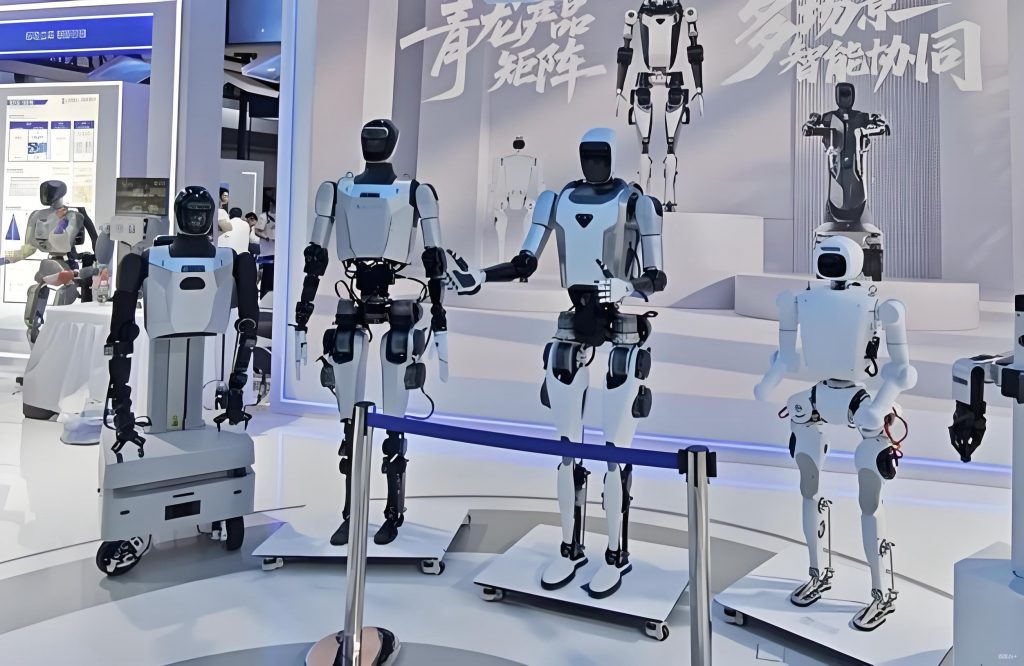
1. Strategic Focus on Embodied Intelligence in Huian District
Huizhou has placed significant emphasis on developing the artificial intelligence and robotics sector, with ambitious targets set for 2027. By that year, the city aims to achieve an output value of approximately 400 billion yuan for intelligent terminals, around 45 billion yuan for core AI components, and about 15 billion yuan for high-end AI electronic new materials. As the direct adjacent area to Shenzhen and Dongguan, Huian District has emerged as the core hub for embodied intelligence industries in Huizhou. In recent years, Huian has actively constructed a full industrial chain for embodied intelligence manufacturing, identified various application scenarios for embodied intelligence, and introduced the “Huizhou Huian District Action Plan for Accelerating the Development of the Artificial Intelligence and Robotics Industry (2025-2027).” This plan outlines a comprehensive strategy to layout the AI and robotics industry across the entire value chain, accelerating the creation of a robust embodied intelligence industry ecosystem. Additionally, Huian will implement a “Seedling Cultivation Action” to enhance support for early-stage, small-scale, and hard-tech enterprises, adopting a cluster-based approach to coordinate resources and foster corporate growth.
The embodied intelligence sector, which integrates AI with physical robots to enable interactive and adaptive behaviors in real-world environments, is a key priority for Huian. The district’s officials have designed a holistic roadmap to build a “strong magnetic field” for embodied intelligence development, focusing on providing high-quality data for embodied intelligence systems. Furthermore, the government and state-owned enterprises are collaborating to introduce robot本体 enterprises and actively promote the opening of application scenarios. According to the head of the Huian District Science, Technology, and Investment Promotion Bureau, Huian’s core advantage lies in its in-depth research and understanding of the industry. Having dedicated over a year to studying the embodied intelligence field, the district has a clear grasp of the current pain points and challenges, allowing for targeted allocation of limited resources to the most critical areas and attracting more enterprises to establish a presence in Huian.
In the realm of embodied intelligence, Huian is concentrating on robot本体 and key modules such as perception, joint, and energy systems. For the year 2025 alone, the district plans to sign and introduce 13 embodied intelligence enterprises, bringing the total number of directly related companies in the industrial chain to over 30. This has初步 established a full industrial chain encompassing robot本体 manufacturing, force sensors, flexible sensors, direct-drive motors, reducers, and high-density batteries. The embodied robot industry is poised to benefit from this integrated approach, as Huian leverages its strategic location and industrial base to drive innovation.
2. Accelerated Industrial Deployment and Corporate Endorsements
The rapid progress in industrial落地 is being met with positive feedback from businesses, who commend Huian’s favorable business environment. The district’s precise policy support and efficient services have made it a preferred destination for companies looking to invest in the embodied intelligence sector. Meng Qingyu, founder and general manager of Shenzhen Dashen Sensing Technology Co., Ltd., highlighted the local government’s professionalism as a key factor in their decision. “What impressed us most was the expertise of the local government, which actively helped us plan our development path and even considered details like company registration and site coding,” Meng stated. He noted that the government’s service efficiency exceeded expectations, enabling the company to focus on production and research and development. Dashen Sensing plans to establish an intelligent sensor R&D and manufacturing center in Huian, with an initial investment of tens of millions of yuan in equipment. Over the next one to two years, the company expects to recruit over 20 R&D personnel, including doctors and masters, to advance embodied intelligence applications in sensing technologies.
Another notable example is Shanghai Kexing Shikong Technology Co., Ltd., whose co-founder, Yang Zhexuan, emphasized Huian’s industrial foundation and scenario advantages. “Thanks to the rich industrial scenarios provided by leading enterprises in Huian, such as Biel Crystal and Shenghong Technology, as well as the district’s区位优势, our company’s development can effectively integrate with the broader embodied intelligence sector through participation in intelligent training grounds,” Yang explained. He believes that Huian is accurately addressing the pulse of the embodied intelligence industry’s growth, offering ideal scenarios for the application of embodied intelligence technologies. The company has signed an agreement with Huian to jointly build a heterogeneous robot embodied intelligence training ground, scheduled to commence operations by the end of December 2025. This project will serve as a critical platform for testing and refining embodied robot systems, further solidifying Huian’s position in the field.
Currently, Huian relies on the strength of district-owned state-owned enterprises to implement a “state-owned enterprise plus” strategy that includes “investment-loan linkage, supply chain support, and industrial park placement.” This comprehensive approach provides all-round support for enterprises to落地 and grow rapidly, attracting considerable capital interest. Lu Yiyang, founding partner and president of Beijing Junheng Private Fund Management Co., Ltd., shared that the company has established a total of 300 million yuan in Junheng Industrial Investment Fund in Huian, focusing on investments in new energy, new materials, advanced manufacturing, and new-generation information technology. About one-third of the fund has already been invested. “Huian’s区位优势, industrial foundation, and government service efficiency were key factors in our decision to布局 here,” Lu revealed. He added that a second phase of the fund is in preparation and will leverage capital力量 to promote more enterprises to settle in Huian, particularly those advancing embodied intelligence and embodied robot technologies.
3. In-Depth Analysis of Embodied Intelligence and Robotics Development
The embodied intelligence industry represents a transformative shift in artificial intelligence, where AI systems are embedded in physical entities like robots, enabling them to perceive, learn, and interact with their environments autonomously. This integration is crucial for applications in manufacturing, healthcare, logistics, and beyond. Huian’s focus on embodied intelligence aligns with global trends toward smarter, more adaptive robotic systems. The district’s efforts to build a full industrial chain for embodied robots—from components like sensors and motors to complete robot systems—demonstrate a forward-thinking approach that capitalizes on local strengths. For instance, the emphasis on high-quality data for embodied intelligence training addresses a common bottleneck in the industry, as robust datasets are essential for developing reliable AI models for physical robots.
Huian’s strategic positioning near Shenzhen and Dongguan provides access to a vast ecosystem of technology firms, supply chains, and talent pools. This区位优势 is complemented by the district’s existing industrial base, which includes major players in electronics and manufacturing. By开放 application scenarios, Huian enables enterprises to test and refine embodied intelligence solutions in real-world settings, accelerating innovation and commercialization. The heterogeneous robot embodied intelligence training ground, for example, will allow companies to simulate diverse environments and challenges, enhancing the performance and adaptability of embodied robots. Such initiatives not only attract investment but also foster collaboration across the embodied intelligence value chain, from research and development to production and deployment.
Moreover, the “Seedling Cultivation Action” underscores Huian’s commitment to nurturing early-stage innovations in embodied intelligence. By providing targeted support to small and medium-sized enterprises (SMEs) and hard-tech startups, the district aims to create a vibrant ecosystem where new ideas can flourish. This includes access to funding, mentorship, and infrastructure, such as the industrial parks facilitated by state-owned enterprises. As embodied intelligence continues to evolve, Huian’s holistic strategy—combining policy, investment, and industry collaboration—positions it as a key player in the global race for AI and robotics leadership. The repeated emphasis on embodied intelligence and embodied robots in Huian’s planning documents and corporate engagements highlights the district’s dedication to mastering this cutting-edge field.
4. Project Highlights and Future Outlook
The 13 projects signed at the investment conference cover a diverse range of sectors within the embodied intelligence and robotics industry. These include advanced manufacturing facilities for robot components, producer services such as data analytics and software development for AI systems, and investment funds dedicated to scaling up innovative startups. Each project is expected to contribute to Huian’s industrial chain, creating synergies that enhance the district’s competitiveness. For instance, the collaboration with Shenzhen Dashen Sensing Technology will strengthen Huian’s capabilities in sensor technology, a critical enabler for embodied intelligence applications in areas like autonomous navigation and object recognition. Similarly, the partnership with Shanghai Kexing Shikong Technology on the embodied intelligence training ground will provide a testing bed for heterogeneous robots, facilitating the development of more versatile and intelligent embodied robot systems.
Looking ahead, Huian aims to deepen its integration with the broader Pearl River Delta region, leveraging partnerships with Shenzhen and Dongguan to build a cohesive industrial belt for artificial intelligence and robotics. The district’s action plan for 2025-2027 sets clear milestones, including increasing the number of embodied intelligence enterprises and expanding the industrial chain to cover more advanced technologies. By focusing on embodied intelligence, Huian not only taps into a high-growth market but also addresses societal needs through applications in smart manufacturing, elderly care, and environmental monitoring. The ongoing support from investment funds, such as the Junheng Industrial Investment Fund, will play a pivotal role in fueling this growth, enabling more companies to innovate and scale in the embodied intelligence space.
In conclusion, the 2025 investment conference in Shenzhen marks a significant step forward for Huizhou’s Huian District in its quest to become a hub for embodied intelligence and robotics. Through strategic planning, efficient governance, and strong industry alliances, Huian is well-positioned to capitalize on the opportunities presented by embodied intelligence. The district’s emphasis on embodied robots—from hardware components to AI-driven functionalities—reflects a comprehensive approach that balances immediate economic gains with long-term technological advancement. As more enterprises and investors recognize the potential of embodied intelligence in Huian, the district is set to play a leading role in shaping the future of intelligent robotics, not only in China but on a global scale.
| Category | Target by 2027 | Current Progress (2025) |
|---|---|---|
| Intelligent Terminal Output Value | Approx. 400 billion yuan | Ongoing development |
| AI Core Components Output Value | Approx. 45 billion yuan | Initial investments in place |
| AI High-End Electronic New Materials Output Value | Approx. 15 billion yuan | Foundational projects launched |
| Number of Embodied Intelligence Enterprises | To be increased significantly | 13 signed in 2025, over 30 in chain |
The embodied intelligence sector in Huian is not just about economic metrics; it embodies a vision for a smarter, more connected future. By continuously integrating embodied robot technologies into various industries, Huian is paving the way for innovations that could revolutionize how humans interact with machines. The district’s commitment to providing high-quality data and open scenarios for embodied intelligence training ensures that businesses have the tools they need to succeed. As the global demand for embodied intelligence grows, Huian’s strategic initiatives—such as the embodied intelligence training ground and the support for SMEs—will likely serve as a model for other regions aiming to harness the power of AI and robotics. Ultimately, the success of Huian’s embodied intelligence ecosystem will depend on sustained collaboration between government, industry, and academia, all working together to advance the frontiers of embodied robot capabilities and applications.