
The 2025 China International Consumer Electronics Expo (CICE) has emerged as a pivotal platform showcasing the rapid evolution of embodied intelligence technologies, marking a significant shift from theoretical concepts to real-world commercial applications. This year’s event, held in Qingdao, provided a comprehensive view of how embodied intelligence is transforming various sectors, with numerous companies unveiling advanced embodied robots designed to perform complex tasks in industrial, domestic, and healthcare environments. The expo highlighted the accelerating pace of commercialization in the embodied intelligence industry, demonstrating that these technologies are no longer confined to laboratories but are increasingly integrated into everyday life and business operations.
Embodied intelligence refers to the integration of artificial intelligence into physical entities, such as robots, enabling them to perceive, learn, and interact with their surroundings in a dynamic and human-like manner. This paradigm represents a leap forward in robotics, as embodied robots can adapt to changing environments and perform a wide range of functions autonomously. Humanoid robots, in particular, are considered the optimal platform for achieving general-purpose embodied intelligence, often described as the “ultimate form” capable of seamlessly entering human-centric spaces and executing diverse tasks. The progress seen at the expo underscores the growing maturity of embodied intelligence, with applications expanding rapidly across multiple domains.
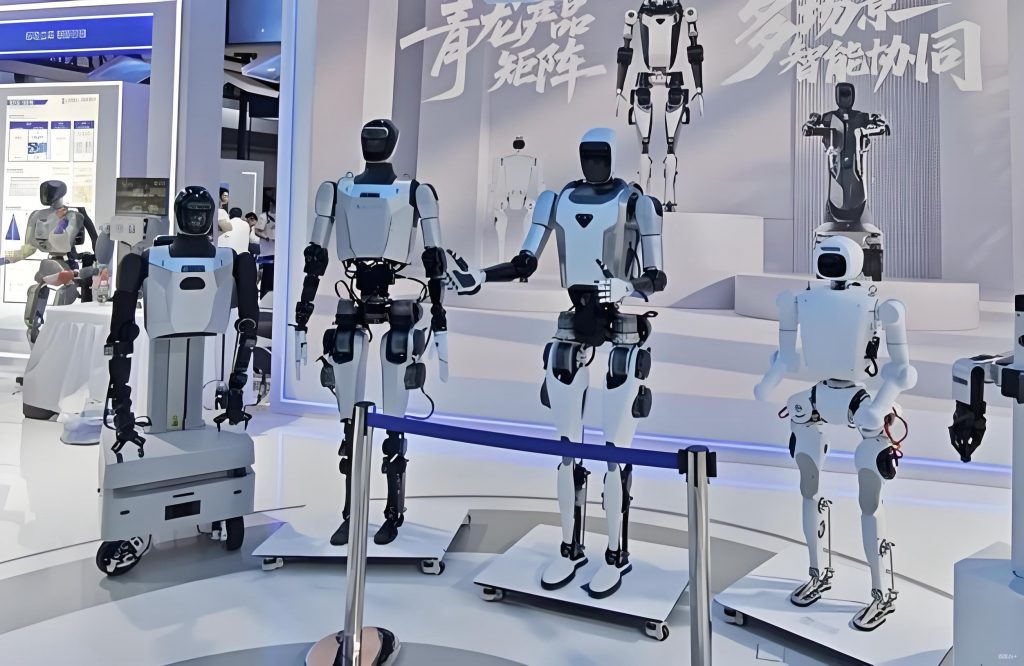
The embodied intelligence sector is witnessing a surge in commercial deployments, driven by advancements in AI, sensor technologies, and mechanical design. Embodied robots are becoming more sophisticated, with enhanced capabilities for navigation, manipulation, and social interaction. This trend is evident in the diverse range of products displayed at the expo, from humanoid assistants to specialized industrial machines. The increasing affordability and reliability of embodied intelligence solutions are key factors propelling their adoption, as businesses and consumers recognize the potential for improved efficiency, safety, and convenience. As embodied intelligence continues to evolve, it is poised to redefine industries and daily experiences on a global scale.
Key Exhibitors Demonstrating Embodied Intelligence Innovations
The expo featured a strong presence from companies at the forefront of embodied intelligence development, particularly from Hangzhou, a hub for technology innovation. Several firms, often referred to as the “Hangzhou Six Little Dragons,” showcased their latest embodied robots and related technologies, highlighting the region’s leadership in this field. The participation of these companies underscored the competitive dynamics and collaborative opportunities within the embodied intelligence ecosystem.
- Unitree Robotics: This company made a notable impact with its display of advanced embodied robots, including the humanoid robot G1, which exhibits remarkably flexible movements akin to humans, such as dynamic standing, handshaking, and dancing. The G1 embodies the principles of embodied intelligence through its ability to learn and adapt to interactions. Additionally, Unitree presented the consumer-grade quadruped robot dog Go2, which simulates the behavior of a real pet and performs complex maneuvers like handstands and flips, showcasing embodied intelligence in entertainment and companionship. The industrial-grade quadruped robot dog B2 was also featured, capable of carrying loads up to 120 kilograms and supporting a human on its back, demonstrating the practical applications of embodied intelligence in logistics and inspection tasks. These embodied robots highlight Unitree’s focus on making embodied intelligence accessible for various use cases, from personal to industrial settings.
- BrainCo (Zhejiang Brain Technology Co., Ltd.): As a pioneer in brain-computer interfaces, BrainCo showcased its intelligent bionic hands and legs, which leverage non-invasive technology to interpret user intentions for precise control. For instance, the intelligent bionic hand was demonstrated playing piano tunes, reflecting the seamless integration of embodied intelligence into assistive devices. These products have achieved mass production, with thousands of users benefiting from them, and BrainCo supplies components to leading humanoid robots like the “Kuafu,” further emphasizing the role of embodied intelligence in enhancing human capabilities. The company’s innovations illustrate how embodied robots can bridge gaps in healthcare and rehabilitation, offering new possibilities for individuals with disabilities.
- Qunkong Technology and Yunchu Technology: These companies contributed to the expo’s embodied intelligence offerings, though specific product details were limited in disclosure. Their participation indicates the broadening scope of embodied intelligence applications, likely spanning software and hardware integrations for smarter systems.
- Lingban Technology: Often called the “seventh dragon,” Lingban presented multiple models of AR smart glasses, which complement embodied intelligence by providing augmented reality interfaces for enhanced human-robot interactions. This technology supports the development of more intuitive embodied robots that can overlay digital information onto the physical world, enriching user experiences in training, maintenance, and daily tasks.
The diversity of exhibits from Hangzhou-based firms reflects a vibrant ecosystem for embodied intelligence, with each company contributing unique advancements. The embodied robots on display not only showcased technical prowess but also highlighted the commercial viability of embodied intelligence, as many products are already in use or nearing widespread deployment. This trend is accelerating as companies collaborate to refine embodied intelligence capabilities, ensuring that these technologies can meet the demands of real-world applications. The expo served as a testament to the growing investment in embodied intelligence, with innovations poised to drive economic growth and societal benefits.
Emerging Embodied Intelligence Cluster in Qingdao
In addition to external participants, the expo highlighted the rise of a local embodied intelligence industry in Qingdao, with several homegrown companies demonstrating their innovations. This clustering effect signals Qingdao’s potential to become a significant hub for embodied intelligence development, leveraging its industrial base and research capabilities. The showcased products ranged from home service robots to industrial automation solutions, all embodying the principles of embodied intelligence to enhance functionality and user experience.
- Haier: The renowned home appliance manufacturer unveiled its humanoid robot “Haiwa HIVA,” designed as a “cyber butler” for household tasks. Haiwa HIVA features a humanoid upper body for dexterous operations and a wheeled lower body for stable mobility, embodying embodied intelligence through its ability to perform complex chores like cleaning with Haier’s flagship floor washer, retrieving items from refrigerators, cooking simple meals, and organizing toys. Powered by a smart brain and UHome large model, this embodied robot undergoes training for home scenarios, enabling it to handle tasks such as living room tidying, laundry care, and cleaning. Haier also introduced a consumer-grade AI-powered exoskeleton robot for motion assistance, focusing on rehabilitation and daily mobility. This product uses AI柔性科技 and robust motors to ensure safe human-robot interaction, addressing unmet needs in home care and further expanding the applications of embodied intelligence in healthcare.
- Leju Robot: This company presented the full-size humanoid robot “Kuafu,” which demonstrated precise motion control through Tai Chi performances, showcasing the advanced embodied intelligence capabilities in balance and coordination. Kuafu has been deployed in industrial settings, such as performing empty container return tasks at FAW Hongqi’s factory, where it handles repetitive logistics operations. This embodied robot exemplifies how embodied intelligence can optimize manufacturing processes, reducing labor costs and improving efficiency. Leju’s innovations underscore the practical benefits of embodied robots in demanding environments, where they can perform tasks with reliability and precision.
- Other Qingdao-based companies:
- Kangdao Medical: Developed a new generation of intelligent rehabilitation robots that utilize embodied intelligence to assist patients with highly repetitive gait training. These embodied robots help individuals achieve greater independence by providing consistent, guided exercises, demonstrating the potential of embodied intelligence in medical recovery and long-term care.
- Hexagon AB: Showcased an autonomous inspection solution by integrating a 3D laser scanner with a robot dog, creating an embodied robot system for hazardous environment assessments. This application of embodied intelligence allows for safe and efficient inspections in areas like construction sites or disaster zones, reducing human risk and enhancing data accuracy.
- Fengguang Precision: Displayed self-developed core components for humanoid robots, including harmonic reducers and joint modules. These parts are essential for the seamless operation of embodied robots, enabling smoother movements and greater durability. Fengguang’s contributions highlight the importance of supply chain development in sustaining the growth of the embodied intelligence industry.
The concentration of embodied intelligence activities in Qingdao points to a strategic effort to foster local innovation and attract investment. Companies like Haier and Leju are leveraging their expertise in manufacturing and technology to push the boundaries of what embodied robots can achieve, from domestic assistance to industrial automation. This clustering effect not only boosts regional economic development but also creates synergies that accelerate the commercialization of embodied intelligence. As more firms join this ecosystem, Qingdao could emerge as a key player in the global embodied intelligence market, driving advancements that benefit various sectors.
Applications and Trends in Embodied Intelligence
The expo illustrated the vast potential of embodied intelligence across multiple domains, with embodied robots being deployed in scenarios that range from mundane daily tasks to critical industrial operations. This diversification is a key indicator of the technology’s maturity, as embodied intelligence solutions are tailored to meet specific needs in each sector. The following sections outline the primary applications and emerging trends observed at the event, emphasizing how embodied intelligence is reshaping industries and improving quality of life.
In the industrial sector, embodied robots like Unitree’s B2 and Leju’s Kuafu are being used for inspection, logistics, and assembly tasks. These embodied robots leverage embodied intelligence to navigate complex environments, identify issues, and perform physical actions with minimal human intervention. For example, in factory settings, embodied robots can conduct routine patrols, monitor equipment status, and handle materials, reducing downtime and enhancing safety. The ability of these embodied robots to learn from their surroundings allows them to adapt to changing conditions, making them invaluable for dynamic industrial operations. As embodied intelligence continues to advance, we can expect even greater integration into supply chains and manufacturing processes, leading to smarter, more responsive production systems.
In home and personal environments, embodied intelligence is enabling robots to serve as companions, assistants, and caregivers. Haier’s Haiwa HIVA, for instance, embodies this trend by managing household chores and providing support for daily activities. Similarly, Unitree’s Go2 robot dog offers entertainment and companionship, mimicking the interactions of a real pet. These applications of embodied intelligence focus on enhancing user convenience and emotional well-being, with embodied robots capable of recognizing voices, gestures, and even emotions to deliver personalized experiences. The growth in this area reflects a broader shift towards smart homes and aging populations, where embodied robots can alleviate burdens and foster independence. As embodied intelligence becomes more affordable and user-friendly, its adoption in residential settings is likely to expand rapidly.
Healthcare is another critical domain for embodied intelligence, with products like BrainCo’s bionic limbs and Kangdao Medical’s rehabilitation robots demonstrating life-changing impacts. These embodied robots use advanced sensors and AI algorithms to assist with mobility and recovery, providing tailored support based on individual needs. For example, the intelligent bionic hand allows users to control movements through “thought,” offering a new level of autonomy for amputees. In rehabilitation, embodied robots guide patients through exercises, ensuring proper form and progression, which can accelerate recovery and reduce the risk of injury. The integration of embodied intelligence in healthcare not only improves patient outcomes but also addresses workforce shortages by automating routine care tasks. This trend is expected to grow as regulatory frameworks evolve and technology costs decrease, making embodied robots more accessible to medical institutions and individuals.
Security and public safety are also benefiting from embodied intelligence, with robots like Hexagon’s scanner-equipped dog performing inspections in hazardous areas. These embodied robots can access confined or dangerous spaces, such as disaster sites or industrial plants, to gather data and assess risks without endangering human lives. The embodied intelligence capabilities enable these robots to make real-time decisions, such as avoiding obstacles or identifying anomalies, enhancing their effectiveness in critical missions. As security threats become more complex, the role of embodied robots in surveillance, emergency response, and infrastructure protection is likely to increase, driven by advancements in AI and robotics.
Price trends are playing a crucial role in the commercialization of embodied intelligence, as evidenced by products like Unitree’s G1 humanoid robot priced at 99,000 RMB and the Go2 robot dog at 9,997 RMB. This downward cost trajectory is making embodied robots more attainable for consumers and small businesses, similar to the affordability of high-end electronics. The reduction in prices is fueled by economies of scale, improved manufacturing techniques, and competition within the embodied intelligence market. As costs continue to fall, we can anticipate broader adoption across sectors, ultimately driving innovation and expanding the reach of embodied intelligence solutions. This affordability, combined with the diversification of applications, suggests that the “singularity” for embodied intelligence is nearing, where these technologies become ubiquitous in society.
| Product | Company | Price (RMB) | Key Applications |
|---|---|---|---|
| Humanoid Robot G1 | Unitree Robotics | 99,000 | Entertainment, Logistics, Home Assistance |
| Quadruped Robot Go2 | Unitree Robotics | 9,997 | Home Companionship, Entertainment |
| Quadruped Robot B2 | Unitree Robotics | Not Specified | Industrial Inspection, Heavy Load Carrying |
| Intelligent Bionic Hand | BrainCo | Not Specified | Healthcare, Rehabilitation, Daily Assistance |
| Humanoid Robot Haiwa HIVA | Haier | Not Specified | Home Services, Cleaning, Organization |
| Humanoid Robot Kuafu | Leju Robot | Not Specified | Industrial Automation, Logistics |
The table above summarizes key embodied robots featured at the expo, highlighting their prices and primary applications. It illustrates the variety of options available in the embodied intelligence market, from affordable consumer products to specialized industrial solutions. As the industry evolves, we can expect more detailed pricing and performance metrics to emerge, further guiding adoption decisions.
Conclusion: The Path Forward for Embodied Intelligence
The 2025 China International Consumer Electronics Expo has unequivocally demonstrated that embodied intelligence is at a tipping point, with embodied robots transitioning from novelty items to essential tools in various sectors. The advancements showcased by companies from Hangzhou, Qingdao, and beyond reflect a collective effort to harness embodied intelligence for practical benefits, driving commercialization through innovation and collaboration. The growing cluster of embodied intelligence activities in regions like Qingdao indicates a healthy ecosystem that supports research, development, and deployment, potentially positioning these areas as global leaders in the field.
Looking ahead, the embodied intelligence industry is poised for exponential growth, fueled by ongoing improvements in AI, robotics, and material science. As embodied robots become more capable and cost-effective, their integration into everyday life will deepen, offering solutions to challenges in healthcare, manufacturing, home care, and security. The emphasis on user-centric design and real-world applications will be critical for sustaining this momentum, ensuring that embodied intelligence technologies meet actual needs and deliver tangible value. Moreover, as regulatory standards and ethical guidelines evolve, they will provide a framework for responsible development and deployment of embodied robots, fostering public trust and acceptance.
In summary, the era of embodied intelligence is dawning, with the expo serving as a clear indicator of its transformative potential. The convergence of affordability, diversity in applications, and industrial clustering heralds a future where embodied robots are commonplace, empowering industries and enhancing human experiences. As we move forward, continued investment in research, education, and infrastructure will be essential to fully realize the benefits of embodied intelligence, creating a smarter, more connected world for all.