
In a significant move that has captured the attention of the robotics industry, Yushu Technology recently unveiled its humanoid robot R1 with a price tag of 39,900 yuan, substantially lower than the average market rate. This announcement has sparked widespread discussion about the feasibility and future applications of humanoid robots, particularly in the context of embodied intelligence. Wang Xingxing, founder and CEO of Yushu Technology, shared his insights during the 2025 World Robot Conference, emphasizing that while robots are ultimately intended for labor, current technological limitations mean that practical, large-scale deployment for valuable work remains a future goal. He highlighted that embodied intelligence has not yet reached a breakthrough comparable to ChatGPT in language models, pointing to the need for significant advances in AI and model training for embodied robots.
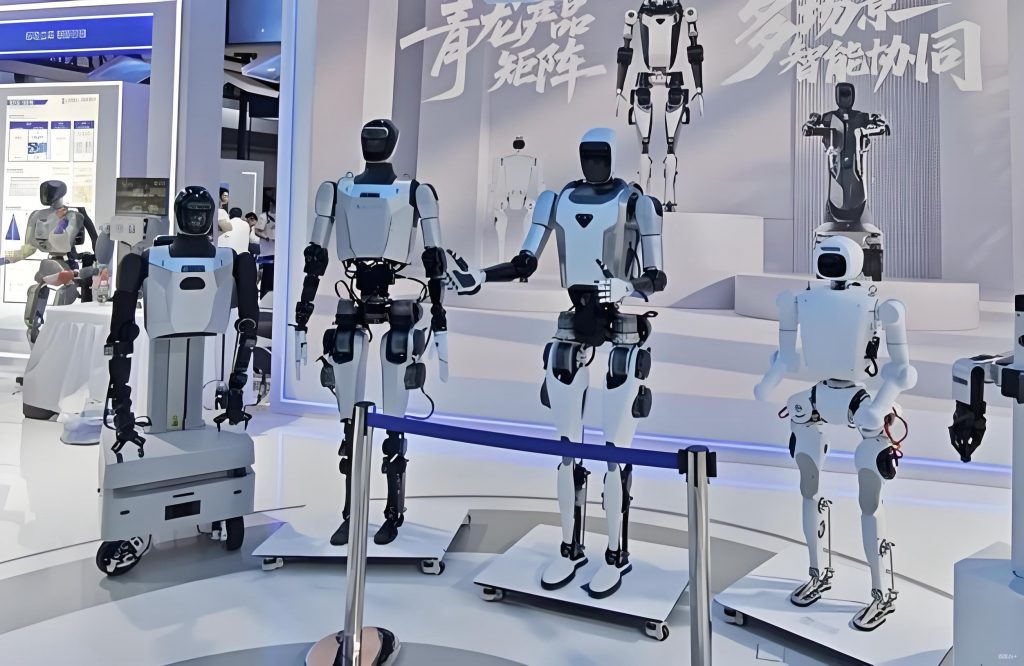
Yushu Technology, known for its innovative approach to robotics, has developed a diverse portfolio including several quadruped robot dogs and three humanoid models: H1, G1, and R1. Each of these robots has garnered public attention for distinct reasons. The H1 model gained fame after performing a traditional yangko dance on the Spring Festival Gala, showcasing its agility and entertainment value. The G1 model demonstrated remarkable athletic capabilities in a combat competition, highlighting its advanced motion control. The latest R1 model, however, has drawn the most discussion due to its accessible pricing, positioning it as a potential game-changer in the commercialization of embodied robots. Wang Xingxing explained that the company’s strategy involves tailoring robot sizes to different use cases: larger robots are better suited for industrial environments where they can perform practical tasks, while smaller models serve developers in research and development, while also offering entertainment features. This dual approach reflects the evolving landscape of embodied intelligence, where both functional and recreational applications are being explored simultaneously.
- Background and Expansion of Yushu Technology’s Robot Lineup
Yushu Technology has steadily built its reputation in the robotics field through a series of product releases that emphasize innovation and affordability. The company’s journey began with quadruped robot dogs, which were designed for various applications such as surveillance, research, and public demonstrations. These early models helped establish Yushu’s expertise in mobility and sensor integration, laying the groundwork for the development of humanoid robots. The introduction of the H1, G1, and R1 humanoid robots marks a strategic shift toward more complex embodied robots capable of mimicking human movements and interactions. The H1’s appearance on a national television event like the Spring Festival Gala not only boosted public awareness but also demonstrated the potential of embodied intelligence in cultural and entertainment contexts. Similarly, the G1’s performance in a格斗赛 (though the term is not used in English, it refers to a combat or fighting competition) underscored the robot’s advanced kinematics and stability, attributes critical for future labor-oriented tasks. The R1’s launch, with its emphasis on low cost, aims to democratize access to humanoid robotics, potentially accelerating adoption in both commercial and academic settings. Wang Xingxing noted that this product diversity allows Yushu to address multiple market segments simultaneously, from industrial automation to consumer entertainment, all while advancing the core technologies of embodied intelligence.
The company’s focus on embodied robots is part of a broader industry trend toward creating machines that can operate in human-centric environments. Unlike traditional industrial robots confined to controlled settings, embodied robots like those from Yushu are designed to navigate unpredictable real-world scenarios, which requires sophisticated embodied intelligence. This involves integrating perception, decision-making, and physical action in a seamless loop. However, as Wang Xingxing pointed out, the current level of embodied intelligence is insufficient for complex tasks. For instance, while the R1 can perform pre-programmed actions or respond to basic commands, it lacks the cognitive depth to handle nuanced situations autonomously. This gap highlights the challenges in developing embodied intelligence that can rival the capabilities seen in AI language models. Yushu’s iterative approach—releasing multiple models with incremental improvements—reflects a pragmatic strategy to gather data and refine algorithms, essential for progressing toward more autonomous embodied robots.
- The Strategic Pricing of the R1 Robot and Its Market Implications
The pricing of the R1 humanoid robot at 39,900 yuan is a deliberate move by Yushu Technology to lower the barrier to entry for embodied robots. In an industry where similar models often cost significantly more, this affordability could spur wider experimentation and adoption, particularly among startups, educational institutions, and hobbyists. Wang Xingxing emphasized that cost reduction is crucial for scaling embodied intelligence applications, as it enables more entities to participate in development and testing. By making the R1 accessible, Yushu aims to foster a broader ecosystem where innovators can build upon its platform, potentially leading to breakthroughs in embodied intelligence that might not emerge in closed, high-cost environments. This strategy mirrors the early days of personal computing, where affordable hardware catalyzed software innovation and eventual widespread use.
Market analysts have noted that Yushu’s pricing could pressure competitors to reconsider their own strategies, potentially accelerating overall industry growth. However, Wang Xingxing cautioned that low cost alone does not solve the fundamental challenges of embodied intelligence. The R1’s capabilities are still limited compared to more expensive models, and its performance in real-world tasks depends heavily on ongoing software updates and AI enhancements. For example, while the R1 might be used in simple demonstrations or educational settings, it is not yet ready for demanding industrial roles that require high reliability and precision. This underscores the interplay between cost and functionality in the evolution of embodied robots. Wang Xingxing believes that as embodied intelligence improves, even affordable models like the R1 will become more capable, eventually bridging the gap between entertainment and practical labor. In the meantime, the R1 serves as a testbed for exploring new applications, from interactive displays to basic assistive tasks, all contributing to the collective understanding of embodied intelligence.
- Diverse Applications: Industrial Use Cases Versus Entertainment and Development
Yushu Technology’s product lineup illustrates a balanced approach to deploying embodied robots across different domains. Larger robots, such as the G1 and H1, are engineered for environments where physical tasks are paramount. In industrial settings, these embodied robots could potentially handle operations like material handling, inspection, or maintenance, reducing the need for human labor in hazardous or repetitive jobs. Wang Xingxing explained that the practicality of such applications hinges on advancements in embodied intelligence, particularly in areas like object recognition, path planning, and adaptive control. For instance, an embodied robot in a factory must not only perceive its surroundings but also make real-time decisions based on changing conditions—a capability that current AI models struggle to deliver consistently. Until then, Yushu is focusing on demonstrations and limited pilot projects to showcase potential, such as the G1’s combat performance, which, while entertaining, also tests the limits of robotic agility and resilience.
On the other end of the spectrum, smaller robots like the R1 are targeted at developers and entertainment sectors. These embodied robots offer a platform for experimenting with new algorithms and user interfaces, accelerating innovation in embodied intelligence. Wang Xingxing highlighted that entertainment applications, though often viewed as less critical, play a vital role in driving public engagement and funding. For example, robots performing dances or interactive shows can generate revenue and attract investment, which in turn supports more rigorous R&D for functional tasks. This dual-use philosophy acknowledges that embodied intelligence is still in its infancy, and progress may come from diverse, iterative experiments rather than a single breakthrough. Moreover, by catering to developers, Yushu is building a community that can contribute to solving complex problems in embodied robot navigation, manipulation, and communication. Wang Xingxing stressed that both entertainment and labor-oriented applications are essential for the holistic development of embodied intelligence, as they provide different types of data and challenges that enrich the training processes for AI models.
- Technological Hurdles: The Gap in AI and Embodied Intelligence
One of the central themes in Wang Xingxing’s commentary is the current inadequacy of AI for embodied robots. He articulated that a true milestone in embodied intelligence would be achieved when a humanoid robot can roam freely in a complex environment, like a conference hall, and respond accurately to simple verbal commands to perform tasks. This level of autonomy requires a seamless integration of perception, cognition, and action—a feat that has not yet been realized. Wang Xingxing drew a comparison to language models like ChatGPT, which excel in text-based interactions due to vast datasets and sophisticated algorithms. In contrast, embodied intelligence involves physical interactions where data is inherently noisy and unpredictable. For example, training an embodied robot to pick up an object involves not just visual data but also tactile feedback, force control, and environmental variables, all of which are difficult to simulate accurately. This discrepancy means that even with extensive data collection, deploying models on real embodied robots often reveals significant performance gaps.
Wang Xingxing emphasized that the robotics community urgently needs breakthroughs in embodied intelligence models to overcome these limitations. Unlike pure software AI, embodied robots must deal with the “reality gap”—the difference between simulated training environments and actual physical worlds. This makes data-driven approaches alone insufficient; instead, researchers must develop models that can generalize from limited data or learn adaptively in real time. For instance, current embodied robots might struggle with tasks that humans find trivial, such as navigating a cluttered room or understanding contextual commands, because their embodied intelligence lacks the nuanced understanding of physics and social cues. Wang Xingxing believes that focused efforts on embodied intelligence, rather than merely scaling data, will yield more substantial progress. He pointed out that while language models benefit from homogeneous text data, embodied intelligence requires heterogeneous inputs—sensor data, motor commands, and environmental feedback—making it a more complex problem. As such, the absence of a ChatGPT-like revolution in embodied intelligence underscores the unique challenges of creating robots that can interact meaningfully with the world.
- CEO Wang Xingxing’s Perspective on Data Challenges and Model Training
Wang Xingxing provided a nuanced view on the role of data in advancing embodied intelligence. While many in the industry advocate for massive datasets to train robot AI, he argued that the core issue lies in the quality and relevance of data rather than sheer volume. In embodied robots, data collected from simulations or controlled environments often fails to capture the unpredictability of real-world scenarios. For example, a robot trained in a lab might perform flawlessly, but when deployed in a dynamic setting like a home or factory, it could falter due to unforeseen obstacles or lighting conditions. This misalignment between training data and real-world application is a major bottleneck for embodied intelligence. Wang Xingxing suggested that future research should prioritize methods for transfer learning and domain adaptation, enabling embodied robots to apply learned knowledge to new situations with minimal additional training.
Moreover, Wang Xingxing highlighted that embodied intelligence development requires a holistic approach beyond data. He explained that robot training involves multiple layers—from low-level motor control to high-level decision-making—each with its own data requirements. For instance, teaching an embodied robot to walk steadily involves collecting data on balance, friction, and terrain, which is fundamentally different from data used for conversational AI. This multifaceted nature means that progress in embodied intelligence depends on interdisciplinary collaborations, combining insights from robotics, computer science, cognitive science, and mechanical engineering. Wang Xingxing expressed optimism that as the field matures, new model architectures and training paradigms will emerge, specifically tailored for embodied robots. However, he cautioned that this will take time, and in the interim, practical applications should focus on areas where current embodied intelligence is sufficient, such as structured entertainment or basic assistive tasks. By doing so, the industry can build momentum while addressing the deeper technical challenges.
- Future Outlook: The Path Forward for Embodied Intelligence and Robotics
The journey toward advanced embodied intelligence is fraught with challenges, but Wang Xingxing remains optimistic about the long-term potential. He envisions a future where embodied robots are commonplace in homes, workplaces, and public spaces, assisting with daily chores, enhancing productivity, and providing companionship. However, achieving this vision requires sustained investment in core technologies, particularly in AI that can handle the complexities of physical interaction. Wang Xingxing noted that the industry is at a pivotal moment, similar to the early days of the internet, where foundational work will determine the pace of innovation. For embodied intelligence to leap forward, he called for increased collaboration between academia, industry, and policymakers to standardize protocols, share datasets, and address ethical concerns. This collaborative spirit could accelerate the development of robust embodied robots capable of learning and adapting in real time.
In the shorter term, Wang Xingxing expects to see embodied intelligence making incremental gains in specific domains. For example, embodied robots might first become reliable in controlled industrial settings or as educational tools, where tasks are well-defined and environments are predictable. As models improve, they could expand into more dynamic areas like healthcare or logistics. Wang Xingxing reiterated that entertainment will continue to play a crucial role, not just as a revenue stream but as a testing ground for human-robot interaction. By engaging the public through entertaining displays, companies like Yushu can gather valuable feedback and data to refine their embodied intelligence algorithms. Ultimately, he believes that the emergence of a ChatGPT-like breakthrough in embodied intelligence is not a matter of if, but when, and that the current efforts—from affordable robots like the R1 to high-performance models like the G1—are essential steps toward that goal. The key is to maintain a balanced focus on both practical applications and foundational research, ensuring that embodied robots evolve in a way that is safe, efficient, and beneficial to society.
In summary, Yushu Technology’s release of the R1 humanoid robot at 39,900 yuan has ignited discussions on affordability and capability in the robotics industry. Wang Xingxing’s insights reveal that while embodied intelligence has not yet reached a transformative stage, the path forward involves leveraging diverse applications, addressing data challenges, and fostering innovation across sectors. As the field progresses, the integration of advanced AI into embodied robots will be critical for unlocking their full potential, from mundane tasks to complex labor, shaping a future where humans and machines collaborate seamlessly.