
As an integral part of modern robotics research, I have observed that intelligent robots represent highly integrated complex electromechanical systems, incorporating electromechanical transmission, motion control, environmental perception, and artificial intelligence. The performance of core components such as driving motors, sensors, and dexterous hands remains insufficient, leading to the superposition of mechanical errors, positioning errors, and sensor errors in intelligent robots. Furthermore, the absence of a fixed motion base results in significant execution errors during practical tasks. Additionally, technical bottlenecks like inadequate dynamic performance in motion planning and control algorithms, limited generalization capabilities of large models, and insufficient capacity and effectiveness of robot training datasets contribute to low stability and reliability in task execution, restricting their industrial applications. Many research institutions and scholars believe that training can enhance the stability and generalization of intelligent robots, and leading enterprises are now deploying robot training platforms to accelerate their practical deployment. In this article, I will explore the current state of intelligent robot training platforms, analyzing simulation and real-world approaches, and propose a comprehensive training framework.
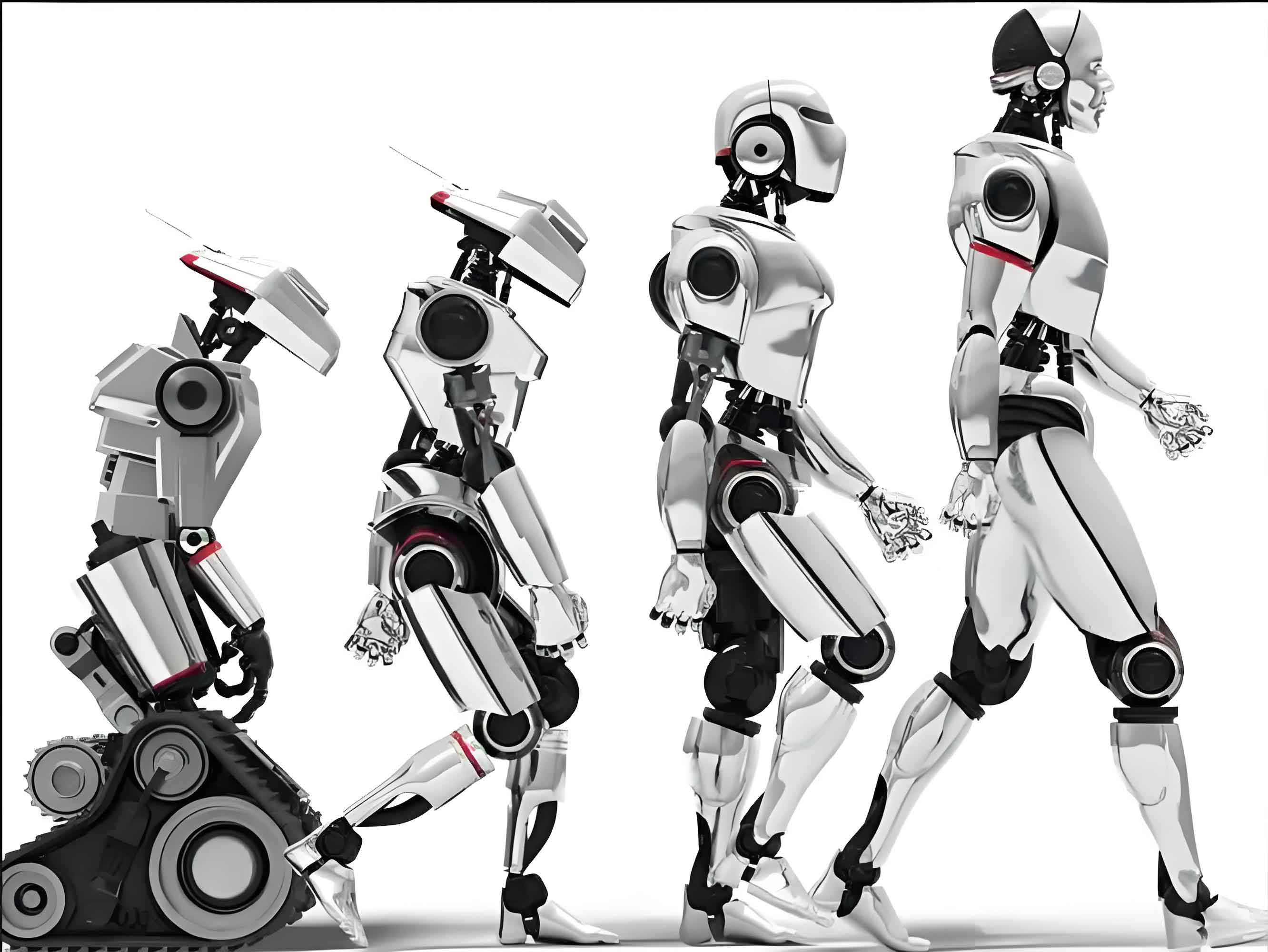
The primary goals of training an intelligent robot include improving its perception in complex environments, enhancing gait stability and terrain traversal capabilities, achieving efficient execution of specific tasks, fostering multi-modal interaction and learning abilities, and ensuring safety and reliability. For instance, training scenarios often involve diverse terrains like regular ground, artificial grass, gravel, slopes, and stairs to optimize motion control algorithms. This process not only refines the robot’s ability to detect and grasp objects but also integrates large language models for better human-robot interaction, ultimately building a foundation for intelligent decision-making.
Intelligent robot training platforms can be broadly categorized into simulation training platforms and real-world training platforms. Simulation platforms utilize computer technology to create virtual environments that mimic real-world conditions, allowing developers to test and train robots for design validation, algorithm testing, data accumulation, and fault diagnosis. In contrast, real-world platforms involve physical setups tailored to specific application scenarios, focusing on task training, state estimation, and human-robot collaboration to enhance task completion rates and overall robustness.
Key Technologies in Intelligent Robot Training Platforms
In simulation training platforms, high-fidelity environment modeling and physics engines are critical. Technologies such as GPU acceleration, sensor integration, and 5G networks have propelled virtual reality into a rapid development phase. Platforms like NVIDIA Isaac Sim leverage Omniverse, based on OpenUSD and RTX technology, to generate realistic, physics-accurate environments with random variations. This enables efficient data synthesis and model training for intelligent robots. The core equation governing reinforcement learning in such environments often involves maximizing the cumulative reward: $$R_t = \sum_{k=0}^{\infty} \gamma^k r_{t+k},$$ where \(R_t\) is the return at time \(t\), \(\gamma\) is the discount factor, and \(r_t\) is the reward. This approach allows intelligent robots to learn optimal policies through trial and error in dynamic settings.
For real-world training platforms, imitation learning is a prevalent method, where robots learn by observing and mimicking expert demonstrations. The policy \(\pi(a|s)\) is trained to predict actions based on state-action pairs from demonstration data. However, acquiring high-quality demonstration data is costly, and challenges include data diversity and generalization. Real-world platforms, such as those deployed in training centers in Shanghai or by companies like Tesla, focus on collecting large-scale datasets through teleoperation and motion capture, aiming to generate thousands of data points daily to improve model adaptability.
Simulation Training Platforms for Intelligent Robots
Several simulation platforms have emerged to support the training of intelligent robots. NVIDIA Isaac Sim, for example, is a universal humanoid robot simulation platform built on NVIDIA Omniverse. It features a modular architecture that supports core scenarios like robot dynamics testing, visual sensor simulation, and LiDAR data generation in varied environments. The workflow involves synthetic data generation, model training, and robot validation, enabling developers to create realistic virtual settings for intelligent robot training. Another platform, AgiBot Digital World, developed by Zhiyuan Robot, is based on Isaac Sim and integrates massive 3D assets, diverse expert trajectory generation mechanisms, and comprehensive evaluation tools. It covers five scenario types, over 180 item categories, and 12 core actions, facilitating complex task training for intelligent robots.
Shanghai AI Laboratory’s GRUtopia 2.0 offers a modular framework that supports arbitrary intelligent robot tasks, including navigation, operation, and motion control. By decomposing tasks into “scene, robot, task metrics,” it allows for rapid task definition with minimal code. The platform incorporates millions of standardized object assets and automation tools for scene generation, significantly enhancing data collection efficiency through VR and motion capture teleoperation. The table below summarizes key features of these simulation platforms for intelligent robot training:
| Platform | Key Features | Applications for Intelligent Robots |
|---|---|---|
| NVIDIA Isaac Sim | Modular architecture, physics-accurate simulation, synthetic data generation | Dynamics testing, sensor simulation, reinforcement learning |
| AgiBot Digital World | High-fidelity assets, automated data generation, diverse scenarios | Complex task training, model evaluation, real-world migration |
| GRUtopia 2.0 | Modular task definition, asset automation, efficient teleoperation | Navigation, operation, multi-modal interaction |
These platforms often employ physics engines like PhysX and PyBullet to simulate the dynamics of intelligent robots. The motion of an intelligent robot can be described by the equation of motion: $$M(q)\ddot{q} + C(q, \dot{q})\dot{q} + G(q) = \tau,$$ where \(M(q)\) is the mass matrix, \(C(q, \dot{q})\) represents Coriolis and centrifugal forces, \(G(q)\) is the gravitational vector, and \(\tau\) denotes the joint torques. This formulation is crucial for training intelligent robots in simulation to ensure that learned policies transfer effectively to real-world scenarios.
Real-World Training Platforms for Intelligent Robots
Real-world training platforms address the limitations of simulation by providing authentic environmental interactions. For example, the heterogeneous humanoid robot training field in Shanghai, launched by the National-Local Co-construction Humanoid Robot Innovation Center, supports over a hundred humanoid robots from different manufacturers. It focuses on智能制造,民生服务, and特种应用 domains, with training “workstations” for tasks like assembly, screw tightening, and caregiving. This setup aims to generate 30,000 to 50,000 data entries daily, building large-scale embodied intelligence datasets for model training. Similarly, companies like DeepRobotics and Unitree have established specialized training grounds for quadruped robots in applications such as power inspection and firefighting, where intelligent robots practice navigation and operation in physically constructed environments.
In these real-world settings, imitation learning frameworks are commonly used, where the policy \(\pi\) is optimized to minimize the loss between demonstrated actions and predicted actions: $$\mathcal{L}(\theta) = \mathbb{E}_{(s,a) \sim \mathcal{D}} \left[ \| \pi_\theta(s) – a \|^2 \right],$$ where \(\mathcal{D}\) is the dataset of expert demonstrations, and \(\theta\) represents the policy parameters. This approach helps intelligent robots acquire skills like grasping and moving objects, but it requires substantial data collection efforts, often involving costly teleoperation equipment.
Advantages and Disadvantages of Training Platforms for Intelligent Robots
Simulation training platforms offer several benefits for intelligent robot development. They enable diverse scenario creation through high-precision physics engines and environmental rendering, allowing for efficient data generation and collection without the need for physical setups. This reduces costs and enhances safety, as intelligent robots can be trained in hazardous virtual environments without risk. However, disparities between simulation and reality persist due to inaccuracies in physics engines and rendering effects, leading to potential failures in policy transfer. Moreover, data quality and generalization are often insufficient, and the lack of standardized interfaces across simulators like Gazebo and Webots complicates integration.
Real-world training platforms, on the other hand, provide high data validity by capturing multi-modal inputs such as vision, force feedback, and navigation in authentic settings. They support group collaboration among multiple intelligent robots, facilitating the validation of swarm intelligence algorithms. Nonetheless, data acquisition costs are high, with teleoperation systems requiring significant investment. Data reuse remains challenging due to difficulties in annotation and format inconsistencies, and safety risks from hardware wear and potential malfunctions pose additional concerns. The table below compares the advantages and disadvantages of both approaches for intelligent robot training:
| Aspect | Simulation Platforms | Real-World Platforms |
|---|---|---|
| Data Efficiency | High-speed synthetic data generation | Authentic data with high validity |
| Cost | Low environment setup cost | High data acquisition and equipment cost |
| Safety | Risk-free training in virtual environments | Potential safety hazards from physical operations |
| Generalization | Limited by simulation-reality gap | Better adaptation but with data reuse issues |
To quantify the performance of intelligent robot training, metrics such as the success rate \(S\) in task completion can be defined: $$S = \frac{N_{\text{success}}}{N_{\text{total}}} \times 100\%,$$ where \(N_{\text{success}}\) is the number of successful trials and \(N_{\text{total}}\) is the total trials. This metric is essential for evaluating both simulation and real-world training outcomes for intelligent robots.
Integrated Training Framework for Intelligent Robots
Inspired by the synergy between simulation and real-world data, I propose a comprehensive training approach for intelligent robots based on functional module division. This method involves decomposing specific task scenarios into modules such as environment information, navigation, sensors, motion, and large-model interaction. Training is primarily conducted in simulation for modules less dependent on physical properties, like navigation and sensors, using platforms like Gazebo with ROS or NVIDIA Isaac Sim. For instance, navigation algorithms can be trained in virtual environments with mapped terrains and obstacles, optimizing strategies through reinforcement learning. The reward function in such training might be defined as: $$r(s,a) = w_1 \cdot r_{\text{goal}} + w_2 \cdot r_{\text{collision}} + w_3 \cdot r_{\text{energy}},$$ where \(w_i\) are weights balancing goal achievement, collision avoidance, and energy consumption for the intelligent robot.
Modules heavily influenced by physical states, such as motion control and large-model interaction, should prioritize real-world training. Initially, simulation validates motion algorithms for stability and coordination, followed by实地 training to enhance adaptability. During system-level training in real-world settings, module execution, system responses, and task completion rates are recorded to build databases and fault models. This iterative process, encapsulated in the equation: $$\theta_{\text{final}} = \arg\min_{\theta} \left[ \mathcal{L}_{\text{sim}}(\theta) + \lambda \mathcal{L}_{\text{real}}(\theta) \right],$$ where \(\mathcal{L}_{\text{sim}}\) and \(\mathcal{L}_{\text{real}}\) are losses in simulation and real environments, and \(\lambda\) is a scaling factor, ensures continuous improvement for intelligent robots.
Conclusion
In summary, intelligent robots are complex systems whose stability and safety can be significantly enhanced through training. The emergence of simulation and real-world training platforms has accelerated data generation and model iteration for intelligent robots. As sim-to-real technologies advance and data standards unified, the cost of training intelligent robots is expected to decrease, paving the way for widespread application. Future work should focus on bridging the simulation-reality gap and fostering collaboration between platforms to realize the full potential of intelligent robots in diverse industries.