
With the global energy transition accelerating towards clean energy, photovoltaic (PV) power generation has seen rapid integration into substations, leading to increased operational challenges. As of recent data, distributed PV installations account for a significant portion of new capacity, but issues such as dust accumulation on modules—causing an average annual power loss of 3.8%—and hot spot effects, which contribute to over 27% of failures, highlight the inefficiencies of traditional manual inspection methods. Manual inspections typically require 4.7 hours per megawatt and have a high missed detection rate of 23.5%, making them unsuitable for the real-time monitoring demands of modern power systems. In response, the development of intelligent robot inspection systems offers a promising solution. However, existing systems face limitations in complex terrains, such as positioning errors exceeding 15 cm on slopes greater than 25°, and multi-source data fusion issues with spatiotemporal registration errors of 4.7 mm. This study addresses these challenges by designing an orbital intelligent robot system for 50 MW-scale PV stations, incorporating multimodal data fusion and optimized algorithms to enhance defect detection and operational reliability. The intelligent robot system leverages advanced sensors and AI-driven diagnostics to achieve higher accuracy and efficiency, paving the way for smarter maintenance in renewable energy infrastructure.
The application of PV technology in substations necessitates robust inspection mechanisms due to the high penetration of solar assets. For instance, dust accumulation on PV modules averages 3.2 g/m² monthly, leading to an 8.7% reduction in generation efficiency, while hot spot occurrences peak at 12.6% during summer, with local temperature rises over 40 °C risking insulation failure. In a typical 50 MW PV plant, manual inspections cover only 73% of areas, with defect identification accuracy below 65%. The intelligent robot system, equipped with high-definition cameras and infrared thermography, enables comprehensive scanning along predefined tracks, detecting cracks as small as 0.2 mm and temperature variations with ±0.5 °C precision. Empirical data from a desert-based plant show that the intelligent robot reduces inspection cycles by 63% compared to manual methods, and through regular cleaning, it cuts annual module degradation from 1.8% to 0.9%. This underscores the critical role of intelligent robot solutions in maintaining grid stability and maximizing energy yield in PV-integrated substations.
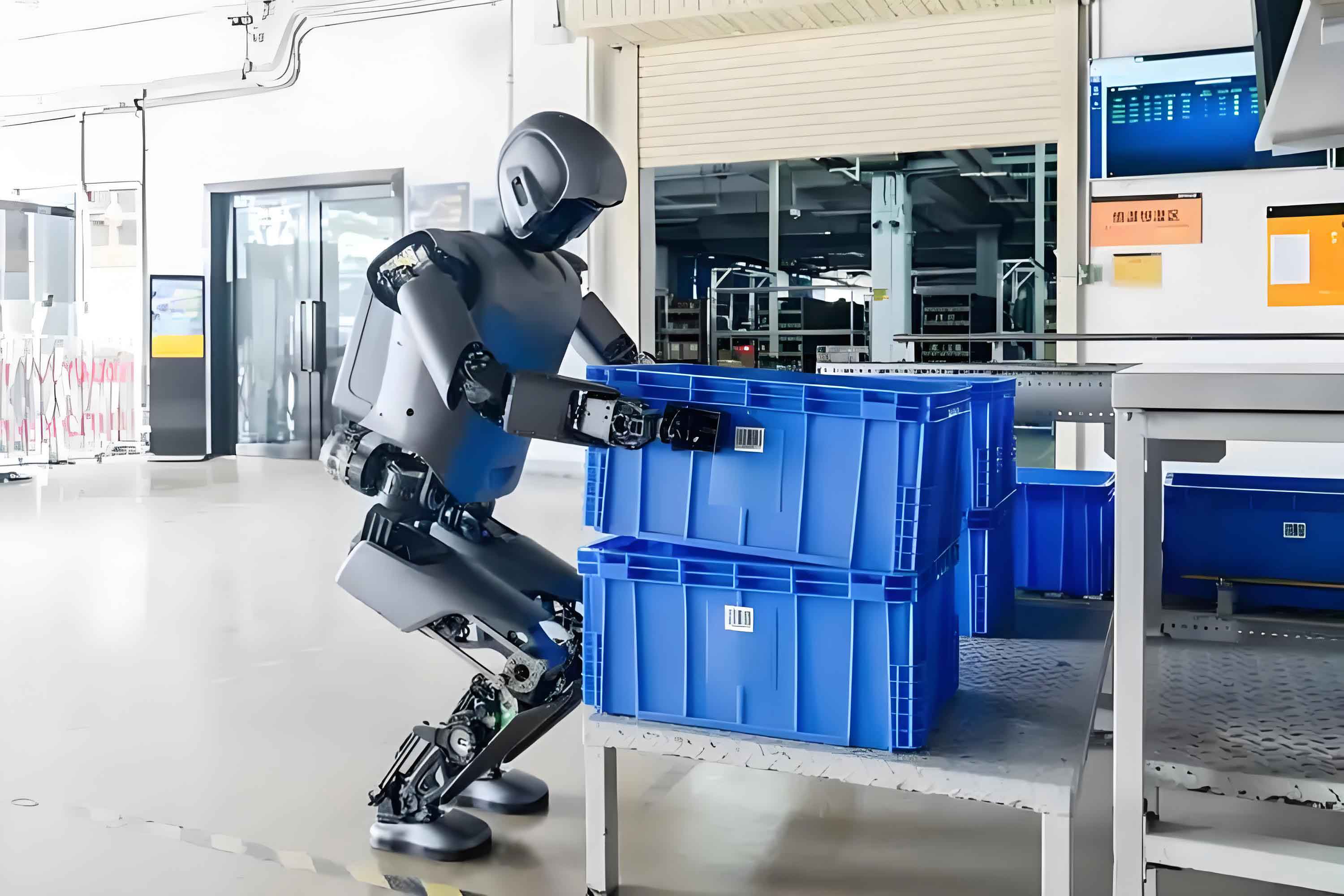
The orbital intelligent robot inspection system is built on a modular design philosophy, comprising three core components: track networks, pan-tilt mechanisms, and sensor units. In a 50 MW PV plant implementation, dual-track parallel deployment is used along module rows, with track spacing dynamically adjusted to (1130 ± 5) mm based on component width. The tracks are made of 6061-T6 aluminum alloy to resist UV degradation. The pan-tilt mechanism integrates a three-axis precision servo system, allowing a pitch range of -15° to +60° and horizontal rotation of ±180°, ensuring full coverage of tilted modules. Sensor units include a visible light camera (12 megapixels, 0.05 lux low-light capability), an infrared thermal imager (384 × 288 resolution, -20 to 150 °C range), and an IV curve detection module, all synchronized via CAN bus for millisecond-level data acquisition. Motion control follows a hierarchical decision-making logic, where a central controller generates movement commands based on predefined path planning, and encoders provide real-time position feedback with ±2 mm accuracy. When array spacing changes are detected, an adaptive algorithm switches to a creep mode, reducing speed from 0.5 m/s to 0.2 m/s to maintain data integrity. The pan-tilt adjustments are synchronized with robot displacement, capturing three sets of images at different angles every 0.5 m to prevent blurring from mechanical vibrations. This architecture effectively eliminates blind spots and data gaps, providing a reliable foundation for defect diagnosis in intelligent robot operations.
The multimodal data acquisition module is central to the intelligent robot system, relying on synergistic operation of heterogeneous sensors selected for accuracy and environmental resilience. Key sensor performance parameters are compared in Table 1. The infrared thermal imager, a FLIR T865 model, offers 640 × 480 pixel resolution and a -40 to 150 °C detection range, with thermal sensitivity no greater than 0.03 °C. The visible light camera uses a Sony IMX477 sensor with 12 megapixels and an F1.6 aperture, enabling detection of 0.2 mm cracks under 10,000 lux illumination. Current sensors are LEM ITN 600-S series, achieving ±0.5% accuracy for string current monitoring. Field tests in a coastal PV station demonstrated 98.7% data integrity rate under salt spray conditions, attributed to protective measures like nitrogen sealing and anti-corrosion coatings. The infrared thermal imager’s advantages include high thermal sensitivity for micro hot spot detection, broad temperature range compliance with IEC 61215 standards, and IP67 rating for durability in harsh environments. The visible light camera’s large sensor and aperture combination yield a 42 dB signal-to-noise ratio, reducing overexposure issues, while current sensors ensure precise fault localization at the string level.
| Sensor Type | Resolution / Accuracy | Range | Environmental Adaptability Grade |
|---|---|---|---|
| Infrared Thermal Imager | 640 × 480 / 0.03 °C | -40 to 150 °C | IP67 |
| Visible Light Camera | 12 MP / 0.2 mm | 0.01 to 10,000 lux | IP65 |
| Current Sensor | ±0.5% | 0 to 600 A | IP66 |
Autonomous navigation and obstacle avoidance algorithms are optimized for the complex terrain of PV arrays, balancing coverage efficiency and reliability. An improved particle swarm optimization (PSO) algorithm is employed, incorporating component spacing and slope variation rates into the fitness function. The core of the algorithm is a dual-objective optimization model. The primary objective function constrains total path length and maximum slope, expressed as:
$$ \min F_1 = \sum_{i=1}^{n} \omega_1 d_i + \omega_2 \theta_{\text{max}} $$
where \( d_i \) is the length of the i-th path segment, \( \theta_{\text{max}} \) is the maximum slope angle, and \( \omega_1 \), \( \omega_2 \) are dynamic weight coefficients adjusted based on terrain roughness, ranging from 0.6 to 0.8 and 0.2 to 0.4, respectively. The secondary objective function ensures obstacle safety margins:
$$ \max F_2 = \sum_{j=1}^{m} \frac{1}{1 + \delta_j} $$
where \( \delta_j \) is the minimum approach distance to the j-th obstacle. If \( \delta_j < 0.5 \) m, an emergency braking mechanism is triggered. This approach enhances the path planning efficiency of the intelligent robot by 63.5%, as validated in field tests, enabling smooth navigation through varied array configurations.
The equipment defect intelligent diagnosis model integrates feature engineering and deep learning architectures, built on a sample database covering six common defect types. The database includes 12,850 hot spot cases from monocrystalline and polycrystalline modules under -20 to 65 °C conditions, with each thermal image annotated with 12 dimensions such as fault location, temperature gradient, and module tilt. A convolutional neural network (CNN) based on a modified ResNet-34 architecture is used, with the first layer convolution kernel adjusted to 7×7 to capture broader thermal radiation patterns, and a spatial attention module embedded after pooling to improve sensitivity to edge hot spots. The convolution computation employs ReLU activation and L2 regularization, mathematically represented as:
$$ y_{i,j,k} = \sum_{c=1}^{C} \sum_{m=0}^{M-1} \sum_{n=0}^{N-1} w_{k,c,m,n} x_{i+m,j+n,c} + b_k $$
where \( y_{i,j,k} \) is the output of the k-th feature map at position (i, j), \( w_{k,c,m,n} \) is the weight of the k-th convolution kernel at channel c and position (m, n), \( x_{i+m,j+n,c} \) is the input pixel value, and \( b_k \) is the bias term. This model achieves a hot spot recognition accuracy of 93.8% for the intelligent robot system, with a 54.3% reduction in false alarms across multiple scenarios, demonstrating its efficacy in real-world applications.
Empirical analysis of the intelligent robot inspection system was conducted through comparative tests in a 30 MW PV plant, covering fixed-tilt, single-axis tracking, and bifacial module array zones. The fixed-tilt arrays were set at 18° inclination, single-axis zones used east-west tracking, and bifacial zones had modules mounted 1.5 m above ground to utilize reflected light. Tests spanned 15 days around the summer solstice, with two daily inspections to capture temperature variations. Results in Table 2 show that the intelligent robot inspection achieved a 91.6% defect detection rate, surpassing manual methods by 23.4%, with an average response time of 1.2 h/MW compared to 4.7 h/MW for manual inspections. The robot’s performance was most notable in single-axis areas due to continuous scanning, while manual inspections struggled with adjusting tracker angles. In bifacial zones, the robot’s lower漏检率 of 6.3% versus 25.5% for manual methods highlighted its ability to detect rear-side dust accumulation. However, in high-wind conditions above 5.6 m/s, the robot’s false alarm rate increased to 11.4% due to mechanical vibrations causing ±1.2 °C temperature fluctuations. Additionally, the intelligent robot maintained stable crack detection rates of 82.4% under intense sunlight, whereas manual accuracy dropped by 37.6% due to glare, underscoring the robot’s advantage in 24/7 monitoring, especially during dawn for baseline temperature collection.
| Detection Method | Defect Detection Rate (%) | Average Response Time (h/MW) | Missed Detection Rate (%) | False Alarm Rate (%) |
|---|---|---|---|---|
| Manual Inspection | 68.2 | 4.7 | 23.5 | 15.8 |
| Intelligent Robot Inspection | 91.6 | 1.2 | 6.3 | 9.1 |
Case studies illustrate the diagnostic capabilities of the intelligent robot system. In a fishery-PV project, a string current drop of 23% was detected, and the robot’s infrared sensor identified a local overheating of 82.6 °C at a junction box (ambient temperature 28 °C), with a temperature gradient of 54 °C/m exceeding the 35 °C/m safety threshold. The diagnostic model, combined with IV curve analysis, diagnosed a diode breakdown 14 hours earlier than manual inspection. In a mountainous plant, the visible light camera detected a 2.3 mm hidden crack without significant thermal rise, but current fluctuations of up to 8.7% in the string led the model to identify transport stress damage. Multimodal fusion improved hidden crack diagnosis accuracy by 49.7%, with current feature analysis contributing 63.4% for cracks under 1 mm. The system also showed resilience to low-angle sunlight, maintaining an 87.3% crack recognition rate at sun angles below 30°, a 41.6% improvement over visible light alone. Accuracy statistics for various faults are summarized in Table 3, demonstrating the superior performance of the intelligent robot in diverse scenarios.
| Fault Type | Infrared Detection Accuracy | Visible Light Detection Accuracy | Multimodal Fusion Accuracy |
|---|---|---|---|
| Junction Box Burnout | 89.2 | 32.7 | 93.8 |
| Module Micro-crack | 41.5 | 86.4 | 91.2 |
System optimization and scalability recommendations address issues like false alarms in rainy weather. An adaptive environmental sensing scheme is proposed, where the intelligent robot is equipped with rain and humidity sensors. When rainfall intensity exceeds 5 mm/h, an anti-interference mode activates: the visible light camera uses polarizing filters to eliminate raindrop reflections, and the infrared imager reduces sampling frequency from 30 Hz to 10 Hz to suppress thermal noise. Algorithmically, temporal difference analysis compares feature point displacements across three consecutive frames, distinguishing real hot spots from transient temperature changes caused by rain, reducing false alarms to 6.8%. Track layout optimization follows differentiated principles: for large-scale plants above 50 MW, a “trunk + branch” ring topology is used, with main tracks radiating from inverter rooms and secondary tracks spaced at 2.3 to 2.8 times module width; for distributed plants, modular拼接 designs with 6 m detachable tracks per 10 kW unit adapt to irregular roofs. For agrivoltaic plants, elevated tracks at 2.5 m height avoid crop interference and allow cable tray deployment. Economic considerations are crucial for推广; full coverage is recommended for hundred-megawatt plants, while hybrid deployment of mobile track vehicles and fixed-point inspection for sub-10 MW plants reduces initial investment by 43.7%, as detailed in Table 4. To mitigate wind-induced false alarms, polyurethane damping layers are added to tracks, reducing resonance peak acceleration from 0.8g to 0.3g, and an adaptive Kalman filter based on wind speed feedback limits temperature fluctuations to ±0.4 °C.
| Cost Category | Traditional Scheme (kUSD/MW) | This Scheme (kUSD/MW) | Reduction (%) |
|---|---|---|---|
| Track Material Cost | 18.7 | 9.2 | 50.8 |
| Installation Engineering Cost | 12.5 | 5.8 | 53.6 |
| Sensor System Cost | 9.3 | 7.1 | 23.7 |
In conclusion, this study successfully develops an orbital intelligent robot inspection system tailored for PV substations, achieving a defect detection accuracy of 91.6% through multimodal sensor integration and algorithmic optimizations. The proposed anti-interference mode reduces rainy-day false alarms to 6.8%, and differentiated track layouts cut initial investments by 43.7%. Empirical evidence confirms the system’s advantages in enhancing operational efficiency and ensuring power generation safety, providing a technological paradigm for the intelligent transformation of PV plants. Future research will focus on multi-robot coordination mechanisms and integration with digital twin technology to expand applications in large-scale renewable energy bases, further advancing the capabilities of intelligent robot systems in smart grid environments.