
In the context of coal processing facilities, the operational safety and environmental monitoring have long posed significant challenges due to the extensive array of equipment involved in washing, crushing, screening, and transportation processes. Traditional methods primarily rely on manual inspections, which are characterized by inefficiencies, high labor intensity, and limited real-time data acquisition. As a leader in industrial automation research, we have directed our efforts toward leveraging advanced robotic technologies to address these shortcomings. The introduction of the robot dog, a quadruped robot, into inspection scenarios represents a transformative approach. This article delves into the comprehensive application of the robot dog in coal washing plants, emphasizing key technological innovations such as SLAM-based navigation, image recognition under adverse conditions, and adaptive control systems. Through extensive research and development, we aim to demonstrate how the robot dog can enhance inspection frequency, accuracy, and overall safety, thereby contributing to the intelligent management of coal washing operations. The integration of multi-sensor data fusion, autonomous navigation, and real-time analytics enables the robot dog to perform in semi-structured environments with low illumination and high dust levels, effectively replacing human labor in hazardous settings.
The core of our investigation revolves around the robot dog’s ability to navigate complex terrains and perform detailed inspections without human intervention. We have developed a robust framework that incorporates quadruped locomotion, allowing the robot dog to traverse uneven surfaces, climb stairs, and wade through water—common obstacles in coal washing plants. This adaptability is crucial for covering multi-level areas and ensuring comprehensive monitoring. Furthermore, the implementation of intelligent algorithms facilitates the recognition of equipment statuses, such as gauge readings and indicator lights, even in challenging visual conditions. Our research also addresses the robot dog’s endurance and stability through optimized power management and mechanical design. By presenting detailed analyses, including mathematical formulations and comparative tables, we provide a holistic view of how the robot dog can revolutionize inspection practices. The subsequent sections elaborate on the technical research, specific methodologies, distinctive features, and practical solutions that underpin this innovation, culminating in a conclusion that highlights the future potential of quadruped robots in industrial automation.
Technical Research in Robot Dog Applications
Our technical research focuses on overcoming the inherent challenges of coal washing plant environments, such as low light, high dust, and complex spatial layouts. We have prioritized the development of autonomous navigation systems using Simultaneous Localization and Mapping (SLAM) algorithms. The SLAM approach enables the robot dog to construct real-time maps of its surroundings while simultaneously determining its position within those maps. This is achieved through probabilistic methods that integrate data from sensors like LiDAR and IMUs. For instance, the posterior probability in SLAM can be represented as:
$$p(x_{1:t}, m | z_{1:t}, u_{1:t})$$
where \(x_{1:t}\) denotes the robot dog’s trajectory up to time \(t\), \(m\) represents the map, \(z_{1:t}\) are the sensor observations, and \(u_{1:t}\) are the control inputs. We employ extended Kalman filters and particle filters to approximate this distribution, ensuring accurate localization even in dynamic environments. Additionally, we have investigated image recognition techniques tailored for low-visibility conditions. By applying convolutional neural networks (CNNs) and region-based detection algorithms, such as Faster R-CNN, the robot dog can identify objects like water accumulations or equipment indicators with high precision. The recognition process involves preprocessing steps like Gaussian filtering and adaptive thresholding, followed by feature extraction and classification. For example, the image intensity transformation for noise reduction is modeled as:
$$I_{\text{filtered}}(x,y) = \sum_{i=-k}^{k} \sum_{j=-k}^{k} I(x+i, y+j) \cdot G(i,j)$$
where \(I\) is the input image, \(G\) is a Gaussian kernel, and \(k\) defines the kernel size. This research has led to significant improvements in the robot dog’s perceptual capabilities, allowing it to operate effectively in smoky or dusty areas where human vision would be impaired.
Another critical area of our research involves sound recognition for equipment fault detection. We have developed a deep learning-based method that combines CNNs with Long Short-Term Memory (LSTM) networks to analyze acoustic signals. The model processes audio data to identify anomalies such as unusual vibrations or mechanical failures. The softmax function is used for multi-class classification:
$$\sigma(z)_i = \frac{e^{z_i}}{\sum_{j=1}^{K} e^{z_j}}$$
where \(z\) is the input vector, \(K\) is the number of classes, and \(\sigma(z)_i\) is the probability of class \(i\). This approach enhances the robot dog’s ability to preemptively detect issues, reducing downtime and maintenance costs. Moreover, we have explored adaptive control systems for the quadruped robot’s gait and stability. By modeling the dynamics of the robot dog’s movement, we can optimize its energy consumption and traversal efficiency across different surfaces. The equations of motion are derived using Lagrangian mechanics, considering the robot dog as a multi-body system:
$$\frac{d}{dt} \left( \frac{\partial L}{\partial \dot{q}} \right) – \frac{\partial L}{\partial q} = \tau$$
where \(L\) is the Lagrangian, \(q\) represents the generalized coordinates, and \(\tau\) denotes the generalized forces. These technical advancements form the foundation for the robot dog’s reliable performance in coal washing plants, as summarized in Table 1.
| Research Area | Technology Used | Key Algorithms | Application in Inspection |
|---|---|---|---|
| Autonomous Navigation | SLAM with LiDAR | EKF, Particle Filter | Real-time mapping and path planning in complex environments |
| Image Recognition | Deep Learning, CNN | Faster R-CNN, HSV Transformation | Detection of gauges, indicators, and hazards in low light |
| Sound Analysis | Acoustic Sensors | CNN-LSTM Hybrid Model | Identification of equipment faults through noise patterns |
| Motion Control | Adaptive Gait Algorithms | Lagrangian Dynamics | Stable traversal over uneven terrain and obstacles |
Research Content and Methodologies
Our research content is structured around several core methodologies that enable the robot dog to perform effectively in coal washing plants. First, we have implemented feature matching algorithms for LiDAR-based map construction. This involves extracting point cloud features to generate grid maps, which serve as the basis for navigation and obstacle avoidance. The process includes keypoint detection and descriptor computation, allowing the robot dog to recognize landmarks and update its position continuously. We have also developed a multi-floor mapping technique that enables the quadruped robot to switch between different level maps autonomously. This is achieved by storing multiple 3D map models and triggering re-localization when moving between floors. The transition is governed by a state machine that assesses the robot dog’s position relative to predefined zones, ensuring seamless navigation across vertical spaces.
In terms of image processing, we have adopted a combination of digital image enhancement and machine learning for multi-scene recognition. For instance, to identify water accumulations, we use region proposal networks (RPNs) to suggest potential areas of interest, followed by support vector machines (SVMs) for classification. The overall accuracy is improved through morphological operations and histogram equalization. Similarly, for gauge reading, we apply Hough transform methods to detect pointers and scales, even under partial occlusion or reflection. The mathematical formulation for the Hough transform in detecting lines is:
$$\rho = x \cos \theta + y \sin \theta$$
where \(\rho\) is the distance from the origin, and \(\theta\) is the angle of the line. This allows the robot dog to accurately interpret analog instruments, which are prevalent in industrial settings. Additionally, we have designed an adaptive,升降云台 (lifting platform) with self-locking mechanisms for multi-target detection. This structure enables the robot dog to adjust its sensor height and orientation, facilitating inspections at various elevations. The control logic for the云台 involves PID controllers to maintain stability:
$$u(t) = K_p e(t) + K_i \int_0^t e(\tau) d\tau + K_d \frac{de(t)}{dt}$$
where \(e(t)\) is the error signal, and \(K_p\), \(K_i\), \(K_d\) are the proportional, integral, and derivative gains, respectively. These methodologies are integrated into a cohesive system that allows the robot dog to handle diverse inspection tasks, as illustrated in the system architecture discussion later.
To enhance the robot dog’s endurance, we have researched high-capacity battery technologies and power management strategies. By modeling the energy consumption of the quadruped robot during different gaits, we can optimize its operational time. The power dissipation \(P\) is estimated as:
$$P = I^2 R + F v$$
where \(I\) is the current, \(R\) is the resistance, \(F\) is the force, and \(v\) is the velocity. This research has led to the development of a distributed control system that balances computational load and energy usage, ensuring the robot dog can operate for extended periods without recharging. The integration of these research elements into a unified platform underscores the versatility of the robot dog in addressing the unique demands of coal washing plant inspections.
Technical Characteristics of the Robot Dog
The robot dog exhibits several distinctive technical characteristics that make it suitable for coal washing plant inspections. Firstly, its diverse walking modes allow it to adapt to various terrains, including stairs, slopes, and wet surfaces. The quadruped robot utilizes dynamic gait control, which enables it to switch between walking, trotting, and crawling based on environmental feedback. This flexibility is achieved through real-time kinematics and force sensors that monitor ground contact and stability. For example, the stance phase dynamics can be described using spring-loaded inverted pendulum models, where the leg stiffness \(k\) and damping \(c\) are adjusted to minimize impact forces:
$$m \ddot{x} = -k x – c \dot{x} + F_{\text{ext}}$$
where \(m\) is the mass, \(x\) is the displacement, and \(F_{\text{ext}}\) represents external forces. This capability ensures that the robot dog can navigate the heterogeneous landscapes of coal washing plants without compromising its inspection duties.
Secondly, the autonomous navigation functionality, powered by SLAM algorithms, allows the robot dog to plan and execute routes independently while avoiding obstacles. The navigation system incorporates A* or Dijkstra’s algorithms for path planning, which compute the shortest path from start to goal while considering the cost map derived from sensor data. The cost function \(C\) for path planning is defined as:
$$C = \sum_{i=1}^{n} w_i \cdot d_i$$
where \(w_i\) are weights assigned to different terrain types, and \(d_i\) are the distances traversed. This ensures efficient and safe movement through cluttered environments. Moreover, the robot dog’s image recognition technology provides robust perception in low-light and high-dust conditions. By employing deep learning models trained on augmented datasets, the quadruped robot can detect subtle features like indicator lights or leaks with high accuracy. The use of HSV color space transformations further enhances its ability to discern colors and brightness levels, which is critical for identifying operational statuses of machinery.
Another key characteristic is the scientific planning of inspection frequencies and data recording. The robot dog can be programmed to follow specific schedules, ensuring regular monitoring of critical equipment. All collected data, including thermal images, gas concentrations, and audio samples, are stored in a centralized database for analysis. This facilitates trend identification and predictive maintenance. Additionally, the上位机软件 (upper computer software) enables remote control and data visualization, allowing operators to monitor the robot dog’s activities in real-time and generate reports. The software architecture is designed with modular components that support scalability and integration with existing plant management systems. These characteristics collectively enhance the reliability and efficiency of inspections, reducing the reliance on manual labor and minimizing human exposure to hazardous conditions.
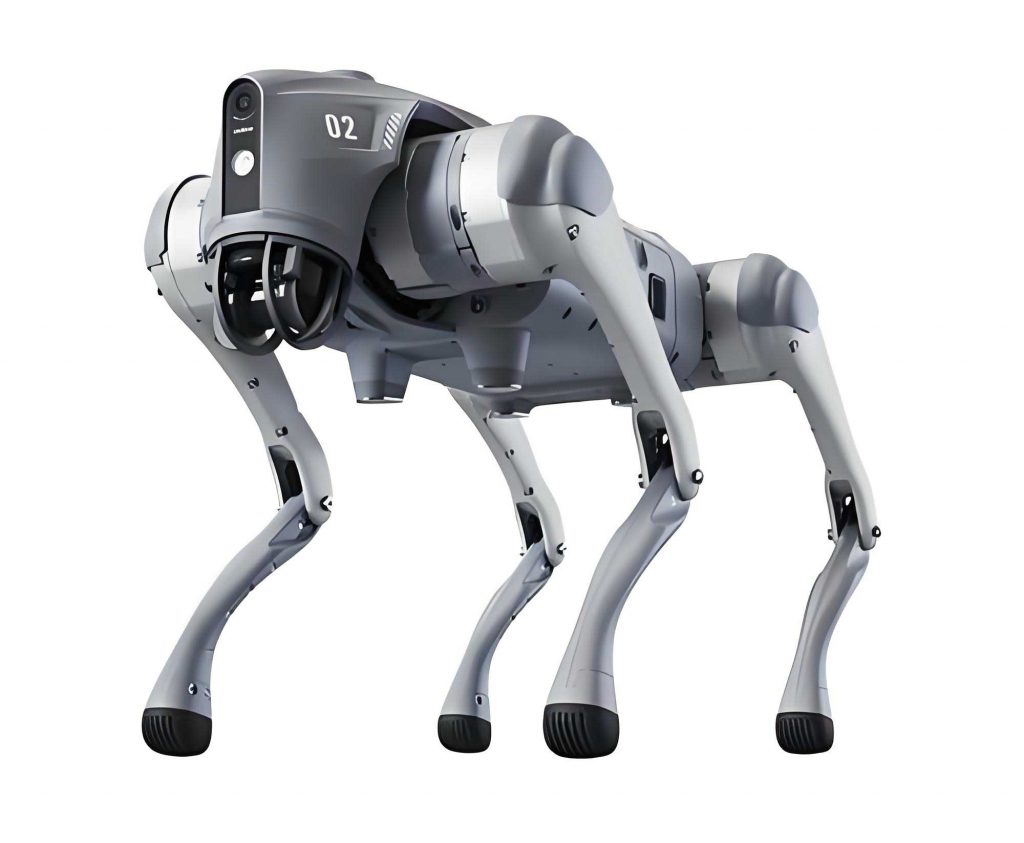
Key Application Technology Solutions
Our implementation of key application technologies for the robot dog in coal washing plants revolves around a comprehensive system architecture that integrates hardware and software components. The overall inspection system is structured into multiple layers: the sensor layer, data acquisition layer, navigation layer, and control layer. The robot dog is equipped with a variety of sensors, including LiDAR, infrared cameras, gas sensors, and microphones, which feed data into an onboard processing unit. This unit runs the SLAM algorithms for localization and map building, while also handling image and sound recognition tasks. The data is transmitted via 4G/5G networks to a central monitoring station, where it is analyzed and stored. This architecture ensures that the robot dog can operate autonomously while providing real-time insights to plant operators.
Specifically, the SLAM navigation technology application involves the use of graph-based optimization to refine the robot dog’s pose estimates. The objective is to minimize the error between observed and predicted landmarks, which is formulated as a non-linear least squares problem:
$$\min_{x, m} \sum_{i=1}^{n} \| z_i – h(x_i, m) \|^2_{\Sigma_i}$$
where \(z_i\) are the measurements, \(h\) is the observation model, \(x_i\) are the poses, \(m\) are the landmarks, and \(\Sigma_i\) is the covariance matrix. This approach allows the quadruped robot to maintain accurate positioning over long durations, even in environments with limited features. For multi-floor inspections, we have developed a map-switching strategy that uses QR codes or RFiD tags at transition points to trigger the loading of corresponding maps. This eliminates the need for continuous 3D mapping of entire facilities, reducing computational overhead and improving response times.
In terms of image recognition solutions, we have deployed a pipeline that includes preprocessing, feature extraction, and classification. For gauge reading, the system first applies Gaussian blur to reduce noise, then uses Canny edge detection to isolate the dial and pointer. The angle of the pointer is computed using trigonometric functions, and the value is interpreted based on calibrated scales. For indicator lights, the system converts images to HSV space and thresholds the value channel to determine brightness states. The recognition accuracy is further enhanced through continuous learning, where false positives are used to retrain the models. Table 2 provides a comparison of image recognition techniques applied in different scenarios.
| Recognition Task | Preprocessing Methods | Detection Algorithms | Accuracy Metrics |
|---|---|---|---|
| Gauge Reading | Gaussian Filter, Thresholding | Hough Transform, CNN | 95% on analog gauges |
| Indicator Light Status | HSV Conversion, Brightness Analysis | SVM, Faster R-CNN | 98% on LED indicators |
| Water Accumulation | Morphological Operations | Region Proposal Networks | 90% in low-light conditions |
| Equipment Temperature | Thermal Image Calibration | Pixel Intensity Analysis | 92% for hotspot detection |
Furthermore, the robot dog’s control system incorporates adaptive gait generation for different terrains. By using reinforcement learning, the quadruped robot can learn optimal policies for navigating obstacles. The reward function \(R\) in this context is defined as:
$$R = -(\alpha \cdot \text{energy} + \beta \cdot \text{time} + \gamma \cdot \text{risk})$$
where \(\alpha\), \(\beta\), and \(\gamma\) are tuning parameters. This ensures that the robot dog balances efficiency with safety during inspections. The integration of these solutions into a cohesive platform has been validated through field tests in simulated coal washing environments, demonstrating significant improvements in inspection coverage and data reliability compared to traditional methods.
Conclusion
In summary, the application of the robot dog in coal washing plant inspection scenarios offers a robust solution to the limitations of manual methods. Through extensive research and development, we have demonstrated how the quadruped robot can autonomously navigate complex environments, recognize critical equipment statuses, and transmit real-time data for analysis. The key technologies, including SLAM-based navigation, advanced image processing, and adaptive control systems, enable the robot dog to operate effectively under challenging conditions such as low light, high dust, and multi-level layouts. The technical characteristics of the robot dog, such as its diverse walking modes and scientific inspection planning, further enhance its suitability for industrial applications. By implementing the proposed solutions, coal washing plants can achieve higher efficiency, reduced labor costs, and improved safety standards. Future work will focus on enhancing the robot dog’s AI capabilities, such as predictive maintenance through machine learning, and expanding its application to other industrial sectors. The continuous evolution of quadruped robot technology holds great promise for transforming inspection practices worldwide.