
Underground quadruped robots, often referred to as robot dogs, are critical for performing hazardous tasks in complex environments such as mines. These robot dogs must navigate uneven terrains, including sandy and gravel surfaces, while maintaining stable walking postures to avoid tipping or instability. Traditional control methods often fail to provide adequate stability due to the unpredictable nature of underground conditions, leading to significant posture fluctuations. To address this, we propose a novel control approach based on distributed hierarchical feedback, which integrates kinematic modeling, stepwise control structures, and recursive feedback mechanisms. This method ensures that the quadruped robot maintains a stable posture by dynamically adjusting to environmental changes, leveraging advanced control theories like non-singular terminal sliding mode control and finite difference-based sliding mode control. The integration of a Central Pattern Generator (CPG) recursive feedback model allows for adaptive gait generation, enhancing the robot dog’s ability to traverse challenging terrains. In this paper, we detail the design, implementation, and experimental validation of this control strategy, demonstrating its superiority over existing methods in terms of roll and pitch angle stability.
The control of quadruped robots in underground settings presents unique challenges due to the irregular surfaces and external disturbances. Existing approaches, such as those based on reinforcement learning or singular perturbation methods, often suffer from long training cycles or inadequate adaptability. Our distributed hierarchical feedback control system overcomes these limitations by employing a multi-layered architecture that processes sensory inputs and adjusts control parameters in real-time. This paper is structured as follows: First, we derive the kinematic model of the quadruped robot using homogeneous transformation matrices. Next, we describe the acquisition of posture stability control inputs through vector operations. Then, we elaborate on the stepwise control methodology, including non-singular terminal sliding mode control and finite difference-based sliding mode control. Subsequently, we introduce the CPG recursive feedback model for adaptive gait generation. Finally, we present experimental results from tests conducted in simulated underground environments, highlighting the effectiveness of our approach in maintaining stable walking postures for the robot dog.
Kinematic Modeling of the Quadruped Robot
To achieve stable walking posture control for the underground quadruped robot, we begin by constructing a kinematic model based on a ground inertial reference frame. This model accounts for the robot’s dynamic interactions with the environment, ensuring accurate posture predictions. The general constraints for the quadruped robot, assuming zero potential energy, are defined as follows:
$$ \frac{1}{t} \left( \frac{\partial A}{\partial \alpha_i} \right) – \frac{\partial A}{\partial \beta_i} = \chi_i, \quad i = 1, 2, \ldots, I $$
where \( t \) represents time, \( A \) denotes the system kinetic energy, \( \alpha \) is the generalized coordinate constraint, \( \beta \) is the generalized velocity constraint, \( \chi_i \) is the generalized vector constraint, \( i \) is the constraint index, and \( I \) is the total number of constraints during motion. The system kinetic energy is calculated using the integral of mass distribution and velocity:
$$ A = \frac{1}{2} \int m \mathbf{S}_j \cdot \mathbf{S}_j \, dm $$
Here, \( m \) is the distributed mass, \( j \) is an arbitrary point marker, and \( \mathbf{S} \) is the velocity vector. By incorporating these constraints and applying the natural orthogonal complement method along with Lagrange’s formulation, we derive the kinematic equation for the quadruped robot:
$$ \mathbf{H}(\mathbf{C}_0, \boldsymbol{\theta}) \ddot{\mathbf{q}} + \mathbf{G}(\mathbf{C}_0, \boldsymbol{\theta}) + \mathbf{D}(\mathbf{C}_0, \boldsymbol{\theta}) = \boldsymbol{\chi}_i(\mathbf{C}_0, \boldsymbol{\theta}) $$
In this equation, \( \mathbf{H} \) is the mass matrix of the robot dog, \( \mathbf{G} \) represents the nonlinear velocity vector set, \( \mathbf{D} \) is the gravity parameter, \( \mathbf{C}_0 \) is the vector matrix describing the robot’s current position and orientation, \( \boldsymbol{\theta} \) is the joint position vector, and \( \mathbf{q} \) is the generalized coordinate vector. This kinematic model serves as the foundation for subsequent posture stability control, enabling precise manipulation of the quadruped robot’s movements in underground conditions.
Acquisition of Posture Stability Control Inputs
For effective posture stability control, it is essential to determine the inputs based on the robot’s leg-end positions. We utilize homogeneous transformation matrices to describe the posture of the robot’s torso in the world coordinate system. The homogeneous transformation matrix is given by:
$$ \mathbf{T} = \begin{bmatrix} \mathbf{R} & \mathbf{O}\phi_H \\ \mathbf{0} & 1 \end{bmatrix} $$
where \( \mathbf{R} \) is the rotation matrix, and \( \mathbf{O}\phi_H \), \( \mathbf{O}\phi_G \), \( \mathbf{O}\phi_D \) are the three-dimensional coordinates of the body’s center point in the ground coordinate system under motion model constraints. To compute the position vector of a single leg end, we employ vector addition and rotation matrices. The position vector of the leg end point \( K \) relative to the hip joint point \( Q \) is derived as:
$$ \mathbf{QK} = \mathbf{O’O} + \mathbf{OK} – \mathbf{R} \times \mathbf{O’Q} $$
Here, \( \mathbf{O’O} \) is the position vector between the body center point \( O’ \) and the ground origin \( O \), \( \mathbf{OK} \) is the position vector from the origin to the leg end point, and \( \mathbf{O’Q} \) is the position vector from the body center to the hip joint. By ensuring consistency in the \( y \) and \( z \)-axis position vectors, we maintain stability. The resulting leg-end position vector is used as the input for posture stability control, allowing the quadruped robot to adjust its posture dynamically during walking.
Stepwise Control Methodology for Posture Stability
The distributed hierarchical control structure for the quadruped robot involves a stepwise approach to achieve stable walking postures. This structure comprises two main control steps: non-singular terminal sliding mode control and finite difference-based sliding mode control. These steps work in tandem to reduce approximation errors and minimize chattering during robot locomotion.
In the first step, non-singular terminal sliding mode control is applied to evaluate the current posture deviation using the leg-end position vector. The control law for this step is derived as follows. Assuming the control variable is the motor output rotation angle, we have:
$$ \mathbf{M}(\boldsymbol{\iota}) \ddot{\boldsymbol{\iota}} + \boldsymbol{\gamma}(\boldsymbol{\iota}, \dot{\boldsymbol{\iota}}) \dot{\boldsymbol{\iota}} + [0, \boldsymbol{\theta}] = [0, \boldsymbol{\omega}] $$
where \( \mathbf{M}(\boldsymbol{\iota}) \) is the coordinate constraint matrix, \( \boldsymbol{\gamma} \) is the centrifugal and Coriolis force vector, \( \boldsymbol{\iota} \), \( \dot{\boldsymbol{\iota}} \), \( \ddot{\boldsymbol{\iota}} \) are vectors composed of spatial attitude angles and joint angles, \( \boldsymbol{\theta} \) is the feedback joint angle, and \( \boldsymbol{\omega} \) is the motor output rotation angle. Defining a non-singular sliding surface, we derive the first-step control law:
$$ [0, \boldsymbol{\omega}_1] = [0, \boldsymbol{\theta}] + \boldsymbol{\sigma} + \left( \frac{\boldsymbol{\iota}}{p} \mathbf{u} e^2 – \frac{\boldsymbol{\iota}}{p} \right) + \boldsymbol{\Phi}(\boldsymbol{\psi}) + d \boldsymbol{\Gamma}(\boldsymbol{\nu}) $$
Here, \( \boldsymbol{\omega}_1 \) is the control variable for the first step, \( \boldsymbol{\sigma} \) is the approximation error, \( p \) is a diagonal matrix, \( \mathbf{u} \) is the torsion stiffness, \( e \) is the base of natural logarithms, \( \boldsymbol{\Phi} \) is the joint rotation angle error, \( \boldsymbol{\psi} \) is the exponential trend term, \( d \) is the approach speed, \( \boldsymbol{\Gamma} \) is the switching saturation function, and \( \boldsymbol{\nu} \) is the constant velocity approach term. The weight vector adaptive law is set based on stability theory to adjust control strategies dynamically.
The second step involves finite difference-based sliding mode control to reduce chattering during walking. The control law for this step is given by:
$$ \boldsymbol{\kappa} = – \vartheta \left[ \mathbf{f}_2 + \mathbf{X} (\boldsymbol{\omega} – \mathbf{f}_1) \right] + \boldsymbol{\xi} (\boldsymbol{\omega}_1 – \boldsymbol{\theta}) – \boldsymbol{\psi} – d \boldsymbol{\Gamma}(\boldsymbol{\nu}) $$
where \( \boldsymbol{\kappa} \) is the output torque, \( \vartheta \) is the joint drive motor end inertia matrix, \( \mathbf{f}_1 \) and \( \mathbf{f}_2 \) are virtual control variables computed using the finite difference method, \( \mathbf{X} \) is a diagonal, positive definite constant matrix, and \( \boldsymbol{\xi} \) is the torsion stiffness matrix. The gain switching adaptive law is derived to ensure robust performance. This stepwise control methodology enables the quadruped robot to maintain stable postures through hierarchical coordination, effectively handling the complexities of underground environments.
Recursive Feedback Model for Adaptive Gait Generation
To enhance the adaptability of the quadruped robot, we incorporate a Central Pattern Generator (CPG) recursive feedback model into the control system. This model consists of three layers of reflex mechanisms: high-level, mid-level, and low-level reflex control structures. The high-level structure uses visual and auditory sensors to perceive the walking environment and recursively feedback information to the control layer, enabling appropriate strategy adjustments. The mid-level structure relies on pressure sensors and gyroscopes to monitor the robot’s real-time walking posture and position, transmitting this data to the posture generator to adjust CPG parameters and coordinate multiple joint movements. The low-level structure observes foot-end pressure or posture information, feeding it back between the CPG and the controlled object to align output signals with the external environment.
The CPG model, which generates stable walking gaits for the robot dog, is based on two first-order differential equations:
$$ \begin{aligned} \dot{l} &= \upsilon_1 (\rho – l^2 – v^2) l – \partial v \\ \dot{v} &= \upsilon_2 (\rho – l^2 – v^2) v – \partial l \end{aligned} $$
Here, \( l \) and \( v \) are the posture input vectors after recursive control, \( \dot{l} \) and \( \dot{v} \) are the output posture vectors, \( \upsilon_1 \) and \( \upsilon_2 \) are convergence coefficients, \( \rho \) is the amplitude constraint of the oscillator, and \( \partial \) is the frequency. By combining the CPG recursive feedback model with the distributed hierarchical control system, the quadruped robot can dynamically adapt its walking posture to external conditions, ensuring stability in complex underground terrains.
Experimental Setup and Environment
To validate the proposed control method, we conducted experiments in a simulated underground environment designed to replicate challenging conditions. The experimental area featured various obstacles such as pits, bumps, irregular surfaces, and slopes, mimicking the complex topography of mine shafts. Visual sensors, including high-resolution cameras, were installed to capture environmental data and monitor the robot’s posture. Pressure sensors and gyroscopes were mounted on the robot’s body and legs to provide real-time feedback on attitude and motion. The control system was implemented using a programmable controller, such as the TX2, which facilitated the execution of reinforcement learning strategies and posture stability algorithms.
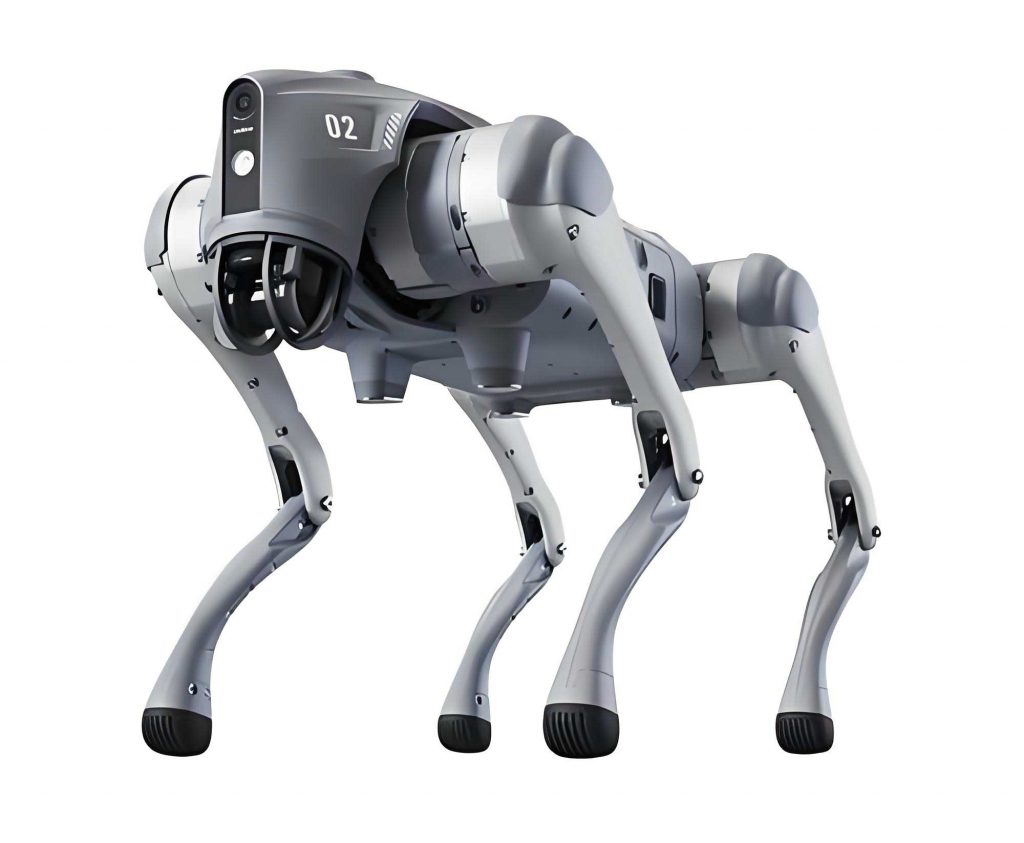
The underground quadruped robot used in experiments was a four-legged structure operated via master-slave remote control, with a maximum operating distance of at least 1 km. It was equipped with a thermal imager for visibility in smoky or foggy conditions and an integrated detection system for monitoring temperature and gas composition. Key parameters of the robot were randomized within specified ranges to test robustness, as summarized in the table below:
| Parameter | Minimum Value | Maximum Value |
|---|---|---|
| Joint Moment of Inertia (kg·m²) | 0.8 × original | 1.2 × original |
| Body Mass (kg) | 0.8 × original | 1.2 × original |
| Joint Friction Coefficient | 0.5 | 1.5 |
| Motor Friction Coefficient | 0.01 | 0.05 |
| Sensor Noise (dB(A)) | 0.95 × original | 1.05 × original |
The controller played a crucial role in deploying the posture stability control method, ensuring precise adjustments during operation. The experimental setup allowed for comprehensive testing of the quadruped robot’s performance under realistic underground scenarios.
Posture Stability Control Results
After applying the proposed control method, the quadruped robot was tested on sandy and gravel terrains to evaluate its walking posture stability. The results demonstrated that the robot dog maintained stable postures across both surface types, with minimal deviations in roll and pitch angles. On sandy terrain, the robot exhibited smooth transitions and balanced movements, as shown in the posture changes captured during walking. Similarly, on gravel terrain, the robot adapted effectively to the uneven surface, maintaining consistent posture without significant oscillations. These outcomes highlight the robustness of the distributed hierarchical feedback control in enabling the quadruped robot to navigate diverse underground environments successfully.
Joint Parameter Testing under Distributed Recursive Control
We compared the joint motion trajectories of the quadruped robot under autonomous movement with and without the assistance of the distributed recursive control system. The experiments focused on the DIP joint angles during flexion and extension phases, with control ranges between 0° and 90°. The results indicated that the normal joint flexion phase was slower than the extension phase, and the control algorithm prevented over-extension issues by avoiding negative angles. This ensures the safety and reliability of the robot dog during operation, as the joint trajectories remained within stable bounds throughout the motion cycles.
Performance Analysis of Control Methods
To assess the effectiveness of our proposed method, we compared it with two alternative approaches: reinforcement learning-based control and singular perturbation-based control. The performance was evaluated based on fluctuations in roll and pitch angles while the quadruped robot walked on sandy and gravel terrains. The results are summarized in the table below:
| Control Method | Roll Angle Fluctuation Range (°) | Pitch Angle Fluctuation Range (°) |
|---|---|---|
| Proposed Method | -0.03 to 0.03 | -0.03 to 0.03 |
| Reinforcement Learning | -0.1 to 0.1 | -0.1 to 0.1 |
| Singular Perturbation | -0.2 to 0.2 | -0.2 to 0.2 |
As evident from the data, our proposed method significantly reduced posture fluctuations, with roll and pitch angles confined to a narrow range of -0.03° to 0.03° on both terrains. In contrast, the other methods exhibited wider fluctuations, indicating poorer stability. This demonstrates the superior performance of the distributed hierarchical feedback control in maintaining the walking posture of the quadruped robot, making it highly suitable for underground applications where stability is paramount.
Conclusion
In this paper, we presented a distributed hierarchical feedback-based control method for achieving stable walking postures in underground quadruped robots. By integrating kinematic modeling, stepwise control structures, and CPG recursive feedback models, our approach enables the robot dog to adapt dynamically to complex terrains. Experimental results confirmed that the proposed method minimizes roll and pitch angle fluctuations, ensuring stable and balanced locomotion on sandy and gravel surfaces. This advancement addresses the limitations of traditional control strategies and enhances the reliability of quadruped robots in hazardous environments. Future work will focus on optimizing the control parameters for even greater adaptability and exploring applications in other challenging scenarios.