
As we advance into a new era of lunar exploration, the focus is shifting from mere scientific investigation to the sustainable utilization of extraterrestrial resources. This transition demands robotic systems capable of navigating the Moon’s harsh and unpredictable terrain with greater autonomy and adaptability. Among various robotic platforms, the quadruped robot, often referred to as a robot dog, stands out due to its bio-inspired design. The discrete foot-end support, multi-degree-of-freedom joint mechanisms, and modular architecture of a quadruped robot enable superior obstacle-crossing capabilities, allowing it to access complex regions like crater bottoms and lava tubes that are impassable for wheeled rovers. However, the extreme lunar environment—characterized by vast temperature fluctuations, high vacuum, low gravity, and communication delays—poses significant challenges to the motion control of these robot dogs. Classical control methods, which rely heavily on precise dynamic models, struggle to cope with the uncertainties in lunar soil mechanics and terrain variability. In response, deep reinforcement learning (DRL) has emerged as a transformative approach, offering an end-to-end perception-decision-execution framework that can learn robust control policies directly from sensor data, thereby enhancing the autonomy and reliability of lunar quadruped robots.
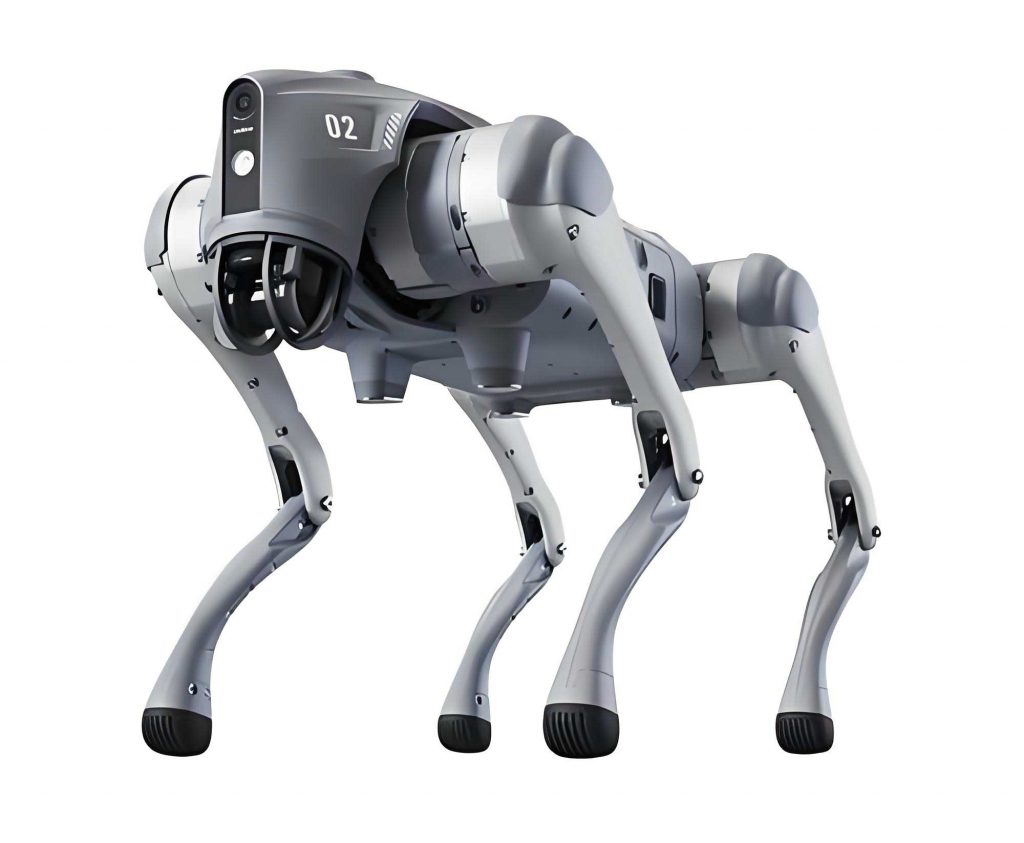
In this review, we explore the application of DRL to control quadruped robots for lunar exploration. We begin by examining classical control methodologies for quadruped robots, highlighting their strengths and limitations. Subsequently, we delve into the foundational principles and advancements in DRL algorithms, categorizing them into value-based, policy gradient, and actor-critic methods. We then discuss the specific adaptations and innovations required to deploy DRL-based control on lunar quadruped robots, covering aspects such as simulation fidelity, foot-terrain interaction modeling, jumping gaits, reward function design, teacher-student frameworks, and sim-to-real transfer. Finally, we address the ongoing challenges and outline future research directions to realize the full potential of DRL in enabling agile and resilient robot dogs on the Moon.
Classical Control Methods for Quadruped Robots
Classical control strategies for quadruped robots can be broadly classified into model-based and model-free approaches. Model-based methods depend on accurate mathematical representations of the robot’s dynamics and kinematics, while model-free techniques leverage data-driven or heuristic algorithms to derive control policies without explicit models.
Model-Based Control Methods
Model-based control formulations often simplify the complex dynamics of a quadruped robot to make optimization tractable. A common approach is the Spring-Loaded Inverted Pendulum (SLIP) model, which reduces the leg mechanics to a spring-damper system. This model facilitates dynamic motions such as trotting and hopping by decoupling control into height, velocity, and posture components. The virtual model control (VMC) method extends this by simulating virtual components within the robot’s structure to compute joint torques that achieve desired dynamic behaviors. For instance, VMC has been applied to adjust body posture and stabilize single-leg hopping on robots like HyQ.
More sophisticated techniques, such as model predictive control (MPC), solve a finite-horizon optimal control problem online. By linearizing the single-rigid body dynamics of the quadruped robot, MPC can plan ground reaction forces that satisfy friction cone constraints and other physical limits. The core MPC optimization can be expressed as:
$$ \min_{x_0, \ldots, x_N} \sum_{i=0}^{N-1} \left( \| x_{i+1} – x_{i+1,\text{ref}} \|_{Q_i} + \| u_i \|_{P_i} \right) $$
subject to:
$$ x_{i+1} = A_i x_i + B_i u_i + G $$
$$ c_i \leq C_i u_i \leq \bar{c}_i $$
$$ D_i u_i = 0, \quad i = 0, \ldots, N-1 $$
Here, \( x_i \in \mathbb{R}^{12} \) represents the state vector (including position, velocity, orientation, and angular velocity), \( u_i \) is the control input (ground reaction forces), \( A_i \) and \( B_i \) are system matrices from linearized dynamics, \( G \) is the gravity vector, and the constraints enforce friction limits (\( \sqrt{f_x^2 + f_y^2} \leq \mu f_z \)) and zero force on swinging legs. The matrices \( Q_i \) and \( P_i \) are weighting matrices that penalize tracking errors and control efforts, respectively. This quadratic program is solved in a receding horizon fashion to generate real-time controls.
Despite their theoretical elegance, model-based methods like MPC are sensitive to model inaccuracies. Uncertainties in soil properties or joint friction can lead to suboptimal performance or instability, especially in unstructured environments like the lunar surface.
Model-Free Control Methods
Model-free approaches circumvent the need for explicit dynamics models by learning control policies directly from data. Heuristic algorithms, such as genetic algorithms and particle swarm optimization, iteratively tune control parameters to optimize gait sequences or joint trajectories for a quadruped robot. For example, genetic algorithms have been used to discover energy-efficient walking patterns, while particle swarm optimization adjusts joint angles to enhance stability on rough terrain.
Bio-inspired methods, like those based on central pattern generators (CPGs), generate rhythmic signals for leg coordination, mimicking neural oscillators in animals. CPG-based controllers exhibit natural robustness to perturbations and have been implemented on robots like Tekken for stable walking over irregular grounds. Similarly, fuzzy logic and neural network controllers handle uncertainties by learning input-output mappings from sensor data. However, these model-free techniques often require extensive parameter tuning and may converge to local optima, limiting their adaptability to novel scenarios.
| Method | Type | Key Features | Limitations |
|---|---|---|---|
| SLIP Model | Model-Based | Simplified dynamics, suitable for dynamic gaits | Assumes ideal spring-mass behavior, poor for complex terrains |
| VMC | Model-Based | Intuitive force control, good for posture adjustment | Requires accurate force mapping, sensitive to model errors |
| MPC | Model-Based | Optimization over horizon, handles constraints | Computationally intensive, relies on linearized models |
| Genetic Algorithms | Model-Free | Global search, no gradient needed | Slow convergence, parameter sensitivity |
| CPG | Model-Free | Robust rhythmic patterns, biological plausibility | Fixed gait patterns, limited adaptability |
| Neural Networks | Model-Free | Learns complex mappings, adaptive | Large data requirements, black-box nature |
The limitations of classical methods—whether due to model dependency or heuristic tuning—motivate the adoption of deep reinforcement learning, which combines the representational power of deep neural networks with the decision-making framework of reinforcement learning to learn adaptive policies directly from interaction.
Deep Reinforcement Learning Algorithms: Foundations and Advances
Deep reinforcement learning integrates deep learning with reinforcement learning to solve sequential decision-making problems under uncertainty. The core idea is to train an agent—in this case, a quadruped robot—to maximize cumulative rewards by interacting with its environment. The environment is typically formulated as a Markov Decision Process (MDP) defined by states \( s_t \), actions \( a_t \), transition dynamics \( p(s_{t+1} | s_t, a_t) \), and a reward function \( r(s_t, a_t) \). The agent’s behavior is governed by a policy \( \pi(a_t | s_t) \), which maps states to actions, and the goal is to find an optimal policy \( \pi^* \) that maximizes the expected return \( \mathbb{E}[\sum_{t=0}^{\infty} \gamma^t r_t] \), where \( \gamma \in [0,1] \) is a discount factor.
DRL algorithms can be categorized into three main families: value-based methods, policy gradient methods, and actor-critic methods. Each has distinct mechanisms for policy improvement and exploration-exploitation trade-offs.
Value-Based Methods
Value-based DRL algorithms focus on learning the action-value function \( Q^\pi(s, a) = \mathbb{E}[\sum_{k=0}^{\infty} \gamma^k r_{t+k} | s_t = s, a_t = a] \), which estimates the expected return of taking action \( a \) in state \( s \) and following policy \( \pi \) thereafter. The Deep Q-Network (DQN) algorithm was a breakthrough that used a deep neural network to approximate \( Q(s, a) \) and stabilized training through experience replay and target networks. The loss function for DQN is:
$$ L(\theta) = \mathbb{E}_{(s,a,r,s’) \sim \mathcal{D}} \left[ \left( r + \gamma \max_{a’} Q(s’, a’; \theta^-) – Q(s, a; \theta) \right)^2 \right] $$
where \( \theta \) are the parameters of the Q-network, \( \theta^- \) are the parameters of the target network (updated periodically), and \( \mathcal{D} \) is the experience replay buffer. Despite its success, DQN tends to overestimate Q-values, leading to suboptimal policies. Subsequent improvements include Double DQN, which decouples action selection from value estimation to reduce bias; Dueling DQN, which separates the value function \( V(s) \) and advantage function \( A(s, a) \) to better assess action relevance; and Prioritized Experience Replay, which samples transitions with high temporal-difference error more frequently to accelerate learning. The Rainbow algorithm combines these extensions into a unified framework, achieving state-of-the-art performance on discrete control tasks.
However, value-based methods are inherently designed for discrete action spaces. Applying them to a quadruped robot, which requires continuous joint control, necessitates discretization of action spaces, which can be inefficient and computationally expensive.
Policy Gradient Methods
Policy gradient methods directly optimize the policy \( \pi_\theta(a | s) \) parameterized by \( \theta \) by ascending the gradient of the expected return \( J(\theta) \). The REINFORCE algorithm is a Monte Carlo policy gradient method that estimates the gradient as:
$$ \nabla_\theta J(\theta) = \mathbb{E}_\pi \left[ \sum_{t=0}^T \nabla_\theta \log \pi_\theta(a_t | s_t) G_t \right] $$
where \( G_t = \sum_{k=t}^T \gamma^{k-t} r_k \) is the return from time step \( t \). While REINFORCE is simple, it suffers from high variance in gradient estimates, which can slow convergence. To reduce variance, baseline subtraction methods are often employed, but pure policy gradient approaches are less sample-efficient compared to hybrid methods.
Actor-Critic Methods
Actor-critic methods combine value function approximation with policy optimization. The actor updates the policy \( \pi_\theta(a | s) \), while the critic evaluates the policy by learning the value function \( V_\phi(s) \) or action-value function \( Q_\phi(s, a) \). The Deep Deterministic Policy Gradient (DDPG) algorithm extends DQN to continuous action spaces by using a deterministic policy \( \mu_\theta(s) \) and a Q-network \( Q_\phi(s, a) \). The actor is updated by applying the chain rule to the expected return:
$$ \nabla_\theta J(\theta) \approx \mathbb{E}_{s \sim \mathcal{D}} \left[ \nabla_a Q_\phi(s, a) \big|_{a=\mu_\theta(s)} \nabla_\theta \mu_\theta(s) \right] $$
DDPG also employs target networks for both actor and critic to stabilize training. Twin Delayed DDPG (TD3) addresses Q-value overestimation by using two Q-networks and taking the minimum value for target updates, along with target policy smoothing to reduce variance. Another prominent actor-critic algorithm is Soft Actor-Critic (SAC), which incorporates entropy regularization to encourage exploration:
$$ J(\theta) = \mathbb{E}_{(s,a) \sim \pi_\theta} \left[ \sum_{t} \gamma^t \left( r(s_t, a_t) + \alpha \mathcal{H}(\pi_\theta(\cdot | s_t)) \right) \right] $$
where \( \mathcal{H} \) is the entropy term and \( \alpha \) is a temperature parameter. SAC balances exploration and exploitation, making it suitable for complex environments. For policy updates with guaranteed monotonic improvement, Trust Region Policy Optimization (TRPO) constrains policy changes using the Kullback-Leibler divergence, but its computational cost led to the development of Proximal Policy Optimization (PPO). PPO simplifies TRPO by using a clipped objective function:
$$ L^{\text{CLIP}}(\theta) = \mathbb{E}_t \left[ \min \left( r_t(\theta) \hat{A}_t, \text{clip}(r_t(\theta), 1-\epsilon, 1+\epsilon) \hat{A}_t \right) \right] $$
where \( r_t(\theta) = \frac{\pi_\theta(a_t | s_t)}{\pi_{\theta_{\text{old}}}(a_t | s_t)} \) is the probability ratio, \( \hat{A}_t \) is the estimated advantage, and \( \epsilon \) is a hyperparameter. PPO is widely used in robotics due to its stability and ease of implementation.
| Algorithm | Type | Key Mechanism | Applicability to Quadruped Robots |
|---|---|---|---|
| DQN | Value-Based | Q-learning with neural networks, experience replay | Limited to discrete actions; requires action discretization for continuous control |
| Double DQN | Value-Based | Reduces Q-value overestimation by decoupling selection and evaluation | Same as DQN; improved stability but still discrete-action focus |
| Dueling DQN | Value-Based | Separates value and advantage streams in network architecture | Better action assessment; discrete actions only |
| REINFORCE | Policy Gradient | Monte Carlo gradient estimation with baseline | Supports continuous actions; high variance, sample-inefficient |
| DDPG | Actor-Critic | Deterministic policy gradient with off-policy learning | Continuous control; suitable for joint torque control in robot dogs |
| TD3 | Actor-Critic | Addresses overestimation with twin critics and delayed updates | Improved performance over DDPG; good for robust locomotion |
| SAC | Actor-Critic | Maximum entropy RL for enhanced exploration | Handles stochastic policies; effective in complex terrains |
| PPO | Actor-Critic | Clipped objective for stable policy updates | Widely adopted for quadruped robot training due to reliability |
The flexibility of actor-critic methods, particularly PPO and SAC, makes them well-suited for training quadruped robots in simulation, with policies that can later be transferred to physical systems.
DRL-Based Control for Lunar Quadruped Robots
Applying DRL to lunar quadruped robots involves addressing unique challenges posed by the Moon’s environment, such as low gravity, regolith mechanics, and extreme temperatures. We discuss key research thrusts in developing DRL controllers for robot dogs on the Moon, including simulation fidelity, gait adaptation, reward design, and transfer learning.
High-Fidelity Lunar Simulation Environments
Training DRL policies requires extensive interaction with the environment, which is impractical on the Moon. Thus, high-fidelity simulators are essential. Physics engines like Isaac Gym and PyBullet enable parallel simulation of thousands of robot dogs on GPUs, accelerating training. However, accurately modeling foot-regolith interactions is critical. Lunar soil is a granular material with low cohesion and variable compaction, leading to significant sinkage and slippage. Traditional penalty-based contact models use spring-dampers but allow non-physical penetration, while rigid contact models with complementarity constraints better capture collision dynamics but may oversimplify soil deformation.
To improve realism, discrete element method (DEM) simulations model regolith as individual particles, providing detailed insights into soil stresses and displacements. For example, a semi-analytical 3D contact model predicts the stress distribution under a circular footpad:
$$ \sigma_z(r, z) = \frac{3F}{2\pi a^2} \left(1 – \frac{r^2}{a^2}\right)^{1/2} \cdot \frac{1}{(1 + (z/a)^2)^{5/2}} $$
where \( F \) is the vertical load, \( a \) is the contact radius, \( r \) is the radial distance, and \( z \) is the depth. This model, when integrated into simulators, helps generate more accurate terrain responses for DRL training. Additionally, incorporating thermal models to account for temperature-dependent material properties and actuator performance is vital for lunar applications.
Jumping Gait Control in Low Gravity
The Moon’s gravity, approximately one-sixth of Earth’s, alters the dynamics of legged locomotion. Jumping gaits become more energy-efficient for traversing obstacles like craters, but they introduce challenges in trajectory planning and landing stability. A quadruped robot must coordinate thrust phases to achieve desired jump heights and distances while maintaining orientation during flight. DRL policies can learn to optimize takeoff velocity, leg sequencing, and body orientation to minimize impact forces upon landing. The reward function for jumping often includes terms for tracking a reference trajectory, minimizing energy consumption, and ensuring a stable posture:
$$ R_{\text{jump}} = w_1 \exp(-c_1 \| \mathbf{p} – \mathbf{p}_{\text{ref}} \|^2) – w_2 \sum \|\tau \dot{q}\| – w_3 \| \phi \| $$
where \( \mathbf{p} \) is the robot’s position, \( \tau \) is joint torque, \( \dot{q} \) is joint velocity, and \( \phi \) represents pitch and roll angles. Low gravity reduces the required force for jumps but increases flight time, necessitating precise mid-air adjustments. Reaction wheels or other control moment gyros can be used to stabilize attitude during jumps, as demonstrated in the SpaceBok robot dog.
Multi-Objective Reward Functions
Designing reward functions is crucial for guiding the DRL agent toward desired behaviors. For a lunar quadruped robot, the reward must balance multiple objectives: tracking velocity commands, maintaining stability, conserving energy, avoiding obstacles, and preventing damage. A typical reward function is a weighted sum of components:
$$ R = w_v R_{\text{velocity}} + w_s R_{\text{stability}} + w_e R_{\text{energy}} + w_a R_{\text{safety}} $$
Common reward components include:
- Velocity tracking: \( R_{\text{velocity}} = \exp(-c \| \mathbf{v} – \mathbf{v}_{\text{ref}} \|^2) \)
- Stability: \( R_{\text{stability}} = -\| \omega_{xy} \| – \| \theta – \theta_{\text{ref}} \| \) (penalizing base angular velocity and orientation errors)
- Energy efficiency: \( R_{\text{energy}} = -\sum | \tau_i \dot{q}_i | \) (minimizing mechanical power)
- Safety: \( R_{\text{safety}} = -\sum \mathbb{I}_{\text{slip}} – \mathbb{I}_{\text{collision}} \) (penalizing foot slippage and self-collisions)
By tuning the weights \( w \), the policy can prioritize different aspects, such as favoring speed over energy savings or vice versa. Reward shaping with bounded functions like exponentials ensures gradients remain well-behaved during training.
| Component | Mathematical Form | Description |
|---|---|---|
| Velocity Tracking | \( \exp(-c \| \mathbf{v} – \mathbf{v}_{\text{ref}} \|^2) \) | Encourages the robot dog to match desired linear and angular velocities |
| Base Stability | \( -\| \omega_{xy} \| – \| \theta – \theta_{\text{ref}} \| \) | Penalizes excessive roll/pitch rates and orientation deviations |
| Energy Efficiency | \( -\sum | \tau_i \dot{q}_i | \) | Reduces joint power consumption to extend mission duration |
| Action Smoothness | \( -\| \mathbf{a}_t – \mathbf{a}_{t-1} \| \) | Promotes smooth control outputs to reduce actuator wear |
| Slip Prevention | \( -\sum \mathbb{I}_{\text{slip}} \) | Discourages foot slippage based on contact force ratios |
| Obstacle Avoidance | \( -\| \mathbf{d} \| \) | Penalizes proximity to hazards; \( \mathbf{d} \) is distance to obstacles |
Teacher-Student Frameworks and Asymmetric Actor-Critic
In real-world deployment, a quadruped robot has limited sensing capabilities, making the environment partially observable. To address this, teacher-student frameworks (also known as asymmetric actor-critic) leverage privileged information during training that is unavailable at test time. The teacher policy has access to full state information, such as precise terrain geometry and soil friction coefficients, and learns an optimal policy. The student policy, which only receives raw sensor data (e.g., IMU, joint encoders, camera images), is trained to imitate the teacher through distillation or adversarial learning. The critic network in the actor-critic setup can use privileged information to provide better guidance, while the actor must rely on realistic inputs. This approach bridges the sim-to-real gap by forcing the student policy to handle perceptual uncertainties.
For example, a recurrent neural network (RNN) can be used in the student policy to integrate temporal observations and infer hidden state variables. The loss function for knowledge distillation might include a Kullback-Leibler divergence between teacher and student action distributions:
$$ L_{\text{distill}} = D_{\text{KL}} \left( \pi_{\text{teacher}}(a | s_{\text{priv}}) \| \pi_{\text{student}}(a | s_{\text{pub}}) \right) $$
where \( s_{\text{priv}} \) includes privileged information and \( s_{\text{pub}} \) is the public sensor data. This method has been successfully applied to teach quadruped robots to traverse rough terrain without direct access to ground truth.
Simulation-to-Reality Transfer
Transferring policies from simulation to physical lunar quadruped robots is challenging due to modeling inaccuracies. Domain randomization and domain adaptation are key techniques to enhance transferability. Domain randomization exposes the DRL agent to a wide range of simulated conditions—varying friction, masses, terrain profiles, and sensor noises—so that the policy becomes robust to discrepancies. For instance, during training, the friction coefficient \( \mu \) might be sampled from \( [0.2, 1.0] \), and motor gains might be perturbed. This encourages the policy to learn invariant features.
Domain adaptation goes a step further by explicitly identifying environmental parameters during deployment. System identification modules can estimate latent variables representing terrain properties, which are then fed into the policy to adjust behavior. Alternatively, meta-reinforcement learning frameworks train policies that can quickly adapt to new environments with few samples. The optimization objective in meta-RL includes:
$$ \max_\theta \mathbb{E}_{\mathcal{E} \sim p(\mathcal{E})} \left[ \mathbb{E}_{\tau \sim \pi_\theta} \left[ \sum_t \gamma^t r_t \right] \right] $$
where \( \mathcal{E} \) represents different environments, and \( p(\mathcal{E}) \) is a distribution over tasks. After meta-training, the policy can be fine-tuned on a specific lunar terrain with minimal data. Real-world data can also be used to refine simulation models, creating a cycle of improvement that reduces the sim-to-real gap.
Challenges and Future Research Directions
Despite promising progress, several challenges impede the deployment of DRL-controlled quadruped robots on the Moon. The simulation-reality gap remains a primary concern; inaccuracies in contact dynamics, actuator models, and sensor noise can lead to performance degradation. Physical testing in lunar analog environments on Earth is constrained by the difficulty of replicating low gravity, vacuum, and regolith properties. For example, parabolic flights or suspension systems only approximate reduced gravity, and lunar simulants may not fully capture the mechanical behavior of actual regolith.
Future research should focus on developing high-fidelity, multi-physics simulators that integrate granular mechanics, thermomechanical effects, and radiation models. Meta-learning and few-shot adaptation algorithms will enable robot dogs to quickly adjust to novel terrains with limited online data. Hierarchical reinforcement learning architectures could separate high-level gait selection from low-level joint control, improving scalability and interpretability. For instance, a top-level policy might choose between walking, trotting, or jumping based on terrain assessment, while a bottom-level policy executes precise motor commands. Collaboration between simulation and real-world experimentation, coupled with advances in compute efficiency, will be essential to achieve autonomous, resilient quadruped robots for long-term lunar missions.
Conclusion
Deep reinforcement learning represents a paradigm shift in controlling quadruped robots for lunar exploration. By learning directly from data, DRL overcomes the limitations of classical model-based and heuristic methods, enabling robot dogs to adapt to the uncertain and extreme conditions of the Moon. Through advancements in simulation, reward design, teacher-student frameworks, and transfer learning, DRL policies can achieve robust locomotion, efficient jumping, and terrain-aware navigation. However, realizing the full potential of these technologies requires continued innovation in simulation fidelity, adaptation algorithms, and system integration. As we push the boundaries of space robotics, DRL-powered quadruped robots will play a pivotal role in unlocking the scientific and resource potential of the lunar surface.