
Industrial robots are often hailed as the “jewel in the crown of manufacturing.” Among them, the Selective Compliance Assembly Robot Arm (SCARA) robot, known for its high rigidity and precision, is extensively utilized in production line scenarios such as automotive and electronics manufacturing. Furthermore, SCARA robots play significant roles in fields including medical rehabilitation, scientific research, and education. The harmonic drive gear, as one of the core components, is pivotal in ensuring the high precision and reliability of SCARA robots. Gear wear within the harmonic drive gear represents one of the most typical failure modes for SCARA robots. Post-wear issues can lead to increased noise, reduced gear strength, oil leakage, and equipment overheating, potentially triggering safety incidents and causing production contamination. Therefore, research into predictive methods is both crucial and necessary.
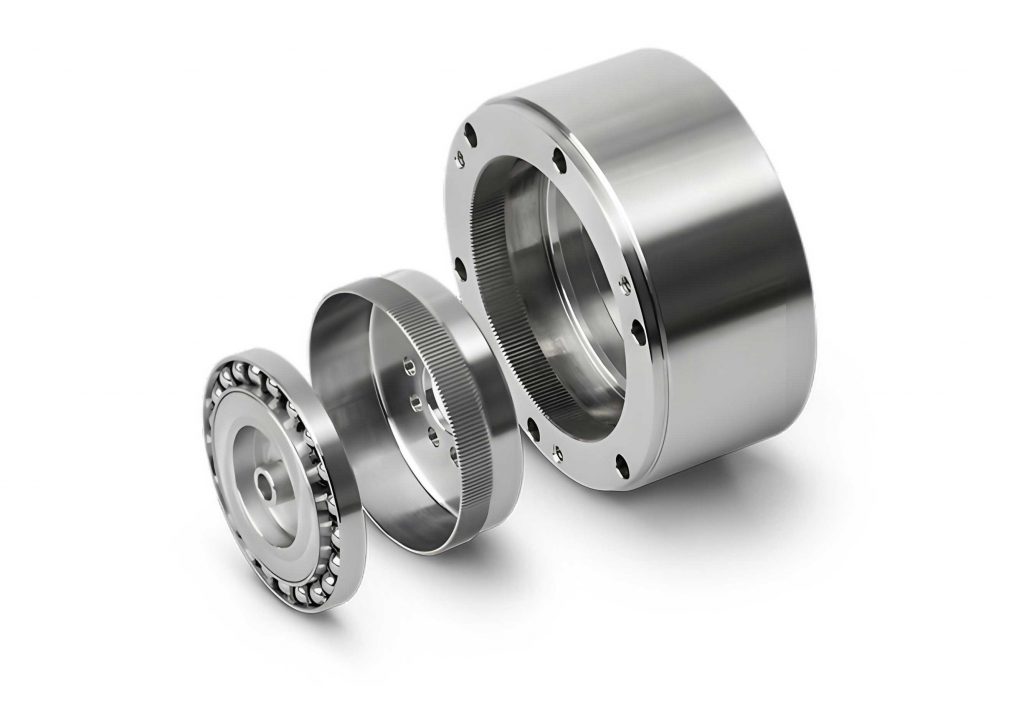
This study explores and validates a predictive method for gear wear failure in small-sized harmonic drive gears used in SCARA robots, based on torque signal analysis. Specifically, by monitoring and analyzing torque signals, we aim to establish a model to predict the onset of gear wear failure. The goal is to reduce robot maintenance costs, enhance the reliability of mechanical systems, and minimize downtime. The significance of this research lies in providing a novel, non-intrusive fault prediction method applicable to SCARA robots and other mechanical systems. This approach holds promise for improving production efficiency in manufacturing, saving maintenance costs for enterprises, and offering a sustainable solution.
According to statistics from the National Robot Testing and Assessment Center, common failures in SCARA robots primarily include harmonic drive gear failures, control cabinet faults, cable faults, RV reducer faults, motor faults, and other types. In terms of failure frequency, the harmonic drive gear remains one of the most prevalent faulty components, representing a widespread and challenging issue for industrial robots globally. The operational tasks of SCARA robots require precise positioning. The harmonic drive gear can achieve high-precision transmission and significant torque output through its internal meshing structure, offering advantages such as zero backlash. Consequently, small-sized harmonic drive gears are commonly used in the joint transmission systems of SCARA robots to reduce the rotational speed of the drive motor and increase output torque, thereby achieving high motion accuracy and stability for the robot.
However, like any mechanical system, SCARA robots and their components are subject to the risk of wear and failure. Among these, gear wear failure is a common problem. In automated production, SCARA robots operate continuously. The flexspline endures substantial alternating loads. During operation, the rotation of the wave generator causes severe wear at the meshing interface between the flexspline and the circular spline. Additionally, transmission wear occurs between the teeth of the flexspline and the circular spline. This leads to degradation in transmission performance, decline in mechanical properties, loss of precision, and unplanned downtime. Therefore, accurately predicting and promptly detecting these faults can reduce unnecessary routine maintenance and enhance production efficiency. Furthermore, as wear intensifies, the stress conditions on the flexspline become more complex, and deformation increases, potentially leading to oil leakage. Oil leakage not only causes economic losses but, when severe, can result in insufficient or interrupted oil supply within the reducer. This exacerbates wear on the gear meshing surfaces, potentially leading to seizure or spalling and causing equipment failure. Moreover, oil leakage seriously pollutes the surrounding environment, corroding soil and water sources, thereby compromising safe production and wasting recoverable lubricating oil.
Thus, scientifically and effectively determining the extent of gear wear and conducting related research to achieve fault prediction is beneficial for ensuring production efficiency, enhancing refined production management, and providing a guarantee for generating substantial economic benefits for enterprises. The primary purpose of our study is to explore and validate a prediction method for gear wear failure in small harmonic drive gears of SCARA robots based on torque signals.
Mechanism Analysis of Gear Wear in Harmonic Drive Gears
According to structural descriptions in standards, a harmonic drive gear is a transmission device that relies on a wave generator to produce a controlled elastic deformation wave in a flexspline. Through interaction with a circular spline, it achieves motion and power transmission. Its input and output rotations are in opposite directions. The key components are the Wave Generator (WG), the Flexspline (FS), and the Circular Spline (CS).
Under normal operation, if the wave generator, flexspline, and circular spline are all concentric and perfectly circular, the theoretical torque waveform remains constant, maintaining a stable transmission ratio and torque output. When the centers of the flexspline and circular spline are not coincident but both components remain circular, the output waveform exhibits constant amplitude. However, when the centers are not coincident and at least one component is not perfectly circular, a second harmonic waveform is generated due to the system’s nonlinear characteristics arising from structural asymmetry. The resulting fault torque waveform depends on the degree of concentricity offset and the circularity of the manufacturing process for the three components.
Gears are critical working parts in a harmonic drive gear, responsible for transmitting torque. Under prolonged or overloaded use, gears may wear or deform, leading to unstable operation, increased noise, decreased output efficiency, and oil leakage. Unstable operation can cause positional偏移 of the wave generator, preventing harmonic components from being correctly generated or transmitted, thereby affecting the stability of torque output. Deformation introduces nonlinear changes during torque transmission, generating additional harmonic components in the torque waveform. If the output side or the circular spline deforms, the final torque signal waveform will exhibit a second harmonic.
Therefore, by acquiring and analyzing the torque signal waveform, we can understand the concentricity of the wave generator, flexspline, and circular spline, as well as the circular characteristics of the gears. This allows for targeted maintenance to prevent unexpected damage to the reducer, thereby enhancing the stability and reliability of SCARA robots in intelligent manufacturing processes. Maintaining stable torque output is essential in the operation of harmonic drive gears. Regular inspection and maintenance of these components are necessary to ensure normal reducer operation and prevent abnormal torque waveforms, underscoring the necessity of researching fault prediction for harmonic drive gear wear.
Experimental Principles and Mitigation of Influencing Factors
Experimental Principle
SCARA robots typically operate at a specific work cycle. The motors, reducers, and other components in their joints work in a periodic, cyclic motion state. As the robot’s cumulative operating time increases, wear on the rotating components within the joints intensifies, leading to a gradual rise in internal friction. To maintain operation, the robot must continuously increase its output torque.
Based on relevant standards, the motor torque constant is defined as the average electromagnetic torque generated when a unit line current is supplied to the motor. Essentially, torque is proportional to the motor winding current. From the structure of the harmonic drive gear, monitoring the current signal in the SCARA control cabinet allows us to understand torque variations. By collecting data on torque changes and studying their correlation with the wear and deformation state of the reducer gears, critical thresholds can be established. This enables the formulation of a daily maintenance data collection plan to promptly grasp the operating state of the harmonic drive gear and take necessary maintenance and repair measures in a timely manner, ensuring reliable robot operation and production efficiency.
Mitigation of Influencing Factors in Torque Testing
In practice, the relationship between electromagnetic torque and winding current is not perfectly proportional. The conversion between current and torque is influenced by several factors, with the more significant ones being temperature, three-phase voltage stability, and load conditions. Our research is based on the analysis of controlled variables. To minimize the impact of these factors on the experimental results, the following measures were implemented during the tests:
- Temperature: Considering the inrush current and resistance changes due to temperature rise from cold to hot states (which cause current fluctuations), thermocouples were deployed before data collection to ensure a constant ambient temperature. The motor’s temperature was monitored, and data recording commenced only after reaching thermal stability (temperature rise less than 1K per hour).
- Three-Phase Voltage Stability: To maintain consistency with actual working conditions, the motor wiring matched the real usage scenario. Requirements for power supply stability were enforced during testing to avoid the impact of current imbalance caused by three-phase voltage imbalance on the test results.
- Load Conditions: Load can be introduced in two primary ways: first, through a motor-to-motor test platform, and second, by applying an actual load. The motor-to-motor method can introduce抖动 from the load motor itself, causing torque fluctuations. Using an actual load, if the SCARA robot operates in a cycle alternating between loaded and unloaded conditions under real working scenarios, the change in load leads to torque fluctuations. To avoid measurement inaccuracies from frequent dynamic loading, our test employed a method of continuous operation under a constant rated load applied via calibrated weights.
- Consistent Test Condition: Only one axis of the SCARA robot was operated according to the actual working mode to ensure consistency in the test conditions.
Experimental Design and Result Analysis
Experimental Conditions
To conduct research on predicting gear wear failure in small harmonic drive gears, we first identified the subject of study and refined the experimental conditions considering controlled variables and data reproducibility.
Two harmonic drive gears, model CSG-32-100-2UH-SP, were selected and installed on Axis 1 and Axis 2 positions of an SCARA robot model IRB 910SC. Lubricant 4BNo.2 was used. The controller was model IRC5C. The laboratory ambient temperature was maintained at 25±1°C. The applied load was the rated load of 6 kg using calibrated weights. Specific parameters are summarized in the table below.
| Joint | SCARA Robot Model | Lubricant | Flexspline Type | Controller | Ambient Temp. (°C) | Load (kg) |
|---|---|---|---|---|---|---|
| Axis 1 | IRB 910SC | 4BNo.2 | Cup Type | IRC5C | 25 | 6 |
| Axis 2 | IRB 910SC | 4BNo.2 | Cup Type | IRC5C | 25 | 6 |
Experimental Procedure
The test was conducted according to the following steps:
- Sensor Installation: Torque sensors were installed on the motor shafts of the SCARA robot to measure torque signals in real-time. These sensors were connected to a data acquisition system to record the torque signals.
- Initial Pose Setup: The SCARA robot (IRB 910SC) was set to an initial pose where both Axis 1 and Axis 2 were at 90° to the ground, keeping the overall structure horizontal. Axis 1 was then rotated.
- Data Recording: Axis 1 was operated at rated speed and acceleration. The robot’s motion state was divided into three phases: acceleration, constant velocity, and deceleration. Torque signals were recorded throughout these phases, capturing data during normal operation and potential fault conditions.
- Data Preprocessing: The acquired torque signals underwent preprocessing, including steps like denoising, filtering, and data alignment, to ensure data quality and consistency.
- Feature Extraction: Features were extracted from the torque signals for use in building the prediction model.
Experimental Data
The acquisition and processing of experimental data were divided into three main parts: Data Acquisition, Data Processing, and Stable Segment Extraction.
Data Acquisition: TSV software (ABB’s official data acquisition software) was used to directly obtain raw signals from the SCARA robot control cabinet, such as torque, position, and speed signals, via TCP/IP protocol. The sampling frequency was set to 1000 Hz.
Data Processing: Factors affecting data quality, primarily white noise and coupling interference from high sampling frequency, were filtered out. A low-pass filter with a cutoff frequency of 10 Hz (50 times the motor’s rotational frequency of 0.2 Hz at 12 RPM) was applied to effectively remove noise while preserving signal characteristics and avoiding distortion.
Stable Segment Extraction: Unstable phases of motion (acceleration, deceleration, reversal, etc.) cannot be used for fault analysis and were剔除. Data from stable operational segments were retained for analysis. This process was applied to data from both Axis 1 and Axis 2, where the harmonic drive gear was tested under similar conditions but with the respective axis rotating.
Experimental Results
After recording and processing the collected data, calculation software was used to generate speed profile graphs for the harmonic drive gear on Axis 1 and Axis 2, comparing theoretical versus actual speed values under different program segments. More critically, the torque trends were analyzed. The torque curve for a brand-new reducer on Axis 1 showed a relatively stable pattern. After extended operation, noticeable oil leakage was observed on the output side of the reducer on Axis 2. The captured torque trend for this harmonic drive gear at this stage revealed clear variations, indicating a change from its healthy state.
Kurtosis Analysis of the Torque Method
Kurtosis is a statistical measure used to assess the “peakedness” or “tailedness” of a probability distribution. The kurtosis factor can reflect the impact characteristics of a vibration signal. It describes the steepness of the data distribution curve around its mean. For analyzing the torque waveform of a reducer, kurtosis can also be employed as an evaluation metric.
The kurtosis value \(K\) for a discrete signal is calculated using the following formula:
$$K = \frac{1}{N} \sum_{i=1}^{N} \left( \frac{x_i – \mu}{\sigma} \right)^4$$
where \(x_i\) represents the signal value, \(\mu\) is the signal mean, \(N\) is the sample length, and \(\sigma\) is the standard deviation.
A kurtosis value greater than 3 indicates a relatively peaked distribution (leptokurtic), a value less than 3 indicates a relatively flat distribution (platykurtic), and a value equal to 3 approximates a normal distribution (mesokurtic).
In our experiment, the calculated kurtosis values were:
| Parameter | Value |
|---|---|
| Axis 1 Kurtosis (K_Ax1) | 3.1 |
| Axis 2 Kurtosis (K_Ax2) | 8.2 |
The value K_Ax1 = 3.1 is close to 3, suggesting a near-normal distribution for the healthy reducer. In contrast, K_Ax2 = 8.2 is significantly higher, indicating pronounced peaks in the torque signal corresponding to the faulty reducer with observed oil leakage. This suggests that when the output side or the circular spline of the harmonic drive gear deforms or leaks oil, the generated torque signal waveform and its kurtosis value exhibit abnormal characteristics.
Extended Validation Experiment
To further validate the feasibility of the torque testing method, an extended experiment was conducted using 10 identical SCARA robots and 20 identical harmonic drive gears. The results demonstrated a strong consistency in using the kurtosis value for predicting output-side oil leakage failure in harmonic drive gears. An accuracy rate of 90% was observed. When the kurtosis value exceeded 8, the likelihood of oil leakage was high. Additionally, a signal threshold exceeding 20% of the mean value could also serve as a judgment criterion. The summary of test objects, kurtosis values, and corresponding oil leakage conditions is presented below.
| Test Robot & Axis | Kurtosis Value | Oil Leakage Observed |
|---|---|---|
| Robot 1, Ax1 | 8.0 | Oil traces present |
| Robot 1, Ax2 | 8.2 | No obvious traces |
| Robot 2, Ax1 | 8.3 | Oil traces present |
| Robot 2, Ax2 | 8.2 | Oil traces present |
| Robot 3, Ax1 | 8.1 | Oil traces present |
| Robot 3, Ax2 | 8.1 | Oil traces present |
| Robot 4, Ax1 | 8.0 | Oil traces present |
| Robot 4, Ax2 | 8.4 | No obvious traces |
| Robot 5, Ax1 | 8.3 | Oil traces present |
| Robot 5, Ax2 | 8.5 | No obvious traces |
| Robot 6, Ax1 | 8.0 | Oil traces present |
| Robot 6, Ax2 | 8.3 | Oil traces present |
| Robot 7, Ax1 | 8.2 | Oil traces present |
| Robot 7, Ax2 | 8.4 | Oil traces present |
| Robot 8, Ax1 | 8.1 | Oil traces present |
| Robot 8, Ax2 | 8.2 | Oil traces present |
| Robot 9, Ax1 | 8.4 | Oil traces present |
| Robot 9, Ax2 | 8.5 | No obvious traces |
| Robot 10, Ax1 | 8.3 | Oil traces present |
| Robot 10, Ax2 | 8.0 | Oil traces present |
Out of 20 reducers tested, 16 with a kurtosis value greater than 8 exhibited visible oil traces on the output side.
Results and Discussion
Experimental verification confirms that the torque method holds significant importance for monitoring the wear degree of harmonic drive gears and preventing unexpected faults from affecting daily production. It can provide guidance for the daily maintenance and repair of manufacturing production lines utilizing SCARA robots.
Our study found that in predicting output-side oil leakage failure in harmonic drive gears, the testing method using the kurtosis value demonstrated remarkable consistency, with an accuracy rate reaching 90%. When the kurtosis value exceeds 8, the probability of oil leakage is high. Additionally, a signal threshold surpassing 20% of the mean value can also serve as a criterion. This method, grounded in theoretical design and experimental validation, is applicable to various types of reducers and other industrial robots, demonstrating good generalizability.
The method is simple, effective, and possesses promotional value as verified. However, the setting of thresholds requires further data support and theoretical validation. A higher threshold increases the probability of detecting potential faults, thereby meeting the reliability requirements of intelligent manufacturing.
This research has successfully applied Prognostics and Health Management (PHM) technology to the actual management and maintenance of industrial robots, achieving tangible and effective results. PHM, as a crucial technology, enables timely management and maintenance of key components like harmonic drive gears through monitoring, diagnosis, and fault prediction. Future research could focus on further applying PHM technology to the fault prediction and prevention of harmonic drive gears to enhance the reliability and production efficiency of industrial robots. Simultaneously, further exploration of related data analysis and modeling methods is needed to achieve accurate prediction and judgment of fault states.
Besides cup-type harmonic drive gears, SCARA-type robots can also employ other forms such as hollow hat-type, standard, and short筒 types. Although the shapes differ, the operating principles and basic structures of these reducers are largely consistent. Supported by the National Robot Testing and Assessment Center, and based on the experimental methods and incentives described in this study, similar tests were extended to other robots employing harmonic drive gears, such as 4-axis articulated industrial arms. The predictability of this method was similarly validated.
Therefore, this method can be extended to the fault prediction of other industrial robots that use harmonic drive gears as power transmission devices. Admittedly, in practical application, factors such as power supply stability and load variations may affect prediction accuracy. Future research employing other controlled variables can continue to deepen the study of fault prediction models for harmonic drive gears.
In summary, although this study has made progress, certain limitations remain in the process of further完善 harmonic drive gear fault analysis and prediction.
Conclusion
Market analyses indicate a bright future for the global SCARA robot market, with its scale expected to grow substantially in the coming years. However, alongside large-scale deployment, the reliability of robots and their key components has garnered significant attention.
Addressing reducer oil leakage, traditional solutions involve disassembling and opening the reducer to replace sealing gaskets or apply sealant. This method is not only time-consuming and labor-intensive but also难以 guarantee the sealing effect, with seepage often recurring during operation. Unexpected failures can cause immense losses in intelligent manufacturing production.
The research conducted in this study, through practical daily data collection, makes fault trends visibly apparent via explicit data. This can serve as an important basis for formulating actual equipment maintenance and repair plans. It holds great significance for holistically improving the reliability of harmonic drive gears and, by extension, the reliability of SCARA and other industrial robots employing harmonic drive gear transmission, thereby reducing unplanned production stoppages. With in-depth research and method optimization, the推广 prospects are broad, and the direct and indirect economic benefits generated are substantial. The integration of torque signal analysis, particularly through metrics like kurtosis, into a PHM framework presents a powerful, non-intrusive tool for sustaining the operational integrity of harmonic drive gear-based automation systems.