
The analysis of assembly-induced stresses within the flexspline is a fundamental prerequisite for understanding the operational performance, longevity, and optimization potential of strain wave gear systems. Often referred to simply as harmonic drives, strain wave gears are renowned for their exceptional capabilities, including high reduction ratios in a compact volume, significant torque capacity, near-zero backlash, and high positional accuracy. These attributes make them indispensable in demanding applications such as aerospace actuators, robotic joints, precision instrumentation, and semiconductor manufacturing equipment. However, their performance is intrinsically linked to the structural integrity of the flexspline, a thin-walled cup-shaped component that undergoes controlled elastic deformation during operation.
This component operates under a regime of cyclical elastic deformation, making it susceptible to fatigue failure—the predominant failure mode for strain wave gears. The most common site for fatigue crack initiation is the fillet region connecting the flexspline’s toothed rim (spline) to its cylindrical cup body. Cracks typically originate at the tooth root on the outer surface and propagate inward at an angle, driven primarily by bending stresses. The initial stress state, which sets the stage for all subsequent operational loading, is established during the assembly process when the wave generator is inserted into the flexspline. Therefore, a detailed investigation into this assembly phase is critical. Utilizing advanced finite element analysis (FEA) software like ABAQUS allows for a precise, non-linear simulation of this contact-driven assembly process, providing invaluable insights into stress concentrations, deformation patterns, and potential areas for structural enhancement in strain wave gear designs.
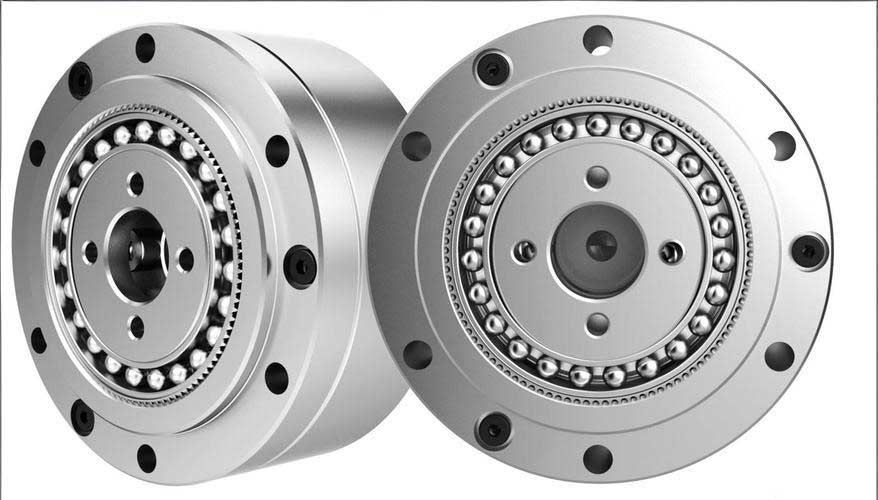
1. Geometric and Finite Element Modeling of the Flexspline and Wave Generator
The fidelity of the finite element analysis for a strain wave gear assembly hinges on the accuracy of the geometric and material models. For this study, a representative model based on common design parameters is constructed, with a focus on efficiently capturing the critical mechanics of the flexspline.
1.1 Geometric Simplification and Modeling
A common and validated simplification in the analysis of strain wave gears involves the treatment of the toothed section of the flexspline. Modeling individual teeth with high fidelity for a full 360-degree analysis is computationally prohibitive and often unnecessary for assessing global stress and deformation patterns in the cup body. The toothed rim is therefore frequently approximated as a solid ring of equivalent bending stiffness. A well-established method is to represent the rim as a ring with a thickened wall, calculated as:
$$\delta_f = \sqrt[3]{1.67} \cdot \delta$$
where \(\delta\) is the wall thickness of the smooth cylindrical cup section. This equivalent thickness method preserves the flexural rigidity of the actual toothed section, allowing for a significant reduction in model complexity and computation time while maintaining acceptable accuracy for stress analysis in the cup and fillet regions.
The key geometric parameters for the analyzed strain wave gear flexspline are summarized in the table below:
| Parameter | Value (mm) |
|---|---|
| Inner Diameter of Cup | 76.7 |
| Cup Wall Thickness (\(\delta\)) | 0.8 |
| Cup Height | 80.0 |
| Bottom Fillet Radius | 6.0 |
| Tooth Front Width | 8.0 |
| Toothed Rim Width | 20.0 |
| Rim End Fillet Radius | 1.4 |
The wave generator is modeled as a solid component with an external elliptical profile, which is the most common type for a cam-based wave generator. The elliptical profile forces the initially circular flexspline into a controlled elliptical shape. To concentrate computational resources on the flexspline’s response, the wave generator is modeled as a deformable body (rather than an analytical rigid surface) to more accurately capture the contact interaction, though its stiffness is set significantly higher than that of the flexspline material. Its elliptical profile has a major axis length of 38.75 mm and a minor axis length of 37.95 mm, corresponding to a radial deformation (\(w_0\)) of the flexspline of approximately 0.4 mm at the major axis.
1.2 Theoretical Deformation Curve of the Flexspline
Under no-load conditions, the initial shape of the flexspline is dictated by the wave generator’s contour. For a wave generator with a standard elliptical cam, the neutral axis of the deformed flexspline follows the outer equidistant curve of the ellipse. This theoretical curve is essential for validating the FEA results. Establishing a coordinate system with the origin at the ellipse center, the x-axis along the minor axis, and the y-axis along the major axis, the parametric equations for the cam ellipse are:
$$ x_c = b \sin\alpha, \quad y_c = a \cos\alpha $$
where \(a\) and \(b\) are the semi-major and semi-minor axes, respectively, and \(\alpha\) is the parameter. The equidistant curve, offset by a distance \(e\) (which is the radial thickness from the cam surface to the flexspline’s neutral axis), is given by:
$$
\begin{aligned}
x_e &= b \sin\alpha + \frac{e a \sin\alpha}{\sqrt{a^2 \cos^2\alpha + b^2 \sin^2\alpha}} \\
y_e &= a \cos\alpha + \frac{e b \cos\alpha}{\sqrt{a^2 \cos^2\alpha + b^2 \sin^2\alpha}}
\end{aligned}
$$
The corresponding radial displacement \(w(\phi)\) of a point on the flexspline’s neutral axis, originally at radius \(R\), is:
$$ \omega(\phi) = \sqrt{x_e^2 + y_e^2} – R = \sqrt{a^2 \cos^2\alpha + b^2 \sin^2\alpha + e^2 + \frac{2abe}{\sqrt{a^2 \sin^2\alpha + b^2 \cos^2\alpha}}} – R $$
The angular coordinate \(\phi\) on the deformed flexspline is not equal to \(\alpha\) due to the circumferential strain. Assuming the neutral axis is inextensible (a common initial assumption for simplified kinematic analysis), the relationship is defined by:
$$ \phi = \frac{1}{R} \int_{0}^{\alpha} \sqrt{a^2 \sin^2\alpha + b^2 \cos^2\alpha} , d\alpha + \frac{e}{R} \int_{0}^{\alpha} \frac{ab}{\sqrt{a^2 \sin^2\alpha + b^2 \cos^2\alpha}} , d\alpha $$
These equations describe the ideal initial shape of the flexspline in the strain wave gear assembly after the wave generator is fully inserted, providing a benchmark for the FEA results.
2. Finite Element Model Setup: Materials, Mesh, and Boundary Conditions
2.1 Material Properties
The flexspline in a strain wave gear is subjected to high-cycle fatigue loading. A high-strength alloy steel, such as 35CrMnSiA, is typically used. The material is modeled as isotropic, linear elastic for the assembly stress analysis. The wave generator is assigned a high stiffness material (e.g., tool steel) to approximate rigid behavior while maintaining contact stability. The properties are defined as follows:
| Component | Material | Young’s Modulus, E (GPa) | Poisson’s Ratio, ν | Density, ρ (kg/m³) |
|---|---|---|---|---|
| Flexspline | 35CrMnSiA | 209 | 0.295 | 7850 |
| Wave Generator | Tool Steel | 210 | 0.30 | 7800 |
2.2 Meshing Strategy
A structured meshing approach is employed to ensure accuracy and computational efficiency. The flexspline model is primarily meshed with 8-node linear brick elements with reduced integration (C3D8R in ABAQUS), which are well-suited for contact problems involving large deformations. In regions of complex geometry, such as the critical fillets connecting the rim to the cup and the bottom dome fillet, a localized refinement is applied. These areas are partitioned and meshed with a higher density of elements, and wedge elements (C3D6) may be used to transition the mesh appropriately. The wave generator is also meshed with solid elements, allowing for a small amount of deformation which improves the robustness of the contact algorithm compared to using a purely analytical rigid surface. A representative mesh for the flexspline emphasizes the refined regions at stress concentrators.
2.3 Boundary Conditions, Loads, and Contact Definition
The simulation of the assembly process is broken into distinct analysis steps to accurately capture the sequence of events:
Step 1 (Initial): The flexspline is in its free, unstressed state. The wave generator is positioned just above the flexspline opening.
Step 2 (Assembly): The wave generator is displaced along its axis into the flexspline until it is fully seated, with its elliptical profile fully engaging the toothed rim section. The rim and cup of the flexspline are constrained from rigid body motion. Typically, the mounting flange at the open end of the flexspline is fixed in all degrees of freedom (encastre boundary condition), simulating its bolted connection to a rigid structure. The wave generator’s motion is controlled by prescribing a vertical displacement to a reference point coupled to its inner surface.
Step 3 (Rotation – Optional for Assembly Analysis): While not the focus of the pure assembly analysis, a subsequent step can involve applying a slow rotation to the wave generator’s reference point to study the quasi-static stress variation at different angular positions.
The interaction between the wave generator’s outer surface and the flexspline’s inner surface is the most critical aspect of the model. A surface-to-surface contact pair is defined.
- Normal Behavior: “Hard” contact is specified. This prevents penetration between the surfaces and allows them to separate if contact pressure becomes zero.
- Tangential Behavior: A frictionless condition is often assumed for the initial assembly analysis to isolate the effects of geometric forcing from frictional effects. For more comprehensive studies, a Coulomb friction coefficient (e.g., μ = 0.1-0.15) can be introduced.
3. Analysis Results: Stresses and Deformations in the Assembled State
Upon solving the non-linear finite element model, the stress and deformation fields within the flexspline of the strain wave gear are obtained. The results reveal the characteristic patterns induced by the elliptical wave generator.
3.1 Stress Distribution
The von Mises stress contour plot after full assembly shows a symmetric and periodic distribution aligned with the wave generator’s axes. The highest stress concentrations are not located at the points of maximum radial deflection (the major axis tips) but are found in the fillet regions where the toothed rim transitions into the cylindrical cup. This aligns perfectly with the documented failure modes of strain wave gears. The stress is a combination of bending and membrane stresses.
For the modeled geometry, the peak von Mises stress is approximately 220 MPa, located in the fillet on the major axis side. The corresponding fillet on the minor axis side shows a lower but still significant stress of about 117 MPa. This difference arises because the deformation on the major axis involves both radial bending and circumferential compression of the rim, while the minor axis region experiences radial bending coupled with circumferential tension, leading to a different stress superposition. The stress state can be conceptually broken down. The bending stress (\(\sigma_b\)) in the thin wall can be approximated by plate bending theory, while the membrane stress (\(\sigma_m\)) from circumferential straining contributes as well. The von Mises equivalent stress \(\sigma_v\) at a point is calculated as:
$$
\sigma_v = \sqrt{ \sigma_{r}^2 + \sigma_{\theta}^2 – \sigma_{r}\sigma_{\theta} + 3\tau_{r\theta}^2 }
$$
where \(\sigma_r\) is the radial stress, \(\sigma_{\theta}\) is the hoop (circumferential) stress, and \(\tau_{r\theta}\) is the shear stress. In the fillet region, complex triaxial stress states develop, elevating \(\sigma_v\).
3.2 Deformation and Displacement Fields
The displacement field shows the expected elliptical deformation. The maximum radial displacement occurs, as dictated by the wave generator profile, at the locations corresponding to the major axis of the ellipse. The deformation is not uniform along the axis of the cup. The displacement magnitude is greatest at the open end where the wave generator engages the rim and attenuates along the cup’s length towards the closed bottom. This creates a bell-shaped deformation pattern when viewed from the side. The radial displacement \(u_r\) at a point (z, θ) along the cup can be described by a decaying harmonic function:
$$ u_r(z, \theta) \approx w_0 \cdot f(z) \cdot \cos(2\theta) $$
where \(w_0\) is the nominal radial deflection at the major axis at the open end, \(f(z)\) is a decay function (often exponential or polynomial) with \(f(0)=1\) at the open end and \(f(L) \rightarrow 0\) at the closed end, and \(\theta\) is the angular coordinate measured from the major axis. The \(\cos(2\theta)\) term reflects the two-lobed (elliptical) deformation pattern characteristic of this strain wave gear configuration.
3.3 Temporal Evolution of Stress During Assembly
Tracking specific elements during the assembly step (Step 2) provides insight into how the critical stress state develops. The graph below conceptually represents the evolution of von Mises stress at three key locations in the critical fillet during the wave generator’s insertion: one element at the top of the fillet (near the rim), one at the midsection, and one at the bottom of the fillet (near the cup).
- The element at the bottom of the fillet experiences the most rapid and severe increase in stress as the wave generator first makes contact and progressively forces the flexspline into an elliptical shape. Its stress curve rises sharply and reaches the global maximum.
- The midsection element follows a similar but slightly less severe trajectory.
- The top element shows a lower final stress magnitude, indicating the gradient through the wall thickness.
All curves exhibit minor oscillations or non-smooth transitions. These are not numerical artifacts but represent real physical phenomena captured by the dynamic/implicit solver: the small inertial effects and contact “snap-through” events as different regions of the flexspline suddenly engage with the advancing elliptical profile of the wave generator. This detailed temporal data is crucial for understanding the shock-loading component of the assembly process, which may influence very high-cycle fatigue (gigacycle) behavior.
4. Implications for Design Optimization of the Strain Wave Gear Flexspline
The finite element analysis of the assembly process provides clear, data-driven guidance for optimizing the flexspline design to enhance the life and performance of the strain wave gear.
1. Optimization of the Rim-to-Cup Fillet: The analysis unequivocally identifies the fillet radius as the primary stress concentrator. Increasing this fillet radius (\(R_{fillet}\)) is the most direct way to reduce the stress concentration factor (\(K_t\)). The relationship is generally of the form:
$$ K_t \propto 1 + C \sqrt{\frac{\delta}{R_{fillet}}} $$
where \(C\) is a geometric constant and \(\delta\) is the wall thickness. A larger, smoother transition distributes the bending stress more evenly. The design challenge is to increase the radius without interfering with gear tooth geometry or compromising the cup’s internal space.
2. Modification of the Tooth Front Width: The analysis of displacement fields shows significant strain at the open end of the flexspline. Reducing the non-functional “tooth front width” (the distance from the open edge of the cup to the start of the toothed rim) can decrease the unsupported length of the flexspline’s cylindrical section. This reduction, denoted as \(\Delta L\), makes the cup structurally stiffer and can reduce the magnitude of the decaying deformation wave, thereby lowering stresses in the adjacent fillet. The trade-off is ensuring adequate space for sealing and mounting.
3. Profiling of the Cup Wall Thickness: A constant wall thickness is not optimal. Since the stress decays along the cup’s length, employing a tapered wall thickness—thicker at the high-stress open end and thinner towards the closed bottom—can create a more uniform stress distribution, reduce weight, and improve fatigue life. The optimal taper profile can be derived iteratively using the FEA model as a guide.
The potential impact of these optimizations can be summarized conceptually:
| Design Parameter | Proposed Change | Primary Effect | Potential Benefit | Design Consideration |
|---|---|---|---|---|
| Rim-to-Cup Fillet Radius | Increase | Reduces stress concentration factor (Kt) | Increased fatigue life, delayed crack initiation | Clearance with mating parts, tooth geometry |
| Tooth Front Width | Decrease | Increases local bending stiffness at open end | Reduces radial displacement & associated bending stress | Space for seals, mounting bolts |
| Cup Wall Thickness | Taper (thick to thin) | Promotes more uniform stress distribution | Weight reduction, improved life efficiency | Manufacturing complexity, minimum thickness |
| Bottom Dome Fillet | Optimize profile | Smooths stress transition from cup to dome | Prevents secondary failure site | Internal space constraints |
5. Conclusion
The finite element analysis of the wave generator assembly process into the flexspline provides a foundational and critical understanding of the initial stress state in a strain wave gear. By simulating this process using ABAQUS, we have mapped the characteristic stress and deformation fields that arise from the elliptical forcing function. The results confirm theoretical predictions, showing that the maximum assembly-induced stresses occur not at the points of maximum deflection but in the geometrically complex fillet region connecting the flexspline’s rim to its cup body—the very location where fatigue failure most commonly initiates in real strain wave gear applications.
This detailed analysis serves multiple essential purposes for advancing strain wave gear technology. Firstly, it validates the mechanical assumptions and theoretical models used to describe the flexspline’s deformed shape. Secondly, and more importantly, it provides a high-fidelity digital prototyping tool. Engineers can use this methodology to virtually test the impact of geometric modifications—such as increasing fillet radii, tapering wall thickness, or adjusting profile shapes—on the critical assembly stresses before committing to costly physical prototypes. The ability to trace the temporal evolution of stress in specific elements offers unique insight into the dynamic loading during assembly, which can inform handling and installation procedures. Ultimately, this analysis forms the indispensable baseline from which all subsequent operational loading analyses (torque transmission, dynamic response, thermal effects) must proceed. By systematically minimizing the initial assembly stresses through geometry optimization informed by such FE studies, the fundamental durability and reliability of the strain wave gear can be significantly enhanced, enabling its use in even more demanding and critical applications.